For a few autumns in a row, I just accepted that pumpkin bundt cakes were going to be dry. Or dense. Or worse—that weirdly gummy texture that happens when you mix pumpkin puree with too much flour and hope for the best. I tried a dozen recipes, tweaked the moisture ratios, swapped oils, and still ended up with cakes that looked beautiful on the stand but crumbled the second you sliced them. Honestly, it started to feel like a moist, tender pumpkin cake with a caramel glaze was a myth—something people posted photos of but never actually ate. Then I stumbled onto a combination that changed everything. A little browned butter, a specific ratio of pumpkin to eggs, and a salted caramel that seeps into the crumb instead of just sitting on top. This Perfect Salted Caramel Pumpkin Bundt Cake isn’t just another fall recipe. It’s the one I kept making until I stopped looking for something better.
Why You’ll Love This Recipe
This cake is the kind of dessert that makes people close their eyes after the first bite. It’s not overly sweet, not dry, and not complicated—even though it looks like it came from a fancy bakery. Here’s why it works so well:
- Perfectly Moist Every Time: The combination of pumpkin puree, sour cream, and browned butter creates a crumb that’s tender without being heavy. No dry edges, no dense center.
- Simple Ingredients, Big Flavor: You probably have most of these in your pantry already. No weird extracts or hard-to-find flours—just real ingredients that work together.
- Make-Ahead Friendly: This cake actually tastes better the next day. The caramel soaks into the crumb overnight, and the spices settle into something deeper and warmer.
- Impressive Without the Stress: A bundt cake always looks like you tried harder than you did. A drizzle of salted caramel and a sprinkle of flaky salt, and suddenly you’re the star of the fall potluck.
- Crowd-Pleaser: Kids love the caramel, adults appreciate the balance of salt and spice, and nobody guesses it’s actually pretty straightforward to make.
I’ve tested this cake for brunches, Thanksgiving dinners, and random Tuesday cravings. It holds up every time. If you’ve had bad luck with pumpkin cakes before, this one will restore your faith. It’s comfort food that actually delivers—no hype, just a really good slice of cake.
What Ingredients You Will Need
This recipe uses simple, wholesome ingredients that come together to create something greater than the sum of their parts. Most are pantry staples, but a few specific choices make a real difference in texture and flavor.
For the Cake
- 1 ¾ cups (220g) all-purpose flour – Spoon and level for accuracy. Too much flour makes the cake dry.
- 1 ½ teaspoons baking powder – For lift and a tender crumb.
- 1 teaspoon baking soda – Helps the cake rise and balances the acidity of the pumpkin.
- ½ teaspoon salt – Enhances everything, especially the caramel.
- 2 teaspoons ground cinnamon – The backbone of fall flavor. I prefer Saigon cinnamon for its warmth.
- ½ teaspoon ground nutmeg – Freshly grated if you have it. It makes a subtle but noticeable difference.
- ½ teaspoon ground ginger – Adds a gentle heat that cuts through the sweetness.
- ¼ teaspoon ground cloves – Just a pinch. Cloves can overpower quickly.
- ½ cup (1 stick, 113g) unsalted butter – You’ll brown this first. It adds a nutty depth that pairs beautifully with pumpkin.
- 1 cup (200g) packed light brown sugar – More moisture and a deeper flavor than white sugar alone.
- ½ cup (100g) granulated sugar – For structure and sweetness.
- 2 large eggs, room temperature – Room temperature eggs emulsify better into the batter.
- 1 teaspoon vanilla extract – Pure, not imitation. It rounds out the spices.
- 1 ½ cups (340g) pumpkin puree – Not pumpkin pie filling. Canned is fine; I use Libby’s. If using fresh, make sure it’s drained well.
- ½ cup (120ml) sour cream, room temperature – This is the secret to a moist, tender crumb. Greek yogurt works too.
For the Salted Caramel Sauce
- 1 cup (200g) granulated sugar – White sugar caramelizes cleanly and consistently.
- 6 tablespoons (85g) unsalted butter, cubed, room temperature – Cold butter can seize the caramel.
- ½ cup (120ml) heavy cream, room temperature – Room temperature cream blends smoothly.
- 1 teaspoon flaky sea salt – Maldon is my go-to. It adds crunch and salinity.
- ½ teaspoon vanilla extract – Optional, but I like the depth it adds.
For Garnish (Optional)
- Flaky sea salt – A light sprinkle on top just before serving.
- Toasted pecans or pepitas – Adds texture and a nutty contrast.
Equipment Needed
You don’t need a professional kitchen to pull this off. A few basic tools will do the job, but a couple of specifics make life easier.
- 10 to 12-cup bundt pan – Make sure it’s a good quality nonstick pan. Cheap pans tend to stick, and nobody wants a mangled cake. I use a Nordic Ware Anniversary pan—it releases beautifully every time.
- Stand mixer or hand mixer – Either works. A stand mixer is easier for creaming butter and sugar, but a hand mixer and a bowl will get the job done.
- Medium saucepan – For browning butter and making caramel. Light-colored metal is best so you can see the color change.
- Whisk – For the caramel and for combining dry ingredients.
- Silicone spatula – For scraping every last bit of batter and caramel. Don’t skip this—waste not, want not.
- Cooling rack – Essential for even cooling. If you let the cake cool in the pan too long, it can get soggy.
- Instant-read thermometer (optional but helpful) – For checking the caramel temperature if you’re new to making caramel. 350°F is the sweet spot for deep amber.
Preparation Method
Step 1: Brown the Butter
Place the ½ cup of unsalted butter in a light-colored saucepan over medium heat. Swirl the pan occasionally as the butter melts. It will foam, then the foam will subside, and you’ll see golden brown specks forming at the bottom. This takes about 5 to 7 minutes. When it smells nutty and the specks are amber, remove it from the heat immediately. Pour it into a heatproof bowl to stop the cooking. Let it cool slightly while you prep the other ingredients.
Step 2: Prep Your Pan
Preheat your oven to 350°F (175°C). Grease your bundt pan thoroughly with softened butter or a baking spray that contains flour. Pay special attention to the crevices of the pan—I use a pastry brush to get into every nook. If you skip this, you’ll regret it when you try to flip the cake.
Step 3: Mix the Dry Ingredients
In a medium bowl, whisk together the flour, baking powder, baking soda, salt, cinnamon, nutmeg, ginger, and cloves. Set aside. This ensures the spices are evenly distributed throughout the cake, so you don’t get a clump of cinnamon in one bite.
Step 4: Cream the Sugars and Browned Butter
In a large mixing bowl, combine the cooled browned butter, brown sugar, and granulated sugar. Beat on medium speed for 2 to 3 minutes until the mixture looks lighter and slightly fluffy. The browned butter adds a nutty richness that regular butter just can’t match.
Step 5: Add Eggs, Vanilla, and Pumpkin
Add the eggs one at a time, beating well after each addition. Scrape down the sides of the bowl as needed. Add the vanilla and pumpkin puree, then beat until just combined. The mixture will look a little curdled at this point—that’s normal. Don’t panic.
Step 6: Alternate the Dry Ingredients and Sour Cream
With the mixer on low speed, add about one-third of the dry ingredients. Mix until just a few streaks of flour remain. Add half of the sour cream and mix until combined. Repeat with another third of the dry ingredients, the remaining sour cream, and finish with the last of the dry ingredients. Stop mixing as soon as the flour disappears. Overmixing will make the cake tough.
Step 7: Bake the Cake
Pour the batter into the prepared bundt pan and spread it evenly. Tap the pan on the counter a few times to release any air bubbles. Bake for 45 to 55 minutes, or until a toothpick inserted into the center comes out clean or with a few moist crumbs. The top should be golden and spring back when lightly pressed. Let the cake cool in the pan for 15 minutes—no longer, or it may stick. Then invert it onto a cooling rack and let it cool completely.
Step 8: Make the Salted Caramel
While the cake cools, make the caramel. Place the 1 cup of granulated sugar in a clean, light-colored saucepan over medium heat. Whisk occasionally as the sugar melts and turns amber. This takes about 8 to 10 minutes. Once the sugar is fully melted and a deep amber color (around 350°F on a thermometer if you’re using one), add the cubed butter. It will bubble up vigorously—keep whisking until the butter is fully incorporated. Slowly pour in the heavy cream while whisking constantly. The mixture will bubble up again. Continue whisking until smooth. Remove from heat and stir in the flaky sea salt and vanilla. Let the caramel cool for 10 to 15 minutes before drizzling over the cake.
Step 9: Glaze and Serve
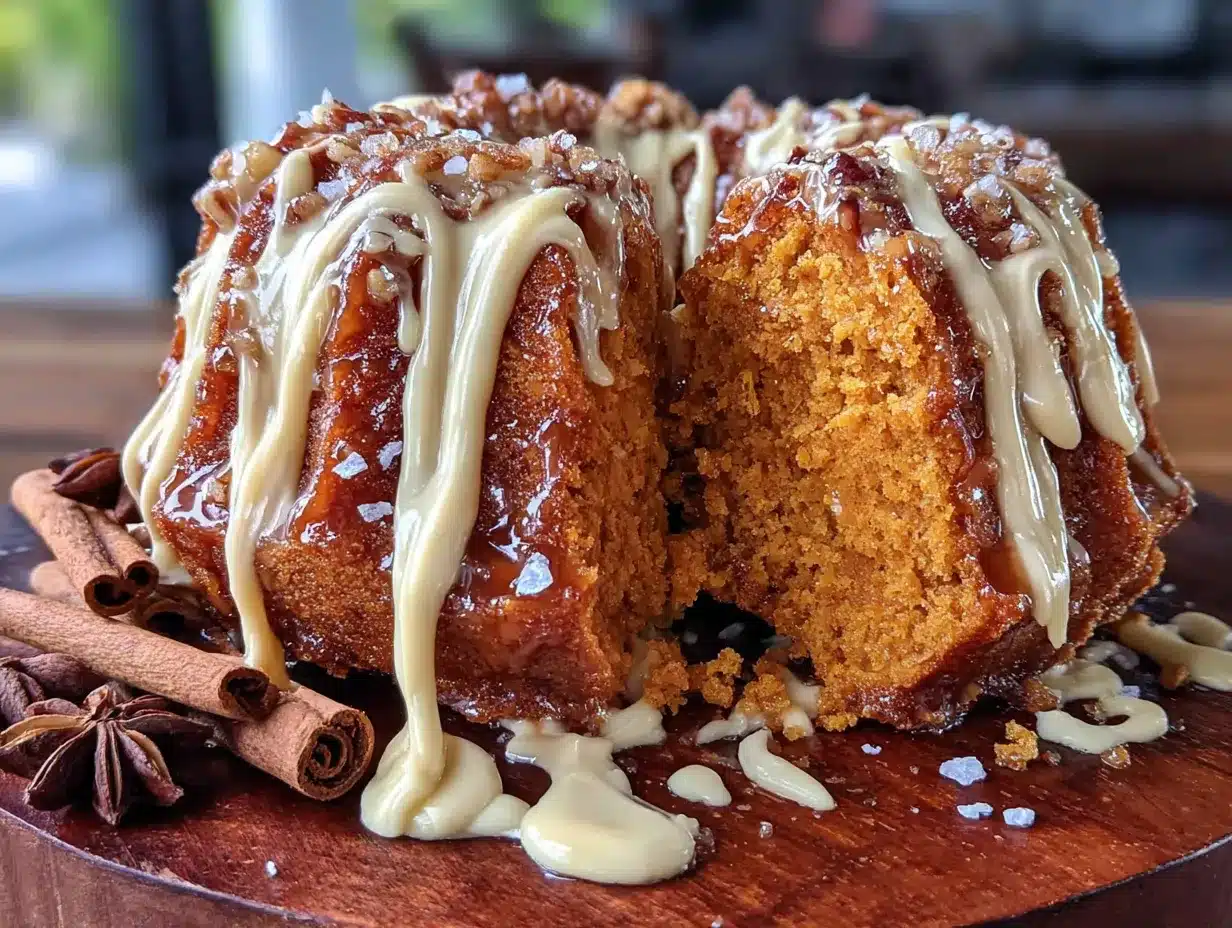
Once the cake is completely cool, drizzle the salted caramel over the top. Let it drip down the sides naturally. Sprinkle with a little extra flaky sea salt and toasted pecans if you’re feeling fancy. Slice and serve.
Cooking Tips & Techniques
I’ve made this cake more times than I care to count, and I’ve made every mistake in the book. Here’s what I learned so you don’t have to repeat my errors.
Don’t skip browning the butter. It adds a nutty, toasty flavor that deepens the pumpkin spice without overpowering it. I once tried using regular melted butter to save time, and the cake was noticeably less interesting. It’s a small step that makes a big difference.
Room temperature ingredients matter. Cold eggs or sour cream can cause the batter to curdle or not emulsify properly. Take them out of the fridge 30 minutes before you start. If you forget, place the eggs in a bowl of warm water for 5 minutes and let the sour cream sit on the counter.
Watch your caramel closely. Caramel can go from perfect to burnt in seconds. The first time I made this, I walked away to answer a text and came back to a pot of blackened sugar. Start over if that happens—don’t try to salvage burnt caramel. It tastes bitter and will ruin the cake.
Let the cake cool completely before glazing. If the cake is still warm, the caramel will soak in and disappear instead of forming that beautiful glossy layer. Patience is hard, but it pays off.
Use a toothpick to check for doneness. If it comes out with wet batter, bake for another 5 minutes and check again. If it comes out with a few moist crumbs, it’s perfect. Overbaking is the fastest way to a dry cake.
Variations & Adaptations
This recipe is forgiving enough to adapt to different tastes and dietary needs. Here are a few variations I’ve tried and loved.
Gluten-Free Version: Swap the all-purpose flour with a 1:1 gluten-free baking flour blend (I like Bob’s Red Mill). The texture will be slightly more delicate, so handle the cake gently when flipping it out of the pan.
Dairy-Free Adaptation: Use a high-quality vegan butter for browning (Miyoko’s works well) and replace the sour cream with full-fat coconut cream or a dairy-free yogurt. The caramel can be made with vegan butter and coconut cream—just be aware that coconut cream caramel has a slightly different flavor profile.
Spice It Up: Add a pinch of cayenne pepper or a teaspoon of orange zest to the batter for a surprising twist. The orange pairs beautifully with pumpkin and caramel.
Nutty Crunch: Fold ½ cup of toasted pecans or walnuts into the batter before baking. The nuts add texture and a savory counterpoint to the sweet caramel.
Chocolate Drizzle: For a double-drizzle effect, melt ½ cup of dark chocolate chips with a teaspoon of coconut oil and drizzle it over the caramel. It’s decadent but worth it for special occasions.
Serving & Storage Suggestions
This cake is best served at room temperature, which allows the caramel to stay glossy and the crumb to remain tender. If you’re serving it straight from the fridge, let it sit out for 20 minutes first.
For Presentation: Place the cake on a beautiful stand or wooden board. Drizzle the caramel just before serving so it doesn’t soak in completely. A sprinkle of flaky sea salt and a few toasted pecans on top make it look like a bakery display.
What to Serve With It: A dollop of lightly sweetened whipped cream or a scoop of vanilla ice cream balances the richness. A cup of black coffee or a chai latte is a perfect pairing.
Storage: Store the cake in an airtight container at room temperature for up to 3 days. If you’ve already glazed it, the caramel may soften the top slightly, but it will still taste amazing. For longer storage, wrap the unglazed cake tightly in plastic wrap and then foil, and freeze for up to 3 months. Thaw overnight in the fridge, then glaze before serving.
Reheating: If you want a warm slice, microwave individual pieces for 15 to 20 seconds. The caramel will soften, and the cake will taste freshly baked.
Flavor Development: Honestly, this cake tastes even better on day two. The spices meld together, and the caramel seeps into the crumb. If you can resist eating it all on day one, you’ll be rewarded.
Nutritional Information & Benefits
Here’s the honest truth: this is a dessert, not a health food. But it does have a few redeeming qualities. Pumpkin is packed with vitamin A and fiber, and the spices—cinnamon, ginger, nutmeg—have anti-inflammatory properties. The browned butter and sour cream add richness, so a smaller slice goes a long way.
Estimated per slice (based on 12 servings):
- Calories: 420
- Fat: 22g
- Carbohydrates: 54g
- Fiber: 2g
- Sugar: 38g
- Protein: 5g
Dietary Considerations: This recipe contains gluten, dairy, and eggs. For gluten-free and dairy-free adaptations, see the variations section above. The caramel is naturally gluten-free if you use certified gluten-free vanilla extract.
My Perspective: I believe in balance. This cake is meant to be enjoyed on a crisp fall afternoon with good company and a hot drink. It’s not an everyday breakfast—but it’s absolutely worth the splurge for a special occasion or a cozy weekend treat.
Conclusion
This Perfect Salted Caramel Pumpkin Bundt Cake is the fall dessert you’ve been waiting for—moist, spiced, and topped with a silky salted caramel that makes every bite unforgettable. It’s the kind of cake that disappears fast at gatherings and leaves people asking for the recipe. I love it because it feels special without being fussy, and it delivers on flavor every single time.
I’d love to hear how yours turns out. Did you add pecans? Try a different spice blend? Drizzle extra caramel on top? Drop a comment below and share your version—I read every one, and I love seeing how you make this recipe your own. Happy baking!
Frequently Asked Questions
Can I use pumpkin pie filling instead of pumpkin puree?
No, please don’t. Pumpkin pie filling is pre-sweetened and spiced, which will throw off the sugar and spice balance in this recipe. Stick with 100% pure pumpkin puree for the best results.
Why did my cake stick to the pan?
This happens most often when the pan isn’t greased thoroughly enough. Use a pastry brush to get into every crevice, and consider using a baking spray that contains flour. Let the cake cool in the pan for exactly 15 minutes—no longer—before flipping it out.
Can I make the caramel ahead of time?
Absolutely. Make the caramel up to a week in advance and store it in an airtight jar in the refrigerator. Reheat it gently in the microwave or on the stovetop until it’s pourable again. You may need to add a splash of cream if it thickens too much.
How do I prevent the cake from being dry?
Don’t overbake it, and don’t overmix the batter. Check for doneness at the 45-minute mark, and pull the cake out when a toothpick comes out with a few moist crumbs. Also, make sure you’re using the correct amount of pumpkin puree and sour cream—they provide the moisture.
Can I double this recipe for a larger bundt pan?
Yes, but you’ll need a 15-cup bundt pan or larger. Increase the baking time by 10 to 15 minutes, and start checking for doneness at the 55-minute mark. If you don’t have a large enough pan, divide the batter between two standard bundt pans and bake them side by side.
Pin This Recipe!
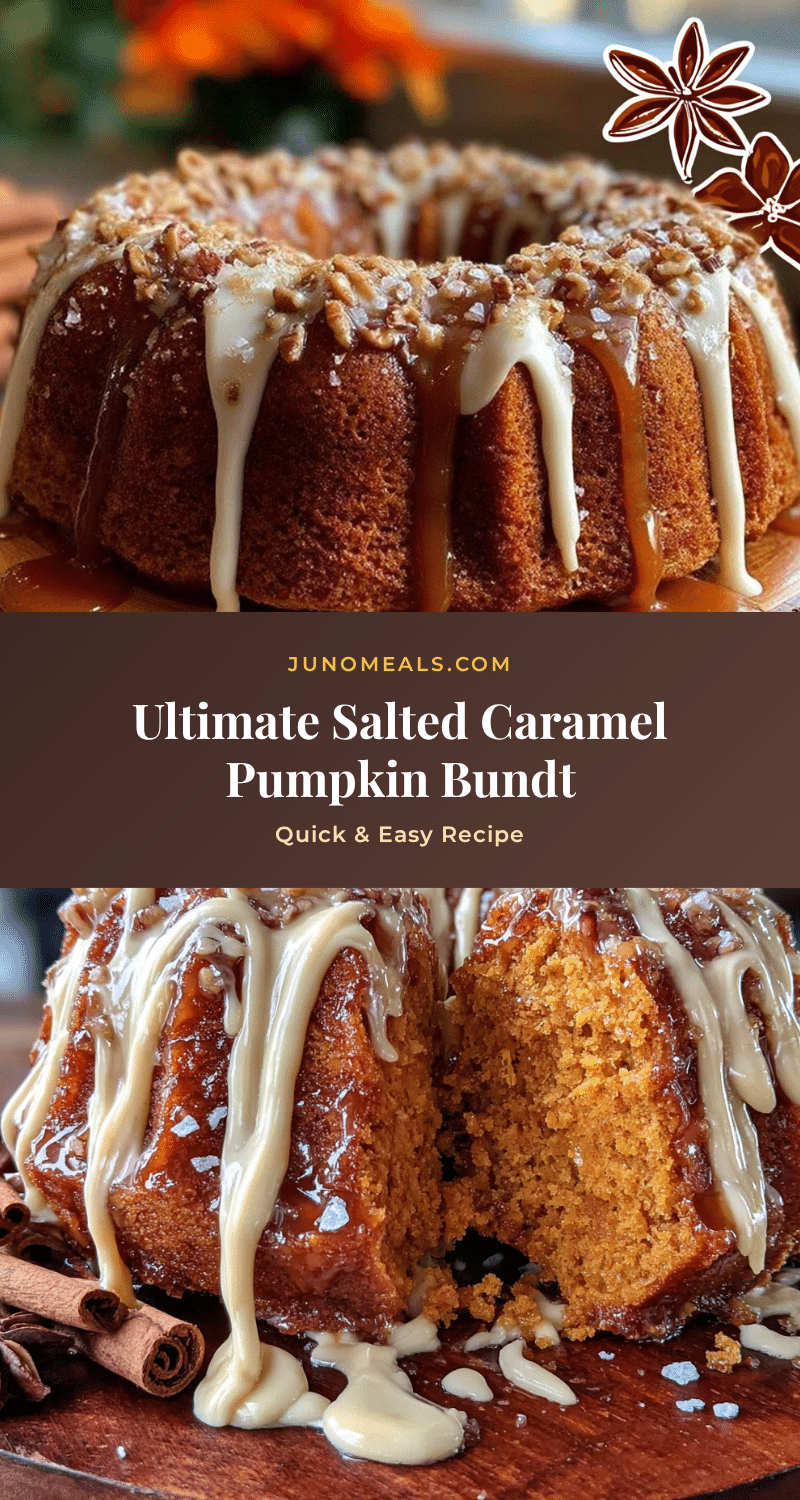
Perfect Salted Caramel Pumpkin Bundt Cake
This moist, tender pumpkin bundt cake is topped with a silky salted caramel sauce. It’s the perfect fall dessert that’s impressive yet easy to make, with a crumb that stays tender for days.
- Prep Time: 20 minutes
- Cook Time: 50 minutes
- Total Time: 1 hour 10 minutes
- Yield: 12 servings 1x
- Category: Dessert
- Cuisine: American
Ingredients
- 1 ¾ cups (220g) all-purpose flour
- 1 ½ teaspoons baking powder
- 1 teaspoon baking soda
- ½ teaspoon salt
- 2 teaspoons ground cinnamon
- ½ teaspoon ground nutmeg
- ½ teaspoon ground ginger
- ¼ teaspoon ground cloves
- ½ cup (1 stick, 113g) unsalted butter
- 1 cup (200g) packed light brown sugar
- ½ cup (100g) granulated sugar
- 2 large eggs, room temperature
- 1 teaspoon vanilla extract
- 1 ½ cups (340g) pumpkin puree
- ½ cup (120ml) sour cream, room temperature
- 1 cup (200g) granulated sugar (for caramel)
- 6 tablespoons (85g) unsalted butter, cubed, room temperature (for caramel)
- ½ cup (120ml) heavy cream, room temperature (for caramel)
- 1 teaspoon flaky sea salt (for caramel)
- ½ teaspoon vanilla extract (for caramel, optional)
- Flaky sea salt (for garnish, optional)
- Toasted pecans or pepitas (for garnish, optional)
Instructions
- Brown the butter: Place ½ cup unsalted butter in a light-colored saucepan over medium heat. Swirl occasionally until it foams, then the foam subsides and golden brown specks form (5-7 minutes). Remove from heat and pour into a heatproof bowl to cool slightly.
- Prep the pan: Preheat oven to 350°F (175°C). Grease a 10-12 cup bundt pan thoroughly with softened butter or baking spray with flour, especially the crevices.
- Mix dry ingredients: In a medium bowl, whisk together flour, baking powder, baking soda, salt, cinnamon, nutmeg, ginger, and cloves. Set aside.
- Cream sugars and browned butter: In a large mixing bowl, combine cooled browned butter, brown sugar, and granulated sugar. Beat on medium speed for 2-3 minutes until lighter and fluffy.
- Add eggs, vanilla, and pumpkin: Add eggs one at a time, beating well after each. Scrape down sides. Add vanilla and pumpkin puree, beat until just combined (mixture may look curdled).
- Alternate dry ingredients and sour cream: With mixer on low, add one-third of dry ingredients, mix until just a few streaks remain. Add half of sour cream, mix. Repeat with another third of dry ingredients, remaining sour cream, then last of dry ingredients. Stop mixing as soon as flour disappears.
- Bake the cake: Pour batter into prepared pan, spread evenly. Tap pan on counter to release air bubbles. Bake 45-55 minutes until a toothpick inserted in center comes out clean or with a few moist crumbs. Cool in pan 15 minutes, then invert onto a cooling rack to cool completely.
- Make the salted caramel: Place 1 cup granulated sugar in a clean, light-colored saucepan over medium heat. Whisk occasionally until sugar melts and turns deep amber (8-10 minutes, about 350°F). Add cubed butter; it will bubble vigorously. Whisk until incorporated. Slowly pour in heavy cream while whisking constantly. Remove from heat, stir in flaky sea salt and vanilla. Let cool 10-15 minutes before drizzling.
- Glaze and serve: Once cake is completely cool, drizzle salted caramel over the top, letting it drip down sides. Sprinkle with extra flaky sea salt and toasted pecans if desired. Slice and serve.
Notes
Don’t skip browning the butter—it adds nutty depth. Room temperature ingredients ensure proper emulsification. Watch caramel closely to avoid burning. Let cake cool completely before glazing. Cake tastes even better the next day as flavors meld.
Nutrition
- Serving Size: 1 slice
- Calories: 420
- Sugar: 38
- Sodium: 380
- Fat: 22
- Saturated Fat: 13
- Carbohydrates: 54
- Fiber: 2
- Protein: 5
Keywords: pumpkin bundt cake, salted caramel, fall dessert, pumpkin cake, caramel glaze, easy bundt cake