My neighbor handed me a bag of persimmons last November and said, “My tree is drowning me. Save me.” I took them politely, not having the faintest idea what to do with a persimmon. I mean, I’d seen them at the grocery store—those bright orange orbs that look like a tomato got lost on its way to the salad bowl. But actually cooking with them? That was new territory.
I spent a good hour just staring at that bag on my counter. They were Fuyu persimmons—the squat, firm ones that look like little pumpkins. I knew enough to know they were the eating kind, not the baking kind. Or so I thought.
I called my mom, the family recipe keeper, and asked what she’d do with them. “Slice them on a cheese board,” she said. “Or just eat them like an apple.” Solid advice for about three of them. But I had twelve. Twelve persimmons and a Sunday afternoon with nothing planned.
So I did what any reasonable person would do when faced with too much fruit. I made bread. And here’s where the story gets interesting—my kid, who was supposedly “helping” me in the kitchen, asked why I couldn’t just mash the persimmons into the batter like I do with bananas. I started to explain why that wouldn’t work—persimmons are firmer, less starchy, completely different fruit chemistry. Then I stopped. Honestly, I had no real reason why it wouldn’t work. I was just being stubborn.
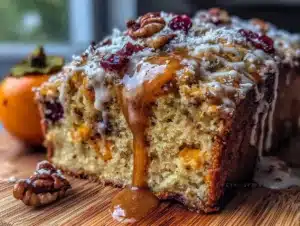
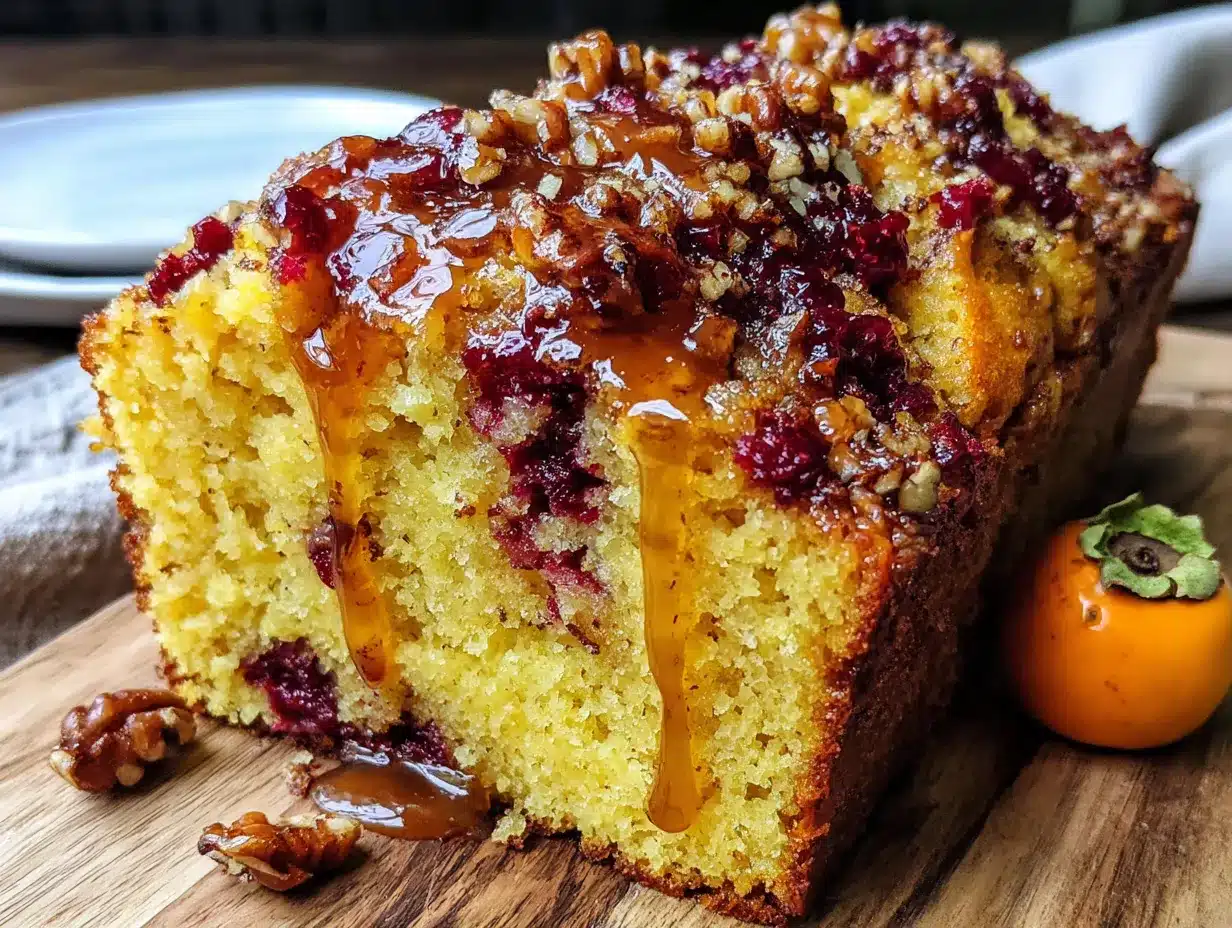
So I mashed them. And you know what? It worked completely. The bread came out of the oven with this incredible deep orange color, speckled with little bits of persimmon that had caramelized around the edges. The texture was denser than banana bread but somehow more tender. That first bite had this unexpected warmth—not spicy, exactly, but cozy in a way I couldn’t quite name at the time. It was the walnuts, I realized later. The combination of sweet persimmon and earthy walnut created this flavor that tastes like autumn feels.
I’ve made this bread at least twenty times since that afternoon. It’s become my go-to for fall gatherings, for holiday brunches, for those quiet mornings when you want the house to smell like something good. Maybe you’ve been there—staring at a fruit you don’t quite know what to do with, wondering if it’s worth the trouble. Let me tell you, it is. This persimmon walnut bread with maple glaze is the kind of recipe that makes you glad you took a chance on something new.
Why You’ll Love This Persimmon Walnut Bread
This isn’t just another quick bread recipe. After testing this recipe more times than I care to admit (my neighbors have been very patient), I can tell you exactly why this version stands out from the crowd.
- Perfectly Seasonal : Persimmons peak from October through December, making this the ideal recipe for fall baking. It’s like capturing autumn in a loaf pan.
- Simple Ingredients : You probably already have flour, sugar, eggs, and butter in your kitchen. The persimmons and walnuts are the only special purchases.
- Forgiving Recipe : This bread is remarkably hard to mess up. Overmix it? Still delicious. Use slightly under-ripe persimmons? It’ll be fine. It’s the kind of recipe that builds confidence.
- Maple Glaze Magic : The glaze isn’t just decoration—it soaks into the warm bread, creating this incredible sweet layer that complements the persimmon flavor perfectly.
- Freezer-Friendly : This bread freezes beautifully. I always make two loaves: one to eat now, one to hide in the freezer for emergencies.
What makes this recipe different from every other fruit bread out there is the texture. The mashed persimmon creates a batter that’s wetter than banana bread but bakes up lighter than pumpkin bread. The walnuts add crunch in all the right places. And that maple glaze? It’s not too sweet—just enough to make you close your eyes after that first bite.
This is comfort food reimagined. It’s healthier than most quick breads (persimmons are packed with fiber and vitamins), faster than yeast breads, but with the same soul-soothing satisfaction. Perfect for impressing brunch guests without stress, or turning a simple Tuesday morning into something memorable.
What Ingredients You Will Need
This recipe uses simple, wholesome ingredients to deliver bold flavor and satisfying texture without the fuss. Most of these are pantry staples, with a few seasonal stars doing the heavy lifting.
For the Bread
- 2 cups all-purpose flour (spooned and leveled—don’t scoop directly from the bag or you’ll get too much)
- 1 teaspoon baking soda
- 1/2 teaspoon baking powder
- 1/2 teaspoon salt
- 1 teaspoon ground cinnamon (I prefer Vietnamese cinnamon for its warmth)
- 1/2 teaspoon ground nutmeg (freshly grated if you have it—the difference is real)
- 1/4 teaspoon ground ginger
- 1 cup granulated sugar
- 1/2 cup unsalted butter, softened (salted butter works too—just reduce the added salt to 1/4 teaspoon)
- 2 large eggs, room temperature
- 1 teaspoon vanilla extract
- 1 1/2 cups persimmon purée (about 3-4 medium Fuyu persimmons, mashed)
- 1/2 cup buttermilk, room temperature (or 1/2 cup milk mixed with 1/2 tablespoon lemon juice, let sit 5 minutes)
- 1 cup chopped walnuts, toasted (toasting brings out their flavor—don’t skip this)
For the Maple Glaze
- 1 cup powdered sugar, sifted
- 3 tablespoons pure maple syrup (not pancake syrup—the real stuff makes a difference)
- 1-2 tablespoons milk (or heavy cream for a richer glaze)
- Pinch of salt
A few ingredient notes from my testing kitchen: For the persimmons, look for Fuyu variety—they’re the squat, tomato-shaped ones that are firm when ripe. Hachiya persimmons (the acorn-shaped ones) are too astringent unless completely jelly-soft. I’ve tested this with both, and Fuyu consistently gives better results. If you can only find Hachiya, make sure they’re incredibly soft—like, “I’m about to burst” soft.
For the walnuts, I recommend buying raw walnuts and toasting them yourself. The pre-toasted ones at the store are often overdone. Just spread them on a baking sheet at 350°F for 6-8 minutes until they smell nutty and fragrant. Watch them closely—they go from toasted to burnt in about 30 seconds.
If you need a dairy-free option, substitute the butter with coconut oil (use refined for neutral flavor) and the buttermilk with almond milk mixed with lemon juice. The texture will be slightly different but still delicious.
Equipment Needed
You don’t need a professional bakery setup for this recipe. Here’s what you’ll actually use:
- 9×5-inch loaf pan (standard size—if yours is smaller, you’ll need to adjust baking time)
- Parchment paper (for easy removal—trust me on this)
- Two mixing bowls (one medium, one large)
- Whisk (for dry ingredients)
- Hand mixer or stand mixer (you can do this by hand, but a mixer makes it easier)
- Potato masher or fork (for mashing persimmons)
- Measuring cups and spoons
- Cooling rack (if you don’t have one, you can use the oven rack—just be careful)
- Small saucepan (for toasting walnuts, if you’re doing it on the stovetop)
I’ve made this bread with just a fork, a bowl, and a lot of determination. It worked fine. But if you have a kitchen scale, I highly recommend using it for the flour—weighing gives you consistent results every time. The persimmons can be mashed with a potato masher or even a sturdy fork. I’ve used both, and honestly, the fork gives you a slightly chunkier texture that I prefer.
One tip: line your loaf pan with parchment paper, leaving overhang on the long sides. This creates “handles” that let you lift the bread out cleanly. I learned this after destroying a perfectly good loaf trying to flip it out of the pan. We don’t talk about that day.
Preparation Method
Let’s make some bread. Set aside about 15 minutes for prep and 55-65 minutes for baking.
- Preheat your oven to 350°F (175°C). Position the rack in the center of the oven. Grease your 9×5-inch loaf pan and line it with parchment paper, leaving overhang on the two long sides.
- Prepare your persimmon purée. Wash the persimmons, cut off the tops, and roughly chop them. You don’t need to peel them—the skin is thin and edible, and it adds fiber. Mash them with a potato masher or fork until you have a chunky purée. You want some texture, not baby food. Set aside.
- Toast the walnuts. Spread the chopped walnuts on a baking sheet and toast at 350°F for 6-8 minutes, until fragrant and slightly darker. Let them cool while you prepare the batter.
- Whisk the dry ingredients together. In a medium bowl, combine the flour, baking soda, baking powder, salt, cinnamon, nutmeg, and ginger. Whisk until evenly distributed. This aerates the flour and ensures your spices are evenly mixed.
- Cream the butter and sugar. In a large bowl, beat the softened butter and granulated sugar together until light and fluffy, about 3-4 minutes with a hand mixer on medium speed. Scrape down the sides of the bowl halfway through. The mixture should look pale and slightly increased in volume.
- Add the eggs and vanilla. Beat in the eggs one at a time, mixing well after each addition. Add the vanilla extract and mix until combined. The mixture might look slightly curdled at this point—that’s normal, especially if your eggs were cold.
- Add the persimmon purée. Fold in the mashed persimmons until just combined. The batter will look a little strange at this point—sort of separated and orange-tinted. Don’t panic. This is normal.
- Alternate adding dry ingredients and buttermilk. Add about one-third of the flour mixture to the wet ingredients and mix on low speed until just combined. Add half the buttermilk and mix. Repeat with another third of flour, the remaining buttermilk, and finally the last of the flour. Mix until just combined—overmixing at this stage will make your bread tough.
- Fold in the walnuts. Gently fold the toasted walnuts into the batter using a rubber spatula. Stop as soon as they’re evenly distributed. The batter will be thick and slightly lumpy—that’s exactly what you want.
- Transfer to the pan and bake. Pour the batter into your prepared loaf pan and spread it evenly. Bake for 55-65 minutes, or until a toothpick inserted into the center comes out clean or with just a few moist crumbs. If the top is browning too quickly (around the 40-minute mark), tent loosely with aluminum foil.
- Cool in the pan. Let the bread cool in the pan for 15 minutes. Then use the parchment paper handles to lift it out and transfer to a wire rack to cool completely. This step is crucial—if you try to slice it while it’s still warm, it will crumble. I know from experience.
- Make the glaze. While the bread cools, whisk together the powdered sugar, maple syrup, and 1 tablespoon of milk in a small bowl. Add more milk a teaspoon at a time until you reach a pourable consistency. The glaze should be thick but flow off the spoon in a steady ribbon.
- Glaze and serve. Once the bread is completely cool, drizzle the maple glaze over the top. Let the glaze set for about 10 minutes before slicing. For clean slices, use a serrated knife and a gentle sawing motion.
One thing I learned the hard way: if your persimmons are particularly ripe and juicy, the bread might need an extra 5-10 minutes in the oven. Check it at the 55-minute mark, but don’t be afraid to leave it in longer. The toothpick test is your friend here.
Cooking Tips & Techniques
After making this persimmon walnut bread more times than I can count, here are the things I wish someone had told me from the start.
Don’t overmix the batter. This is the number one mistake people make with quick breads. Mix until you don’t see streaks of flour anymore, then stop. The gluten develops as you mix, and too much gluten means a tough, dense bread. A few lumps are fine—they’ll bake out.
Room temperature ingredients matter. I know, I know—every recipe says this. But with persimmon bread, it genuinely makes a difference. Cold eggs and cold buttermilk will seize the butter, creating a dense, uneven crumb. Take everything out of the fridge 30 minutes before you start baking. Your bread will thank you.
Toast your walnuts. I cannot stress this enough. Raw walnuts are fine, but toasted walnuts are transformed. The heat releases their natural oils and brings out this deep, earthy flavor that pairs perfectly with the sweet persimmon. I forgot to toast them once, and the bread was noticeably less flavorful. Never again.
Check your persimmons for ripeness. Fuyu persimmons should be firm but give slightly when pressed—like a ripe peach. If they’re rock hard, they’ll be astringent and the bread will lack sweetness. If they’re too soft, they’ll release too much liquid and make the batter watery. The Goldilocks zone is that perfect in-between stage.
Let the bread cool completely before glazing. I know it’s tempting to pour that maple glaze over a warm loaf, but it will just melt and slide off. Trust the process. A completely cool loaf gives you that beautiful, Instagram-worthy glaze that stays put.
One more thing: if you’re baking for a crowd, double the recipe and make two loaves. One will disappear immediately. The other? Well, that one’s for you.
Variations & Adaptations
This persimmon walnut bread is wonderfully adaptable. Here are a few ways I’ve played with the recipe over the years.
Spiced Orange Persimmon Bread. Add the zest of one orange to the batter along with the persimmon purée. Replace the cinnamon with 1 1/2 teaspoons of pumpkin pie spice. The citrus brightens the persimmon flavor beautifully. I tested this variation for a holiday brunch, and it was the first thing to disappear from the table.
Chocolate Chip Persimmon Bread. Fold in 1/2 cup of dark chocolate chips along with the walnuts. The bitterness of dark chocolate (70% cacao or higher) is a surprising but perfect match for the sweet persimmon. My kid-approved version—because sometimes you need chocolate in your bread.
Gluten-Free Version. Substitute the all-purpose flour with a 1:1 gluten-free baking flour blend (I use Bob’s Red Mill). Add 1/2 teaspoon of xanthan gum if your blend doesn’t already include it. The texture will be slightly more crumbly, but the flavor is still spot-on. Let the bread cool completely before slicing—gluten-free breads are more fragile when warm.
Vegan Adaptation. Replace the butter with coconut oil (use refined for neutral flavor) or vegan butter. Use flax eggs (1 tablespoon ground flaxseed mixed with 3 tablespoons water per egg, let sit 5 minutes). Substitute the buttermilk with almond milk mixed with lemon juice. The bread will be slightly denser but still delicious.
Nut-Free Option. Skip the walnuts entirely, or substitute with pepitas (pumpkin seeds) for crunch without nuts. Toast the pepitas just like you would walnuts. The bread works fine without any add-ins—it’s still incredibly flavorful.
I once made a version with dried cranberries mixed in, and it was fantastic for Thanksgiving. The tartness of the cranberries cuts through the sweetness of the persimmon and maple glaze. Consider that my gift to you for holiday baking season.
Serving & Storage Suggestions
This persimmon walnut bread is versatile enough for breakfast, brunch, dessert, or a midday snack. Here’s how I serve and store mine.
Serving temperature: Room temperature is ideal. The flavors are more pronounced, and the texture is at its best. If you’ve refrigerated it, let slices sit out for 15-20 minutes before serving. For a special treat, warm a slice in the microwave for 10-15 seconds—it makes the maple glaze slightly gooey.
Presentation ideas: Slice the bread and arrange on a wooden board with a small dish of extra maple glaze for dipping. Add a few fresh persimmon slices and some walnuts on the side for visual appeal. For brunch, serve alongside a hot cup of coffee or chai tea—the spices in the bread complement chai beautifully.
Storage instructions: Store the bread in an airtight container at room temperature for up to 3 days. If you’ve glazed the bread, place a paper towel in the container to absorb excess moisture and prevent the glaze from becoming sticky. For longer storage, refrigerate for up to a week.
Freezing instructions: This bread freezes beautifully. Wrap the unglazed loaf tightly in plastic wrap, then in aluminum foil, and freeze for up to 3 months. When ready to serve, thaw overnight in the refrigerator, bring to room temperature, then glaze. You can also freeze individual slices for quick breakfasts—just wrap each slice in plastic wrap and store in a freezer bag.
Reheating tips: For a single slice, microwave for 10-15 seconds. For a whole loaf, wrap in foil and warm in a 300°F oven for 10-15 minutes. The flavors actually deepen after a day or two—the persimmon and spice flavors meld together beautifully. I honestly prefer this bread on day two.
How flavors develop: The persimmon flavor becomes more pronounced after 24 hours. The spices settle into the background, letting the fruit shine. If you can resist eating it immediately, wrap it tightly and let it sit overnight. You’ll be rewarded with a more complex, well-rounded flavor.
Nutritional Information & Benefits
While I wouldn’t call this a health food (it’s still a sweet bread with butter and sugar), persimmon walnut bread does offer some surprising nutritional benefits.
Estimated nutrition per slice (1/12 of loaf):
- Calories: 285
- Fat: 13g
- Carbohydrates: 39g
- Fiber: 2g
- Sugar: 22g
- Protein: 5g
Health benefits of key ingredients: Persimmons are packed with vitamin A (great for eye health), vitamin C (immune support), and fiber (digestive health). They also contain antioxidants that help fight inflammation. Walnuts provide omega-3 fatty acids, which are excellent for brain health. The cinnamon in this recipe may help regulate blood sugar levels.
Dietary considerations: This recipe contains gluten, dairy, eggs, and tree nuts. For gluten-free and vegan adaptations, see the variations section above. This bread is naturally low in sodium and contains no artificial preservatives or additives.
Allergen notes: Walnuts are tree nuts. If you’re serving this to someone with nut allergies, omit the walnuts or use seeds instead. The bread itself is nut-free—only the add-in contains nuts.
My personal perspective? This bread is a treat, and treats are part of a balanced life. I don’t stress about the sugar content when I’m enjoying something made with real ingredients and a lot of love. One slice with your morning coffee is perfectly fine.
Conclusion
This persimmon walnut bread with maple glaze started as a happy accident—a moment of stubbornness replaced by curiosity, a kid’s suggestion that turned out to be genius. Every time I make it, I remember that afternoon in my kitchen, mashing persimmons and wondering if I was about to ruin a perfectly good batch of ingredients.
Now it’s one of my most-requested recipes. It’s the bread I bring to fall gatherings, the one my friends ask for by name, the one that makes people say, “I never knew what to do with persimmons either!”
What I love most about this recipe is how forgiving it is. You can adjust the spices, swap the nuts, change the glaze—it always works. It’s the kind of recipe that builds confidence in the kitchen, the kind that makes you feel like a real baker even on your first try.
I’d love to hear how yours turns out. Did you add chocolate chips? Try it with pecans instead of walnuts? Pour on extra glaze? Drop a comment below and let me know your twist on this cozy fall bread. And if you’re looking for more seasonal baking inspiration, check out my pumpkin banana bread for another quick bread that disappears just as fast.
Happy baking, friend. Your kitchen is about to smell incredible.
Frequently Asked Questions
Can I use Hachiya persimmons instead of Fuyu?
Yes, but only if they’re extremely soft—like, “about to burst” soft. Hachiya persimmons are astringent when not fully ripe, and they’ll make your bread taste bitter and chalky. If you’re unsure, stick with Fuyu. They’re more forgiving and give consistent results.
Why did my persimmon bread sink in the middle?
This usually happens for one of three reasons: the batter was overmixed (developing too much gluten), the oven door was opened too early (causing the bread to fall), or the persimmons were too watery (overloading the structure). Next time, check your persimmons for ripeness and resist the urge to peek during the first 40 minutes of baking.
Can I make this bread without the maple glaze?
Absolutely. The bread is delicious on its own—sweet, spiced, and full of persimmon flavor. The glaze adds a nice touch, but it’s not essential. If you’re watching your sugar intake or just prefer a simpler bread, skip the glaze and enjoy it plain or with a pat of butter.
How do I know when the persimmons are ripe enough?
Fuyu persimmons should be firm but give slightly when pressed—like a ripe peach or avocado. They should have a deep orange color with no green patches. If they’re rock hard, let them sit on the counter for a few days. If they’re too soft and mushy, they’ll release too much liquid and affect the bread’s texture.
Can I add other fruits or mix-ins to this recipe?
Yes! Dried cranberries, dark chocolate chips, or chopped dried apricots all work beautifully. Just keep the total add-ins to about 1 cup so you don’t overwhelm the batter. I’ve also added fresh cranberries (about 1/2 cup) for a tart twist—just toss them in a little flour before folding to prevent them from sinking to the bottom.
Pin This Recipe!
Cozy Persimmon Walnut Bread with Easy Maple Glaze
This moist and tender persimmon walnut bread is a cozy fall treat, made with mashed Fuyu persimmons and toasted walnuts, then drizzled with a simple maple glaze. It’s a forgiving, freezer-friendly quick bread that captures the essence of autumn.
- Prep Time: 15 minutes
- Cook Time: 55-65 minutes
- Total Time: 1 hour 10 minutes - 1 hour 20 minutes
- Yield: 12 servings 1x
- Category: Dessert
- Cuisine: American
Ingredients
- 2 cups all-purpose flour (spooned and leveled)
- 1 teaspoon baking soda
- 1/2 teaspoon baking powder
- 1/2 teaspoon salt
- 1 teaspoon ground cinnamon (preferably Vietnamese)
- 1/2 teaspoon ground nutmeg (freshly grated if possible)
- 1/4 teaspoon ground ginger
- 1 cup granulated sugar
- 1/2 cup unsalted butter, softened
- 2 large eggs, room temperature
- 1 teaspoon vanilla extract
- 1 1/2 cups persimmon purée (about 3–4 medium Fuyu persimmons, mashed)
- 1/2 cup buttermilk, room temperature (or 1/2 cup milk mixed with 1/2 tablespoon lemon juice, let sit 5 minutes)
- 1 cup chopped walnuts, toasted
- 1 cup powdered sugar, sifted
- 3 tablespoons pure maple syrup
- 1–2 tablespoons milk (or heavy cream for a richer glaze)
- Pinch of salt
Instructions
- Preheat your oven to 350°F (175°C). Position the rack in the center of the oven. Grease your 9×5-inch loaf pan and line it with parchment paper, leaving overhang on the two long sides.
- Prepare your persimmon purée. Wash the persimmons, cut off the tops, and roughly chop them. You don’t need to peel them—the skin is thin and edible. Mash them with a potato masher or fork until you have a chunky purée. Set aside.
- Toast the walnuts. Spread the chopped walnuts on a baking sheet and toast at 350°F for 6-8 minutes, until fragrant and slightly darker. Let them cool while you prepare the batter.
- Whisk the dry ingredients together. In a medium bowl, combine the flour, baking soda, baking powder, salt, cinnamon, nutmeg, and ginger. Whisk until evenly distributed.
- Cream the butter and sugar. In a large bowl, beat the softened butter and granulated sugar together until light and fluffy, about 3-4 minutes with a hand mixer on medium speed. Scrape down the sides of the bowl halfway through.
- Add the eggs and vanilla. Beat in the eggs one at a time, mixing well after each addition. Add the vanilla extract and mix until combined.
- Add the persimmon purée. Fold in the mashed persimmons until just combined.
- Alternate adding dry ingredients and buttermilk. Add about one-third of the flour mixture to the wet ingredients and mix on low speed until just combined. Add half the buttermilk and mix. Repeat with another third of flour, the remaining buttermilk, and finally the last of the flour. Mix until just combined—do not overmix.
- Fold in the walnuts. Gently fold the toasted walnuts into the batter using a rubber spatula. Stop as soon as they’re evenly distributed.
- Transfer to the pan and bake. Pour the batter into your prepared loaf pan and spread it evenly. Bake for 55-65 minutes, or until a toothpick inserted into the center comes out clean or with just a few moist crumbs. If the top is browning too quickly (around the 40-minute mark), tent loosely with aluminum foil.
- Cool in the pan. Let the bread cool in the pan for 15 minutes. Then use the parchment paper handles to lift it out and transfer to a wire rack to cool completely.
- Make the glaze. While the bread cools, whisk together the powdered sugar, maple syrup, and 1 tablespoon of milk in a small bowl. Add more milk a teaspoon at a time until you reach a pourable consistency.
- Glaze and serve. Once the bread is completely cool, drizzle the maple glaze over the top. Let the glaze set for about 10 minutes before slicing. For clean slices, use a serrated knife and a gentle sawing motion.
Notes
For best results, use Fuyu persimmons that are firm but give slightly when pressed. Toast walnuts to enhance flavor. Let bread cool completely before glazing. The bread freezes well for up to 3 months (unglazed).
Nutrition
- Serving Size: 1 slice (1/12 of loa
- Calories: 285
- Sugar: 22
- Sodium: 210
- Fat: 13
- Saturated Fat: 5
- Carbohydrates: 39
- Fiber: 2
- Protein: 5
Keywords: persimmon bread, walnut bread, maple glaze, fall baking, quick bread, persimmon recipe, autumn dessert