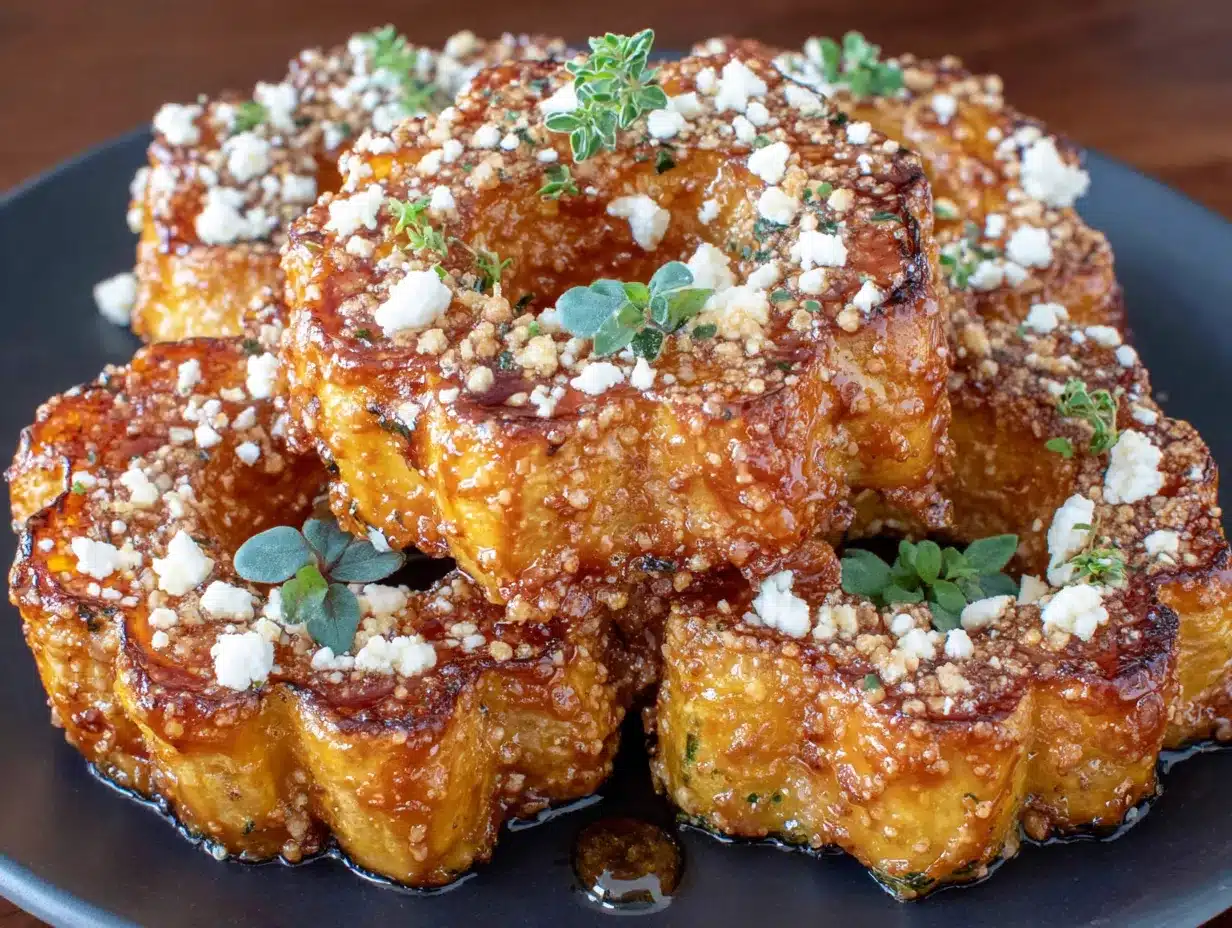
I figured roasting squash meant soft, mushy cubes. It took about one bite of these crispy-edged, caramelized rings for that assumption to fall apart completely. Honestly, the first time I made delicata squash, I treated it like any other winter vegetable—peeled, cubed, and tossed into a hot oven. The result was fine. But fine is not what we are after here.
This recipe happened by accident on a chilly Tuesday when I had a single delicata squash, a bottle of maple syrup I was about to finish, and zero patience for peeling. I sliced it into rings—just out of sheer laziness—and figured I would deal with the skin later. Then I forgot to flip them halfway through. By the time I pulled the tray out, the edges were dark, crispy, and almost candied. That mistake? It became the whole point.
The feta came next. I had some leftover from a salad, and I crumbled it over the hot rings out of instinct. The salty tang against the sweet, caramelized squash was the kind of pairing that makes you wonder why you ever bothered with complicated side dishes. These crispy maple roasted delicata squash rings are now my go-to for fall dinners, holiday tables, and even lazy Sunday snacks. They look fancy, but let’s be real—they are the result of being too tired to follow the rules.
That is the thing about cooking sometimes. You do not need a perfect plan. You just need a hot oven, a good squash, and the willingness to let things get a little crispy on the edges. Trust me on this one.
Why You’ll Love This Recipe
Let me tell you why these crispy maple roasted delicata squash rings have become my most-requested side dish. I have tested this recipe at least a dozen times, tweaking temperatures and timing until every ring comes out with that perfect balance of tender interior and caramelized, almost crunchy edge.
- Quick & Easy: From counter to table in under 30 minutes. No peeling, no complicated prep, and minimal cleanup. Perfect for those evenings when you need something impressive without the effort.
- Simple Ingredients: You probably have everything already. Maple syrup, olive oil, salt, pepper, and feta. That is it. No fancy grocery store trips required.
- Perfect for Fall Gatherings: These rings disappear fast at Thanksgiving, Friendsgiving, or any cozy dinner party. They bring that rustic, seasonal charm without stealing the spotlight from the main dish.
- Crowd-Pleaser: I have served these to picky eaters, vegetable skeptics, and full-on squash haters. Every single person went back for seconds. The crispy edges win them over every time.
- Unbelievably Delicious: The texture is what gets you. The maple syrup caramelizes at high heat, creating a sticky-sweet coating that turns almost crunchy at the edges. Then the salty, creamy feta cuts through all that sweetness. It is comfort food that feels a little bit fancy.
What makes this recipe different from the dozens of roasted squash recipes out there? It is the technique. Roasting the rings in a single layer at high heat without flipping them halfway creates that deep, concentrated caramelization on one side. You get a texture contrast that most roasted squash recipes miss entirely. Plus, the combination of sweet maple and salty feta is honestly genius—and I say that as someone who usually avoids claiming anything is genius.
This is the kind of dish that makes you close your eyes after the first bite. It is simple, seasonal, and soul-satisfying in a way that feels almost unfair for how little work it requires.
What Ingredients You Will Need
This recipe uses simple, wholesome ingredients to deliver bold flavor and satisfying texture without the fuss. Most are pantry staples, and the few fresh items are easy to find at any grocery store during fall and winter.
- Delicata squash (2 medium, about 1.5 lbs total) – Look for squash that feels heavy for its size with firm, unblemished skin. You do not need to peel delicata—the skin is thin, tender, and perfectly edible once roasted. (I prefer organic when possible since you eat the skin.)
- Pure maple syrup (3 tablespoons) – Use real maple syrup, not pancake syrup. The flavor is deeper and less cloying. Grade A dark amber works beautifully here for a more pronounced maple taste. (I like the brand Runamok for its rich, woodsy notes.)
- Extra-virgin olive oil (2 tablespoons) – Helps the maple syrup spread evenly and promotes browning. A good-quality olive oil adds subtle fruity notes, but any neutral oil works in a pinch.
- Kosher salt (1 teaspoon) – I use Diamond Crystal. If using fine sea salt, reduce to 3/4 teaspoon. Salt is crucial here—it balances the sweetness and prevents the dish from tasting cloying.
- Freshly ground black pepper (1/2 teaspoon) – Adds a mild warmth that complements the maple. Do not skip it.
- Feta cheese (4 ounces, crumbled) – Use block feta packed in brine, not pre-crumbled. The texture is creamier, and the flavor is saltier and more complex. I prefer sheep’s milk feta from Greece for its tangy, bold profile. (Valley Shepherd Creamery makes an excellent domestic version if you cannot find imported.)
- Fresh parsley or thyme (optional, for garnish) – A sprinkle of fresh herbs adds color and a bright, herbaceous note that lifts the richness. Flat-leaf parsley or fresh thyme both work well.
- Red pepper flakes (optional, for garnish) – A tiny pinch adds a subtle heat that plays beautifully against the sweet maple and salty feta. Totally optional but highly recommended if you like a little kick.
Substitution Notes: If you cannot find delicata squash, acorn squash or butternut squash work as substitutes. For acorn, slice into rings and peel if the skin feels tough. For butternut, peel first and cut into 1/2-inch half-moons. Use coconut sugar or honey instead of maple syrup if needed, though the flavor profile will shift slightly. For a dairy-free version, omit the feta or use a plant-based feta alternative.
Equipment Needed
You do not need much for this recipe, which is part of its charm. Here is what you will need:
- Baking sheet (half-sheet pan, 18×13 inches) – A heavy-duty, rimmed baking sheet prevents warping at high heat and promotes even browning. I use Nordic Ware aluminum sheets—they are affordable and last forever.
- Parchment paper or silicone baking mat – Lining the pan prevents sticking and makes cleanup effortless. Parchment is my preference for the crispiest results.
- Sharp chef’s knife (8-inch) – A good knife makes slicing the squash into even rings much easier and safer. Dull knives are more dangerous than sharp ones.
- Cutting board – Any sturdy board works. I prefer wood for vegetables.
- Small bowl – For whisking together the maple syrup and olive oil.
- Whisk or fork – To emulsify the maple-olive oil mixture.
- Measuring spoons – For accurate measurements of maple syrup, oil, salt, and pepper.
- Pastry brush (optional) – Useful for evenly brushing the maple mixture onto the squash rings, though you can also drizzle and toss with your hands.
- Spatula – For transferring the hot rings from the baking sheet to a serving platter.
Budget-friendly tip: If you do not own a pastry brush, simply whisk the maple mixture in a large bowl, add the squash rings, and toss gently with your hands until evenly coated. Works perfectly and saves you a gadget.
Preparation Method
Let me walk you through this step by step. The timing is forgiving, but the technique matters for that perfect crispy edge.
- Preheat your oven to 425°F (220°C). Place a rack in the middle position. Getting the oven fully hot before the squash goes in is non-negotiable for caramelization. Give it a full 15-20 minutes to preheat.
- Line a large baking sheet with parchment paper. Do not skip this step. The maple syrup will caramelize and stick to bare metal, making cleanup a nightmare. Parchment saves you.
- Prepare the squash. Wash the delicata squash thoroughly under cool water. Pat dry with a clean towel. Trim off the very ends (about 1/4 inch from each tip). Cut the squash crosswise into 1/2-inch thick rings. You should get about 10-12 rings per squash, depending on size. Use a spoon to scoop out the seeds and stringy pulp from the center of each ring. (Save the seeds—you can roast them separately with salt for a crunchy snack.)
- Make the maple mixture. In a small bowl, whisk together 3 tablespoons maple syrup, 2 tablespoons olive oil, 1 teaspoon kosher salt, and 1/2 teaspoon black pepper. Whisk until the mixture looks slightly thickened and emulsified, about 30 seconds.
- Coat the squash rings. Place the cleaned rings in a large bowl. Pour the maple mixture over them. Use your hands (clean, of course) to gently toss and massage the mixture into every surface of the rings. Make sure both sides are evenly coated. Let them sit for 2-3 minutes if you have time—this allows the salt to start drawing out a bit of moisture, which concentrates flavor.
- Arrange on the baking sheet. Place the rings in a single layer on the prepared baking sheet. Do not overcrowd—leave at least 1/2 inch between each ring. If they touch, they will steam instead of caramelize. Work in batches if necessary. (Honestly, I have tried cramming them all on one sheet, and the results are always disappointing. Use two sheets if you need to.)
- Roast without flipping. Place the baking sheet in the preheated oven. Roast for 18-22 minutes, rotating the pan halfway through for even browning. Here is the key: do not flip the rings. I know that goes against every roasting instinct you have. But leaving them untouched allows one side to develop deep, crispy caramelization while the other side stays tender. The rings should be golden brown and slightly charred at the edges when done. The centers should be fork-tender but not mushy.
- Check for doneness. At the 18-minute mark, peek at the rings. They should be deeply browned on the bottom edges and look almost candied. Pierce the thickest part of a ring with a fork—it should slide in easily with slight resistance. If the fork goes in like butter, you have gone too far. Pull them out immediately.
- Add the feta. Transfer the hot rings to a serving platter. While they are still steaming, crumble the feta cheese evenly over the top. The residual heat will soften the feta slightly, making it creamy without melting it completely. This contrast—warm, crispy squash and cool, salty feta—is what makes the dish unforgettable.
- Garnish and serve. Sprinkle fresh parsley or thyme over the top if using. Add a tiny pinch of red pepper flakes for heat if desired. Serve immediately while the rings are still warm and crispy. They lose their crunch as they cool, so eat them right away.
Sensory cues: Your kitchen should smell like caramelized sugar and roasted squash by minute 15. The edges of the rings will look dark and almost burnt in spots—that is good. The feta should look like little white and cream pillows scattered across the golden rings. When you take a bite, you should hear a slight crunch before the tender interior gives way, followed by the salty tang of feta melting against the sweet squash.
Cooking Tips & Techniques
I have made this recipe enough times to know exactly where things can go wrong. Here is what I have learned the hard way so you do not have to.
The biggest mistake I made early on was flipping the rings halfway through. I know, I know—every roasting recipe tells you to flip for even cooking. But with this particular dish, flipping prevents that deep, almost crunchy caramelization from forming. The side that sits against the hot pan gets direct heat contact, which is what creates that candy-like edge. Trust the process. Leave them alone.
Another failure I want to save you from: using too much maple syrup. I got excited the first time and doubled the amount, thinking more sweetness equals more flavor. It does not. The excess syrup pools around the rings and steams them instead of caramelizing. You end up with soggy, sticky rings instead of crispy ones. Stick to the measurements. The 3 tablespoons is enough to coat the rings in a thin, even layer that caramelizes beautifully.
Timing strategy: Start checking at 18 minutes if your oven runs hot. Every oven is different—mine took exactly 20 minutes for perfect results. If the rings are not deeply browned at 20 minutes, give them 2 more minutes and check again. But watch closely after 22 minutes; they can go from perfect to burnt quickly.
Multitasking tip: While the squash roasts, prep your feta and garnish. Crumble the feta into a small bowl and chop your herbs. That way, when the rings come out of the oven, you can dress them immediately while they are still hot. The timing works out perfectly—you will have everything ready by the time the timer goes off.
For the crispiest results, make sure your squash rings are as dry as possible before adding the maple mixture. Excess moisture from washing can dilute the coating and prevent caramelization. Pat them dry thoroughly with a clean kitchen towel after cleaning out the seeds.
Variations & Adaptations
This recipe is wonderfully flexible. Here are some variations I have tried and loved:
- Savory Herb Version: Add 1 teaspoon dried rosemary or 1/2 teaspoon dried thyme to the maple mixture before tossing. The herbal notes add depth and make the rings feel more savory, perfect alongside roasted chicken or pork. I made this version for a Sunday dinner and my brother-in-law asked for the recipe three times.
- Spicy Maple Version: Whisk 1/2 teaspoon smoked paprika and 1/4 teaspoon cayenne pepper into the maple mixture. The heat builds slowly and pairs beautifully with the sweet maple and salty feta. This is my personal favorite for fall gatherings when I want something with a little kick.
- Vegan Version: Omit the feta entirely or use a plant-based feta alternative. I have tried this with a cashew-based feta from a local brand, and it was surprisingly good. The dish still works beautifully without cheese—the caramelized squash rings are delicious on their own.
- Balsamic Glaze Finish: After roasting, drizzle a teaspoon of balsamic glaze over the rings before adding the feta. The tangy-sweet balsamic adds another layer of complexity that complements the maple beautifully. This version feels more sophisticated and works well for dinner parties.
- Different Squash Options: As mentioned earlier, acorn squash or butternut squash are good substitutes. For acorn, peel if the skin feels tough. For butternut, peel and cut into 1/2-inch half-moons. Adjust roasting time as needed—butternut may take 2-3 minutes longer.
I have also tried roasting the rings on a wire rack set inside the baking sheet. This allows hot air to circulate underneath, which creates even crispier edges. The downside is that some of the maple mixture drips off, so the flavor is slightly less intense. Worth trying if you prioritize crunch over sweetness.
Serving & Storage Suggestions
These crispy maple roasted delicata squash rings are best served immediately, straight from the oven. That is when the edges are at their crispiest and the feta is perfectly softened by the residual heat. Serve them warm on a large platter, arranged in a single layer so they do not steam each other.
What to serve alongside: These rings pair beautifully with roasted chicken, grilled pork chops, or a simple seared steak. They also work well alongside other fall sides like roasted Brussels sprouts or a crisp apple and arugula salad. For a vegetarian main, serve them over a bed of warm quinoa or farro with a drizzle of tahini dressing. I have even piled them onto a hearty grain bowl for lunch, and it was fantastic.
Beverage pairings: A dry Riesling or a light Pinot Noir complements the sweetness of the maple without overwhelming the dish. For non-alcoholic options, try a sparkling apple cider or a ginger beer with a squeeze of lime.
Storage: Leftover rings can be stored in an airtight container in the refrigerator for up to 3 days. However, I have to be honest—they will lose their crispiness. The texture becomes softer and more tender, like roasted squash without the crunch. They are still delicious, just different.
Reheating: To restore some crispiness, reheat the rings in a 400°F (200°C) oven for 5-7 minutes on a parchment-lined baking sheet. Do not use the microwave—it will make them soggy. Add fresh feta after reheating, as the old feta will have dried out.
Flavor development: Interestingly, the maple flavor deepens and becomes more pronounced after a day in the fridge. If you have leftovers, do not be surprised if they taste even sweeter and more caramelized the next day. The texture may change, but the flavor only gets better.
Nutritional Information & Benefits
Here is the estimated nutritional breakdown per serving (about 1/4 of the recipe, roughly 4-5 rings with feta):
- Calories: Approximately 220-250
- Total Fat: 12g (4g saturated)
- Carbohydrates: 28g (6g fiber, 16g sugar)
- Protein: 6g
- Sodium: 520mg
- Vitamin A: 120% of Daily Value
- Vitamin C: 25% of Daily Value
- Calcium: 15% of Daily Value
- Iron: 8% of Daily Value
Health benefits: Delicata squash is packed with beta-carotene, which your body converts to vitamin A for healthy vision and immune function. It is also a good source of fiber, which supports digestive health and keeps you feeling full. The feta adds calcium and protein, while the olive oil provides heart-healthy monounsaturated fats. Maple syrup contains antioxidants and minerals like zinc and manganese, though it is still sugar—so enjoy in moderation.
Dietary considerations: This recipe is naturally gluten-free and vegetarian. For a vegan version, omit the feta. It is also relatively low in calories for a side dish, making it a great option for those watching their intake. The main allergens are dairy (feta) and potentially tree nuts if using a nut-based feta alternative.
I personally love that this dish feels indulgent but is actually packed with nutrients. It is the kind of recipe that satisfies your cravings for something sweet and savory while still being good for you. Balance, right?
Conclusion
These crispy maple roasted delicata squash rings with feta are proof that the best recipes often come from happy accidents. What started as a lazy Tuesday experiment has become my most-requested fall side dish, and I think once you try them, they will become yours too. The combination of sweet, caramelized edges, tender squash centers, and salty, creamy feta is genuinely hard to beat.
I encourage you to make this recipe your own. Add extra spice, swap the herbs, or try it with a different squash variety. The technique is forgiving, and the results are always delicious. And if you forget to flip them—well, that is exactly how this whole thing started.
I would love to hear how yours turn out. Did you add something unexpected? Did your family go back for seconds? Drop a comment below and let me know. And if you are looking for another crowd-pleasing dish, check out these mini lemon blueberry cheesecakes for a sweet finish to your fall gathering. Happy cooking, friends—and do not be afraid to let things get a little crispy around the edges.
Frequently Asked Questions
Can I use butternut squash instead of delicata?
Yes, absolutely. Butternut squash works well as a substitute. Just peel it first, cut it into 1/2-inch half-moons or cubes, and adjust the roasting time by 2-3 minutes since butternut is denser. The skin of butternut is too tough to eat, unlike delicata.
Do I have to peel delicata squash?
No, that is one of the best things about delicata squash. The skin is thin, tender, and completely edible once roasted. It adds a slight chewiness and extra fiber. Just wash the squash thoroughly before slicing.
Can I make this recipe ahead of time?
You can prep the squash rings up to a day in advance—slice them, remove the seeds, and store them in an airtight container in the refrigerator. However, I recommend roasting them just before serving for the best crispy texture. Leftovers are good but not as crunchy.
Why did my squash rings turn out soggy?
This usually happens for one of three reasons: overcrowding the baking sheet, using too much maple syrup, or not preheating the oven fully. Make sure your rings are in a single layer with space between them, stick to the 3 tablespoons of syrup, and let your oven come to full temperature before roasting.
Can I freeze roasted delicata squash rings?
I do not recommend freezing these rings. The texture changes significantly upon thawing—they become mushy and lose all their crispiness. If you have leftovers, store them in the refrigerator and reheat in the oven for best results. For longer storage, freeze the raw, sliced squash rings and roast them fresh when needed.
For more delicious recipes and cooking inspiration, browse our full collection of recipes.
Pin This Recipe!
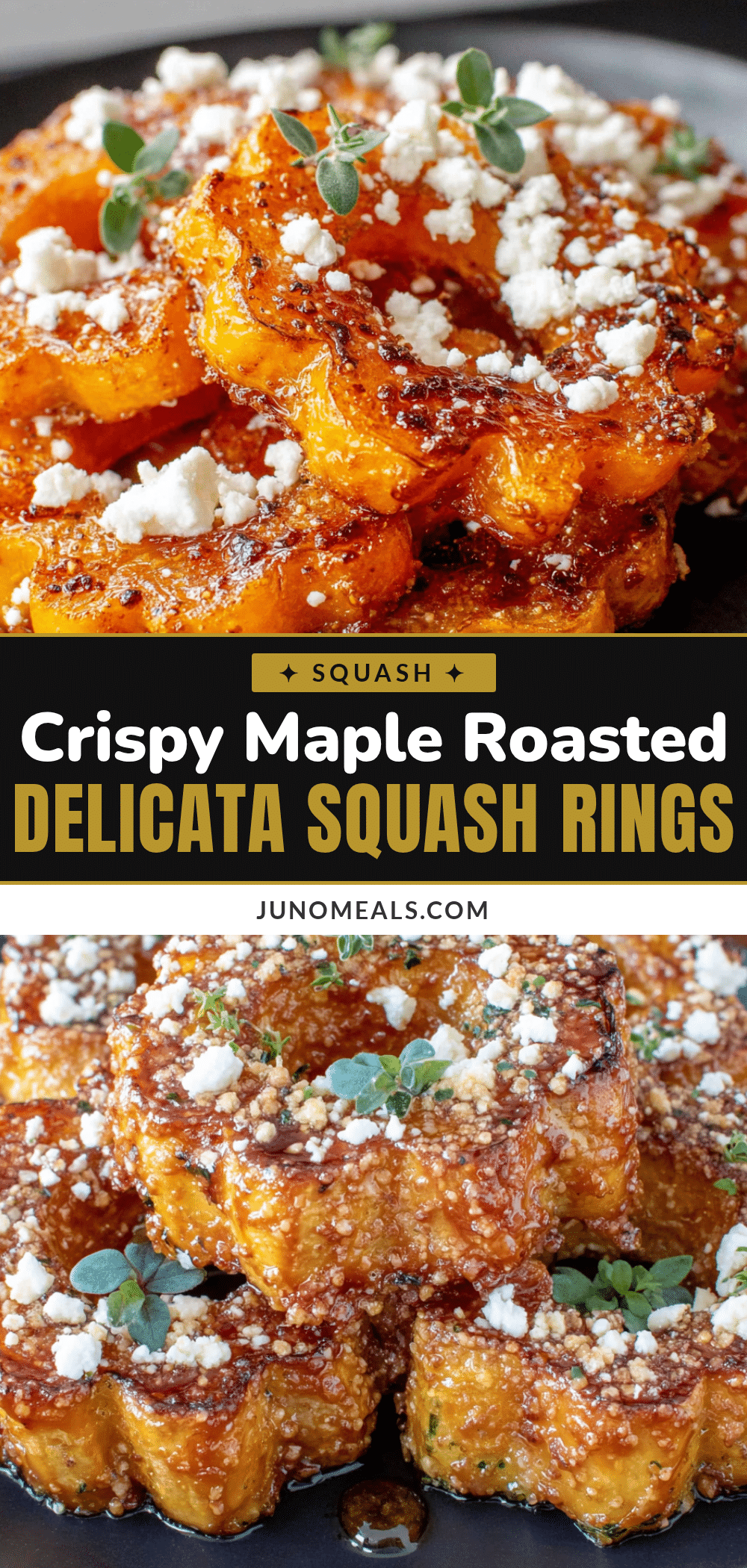
Easy Maple Roasted Delicata Squash Rings with Feta
Crispy-edged, caramelized delicata squash rings roasted with maple syrup and topped with salty feta cheese. A quick and easy fall side dish that’s perfect for weeknight dinners or holiday gatherings.
- Prep Time: 15 minutes
- Cook Time: 20 minutes
- Total Time: 35 minutes
- Yield: 4 servings 1x
- Category: Side Dish
- Cuisine: American
Ingredients
- 2 medium delicata squash (about 1.5 lbs total)
- 3 tablespoons pure maple syrup
- 2 tablespoons extra-virgin olive oil
- 1 teaspoon kosher salt (Diamond Crystal; reduce to 3/4 teaspoon if using fine sea salt)
- 1/2 teaspoon freshly ground black pepper
- 4 ounces feta cheese (block packed in brine, crumbled)
- Fresh parsley or thyme (optional, for garnish)
- Red pepper flakes (optional, for garnish)
Instructions
- Preheat your oven to 425°F (220°C). Place a rack in the middle position. Give it a full 15-20 minutes to preheat.
- Line a large baking sheet with parchment paper.
- Wash the delicata squash thoroughly under cool water. Pat dry. Trim off the very ends (about 1/4 inch from each tip). Cut the squash crosswise into 1/2-inch thick rings. Use a spoon to scoop out the seeds and stringy pulp from the center of each ring.
- In a small bowl, whisk together 3 tablespoons maple syrup, 2 tablespoons olive oil, 1 teaspoon kosher salt, and 1/2 teaspoon black pepper until slightly thickened and emulsified, about 30 seconds.
- Place the cleaned rings in a large bowl. Pour the maple mixture over them. Use your hands to gently toss and massage the mixture into every surface of the rings. Let them sit for 2-3 minutes if time allows.
- Arrange the rings in a single layer on the prepared baking sheet, leaving at least 1/2 inch between each ring. Do not overcrowd.
- Roast for 18-22 minutes, rotating the pan halfway through. Do not flip the rings. The rings should be golden brown and slightly charred at the edges when done. The centers should be fork-tender but not mushy.
- Transfer the hot rings to a serving platter. While still steaming, crumble the feta cheese evenly over the top.
- Sprinkle fresh parsley or thyme over the top if using. Add a tiny pinch of red pepper flakes for heat if desired. Serve immediately while warm and crispy.
Notes
Do not flip the rings during roasting to achieve deep caramelization. For the crispiest results, ensure squash rings are dry before adding the maple mixture. Leftovers can be stored in an airtight container in the refrigerator for up to 3 days; reheat in a 400°F oven for 5-7 minutes to restore some crispiness.
Nutrition
- Serving Size: 1/4 of recipe (about
- Calories: 235
- Sugar: 16
- Sodium: 520
- Fat: 12
- Saturated Fat: 4
- Carbohydrates: 28
- Fiber: 6
- Protein: 6
Keywords: delicata squash, maple roasted squash, feta, fall side dish, easy roasted vegetables, vegetarian, gluten-free