Last October, I was at the farmers’ market, staring at a bin of acorn squash like they were a puzzle I couldn’t solve. I’d bought one the week before, roasted it in wedges, and honestly, it was fine. Just fine. Nothing to write home about. A woman next to me, maybe in her seventies, was picking through the pile with real intention. She watched me hesitate for a second and didn’t say anything at first. Then she picked up a perfect little green-and-orange striped squash, turned it over in her hands, and said, “You know, the trick isn’t in the squash itself. It’s in how you cut it.” She showed me how to slice off the top and bottom, scoop out the seeds, and then cut the whole thing into thick rings. “The rings,” she said, “they cook more evenly. And they look pretty on the plate, which never hurts.”
I went home with three squash and a new way of thinking. That conversation at the market stuck with me, not just because of the tip, but because of how she shared it — like she was letting me in on a secret she’d figured out over many autumns. I tried her method that same afternoon, and let me tell you, it was a game-changer. The rings caramelized beautifully, every single one of them, and they felt special in a way wedges never did. I’ve been making them ever since, tweaking the seasoning until I landed on this cozy maple version that practically screams fall. Maybe you’ve been there, too — stuck in a cooking rut with a vegetable you *want* to love but just haven’t figured out yet. This recipe is for that moment.
The first time I made these maple roasted acorn squash rings, I actually burned the maple syrup a little. The kitchen smelled amazing, but the edges were a bit too dark, and I had to scrape a few off the pan. It was a mess, honestly. But that tiny failure taught me exactly when to add the syrup (hint: not at the very beginning). Now, these rings come out perfectly every time — tender in the middle, caramelized at the edges, and coated in a glaze that tastes like autumn in a bite. This is the recipe that made me fall in love with acorn squash, and I have a feeling it might do the same for you.
Why You’ll Love This Recipe
Let me tell you why these cozy maple roasted acorn squash rings have become my go-to fall side dish. I’ve tested this recipe more times than I can count, tweaking the temperature, the timing, and the glaze ratio until everything clicked. It’s the kind of dish that makes you look like a kitchen pro without actually having to work that hard.
- Quick & Easy: These rings come together in about 35 minutes, most of which is hands-off oven time. Perfect for busy weeknights when you still want something that feels special.
- Simple Ingredients: You probably have most of these in your kitchen right now. No fancy grocery runs needed — just a squash, some pantry staples, and a little maple syrup.
- Perfect for Fall Gatherings: Whether it’s a Thanksgiving side dish, a cozy Sunday dinner, or a weeknight meal that needs a veggie boost, these rings fit right in.
- Crowd-Pleaser: I’ve served these to picky kids and foodie adults, and they disappear every time. Something about the ring shape makes them fun to eat, too.
- Unbelievably Delicious: The combination of sweet maple syrup, warm cinnamon, and a touch of cayenne creates a flavor that’s cozy, complex, and completely addictive.
What makes this recipe different from all the other roasted squash recipes out there? It’s the ring shape, honestly. Cutting the squash into rings instead of wedges means every piece cooks evenly and gets that gorgeous caramelized edge. Plus, the glaze is perfectly balanced — not too sweet, not too savory. It’s the kind of dish that makes you close your eyes after the first bite, wondering why you didn’t try this sooner. This isn’t just another roasted vegetable recipe. It’s the one that’ll earn a permanent spot in your fall rotation.
What Ingredients You Will Need
This recipe uses simple, wholesome ingredients to deliver bold flavor and satisfying texture without the fuss. Most of these are pantry staples, especially if you cook seasonally in the fall. Here is everything you will need:
- Acorn squash, 2 medium (about 1.5 pounds each) — Look for squash that feels heavy for its size with firm, unblemished skin. The green-and-orange striped ones are perfectly ripe. (I find the medium ones are easiest to cut into rings.)
- Pure maple syrup, 3 tablespoons — Use the real stuff, not pancake syrup. Grade A dark amber works beautifully here. (I prefer Maple Grove Farms for its rich flavor.)
- Olive oil, 2 tablespoons — Extra virgin gives the best flavor, but regular olive oil works fine. Avocado oil is a great neutral substitute.
- Butter, 1 tablespoon, melted — Unsalted is best so you can control the salt level. For a dairy-free version, use vegan butter or just increase the olive oil by a tablespoon.
- Brown sugar, 1 tablespoon, packed — Light or dark brown sugar both work. Dark adds a deeper molasses flavor that pairs beautifully with the maple.
- Ground cinnamon, 1 teaspoon — This is the cozy spice that makes these rings taste like fall. Fresh cinnamon has a stronger aroma, so check your jar’s date if it’s been sitting around.
- Ground nutmeg, ¼ teaspoon — Freshly grated is amazing if you have it, but pre-ground works perfectly fine.
- Cayenne pepper, ⅛ teaspoon — This is optional but highly recommended. It doesn’t make the rings spicy; it just adds a little warmth that makes the sweetness pop. (I use Spice Islands for consistent heat.)
- Salt, ½ teaspoon — Fine sea salt or kosher salt both work. Flaky salt for finishing is nice but not necessary.
- Fresh thyme, 4-5 sprigs — Optional but lovely for garnish and a subtle herbal note. Rosemary works well too.
- Pecans or walnuts, ¼ cup, chopped — Optional for topping. Toasting them first brings out their nutty flavor. (I always toast mine in a dry pan for 2-3 minutes before adding.)
For substitutions, you can swap the maple syrup with honey or agave nectar, though the flavor will shift slightly. If you are avoiding sugar, a sugar-free maple syrup alternative works, but the texture might be a bit less glossy. The brown sugar can be omitted if you want a less sweet version — just add an extra tablespoon of maple syrup instead. And if cayenne isn’t your thing, leave it out or swap it with a pinch of smoked paprika for a different kind of warmth.
Equipment Needed
You do not need much for this recipe, which is part of its charm. Here is what you will want to have on hand:
- Sharp chef’s knife — Acorn squash is tough, so a good knife makes all the difference. A 8-inch chef’s knife is perfect. (I use a Victorinox Fibrox — affordable and stays sharp.)
- Cutting board — A sturdy one that won’t slip. Place a damp paper towel underneath to keep it steady while you cut.
- Large baking sheet — A rimmed baking sheet works best to catch any glaze drips. Half-sheet size (18×13 inches) is ideal for fitting all the rings in a single layer.
- Parchment paper or silicone baking mat — This prevents sticking and makes cleanup effortless. If you don’t have either, lightly grease the pan.
- Mixing bowl — Small to medium size for whisking the glaze.
- Whisk or fork — For combining the glaze ingredients.
- Pastry brush — Optional but helpful for evenly coating the rings with the glaze. A spoon works too.
- Measuring spoons — For accurate measurements, especially with the spices.
- Vegetable peeler — Optional. Some people like to peel the squash, but I leave the skin on — it softens during roasting and is completely edible.
If you do not have a pastry brush, do not worry. Just use a spoon to drizzle the glaze over the rings and then rub it in with your fingers. It is a little messier, but it works just as well. And if your baking sheet is smaller, you can use two sheets or roast in batches — just make sure the rings are in a single layer so they caramelize properly.
Preparation Method
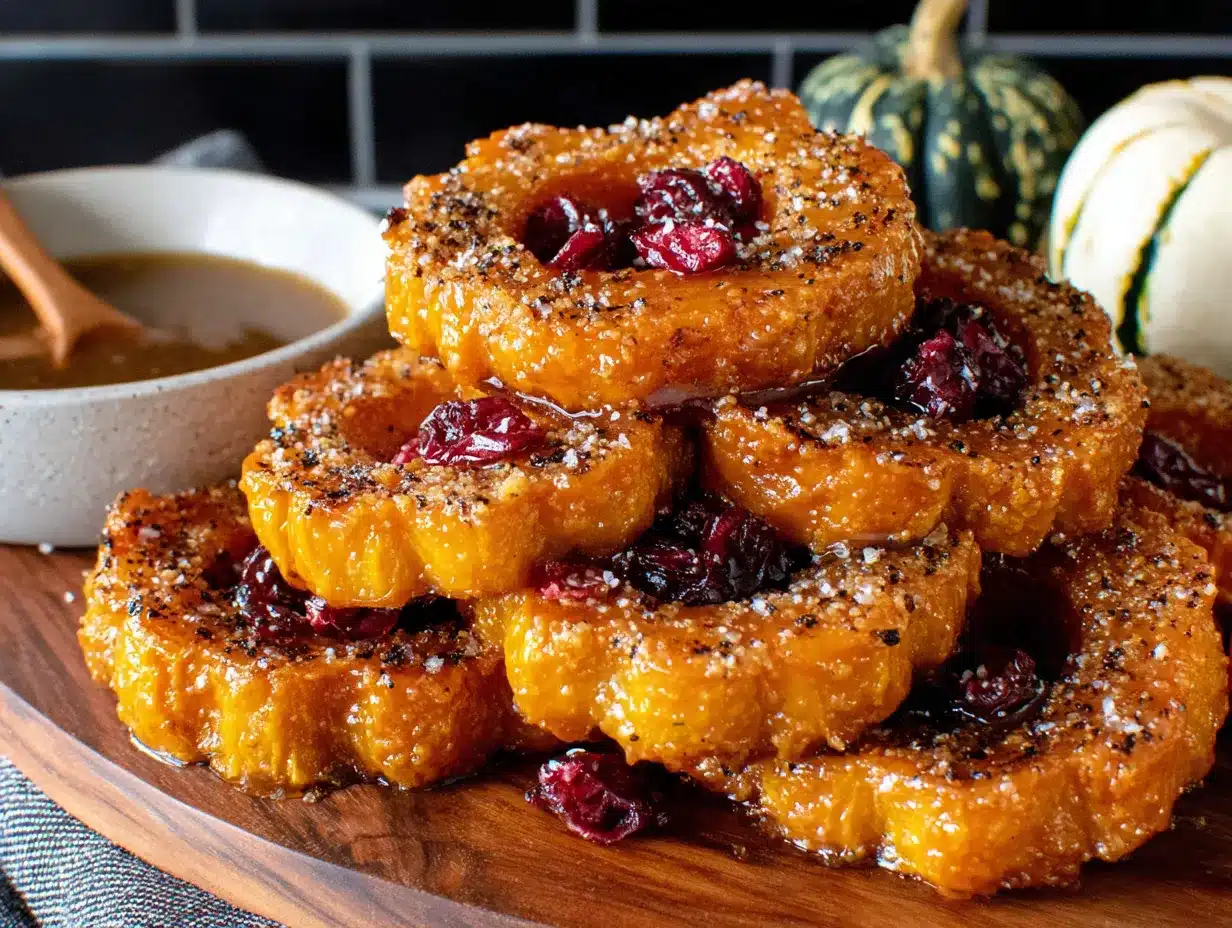
Here is how to make these cozy maple roasted acorn squash rings from start to finish. Follow these steps, and you will have a gorgeous side dish that tastes like autumn on a plate.
- Preheat your oven to 400°F (200°C). Line a large baking sheet with parchment paper or a silicone baking mat. This makes cleanup so much easier and prevents the glaze from sticking.
- Prepare the squash. Using a sharp chef’s knife, carefully cut off about ¼ inch from the top and bottom of each acorn squash. This creates flat surfaces so the squash sits steady. Then, slice the squash crosswise into rings about ½ to ¾ inch thick. You should get about 4-5 rings per medium squash. Use a spoon or your fingers to scoop out the seeds and stringy pulp from the center of each ring. (Save the seeds — you can roast them later for a snack!)
- Arrange the rings. Place the squash rings in a single layer on the prepared baking sheet. Do not overcrowd them — leave a little space between each ring so they caramelize instead of steam. If they are touching, they will release water and get soggy.
- Make the glaze. In a small bowl, whisk together the maple syrup, olive oil, melted butter, brown sugar, cinnamon, nutmeg, cayenne (if using), and salt. Whisk until the brown sugar is mostly dissolved and everything is well combined. Taste it — it should be sweet with a hint of warmth from the cayenne.
- Glaze the rings. Using a pastry brush or a spoon, coat both sides of each squash ring with the glaze. Do not be shy — really work it into the ridges. Reserve about a tablespoon of the glaze for brushing on halfway through roasting.
- Roast for 20 minutes. Place the baking sheet in the preheated oven and roast the rings for 20 minutes. The edges should start to look golden and caramelized.
- Flip and glaze again. Carefully flip each ring using a spatula. Brush the reserved glaze over the tops. If you are using fresh thyme sprigs, tuck them between the rings on the pan — the heat will release their oils and infuse the squash with herbal flavor.
- Roast for another 10-15 minutes. Return the pan to the oven and roast until the rings are tender when pierced with a fork and the edges are deeply caramelized. The total roasting time is usually 30-35 minutes, but it can vary depending on the thickness of your rings and your oven. Start checking at the 25-minute mark.
- Optional: Add nuts. In the last 3 minutes of roasting, sprinkle the chopped pecans or walnuts over the rings if using. This toasts them lightly without burning.
- Rest and serve. Let the rings cool on the pan for 2-3 minutes. This allows the glaze to set slightly. Transfer to a serving platter, garnish with fresh thyme or a sprinkle of flaky salt, and serve warm.
A few things to watch for: If your rings are thinner than ½ inch, reduce the roasting time by 5 minutes. If they are thicker than ¾ inch, add 5-10 minutes. The squash should be fork-tender but not mushy. And here is a trick I learned the hard way — do not skip the flipping step. It ensures both sides get that beautiful caramelization. The first time I made these, I left them untouched for the whole roasting time, and the bottoms got a little too dark while the tops stayed pale. Flipping makes all the difference.
Cooking Tips & Techniques
Over the years, I have made these maple roasted acorn squash rings more times than I can count, and I have picked up a few tricks that make the process smoother and the results more consistent. Let me share what I have learned.
Cutting the squash safely. Acorn squash is tough, and its round shape makes it tricky to cut. Here is my method: First, microwave the whole squash for 1-2 minutes. This softens the skin just enough to make cutting easier. Then, cut a thin slice off the bottom to create a flat, stable base. Always use a sharp knife — a dull one is more dangerous because it can slip. And keep your fingers curled under like a claw while you slice. I have a small scar on my thumb from a knife slip years ago, so trust me on this one.
Getting the perfect caramelization. The secret to deeply caramelized edges is patience. Do not rush the roasting process by cranking up the heat. At 400°F, the natural sugars in the squash and the maple syrup slowly concentrate and brown, creating that gorgeous golden crust. If you add the maple syrup at the very beginning, it can burn before the squash is tender. That is why I recommend brushing on the glaze, roasting for 20 minutes, then flipping and glazing again. This two-step method gives you tender squash with perfectly caramelized edges every time.
Common mistakes to avoid. The biggest one is overcrowding the pan. If the rings are touching, they release steam and end up soggy instead of caramelized. Give them space. Another mistake is skipping the flip — both sides need direct contact with the hot pan to caramelize evenly. And do not forget to check your oven temperature. Ovens can run hot or cold, so an oven thermometer is a cheap investment that saves a lot of frustration.
Multitasking tips. While the squash roasts, you can prep the rest of your meal. These rings pair beautifully with roasted chicken, pork chops, or a hearty grain salad. I often make them alongside a simple sheet pan dinner — toss some chicken thighs and Brussels sprouts on another pan, and everything finishes around the same time. The total hands-on time for this recipe is only about 10 minutes, so you have plenty of time to focus on other dishes.
Consistency tips. For the most consistent results, try to cut your rings the same thickness. Uneven rings will cook at different rates, with thinner ones drying out while thicker ones stay undercooked. I use a ruler the first time I make a new recipe, but after a few rounds, you will develop an eye for it. And always taste a piece before you serve — squash can vary in sweetness depending on the season and how it was stored, so you might want to adjust the salt or a final drizzle of maple syrup.
Variations & Adaptations
One of the best things about this recipe is how adaptable it is. Here are some variations I have tried and loved, plus a few ideas you can experiment with on your own.
Savory version. Skip the maple syrup and brown sugar, and instead toss the rings with olive oil, garlic powder, smoked paprika, and a pinch of red pepper flakes. Roast the same way, and you will have a savory side that pairs beautifully with grilled meats or roasted fish. I made this version for a summer barbecue, and it was a hit — the smoky paprika gave the squash an almost bacon-like depth.
Herb-infused version. Add 2-3 sprigs of fresh rosemary or sage to the baking sheet while the rings roast. The herbs release their oils into the hot oven, infusing the squash with a subtle earthy aroma. I like to crumble a few dried sage leaves over the rings before serving for an extra pop of flavor. This version is especially good alongside roast turkey or pork tenderloin.
Spicy maple version. Double the cayenne pepper to ¼ teaspoon, and add a pinch of ground ginger and allspice. The heat builds slowly, warming your mouth without overwhelming the sweetness. I once served this version at a Friendsgiving dinner, and people could not stop talking about it. The secret is balancing the heat with enough maple syrup so it is not just spicy — it is complex.
Vegan adaptation. Replace the butter with an extra tablespoon of olive oil or vegan butter. The recipe is naturally dairy-free with that simple swap. I have tested it with both, and honestly, I cannot tell the difference. The olive oil version has a slightly fruitier flavor, which pairs nicely with the maple.
Different squash options. If you cannot find acorn squash, butternut squash works beautifully too. Cut it into ½-inch thick rounds (peeled first) and follow the same instructions. Delicata squash is another great option — its skin is thinner and even more tender when roasted, so you can eat it without any hesitation. Just adjust the roasting time slightly since delicata cooks a little faster.
My personal favorite variation. I once added a tablespoon of bourbon to the glaze, and let me tell you, it was incredible. The bourbon adds a smoky, vanilla-like depth that complements the maple perfectly. Just be careful — the alcohol burns off during roasting, so you are left with just the flavor. I only do this version when I am feeling a little extra, but it is always worth it.
Serving & Storage Suggestions
These cozy maple roasted acorn squash rings are versatile enough to fit into any meal. Here is how to serve and store them for the best experience.
Serving temperature and presentation. Serve the rings warm, right out of the oven, when the glaze is still glossy and the edges are perfectly caramelized. Arrange them on a platter in a single layer, slightly overlapping for a beautiful presentation. Garnish with a few fresh thyme leaves, a sprinkle of flaky salt, and some toasted pecans or walnuts. They look stunning as a side dish on a Thanksgiving table or alongside a simple weeknight roast chicken.
Complementary dishes and beverages. These rings pair beautifully with roasted meats like chicken, turkey, pork chops, or even a seared steak. For a vegetarian meal, serve them over a bed of wild rice or quinoa with a handful of arugula and a drizzle of balsamic glaze. A crisp apple cider or a dry Riesling complements the sweetness of the maple without overpowering it. For a cozy fall dinner, I love serving these rings with a side of roasted Brussels sprouts and a simple green salad.
Storage instructions. Leftover rings can be stored in an airtight container in the refrigerator for up to 4 days. The glaze will soften a bit, and the rings will lose some of their crispness, but they will still be delicious. To reheat, place them on a baking sheet in a 350°F (175°C) oven for 5-7 minutes, or until warmed through. The microwave works in a pinch, but the texture will be softer and less caramelized.
Freezer tips. These rings freeze surprisingly well. Let them cool completely, then arrange them in a single layer on a baking sheet and freeze until solid (about 2 hours). Transfer the frozen rings to a freezer-safe bag or container, separating layers with parchment paper. They will keep for up to 3 months. To reheat, bake directly from frozen at 375°F (190°C) for 10-12 minutes, or until hot and slightly caramelized again.
How flavors develop over time. Honestly, these rings are best fresh out of the oven, when the edges are at their crispiest. But leftovers have their own charm — the flavors meld together overnight, and the maple-cinnamon glaze soaks into the squash a bit more. The texture is softer, but the taste is just as cozy. I have been known to eat cold leftovers straight from the fridge as a snack, and I am not ashamed of it.
Nutritional Information & Benefits
Here is the estimated nutritional breakdown for one serving of these maple roasted acorn squash rings (about 3-4 rings, using 2 medium squash, divided into 4 servings):
| Nutrient | Amount per Serving |
|---|---|
| Calories | 210 |
| Total Fat | 10g |
| Saturated Fat | 2.5g |
| Carbohydrates | 32g |
| Fiber | 5g |
| Sugar | 18g |
| Protein | 3g |
| Vitamin A | 25% DV |
| Vitamin C | 30% DV |
| Potassium | 15% DV |
Acorn squash is a nutritional powerhouse. It is packed with vitamin A (from beta-carotene) for healthy vision and immune function, and vitamin C for collagen production and antioxidant protection. The fiber content helps with digestion and keeps you feeling full, making this a satisfying side dish that won’t weigh you down. Maple syrup, while still sugar, contains trace minerals like zinc and manganese, and using it in moderation adds a natural sweetness that pairs beautifully with the squash’s earthy flavor.
This recipe is naturally gluten-free and can be made vegan with a simple swap. It is also low in sodium, especially if you use a light hand with the salt. The cayenne pepper, even in small amounts, can give your metabolism a tiny boost, though honestly, I add it more for the flavor than any health benefit. If you are watching your sugar intake, you can reduce the maple syrup to 2 tablespoons and skip the brown sugar — the squash’s natural sweetness will still shine through.
Potential allergens to note: This recipe contains dairy (butter) unless you use a vegan substitute. The optional nuts are a common allergen, so leave them out if needed. Always check your maple syrup label if you have concerns about additives, though pure maple syrup is usually just that — pure.
Conclusion
These cozy maple roasted acorn squash rings have become my go-to fall side dish for a reason. They are simple enough for a Tuesday night but special enough for a holiday table. The ring shape makes them cook evenly and look beautiful, and the maple-cinnamon glaze is the kind of flavor that makes you want to lick the plate. Honestly, I have caught myself doing that more than once.
I hope you give this recipe a try and make it your own. Maybe you will add a little extra cayenne for heat, or swap the pecans for pumpkin seeds, or serve them over a bed of greens with a tangy vinaigrette. That is the beauty of cooking — you can take a simple idea and make it yours. The woman at the farmers’ market shared her tip with me, and now I am sharing it with you. That is how good food travels, one conversation at a time.
If you make these rings, I would love to hear about it. Leave a comment below and tell me how they turned out, or share your own twist on the recipe. Tag me in your photos on Pinterest or Instagram — I love seeing your creations. And if you are looking for more cozy fall recipes, do not forget to check out my cozy butternut soup with crispy sage or these cinnamon roasted sweet potatoes. Happy cooking, and here is to a season full of warm, delicious moments!
Frequently Asked Questions
Can I eat the skin of the acorn squash?
Yes, you absolutely can! The skin of acorn squash softens significantly during roasting and becomes tender enough to eat. Some people actually prefer it because it adds a slight chewiness and extra fiber. If you are not sure, try a small piece first — you might be surprised at how pleasant it is. That said, if you prefer a softer texture, you can peel the rings before roasting, though it is a bit of work.
How do I prevent the maple syrup from burning?
This is the most common issue I hear about. The key is not adding all the glaze at the beginning. Brush the rings with the glaze, roast for 20 minutes, then flip and glaze again for the final 10-15 minutes. This two-step method prevents the sugars from burning while still giving you that beautiful caramelization. Also, keep an eye on your oven temperature — if it runs hot, reduce it to 375°F (190°C) and add a few minutes to the roasting time.
Can I make these rings ahead of time for a party?
Absolutely! You can prepare the rings up to the point of glazing and refrigerate them on the baking sheet for up to 24 hours. When you are ready to serve, brush with the glaze and roast as directed. You might need to add 5 minutes to the roasting time since the squash will be cold from the fridge. Alternatively, you can roast them fully, then reheat at 350°F (175°C) for 5-7 minutes before serving. They will not be quite as crispy, but they will still be delicious.
What can I use instead of maple syrup?
Honey is the best substitute, though it has a different floral note. Agave nectar works too, but it is sweeter, so use about 2 tablespoons instead of 3. Brown sugar dissolved in a little warm water can work in a pinch, though the texture will be less glossy. If you are avoiding sugar entirely, a sugar-free maple syrup alternative will work, but the caramelization will not be as pronounced.
How do I cut acorn squash safely?
Start by microwaving the whole squash for 1-2 minutes to soften the skin slightly. Cut a thin slice off the bottom to create a flat, stable base. Then, using a sharp chef’s knife, carefully slice crosswise into rings. Always keep your fingers curled under like a claw while slicing. If the squash is particularly hard, you can also use a mallet to gently tap the knife through. And please, do not use a dull knife — it is more likely to slip and cause injury.
Pin This Recipe!
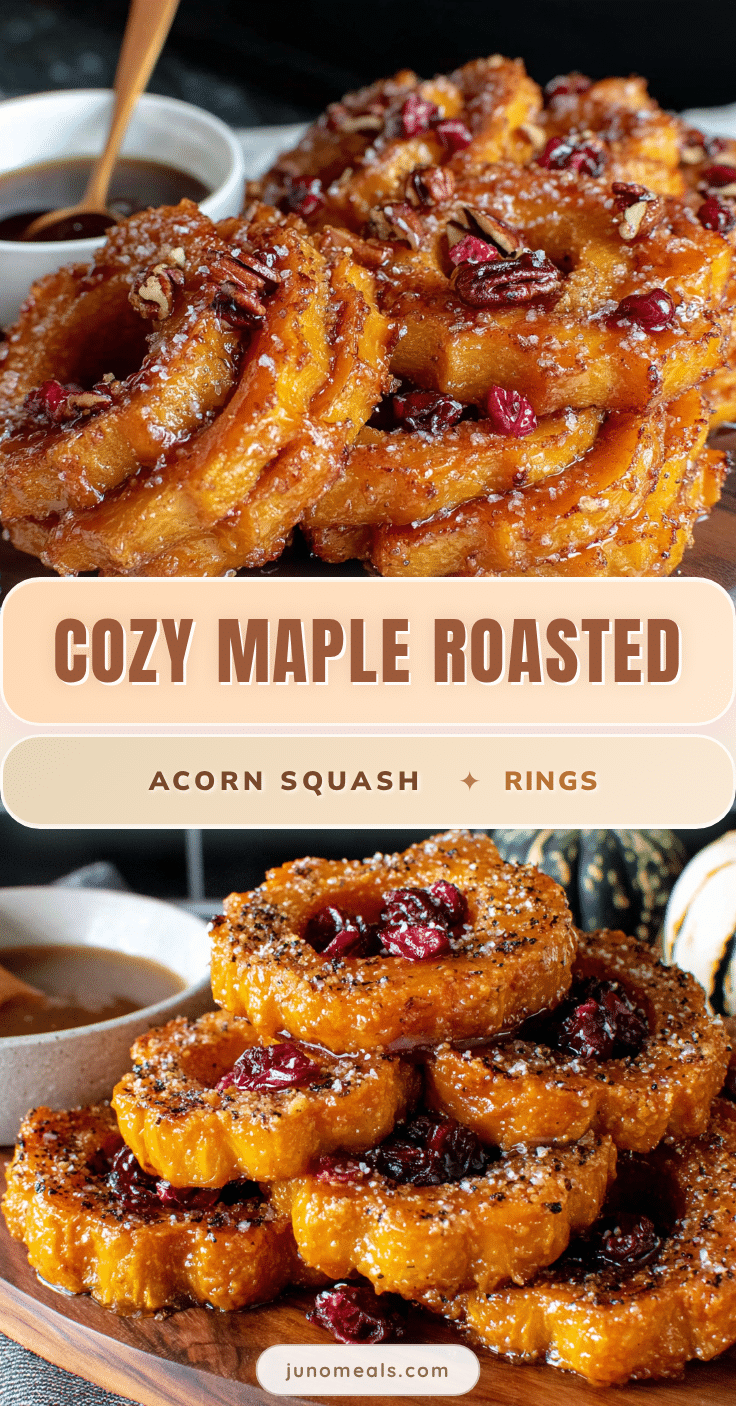
Cozy Maple Roasted Acorn Squash Rings
Tender acorn squash rings roasted with a sweet maple-cinnamon glaze until caramelized and golden. This easy fall side dish is perfect for weeknight dinners or holiday gatherings.
- Prep Time: 10 minutes
- Cook Time: 30-35 minutes
- Total Time: 40-45 minutes
- Yield: 4 servings 1x
- Category: Side Dish
- Cuisine: American
Ingredients
- 2 medium acorn squash (about 1.5 pounds each)
- 3 tablespoons pure maple syrup
- 2 tablespoons olive oil
- 1 tablespoon unsalted butter, melted
- 1 tablespoon brown sugar, packed
- 1 teaspoon ground cinnamon
- ¼ teaspoon ground nutmeg
- ⅛ teaspoon cayenne pepper (optional)
- ½ teaspoon fine sea salt
- 4–5 sprigs fresh thyme (optional, for garnish)
- ¼ cup chopped pecans or walnuts (optional, for topping)
Instructions
- Preheat your oven to 400°F (200°C). Line a large baking sheet with parchment paper or a silicone baking mat.
- Prepare the squash: Using a sharp chef’s knife, cut off about ¼ inch from the top and bottom of each acorn squash to create flat surfaces. Slice the squash crosswise into rings about ½ to ¾ inch thick. Scoop out the seeds and stringy pulp from the center of each ring.
- Arrange the rings in a single layer on the prepared baking sheet, leaving space between each ring so they caramelize instead of steam.
- Make the glaze: In a small bowl, whisk together the maple syrup, olive oil, melted butter, brown sugar, cinnamon, nutmeg, cayenne (if using), and salt until well combined.
- Using a pastry brush or spoon, coat both sides of each squash ring with the glaze. Reserve about 1 tablespoon of glaze for later.
- Roast for 20 minutes. The edges should start to look golden and caramelized.
- Carefully flip each ring using a spatula. Brush the reserved glaze over the tops. If using fresh thyme sprigs, tuck them between the rings on the pan.
- Roast for another 10-15 minutes, until the rings are tender when pierced with a fork and the edges are deeply caramelized. Total roasting time is usually 30-35 minutes.
- Optional: In the last 3 minutes of roasting, sprinkle the chopped pecans or walnuts over the rings if using.
- Let the rings cool on the pan for 2-3 minutes. Transfer to a serving platter, garnish with fresh thyme or a sprinkle of flaky salt, and serve warm.
Notes
For best caramelization, do not overcrowd the pan and flip the rings halfway through roasting. If rings are thinner than ½ inch, reduce roasting time by 5 minutes; if thicker than ¾ inch, add 5-10 minutes. To prevent maple syrup from burning, add glaze in two stages. Leftovers can be stored in an airtight container in the refrigerator for up to 4 days. Reheat in a 350°F oven for 5-7 minutes.
Nutrition
- Serving Size: 3-4 rings
- Calories: 210
- Sugar: 18
- Sodium: 300
- Fat: 10
- Saturated Fat: 2.5
- Carbohydrates: 32
- Fiber: 5
- Protein: 3
Keywords: acorn squash, maple roasted squash, fall side dish, roasted acorn squash rings, easy fall recipe, Thanksgiving side dish, maple cinnamon squash