My neighbor, Sarah, wasn’t trying to impress anyone. I’d stopped by to grab a garden stake she’d promised me, and the smell of garlic and rosemary hit me before I even got to her back gate. It was that warm, yeasty smell that makes you stop mid-sentence and just breathe in. She had this pan of focaccia sitting on her kitchen counter, all golden and dimpled, looking like something from a fancy bakery. I mean, honestly, it was a Thursday afternoon, not a dinner party, not a holiday. She just shrugged and said, “Oh, the kids wanted a snack.”
I stood there, holding my garden stake, completely hypnotized by this bread. Sarah is one of those cooks who doesn’t think she’s doing anything special—she’s just feeding her family. And that, let me tell you, is where the magic happens. She tore off a piece for me, and it was still warm, with these crispy, buttery edges and a soft, airy center that just melted. The garlic was mellow, not sharp, and the rosemary smelled like a Tuscan hillside. I asked her for the recipe, and she scribbled it on the back of an envelope while her kids ran through the kitchen. That’s how the best recipes happen, you know? Not from a stress-filled test kitchen, but from a mom who figured out how to make something incredible without breaking a sweat.
I’ve been making this Rosemary Garlic Sourdough Focaccia ever since, and it’s become a staple in my house, too. My own kids inhale it. It’s that rare thing: a bread that feels fancy enough for company but is actually dead simple to pull together. Maybe you’ve been there—wanting to make homemade bread but feeling like it’s a whole day project? This one is different. It uses your sourdough discard (yes, that jar in the back of your fridge!), so there’s no waste, and the hands-on time is maybe fifteen minutes. The rest is just waiting for the dough to do its thing.
Honestly, this recipe stayed with me because it proved that you don’t need a million ingredients or a culinary degree to make something that stops people in their tracks. It’s just flour, water, salt, oil, and a little bit of patience. And the smell? It’ll pull your own family into the kitchen before you even call them.
Why You’ll Love This Recipe
Let me tell you why this Rosemary Garlic Sourdough Focaccia has become a non-negotiable in my weekly rotation. First off, it’s a total family win. My kids, who can be picky about anything green, gobble up the rosemary and garlic without a second thought. It’s the kind of bread that makes you feel like a rockstar parent without any of the stress.
- Budget-Friendly & Pantry-Loving: You likely already have everything you need. Flour, olive oil, salt, garlic, and rosemary. No fancy grocery trips, no expensive cheeses. It’s made for a sensible weekly food budget.
- Uses Up Sourdough Discard: If you keep a sourdough starter, you know the guilt of throwing away that discard. This recipe puts it to perfect use, giving you a tangy, complex flavor that commercial yeast just can’t match.
- Incredibly Forgiving: This dough is wet and sticky, which means it’s almost impossible to overwork. It’s the perfect recipe for beginners or for days when you just want to relax and let the bread do the work.
- Leftovers That Reheat Like Magic: This is a huge one for family meals. Day-old focaccia, when warmed in a skillet or toaster oven, tastes almost as good as fresh. It’s perfect for school lunches or a quick after-school snack.
- Customizable for Picky Eaters: Don’t like rosemary? Swap in thyme. Want it cheesier? Sprinkle on some parmesan. This recipe is a base for whatever your family loves.
What makes this focaccia different from every other recipe out there is the technique. The long, slow fermentation from the sourdough starter creates a depth of flavor that’s just incredible. And the generous amount of good olive oil—don’t skimp on it—gives you that crispy, almost fried crust that makes it impossible to stop eating. It’s comfort food, reimagined. It’s healthier than a lot of store-bought bread, faster than you think, and has that same soul-soothing satisfaction.
What Ingredients You Will Need
This recipe uses simple, wholesome ingredients to deliver a bold, savory flavor and that signature airy, chewy texture. Most of these are pantry staples, which is exactly what you want when you’re feeding a family on a budget.
For the Dough
- 1 cup (240g) sourdough starter discard (unfed, straight from the fridge): This is the star of the show. It gives the focaccia its subtle tang and helps with the texture. I always use my unfed discard—the stuff I’d normally feel guilty about tossing.
- 1 ½ cups (360ml) warm water (about 90°F/32°C): Not hot, just warm to the touch. Warm water helps wake up the yeast activity in your starter.
- 3 ½ cups (440g) all-purpose flour: I’ve used bread flour in a pinch, but all-purpose gives a softer, more tender crumb that kids love. King Arthur Flour is my go-to for consistent results.
- 1 tablespoon (9g) active dry yeast or 1 packet: This gives the focaccia a reliable rise, especially if your starter isn’t super bubbly. It’s our insurance policy for a good crumb.
- 2 teaspoons (10g) fine sea salt: Don’t skip this. Salt is crucial for flavor and for controlling the fermentation.
For the Topping & Folding
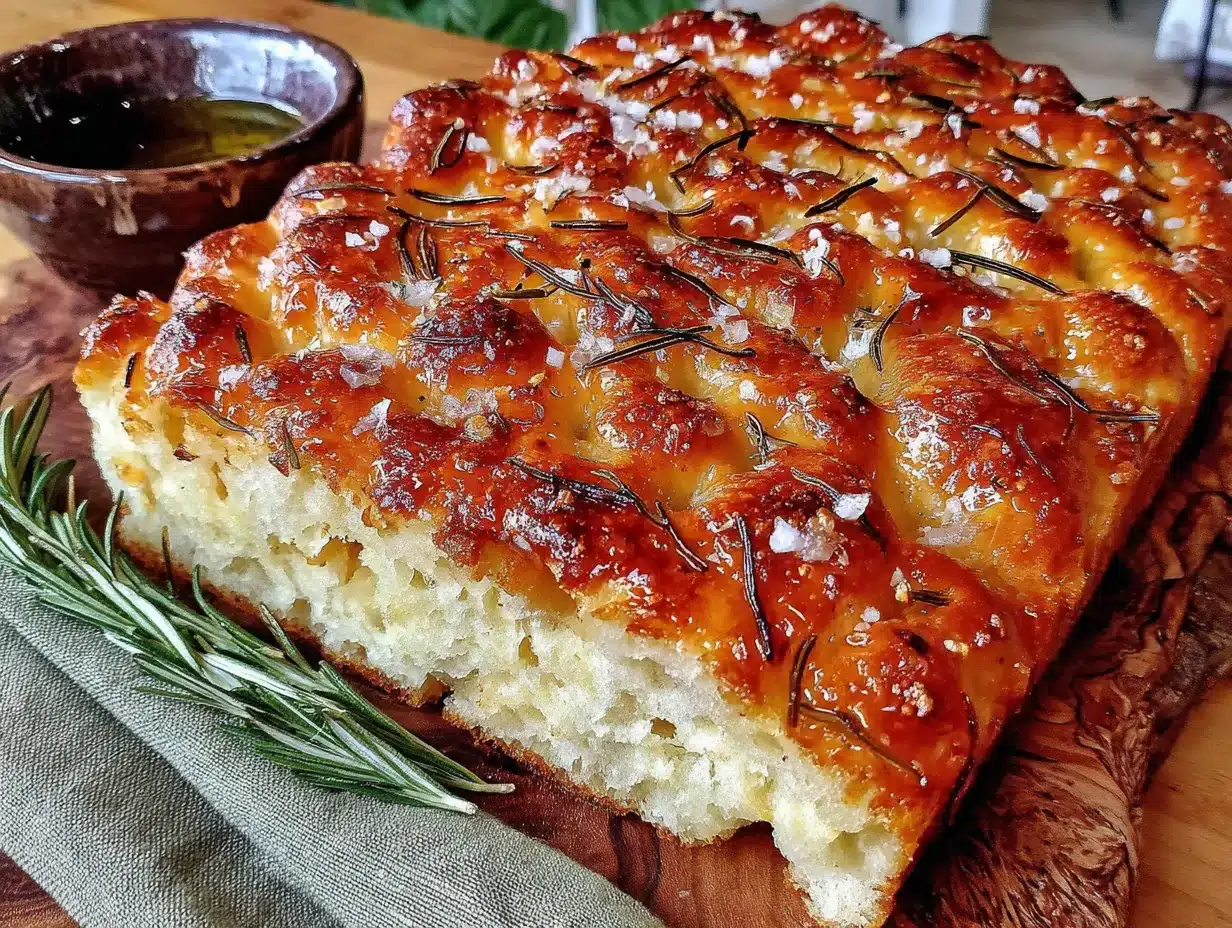
- ½ cup (120ml) extra-virgin olive oil, divided: This is not the place for your cheap cooking oil. Use a good, fruity olive oil. Half goes into the dough for flavor and tenderness; the other half goes into the pan to create that legendary crispy bottom and top.
- 4-5 cloves garlic, thinly sliced: I use a mandoline for paper-thin slices, but a sharp knife works fine. Thin slices mellow out during baking and become sweet and almost nutty.
- 2 tablespoons fresh rosemary, roughly chopped: Fresh is absolutely worth it here. Dried rosemary can be a bit sharp and woody. If you only have dried, use 2 teaspoons and crush it between your fingers first.
- Flaky sea salt (like Maldon), for finishing: This is optional but highly recommended. Those little crunchy bursts of salt are what make bakery focaccia so addictive.
Ingredient Selection Tip: For the best garlic flavor, look for firm, plump cloves. If your garlic has a green sprout in the middle, remove it—it can be bitter. For the rosemary, the fresher the better. I sometimes snip a few sprigs from a pot on my windowsill.
Substitution Guidance: If you don’t have a sourdough starter, you can make this with a biga or poolish, but the discard is what makes it so easy and waste-free. For a dairy-free version, you’re already there—this recipe has no dairy. For a gluten-free option, I can’t recommend a straight swap here; gluten is key for the structure. Look for a dedicated gluten-free focaccia recipe instead.
Equipment Needed
You don’t need a fancy kitchen to pull this off. Here’s what you’ll need:
- A large mixing bowl: Any bowl will do. I use a big ceramic one because it holds heat well.
- A 9×13-inch baking pan: A metal or glass baking dish works. A dark non-stick pan will give you a darker, crispier bottom crust.
- A wooden spoon or dough whisk: For mixing the shaggy dough. A spatula works in a pinch.
- Plastic wrap or a damp kitchen towel: For covering the dough while it rises. Plastic wrap is better for trapping moisture.
- A sharp knife or kitchen shears: For chopping the rosemary.
- A small skillet (optional): I like to gently warm my garlic and rosemary in a little olive oil before adding them to the dough. It mellows the garlic and infuses the oil. It’s a small step that makes a big difference.
Budget-Friendly Tip: Don’t have a 9×13 pan? Use a cast-iron skillet or a large cake pan. The shape doesn’t matter as much as the depth. You want the dough to be about an inch thick after rising.
Preparation Method
Alright, let’s get to the fun part. This recipe is more about patience than skill. The dough is sticky and wet—that’s exactly what we want for an airy, holey crumb.
- Make the Dough (10 minutes): In your large mixing bowl, combine the sourdough discard and the warm water. Stir until the starter is mostly dissolved. It doesn’t have to be perfect. Add the flour, yeast, and salt. Mix with your wooden spoon until a shaggy, sticky ball forms. It will look rough, and that’s fine. Cover the bowl with plastic wrap and let it rest for 30 minutes. This is called the “autolyse” phase, and it lets the flour absorb the water, making the dough easier to handle later.
- The First Rise & Stretch (2-3 hours): After the rest, drizzle about 2 tablespoons of olive oil over the dough. Now, wet your hands (this is key—wet hands won’t stick). Reach under one side of the dough, stretch it up, and fold it over the top. Rotate the bowl a quarter turn and repeat. Do this 4-6 times, until the dough feels a little smoother and tighter. It will still be sticky. Cover the bowl again and let it rise in a warm spot for 2-3 hours, or until it has doubled in size and is bubbly on top.
- Prepare the Pan (5 minutes): Pour the remaining ¼ cup of olive oil into your 9×13 pan. Use your fingers to spread it all over the bottom and up the sides. Don’t be shy—this oil is what creates that incredible crispy crust. Scatter the sliced garlic and half of the chopped rosemary over the oil.
- Transfer & Stretch (5 minutes): Gently scrape the risen dough out of the bowl and into the oiled pan. It will look like a blob. Don’t try to knead it or deflate it. Just let it sit for 10 minutes to relax. Then, using your fingertips, gently press and stretch the dough to fill the pan. It might not reach all the corners—that’s okay. If it springs back, let it rest another 10 minutes and try again.
- The Second Rise (1-2 hours): Cover the pan loosely with plastic wrap or a damp towel. Let it rise again until it’s puffy and nearly doubled in size. This can take anywhere from 1 to 2 hours, depending on the temperature of your kitchen. You’ll know it’s ready when you poke it gently with a finger and the indentation stays.
- Dimple & Top (5 minutes): About 20 minutes before you’re ready to bake, preheat your oven to 425°F (220°C). Uncover the puffy dough. Now, the best part: dip your fingers in a little olive oil and press deep dimples all over the surface of the dough. Go all the way down to the bottom of the pan. These dimples are what catch the oil and create those crispy, golden pockets. Sprinkle the remaining rosemary and a generous pinch of flaky sea salt over the top.
- Bake (20-25 minutes): Place the pan on the middle rack of your hot oven. Bake for 20-25 minutes, until the focaccia is deep golden brown on top and sounds hollow when you tap it. The edges should be crispy and pulling away from the sides of the pan. Let it cool in the pan on a wire rack for at least 10 minutes before slicing. This is the hardest part—the smell will drive you crazy.
Personal Tip: I always set a timer for 18 minutes and then check it. Every oven runs a little differently. If the top is getting too dark but the bottom isn’t done, tent it loosely with foil for the last few minutes.
Cooking Tips & Techniques
I’ve made this focaccia at least two dozen times, and I’ve learned a few things the hard way. Here’s what I wish someone had told me.
The Dough is Supposed to Be Wet. I cannot stress this enough. The first time I made focaccia, I kept adding flour because the dough felt “too sticky.” The result was a dense, bready brick. A high-hydration dough is what gives focaccia its signature air pockets and chewy texture. Trust the process. Wet hands are your best friend.
Don’t Rush the Rise. Sourdough is slow food. If your kitchen is cold (under 70°F), that first rise could take 4-5 hours. If your kitchen is warm (75°F+), it might be ready in 90 minutes. Look for the visual cues: doubled in size, bubbly, and jiggly. I once tried to speed things up by putting the bowl in a barely-warm oven, and I ended up with a crust on top of the dough. Not good. Patience is the only shortcut.
Let It Cool (Mostly). I know, I know. The smell is intoxicating. But if you slice into it while it’s piping hot, the steam will escape and the texture will be gummy. Let it rest for at least 20 minutes. I usually let it cool for 30-40 minutes. The crust stays crispy, and the inside stays tender.
My Biggest Failure: I once forgot to add the salt. The focaccia rose beautifully, looked gorgeous, and tasted like absolutely nothing. It was the saddest bread I’ve ever made. Salt is not just for flavor—it strengthens the gluten structure and controls the yeast activity. Don’t skip it.
Timing Strategy: I often start the dough in the morning. The first rise happens while I’m working. I transfer it to the pan before lunch, and it’s ready to bake by mid-afternoon. It’s a perfect weekend project that doesn’t eat up your whole day.
Variations & Adaptations
This focaccia is a fantastic base for experimentation. Here are a few ways I’ve changed it up, all of which have passed the kid test.
- Cheesy Garlic Focaccia: After dimpling the dough, sprinkle ½ cup of shredded parmesan or pecorino romano over the top before baking. The cheese gets crispy and salty in the oven. My kids call this “pizza bread.”
- Everything Bagel Focaccia: Skip the rosemary and garlic. Before baking, brush the top with a little olive oil and sprinkle generously with everything bagel seasoning (poppy seeds, sesame seeds, dried garlic, dried onion, salt). It’s incredible for breakfast with cream cheese.
- Sun-Dried Tomato & Olive: Add ½ cup of chopped sun-dried tomatoes (in oil, drained) and ¼ cup of chopped kalamata olives to the dough during the first stretch and fold. The salty, tangy flavors are a perfect match for the tangy sourdough.
- Herb & Sea Salt: Experiment with different herb combinations. Thyme and oregano work beautifully. A sprinkle of red pepper flakes adds a gentle warmth that adults will love.
- Sweet Version: For a breakfast focaccia, omit the garlic and rosemary. Add ¼ cup of sugar to the dough. Before baking, dimple the dough and drizzle with honey, then sprinkle with cinnamon and a little flaky salt. It’s like a giant, shareable cinnamon roll.
Serving & Storage Suggestions
This focaccia is a star at any meal. Here’s how I serve and store it in my house.
Serving: Serve it warm or at room temperature. It’s perfect on its own as a snack, or alongside a bowl of tomato basil soup for a cozy lunch. I also love using it for sandwiches—slice it horizontally and fill it with roasted veggies, mozzarella, and a drizzle of balsamic. It’s sturdy enough to hold up to hearty fillings without getting soggy.
Storage: Store leftover focaccia in an airtight container at room temperature for up to 2 days. Do not refrigerate it—the fridge will dry it out and make it stale. For longer storage, wrap it tightly in plastic wrap and then foil, and freeze it for up to 3 months.
Reheating: This is the real secret. Skip the microwave—it will turn your crispy focaccia into a sad, rubbery sponge. Instead, reheat slices in a dry skillet over medium heat for 1-2 minutes per side, or in a toaster oven at 350°F for 5 minutes. The crust gets crispy again, and the inside stays soft. It’s almost as good as fresh.
Flavor Development: Honestly, this focaccia is just as good on day two. The flavors of the garlic and rosemary meld together even more overnight. I sometimes make it a day ahead on purpose, just so the leftovers are ready for lunch.
Nutritional Information & Benefits
While this is a bread, it’s made with simple, whole ingredients that offer some surprising benefits. Here’s a general estimate for one serving (1/8 of the recipe).
| Nutrient | Amount per Serving |
|---|---|
| Calories | ~280 |
| Fat | 14g |
| Carbohydrates | 34g |
| Fiber | 2g |
| Protein | 5g |
| Sodium | 380mg |
Health Benefits: The fermentation process of sourdough makes the nutrients in the flour more bioavailable and can be easier to digest for some people. Olive oil is a source of healthy monounsaturated fats, which are good for heart health. Garlic and rosemary are both packed with antioxidants and have anti-inflammatory properties. It’s not a health food, but it’s a wholesome, real-food treat that fits into a balanced diet.
Dietary Considerations: This recipe is naturally dairy-free and vegan (check your sugar if you add the sweet variation). It contains gluten, so it’s not suitable for those with celiac disease. If you’re watching your sodium, you can reduce the salt in the dough and skip the flaky sea salt finish.
Conclusion
This Rosemary Garlic Sourdough Focaccia is more than just a recipe—it’s a little piece of everyday magic. It’s the bread that makes a simple dinner feel like a feast. It’s the snack that brings your kids running into the kitchen. It’s the project that makes you feel like a real baker, even on a lazy Thursday afternoon.
I love this recipe because it’s forgiving, it’s flexible, and it’s a genuine crowd-pleaser. It uses up that sourdough discard you’ve been saving, and it turns simple pantry ingredients into something truly special. I hope you’ll try it and make it your own. Maybe your family will love it with extra cheese, or with a sprinkle of everything bagel seasoning. Maybe you’ll find a new favorite way to serve it.
I’d love to hear how it turned out for you! Drop a comment below and tell me about your variations. Did your kids gobble it up? Did you try a new topping? Your feedback and ideas help this whole community of home cooks get better. Happy baking, friends—you’ve got this.
Frequently Asked Questions
Can I use active sourdough starter instead of discard?
Yes, you can! If you use active, bubbly starter, you may want to reduce the amount of yeast slightly, as the starter will be more powerful. The texture will be even more airy and tangy. It’s a great way to use up extra starter if you have it.
Why is my focaccia dense and not airy?
This usually happens for one of two reasons: the dough wasn’t hydrated enough (too much flour), or it didn’t rise long enough. Make sure you’re measuring your flour correctly (spoon it into the cup and level it off, don’t scoop). And give it time—a cold kitchen means a longer rise. Be patient and look for the visual cues.
Can I make this focaccia without a sourdough starter?
Absolutely. You can make a simple focaccia using just the yeast and water. Omit the sourdough starter and increase the water to 1 ¾ cups and the flour to 4 cups. The flavor will be less tangy, but it will still be delicious and have a great texture. It’s a fantastic starting point for beginners.
How do I get a really crispy bottom crust?
The key is a generous amount of olive oil in the pan. Don’t skimp on it. The oil essentially fries the bottom of the dough as it bakes. Also, using a metal or dark non-stick pan helps conduct heat better than glass. Finally, let it cool in the pan for a few minutes before transferring to a wire rack—this lets the bottom steam and get crispy.
Can I freeze the unbaked dough?
Yes! After you’ve transferred the dough to the oiled pan and done the second rise, you can wrap the entire pan tightly in plastic wrap and freeze it for up to 3 months. When you’re ready to bake, let it thaw in the refrigerator overnight, then let it come to room temperature for about an hour before dimpling and baking. It’s a great make-ahead option.
Pin This Recipe!
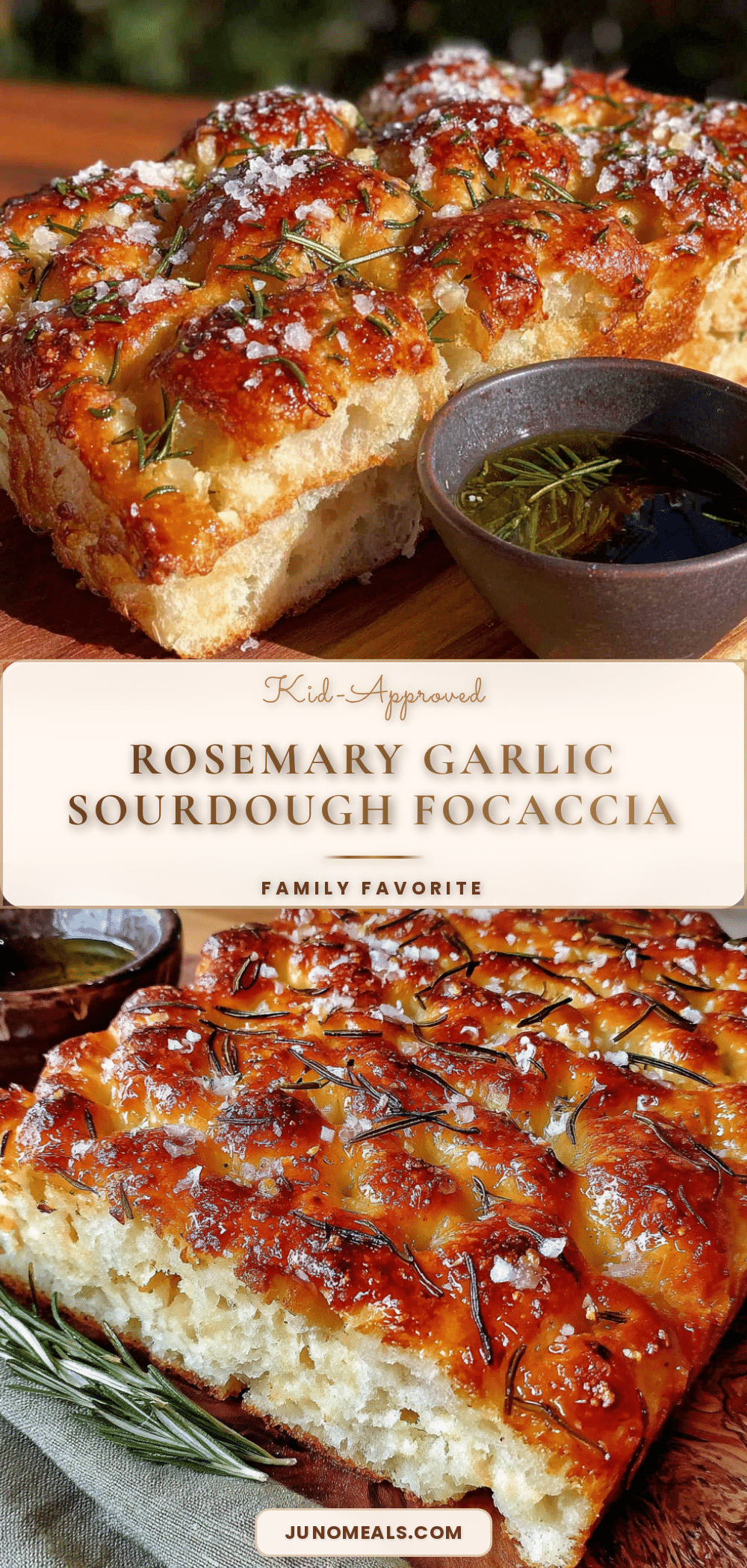
Best Rosemary Garlic Sourdough Focaccia (Kid-Approved!)
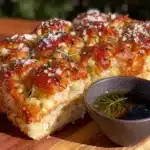
This Rosemary Garlic Sourdough Focaccia is a simple, forgiving bread that uses sourdough discard for a tangy flavor and a crispy, golden crust. It’s a family-friendly recipe that feels fancy enough for company but is easy enough for a weekday snack.
- Prep Time: 15 minutes
- Cook Time: 25 minutes
- Total Time: 3 hours 40 minutes (includes rising time)
- Yield: 8 servings 1x
- Category: Bread
- Cuisine: Italian
Ingredients
- 1 cup (240g) sourdough starter discard (unfed, straight from the fridge)
- 1 ½ cups (360ml) warm water (about 90°F/32°C)
- 3 ½ cups (440g) all-purpose flour
- 1 tablespoon (9g) active dry yeast or 1 packet
- 2 teaspoons (10g) fine sea salt
- ½ cup (120ml) extra-virgin olive oil, divided
- 4–5 cloves garlic, thinly sliced
- 2 tablespoons fresh rosemary, roughly chopped
- Flaky sea salt (like Maldon), for finishing
Instructions
- Make the Dough (10 minutes): In your large mixing bowl, combine the sourdough discard and the warm water. Stir until the starter is mostly dissolved. Add the flour, yeast, and salt. Mix with a wooden spoon until a shaggy, sticky ball forms. Cover the bowl with plastic wrap and let it rest for 30 minutes (autolyse).
- The First Rise & Stretch (2-3 hours): After the rest, drizzle about 2 tablespoons of olive oil over the dough. Wet your hands, then reach under one side of the dough, stretch it up, and fold it over the top. Rotate the bowl a quarter turn and repeat. Do this 4-6 times. Cover the bowl again and let it rise in a warm spot for 2-3 hours, until doubled in size and bubbly on top.
- Prepare the Pan (5 minutes): Pour the remaining ¼ cup of olive oil into a 9×13-inch baking pan. Spread it all over the bottom and up the sides. Scatter the sliced garlic and half of the chopped rosemary over the oil.
- Transfer & Stretch (5 minutes): Gently scrape the risen dough into the oiled pan. Let it sit for 10 minutes to relax. Then, using your fingertips, gently press and stretch the dough to fill the pan. If it springs back, let it rest another 10 minutes and try again.
- The Second Rise (1-2 hours): Cover the pan loosely with plastic wrap or a damp towel. Let it rise until puffy and nearly doubled in size, about 1-2 hours. It’s ready when you poke it gently and the indentation stays.
- Dimple & Top (5 minutes): About 20 minutes before baking, preheat your oven to 425°F (220°C). Uncover the dough. Dip your fingers in a little olive oil and press deep dimples all over the surface. Sprinkle the remaining rosemary and a generous pinch of flaky sea salt over the top.
- Bake (20-25 minutes): Place the pan on the middle rack and bake for 20-25 minutes, until deep golden brown on top and hollow-sounding when tapped. Let it cool in the pan on a wire rack for at least 10 minutes before slicing.
Notes
The dough is supposed to be wet and sticky; don’t add extra flour. For a cold kitchen, the first rise may take 4-5 hours. Let the focaccia cool for at least 20 minutes before slicing to avoid a gummy texture. For a crispier bottom crust, use a metal or dark non-stick pan and don’t skimp on the olive oil.
Nutrition
- Serving Size: 1/8 of recipe
- Calories: 280
- Sugar: 1
- Sodium: 380
- Fat: 14
- Saturated Fat: 2
- Carbohydrates: 34
- Fiber: 2
- Protein: 5
Keywords: sourdough focaccia, rosemary garlic focaccia, sourdough discard recipe, easy focaccia, kid-friendly bread, homemade focaccia