I ruined pulled pork for three Super Bowls in a row before I finally figured out what I was doing wrong. Honestly, it was embarrassing. The first year, the meat came out dry and stringy—like chewing on a pile of shoe leather. The second year, I got impatient and pulled it too early, ending up with chunks that were somehow both tough and mushy. The third year? I forgot to trim the fat cap and served my guests a greasy, slick mess that left a film on the roof of your mouth. Nobody said anything, but I saw the way they reached for the napkins to discreetly spit bits out. I wanted to crawl under the coffee table.
So when I set out to make these Best Pulled Pork Sliders for Game Day Parties for the fourth time, I did something different. I stopped treating it like a race and started treating it like a slow, patient conversation between the meat and the heat. I learned to listen for the right internal temperature, look for the perfect shred, and trust the process instead of rushing it. And you know what? That fourth batch disappeared in under twenty minutes, and people actually asked for the recipe. That never happens at my house.
These pulled pork sliders are the result of all those failures, and I think that’s why they work so well. They’re forgiving, they’re packed with flavor, and they’re built for the chaos of a game day crowd. If I can nail this recipe after three years of trial and error, you can absolutely nail it on your first try. Let me show you how.
Why You’ll Love This Recipe
These Best Pulled Pork Sliders for Game Day Parties aren’t just another recipe to bookmark and forget. They’re the kind of dish that makes people hover around the serving platter, grabbing another slider before they’ve even finished the first one. I’ve tested this method on friends, family, and the most critical audience of all—my brother-in-law, who only eats things he considers “worthy of the game.” He gave me a nod of approval, which is basically a standing ovation in his language.
Here’s what makes these sliders stand out from the rest:
- Incredibly Tender Meat : The pork shoulder breaks down into buttery, melt-in-your-mouth shreds that soak up every bit of the smoky-sweet glaze. No dry bites, no chewy surprises.
- Bold, Balanced Flavor : A homemade dry rub with brown sugar, smoked paprika, and a hint of cayenne gives you that deep, slow-cooked taste without needing a smoker or a backyard pit.
- Easy Enough for Any Host : Most of the cooking time is hands-off. You sear the pork, toss it in the slow cooker or Dutch oven, and let the oven or appliance do the heavy lifting while you set up the snack table.
- Perfect for a Crowd : A single pork shoulder feeds a hungry group of 8 to 10 people easily. Double the recipe if you’re hosting the entire neighborhood watch party.
- Make-Ahead Friendly : The pulled pork actually tastes better the next day. You can prep everything the night before and reheat it right before kickoff. Less stress, more touchdowns.
- Customizable Heat Level : Want it mild? Skip the cayenne. Want it fiery? Add some chipotle powder or a splash of hot sauce to the braising liquid. You’re in control.
These sliders are the kind of food that brings people together. There’s something about pulling apart that tender pork, piling it onto a soft brioche bun, and taking a bite while someone yells at the TV that just feels right. It’s comfort food at its most honest, and it’s built for the moments that matter most.
What Ingredients You Will Need
This recipe relies on simple, pantry-friendly ingredients that come together to create something far greater than the sum of their parts. I’ve tested these exact quantities across multiple batches, so trust me when I say this combination works beautifully.
For the Dry Rub
- 2 tablespoons brown sugar (light or dark—both work, but dark adds deeper molasses notes)
- 1 tablespoon smoked paprika (I prefer Sweet Smoked Paprika from The Spice House for its rich, woodsy aroma)
- 1 teaspoon garlic powder
- 1 teaspoon onion powder
- 1 teaspoon kosher salt
- 1/2 teaspoon black pepper, freshly ground
- 1/2 teaspoon cayenne pepper (optional—adds a subtle warmth, not overwhelming heat)
- 1/2 teaspoon dry mustard powder (adds a tangy backbone that cuts through the richness)
For the Pork
- 3 to 4 pounds boneless pork shoulder (also labeled as pork butt—don’t let the name confuse you, it’s the perfect cut for shredding)
- 2 tablespoons olive oil, for searing
- 1 cup chicken broth (low-sodium preferred, so you control the salt level)
- 1/4 cup apple cider vinegar (adds brightness and helps tenderize the meat)
- 2 tablespoons Worcestershire sauce
- 1 tablespoon liquid smoke (optional, but gives that authentic slow-smoked flavor without a smoker)
For the Sliders
- 12 to 16 slider buns (brioche or potato rolls work best—soft, slightly sweet, and sturdy enough to hold the filling)
- 1/2 cup barbecue sauce (use your favorite brand or homemade; I lean toward a Kansas City-style sweet and tangy sauce)
- Coleslaw mix (store-bought or homemade—adds crunch and freshness to balance the rich pork)
- Pickle slices (dill pickles cut the richness perfectly)
- Butter, melted, for toasting the buns (optional but highly recommended)
Ingredient Selection Tips: Look for a pork shoulder with good marbling—those thin streaks of fat running through the meat are what make it tender and juicy after hours of cooking. Avoid pre-trimmed roasts if possible; you want that fat cap intact to keep the meat moist. For the broth, I use Swanson’s low-sodium chicken broth, but any brand works fine. If you’re avoiding gluten, double-check your Worcestershire sauce and barbecue sauce labels—some brands contain wheat-based ingredients.
Substitution Guidance: No pork shoulder on hand? Boneless beef chuck roast works surprisingly well, though the cooking time may vary slightly. For a lighter option, you can use boneless, skinless chicken thighs, but reduce the cooking time to about 3 to 4 hours on low in a slow cooker. Vegetarian guests? Try jackfruit—it shreds similarly and absorbs the rub beautifully. Just note that jackfruit cooks much faster, so check it after 1.5 hours.
Equipment Needed
You don’t need a professional kitchen to make these sliders, but having the right tools makes the process smoother and more enjoyable. Here’s what I use every time I make this recipe:
- Slow cooker or Dutch oven : A 6-quart slow cooker is ideal for hands-off cooking. If you prefer oven-braising, a heavy Dutch oven (like a Le Creuset or Lodge enameled cast iron) works beautifully. I’ve used both, and honestly, the Dutch oven gives slightly better browning, but the slow cooker is more convenient for game day prep.
- Large skillet or cast iron pan : For searing the pork shoulder before braising. This step is non-negotiable—it locks in flavor and creates that beautiful crust.
- Sharp chef’s knife : For trimming excess fat and slicing the pork if needed. A dull knife makes this job frustrating and dangerous.
- Tongs : For flipping the pork during searing and transferring it to the slow cooker.
- Cutting board : Preferably large enough to hold the entire pork shoulder. I use a wooden board, but plastic is fine too.
- Two forks or meat claws : For shredding the pork. Meat claws are a game-changer—they make the job faster and less messy. If you don’t have them, two sturdy forks work perfectly.
- Measuring spoons and cups : For the dry rub and liquids. I keep a set specifically for spice blends to avoid cross-contamination.
- Mixing bowl : For combining the dry rub ingredients.
- Baking sheet : For toasting the slider buns in the oven. Line it with parchment paper for easy cleanup.
- Pastry brush : For brushing melted butter onto the buns before toasting. A silicone brush works best and is easy to clean.
Budget-Friendly Alternatives: No Dutch oven? A heavy-bottomed stockpot with a tight-fitting lid works in a pinch. No slow cooker? Braise the pork in a 300°F (150°C) oven for 3 to 4 hours, checking periodically to ensure the liquid hasn’t evaporated. No meat claws? Two forks and a little patience will get the job done—just be careful not to burn your fingers.
Preparation Method
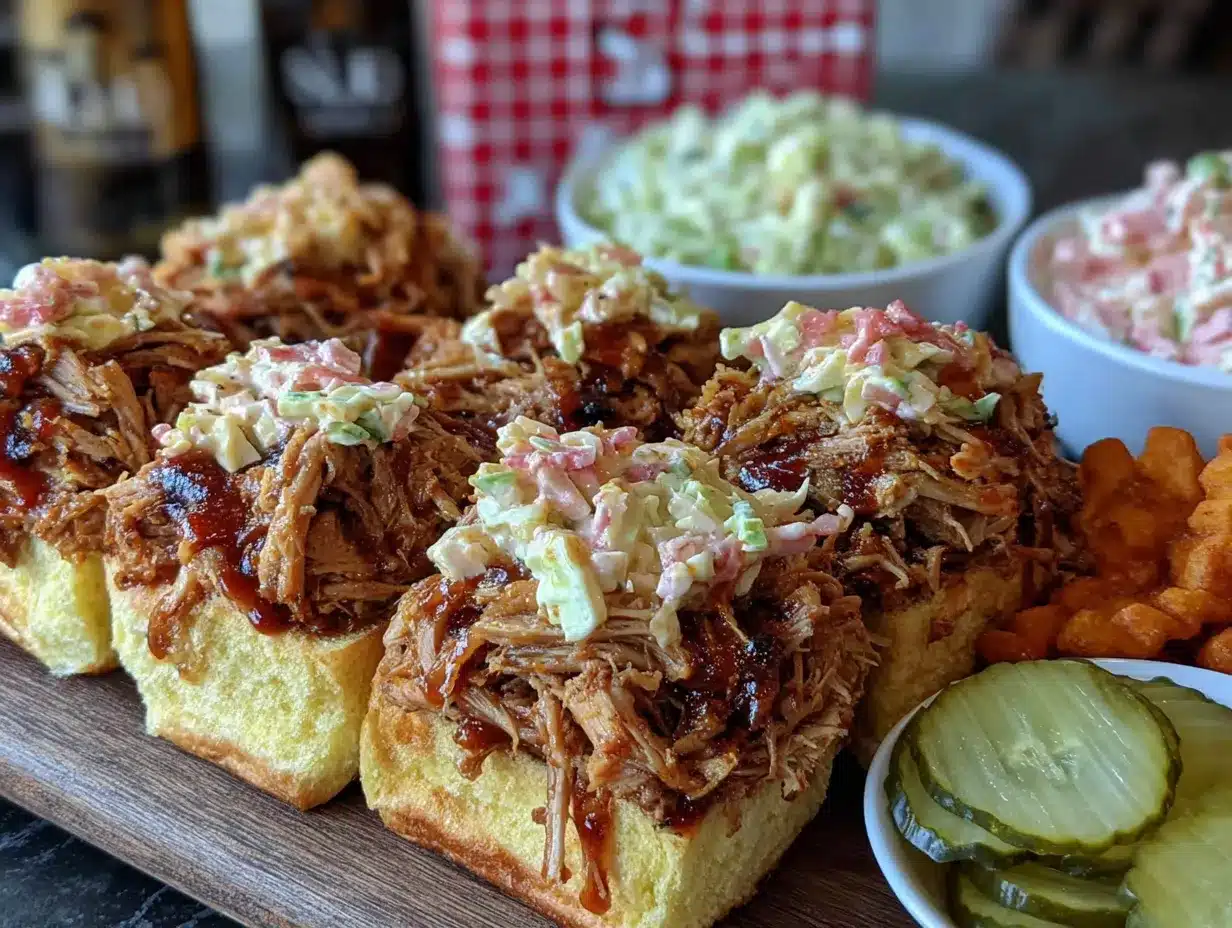
Let me walk you through the exact steps I follow to make these sliders. I’ve refined this process over many batches, so every detail matters. Take your time with the searing step—it’s where the magic starts.
Step 1: Prep the Pork (10 minutes)
Remove the pork shoulder from the refrigerator about 30 minutes before cooking to let it come to room temperature. Pat it completely dry with paper towels—moisture is the enemy of a good sear. Using a sharp knife, trim any large, thick pieces of excess fat from the surface, but leave a thin layer (about 1/4 inch) intact. This fat will render during cooking and keep the meat juicy.
Step 2: Make the Dry Rub (5 minutes)
In a small mixing bowl, combine the brown sugar, smoked paprika, garlic powder, onion powder, kosher salt, black pepper, cayenne pepper (if using), and dry mustard powder. Whisk with a fork until evenly distributed. The aroma at this point is incredible—smoky, sweet, and a little spicy. Rub this mixture all over the pork shoulder, pressing it firmly into every surface. Don’t skip the sides and crevices. Let the rubbed pork sit for 10 minutes while you heat the oil.
Step 3: Sear the Pork (10 minutes)
Heat the olive oil in a large skillet or cast iron pan over medium-high heat until it shimmers. Carefully place the pork shoulder in the hot pan—you should hear a satisfying sizzle. Sear for 3 to 4 minutes per side, without moving it, until a deep golden-brown crust forms. Use tongs to rotate the pork and sear all sides, including the ends. This step builds the foundation of flavor, so don’t rush it. The crust should be dark and caramelized, not burnt.
Step 4: Build the Braising Liquid (5 minutes)
While the pork sears, pour the chicken broth, apple cider vinegar, Worcestershire sauce, and liquid smoke (if using) into the bottom of your slow cooker or Dutch oven. Stir to combine. This liquid will keep the meat moist and infuse it with tangy, savory flavor as it cooks. If you’re using a Dutch oven, you can deglaze the skillet with a splash of broth first, scraping up the browned bits from the bottom, then pour everything into the pot.
Step 5: Slow Cook the Pork (6 to 8 hours on low, or 4 to 5 hours on high)
Transfer the seared pork shoulder to the slow cooker or Dutch oven, placing it fat-side up in the liquid. Cover and cook on low for 6 to 8 hours, or on high for 4 to 5 hours. The pork is ready when it’s fork-tender—meaning you can insert a fork into the thickest part and twist it with almost no resistance. The meat should practically fall apart when you nudge it. If you’re using a Dutch oven in the oven, cook at 300°F (150°C) for 3.5 to 4 hours, checking the liquid level halfway through.
Step 6: Shred the Pork (10 minutes)
Once the pork is fully cooked, carefully transfer it to a large cutting board or baking sheet. Let it rest for 5 to 10 minutes—this allows the juices to redistribute. Using two forks or meat claws, shred the pork into bite-sized pieces. Don’t over-shred; you want some texture, not a mushy paste. Discard any large pieces of fat or connective tissue that didn’t render fully.
Step 7: Toss with Barbecue Sauce (5 minutes)
Pour off most of the braising liquid from the slow cooker, reserving about 1/4 cup to keep the pork moist. Return the shredded pork to the pot and add the barbecue sauce. Toss gently to coat every strand of meat. Taste and adjust seasoning—add more sauce for extra sweetness, or a splash of vinegar for tang. Keep the pork warm on the “keep warm” setting or over low heat while you prepare the buns.
Step 8: Toast the Buns (5 minutes)
Preheat your oven to 350°F (175°C). Split the slider buns in half and arrange them cut-side up on a baking sheet. Brush the cut surfaces with melted butter. Toast for 3 to 5 minutes, until the edges are golden and the centers are soft. Watch them closely—buns can go from perfect to burnt in seconds.
Step 9: Assemble the Sliders (5 minutes)
Place a generous scoop of pulled pork on the bottom half of each bun. Top with a spoonful of coleslaw and a couple of pickle slices. Cap with the top bun and press down gently to set. Serve immediately while the buns are still warm and the pork is juicy.
Cooking Tips & Techniques
After all those early failures, I developed a few tricks that make this recipe bulletproof. Here’s what I wish someone had told me before my first attempt:
Don’t Skip the Searing Step. I know it’s tempting to just dump everything in the slow cooker and walk away, but that browned crust is where the deep, savory flavor comes from. It’s called the Maillard reaction, and it’s not just fancy chef talk—it’s chemistry that makes meat taste meatier. Take the extra 10 minutes. Your taste buds will thank you.
Low and Slow is Non-Negotiable. Cooking the pork on low heat for a longer time breaks down the collagen in the meat, turning tough connective tissue into silky, gelatinous goodness. If you rush it on high heat, you’ll end up with dry, stringy meat. I learned this the hard way when I tried to speed-cook a pork shoulder for a last-minute party. It was a disaster. Set your slow cooker to low and plan ahead.
Let the Pork Rest Before Shredding. This is a mistake I made for years. I was so excited to eat that I’d start shredding the pork the second it came out of the pot. All those precious juices would run out onto the cutting board, leaving the meat dry. Let it rest for at least 5 minutes, loosely covered with foil. The juices will redistribute, and your shredding will be cleaner and more satisfying.
Use the Braising Liquid Wisely. The liquid left in the slow cooker is liquid gold. Strain it and use it to moisten the shredded pork if it seems dry, or reduce it on the stovetop to make a quick, flavorful sauce. Just be careful not to add too much—you want the meat coated, not swimming.
Toast the Buns, Always. A soggy bun ruins the entire slider experience. Toasting creates a barrier that prevents the pork juices from soaking through, keeping every bite structurally sound. Plus, the buttery crunch adds a lovely contrast to the tender meat.
Timing and Multitasking: While the pork is cooking, use that time to prep your toppings. Chop the coleslaw ingredients, slice the pickles, and set up your serving platter. This way, when the pork is ready, you can assemble everything in minutes instead of scrambling last minute.
Variations & Adaptations
One of the best things about this recipe is how easily it adapts to different tastes and dietary needs. Here are a few variations I’ve tried and loved:
Spicy Chipotle Version: Add 2 chipotle peppers in adobo sauce (minced) to the braising liquid along with 1 tablespoon of the adobo sauce. The smoky heat pairs beautifully with the sweet brown sugar in the rub. I made this version for a playoff game, and my spice-loving cousin ate six sliders in a row. No exaggeration.
Hawaiian-Inspired Sliders: Swap the barbecue sauce for a mixture of 1/4 cup pineapple juice, 2 tablespoons soy sauce, and 1 tablespoon brown sugar. Top the sliders with grilled pineapple rings and a drizzle of sriracha mayo. This variation is bright, tangy, and perfect for summer game days.
Low-Carb / Keto-Friendly Option: Skip the buns entirely and serve the pulled pork over a bed of crisp lettuce leaves or in large butter lettuce cups. Use a sugar-free barbecue sauce or make your own with tomato paste, apple cider vinegar, and monk fruit sweetener. The pork itself is naturally low in carbs, so you’re just swapping the bun.
Smoker Method (for Outdoor Enthusiasts): If you have a smoker, rub the pork with the dry rub and smoke it at 225°F (110°C) for 6 to 8 hours using hickory or applewood chips. Wrap it in foil with the braising liquid halfway through to keep it moist. The smoky flavor takes these sliders to another level entirely.
Vegetarian Jackfruit Version: Drain and rinse two cans of young green jackfruit in brine (not syrup). Shred it with your hands or a fork to mimic the texture of pulled pork. Sauté it with the dry rub and a splash of vegetable broth for 20 to 30 minutes until tender. It’s surprisingly convincing, and even my meat-loving friends have asked for seconds.
Serving & Storage Suggestions
Serving Temperature and Presentation: Serve the sliders warm, ideally within 10 minutes of assembly. Arrange them on a large wooden board or platter, garnished with fresh parsley or cilantro for a pop of color. Place small bowls of extra barbecue sauce, pickles, and coleslaw on the side so guests can customize their sliders. For game day, I like to set up a DIY slider bar—it keeps people engaged and reduces my workload.
Complementary Dishes and Beverages: These sliders pair beautifully with classic game day sides like crispy french fries, sweet potato wedges, or a simple green salad. For drinks, a cold beer (lager or pale ale) is the obvious choice, but a tangy lemonade or iced tea works just as well. If you’re serving a crowd, consider adding a batch of mini lemon blueberry cheesecakes for dessert—they’re light, refreshing, and the perfect sweet ending to a savory meal.
Storage Instructions: Store leftover pulled pork in an airtight container in the refrigerator for up to 4 days. The flavors actually deepen and meld overnight, making leftovers even more delicious. For longer storage, freeze the pork in a freezer-safe bag or container for up to 3 months. Thaw overnight in the refrigerator before reheating.
Reheating Methods: The best way to reheat pulled pork is in a covered skillet over medium-low heat with a splash of broth or water to restore moisture. Stir occasionally until warmed through, about 5 to 7 minutes. You can also microwave it in 30-second bursts, but be careful not to dry it out. For the buns, re-toast them in the oven or a toaster to revive their crunch.
How Flavors Develop Over Time: Pulled pork is one of those rare dishes that actually improves with age. The spices meld with the meat, the acidity mellows, and the texture becomes even more tender. If you can, make the pork a day ahead and refrigerate it overnight. Reheat it gently before serving, and you’ll be rewarded with deeper, more complex flavor.
Nutritional Information & Benefits
Here’s an approximate nutritional breakdown for one slider (based on 12 sliders using 3 pounds of pork, brioche buns, and standard toppings):
- Calories: 320-350
- Protein: 22-25 grams
- Fat: 14-16 grams
- Carbohydrates: 28-32 grams
- Fiber: 1-2 grams
- Sugar: 10-12 grams
- Sodium: 600-700 milligrams
Health Benefits of Key Ingredients: Pork shoulder is a good source of high-quality protein, B vitamins (especially B12 and B6), and minerals like zinc and selenium. The apple cider vinegar in the braising liquid may aid digestion and help balance blood sugar levels. Coleslaw adds a serving of vegetables with fiber, vitamin C, and antioxidants. If you use whole-grain buns, you’ll also get a boost of complex carbohydrates and additional fiber.
Dietary Considerations: This recipe can be made gluten-free by using gluten-free buns and verifying that your barbecue sauce and Worcestershire sauce are certified gluten-free. For a lower-sodium version, reduce the salt in the dry rub and use low-sodium broth and barbecue sauce. The recipe is naturally nut-free and egg-free (unless your buns contain eggs).
Personal Wellness Perspective: I don’t pretend these sliders are health food—they’re comfort food, plain and simple. But I’ve found that cooking with whole ingredients, controlling the salt and sugar myself, and balancing the meal with a fresh slaw makes me feel better about indulging. It’s not about deprivation; it’s about making smarter choices where you can, so you can fully enjoy the moments that matter.
Frequently Asked Questions
Can I use a different cut of pork?
Yes, but pork shoulder (also called pork butt) is the best choice because of its marbling and collagen content. Pork loin or tenderloin will dry out quickly because they’re too lean. If you’re in a pinch, bone-in pork shoulder works beautifully—just add 30 to 60 minutes to the cooking time.
How do I prevent the sliders from getting soggy?
Toast the buns! This creates a barrier that keeps the pork juices from soaking through. Also, drain any excess liquid from the shredded pork before assembling, and add the coleslaw just before serving rather than letting it sit on the meat.
Can I make these sliders in an Instant Pot?
Absolutely. Sear the pork using the sauté function, then add the braising liquid and cook on high pressure for 90 minutes. Let the pressure release naturally for 15 minutes before shredding. The texture won’t be quite as fall-apart tender as slow-cooked pork, but it’s a great time-saving alternative.
What’s the best way to feed a large crowd?
Double or triple the recipe and use a large slow cooker (8 quarts or bigger). Set up a DIY slider bar with multiple toppings so guests can build their own. This reduces your workload and lets people customize their sliders to their liking. I’ve fed 20 people this way without breaking a sweat.
Can I freeze the pulled pork?
Yes! Cool the shredded pork completely, then transfer it to a freezer-safe bag or container. Remove as much air as possible before sealing. It will keep for up to 3 months. Thaw overnight in the refrigerator and reheat gently with a splash of broth to restore moisture.
Conclusion
These Best Pulled Pork Sliders for Game Day Parties are the result of trial, error, and a whole lot of stubborn determination. I’ve burned, dried out, and greased up my fair share of pork shoulders, but this recipe finally cracked the code. It’s forgiving enough for beginners, flavorful enough to impress seasoned cooks, and easy enough to make while you’re juggling dips, drinks, and the big game on TV.
What I love most about these sliders is how they bring people together. There’s something about piling that tender, saucy pork onto a soft bun, adding a crunch of coleslaw, and taking that first bite while everyone cheers (or groans) at the screen. It’s messy, it’s satisfying, and it’s exactly the kind of food that makes game day feel special.
I’d love to hear how yours turn out. Did you add any twists? Did your crowd polish them off in record time? Drop a comment below and share your version—I’m always looking for new ideas to try. And if you’re planning your next party menu, don’t forget to browse our full collection of recipes for more crowd-pleasing inspiration. Now go make some sliders and enjoy the game!
Pin This Recipe!

Best Pulled Pork Sliders for Game Day

These incredibly tender and flavorful pulled pork sliders are perfect for game day parties. Made with a smoky-sweet dry rub and slow-cooked to perfection, they’re easy to make and guaranteed to disappear fast.
- Prep Time: 20 minutes
- Cook Time: 6 hours
- Total Time: 6 hours 20 minutes
- Yield: 12-16 sliders 1x
- Category: Main Course
- Cuisine: American
Ingredients
- 2 tablespoons brown sugar
- 1 tablespoon smoked paprika
- 1 teaspoon garlic powder
- 1 teaspoon onion powder
- 1 teaspoon kosher salt
- 1/2 teaspoon black pepper, freshly ground
- 1/2 teaspoon cayenne pepper (optional)
- 1/2 teaspoon dry mustard powder
- 3 to 4 pounds boneless pork shoulder
- 2 tablespoons olive oil
- 1 cup chicken broth, low-sodium
- 1/4 cup apple cider vinegar
- 2 tablespoons Worcestershire sauce
- 1 tablespoon liquid smoke (optional)
- 12 to 16 slider buns (brioche or potato rolls)
- 1/2 cup barbecue sauce
- Coleslaw mix (store-bought or homemade)
- Pickle slices (dill)
- Butter, melted, for toasting buns
Instructions
- Remove the pork shoulder from the refrigerator about 30 minutes before cooking to let it come to room temperature. Pat it completely dry with paper towels. Using a sharp knife, trim any large, thick pieces of excess fat from the surface, but leave a thin layer (about 1/4 inch) intact.
- In a small mixing bowl, combine the brown sugar, smoked paprika, garlic powder, onion powder, kosher salt, black pepper, cayenne pepper (if using), and dry mustard powder. Whisk with a fork until evenly distributed. Rub this mixture all over the pork shoulder, pressing it firmly into every surface. Let the rubbed pork sit for 10 minutes while you heat the oil.
- Heat the olive oil in a large skillet or cast iron pan over medium-high heat until it shimmers. Carefully place the pork shoulder in the hot pan and sear for 3 to 4 minutes per side, without moving it, until a deep golden-brown crust forms. Use tongs to rotate the pork and sear all sides, including the ends.
- While the pork sears, pour the chicken broth, apple cider vinegar, Worcestershire sauce, and liquid smoke (if using) into the bottom of your slow cooker or Dutch oven. Stir to combine.
- Transfer the seared pork shoulder to the slow cooker or Dutch oven, placing it fat-side up in the liquid. Cover and cook on low for 6 to 8 hours, or on high for 4 to 5 hours, until the pork is fork-tender.
- Once the pork is fully cooked, carefully transfer it to a large cutting board or baking sheet. Let it rest for 5 to 10 minutes. Using two forks or meat claws, shred the pork into bite-sized pieces. Discard any large pieces of fat or connective tissue that didn’t render fully.
- Pour off most of the braising liquid from the slow cooker, reserving about 1/4 cup to keep the pork moist. Return the shredded pork to the pot and add the barbecue sauce. Toss gently to coat every strand of meat. Keep the pork warm on the ‘keep warm’ setting or over low heat while you prepare the buns.
- Preheat your oven to 350°F (175°C). Split the slider buns in half and arrange them cut-side up on a baking sheet. Brush the cut surfaces with melted butter. Toast for 3 to 5 minutes, until the edges are golden and the centers are soft.
- Place a generous scoop of pulled pork on the bottom half of each bun. Top with a spoonful of coleslaw and a couple of pickle slices. Cap with the top bun and press down gently to set. Serve immediately.
Notes
Don’t skip the searing step—it builds deep flavor. Cook low and slow for the most tender results. Let the pork rest before shredding to keep it juicy. Toast the buns to prevent sogginess. The pulled pork tastes even better the next day.
Nutrition
- Serving Size: 1 slider
- Calories: 335
- Sugar: 11
- Sodium: 650
- Fat: 15
- Saturated Fat: 5
- Carbohydrates: 30
- Fiber: 1.5
- Protein: 23
Keywords: pulled pork sliders, game day, pulled pork, sliders, pork shoulder, barbecue, slow cooker, party food