It was 11:37 PM on a random Wednesday in mid-December, and I was wide awake with a Christmas ham problem. Not a real problem, mind you — the ham was sitting in my fridge, a beautiful bone-in spiral cut I’d snagged on sale for $1.49 a pound. The problem was the glaze. Every recipe I found called for ingredients I didn’t have. No brown sugar? Check. No honey? Check. But I had a can of pineapple rings sitting in the pantry, some Dijon mustard, and a weird hunch that maybe, just maybe, I could make something work. I mean, necessity is the mother of invention, right? Or in this case, a late-night craving for something sweet and sticky and perfect.
So there I stood in my bathrobe at midnight, pulling out a saucepan and eyeballing measurements like a mad scientist. I crushed some of the pineapple, added a splash of apple cider vinegar (don’t ask me why — it just felt right), and let it bubble away on the stove. The kitchen smelled like a tropical Christmas miracle. Honestly, I didn’t think it would work. But when I brushed that improvised glaze onto a ham steak I had in the freezer, just to test it, my husband shuffled in and asked if I was making Christmas dinner already. Maybe you’ve been there — that moment when a desperate, half-asleep kitchen experiment turns into something you know you’ll make forever.
That ham steak was gone in five minutes. The next morning, I wrote down exactly what I’d done before I forgot it. And now, every single Christmas, this Best Brown Sugar Pineapple Glazed Ham is the star of our table. It’s sweet, tangy, sticky in all the right ways, and so ridiculously easy that you’ll wonder why you ever bought those expensive pre-glazed hams. Let me show you how it’s done.
Why You’ll Love This Recipe
Let’s be real for a second — Christmas dinner is stressful enough without worrying about a dry, boring ham. This recipe solves that problem and then some. I’ve tested it on my family for three Christmases now, and it’s never let me down.
- Budget-Friendly: This uses a regular spiral-cut ham (watch for those holiday sales!) and pantry staples you probably already have. No fancy imported ingredients needed.
- Incredibly Easy: If you can stir a saucepan, you can make this glaze. The ham does most of the work in the oven while you focus on sides and sanity.
- Perfect for a Crowd: A bone-in ham feeds a ton of people, and leftovers are even better. Trust me, you’ll be fighting over the last slice.
- Picky Eater Approved: My youngest, who claims to hate anything “fancy,” ate three helpings. The sweet pineapple-brown sugar combo wins over even the toughest critics.
- Make-Ahead Friendly: You can glaze and bake this ham a day ahead, then reheat it gently. One less thing to worry about on Christmas morning.
What makes this recipe different from all the others? It’s that unexpected tang from the apple cider vinegar. Most brown sugar pineapple glazes are just sweet — this one has a little backbone, a little something that cuts through the richness of the ham and makes every bite sing. I stumbled onto it by accident at midnight, and I’ve never gone back. This isn’t just another ham recipe; it’s the one that makes people close their eyes after the first bite and say, “Okay, this is Christmas.”
What Ingredients You Will Need
This recipe uses simple, honest ingredients to build layers of flavor. Most of these are probably in your kitchen right now, which is exactly how I like it.
- Bone-in Spiral-Cut Ham (8-10 lbs): I prefer a fully cooked, spiral-cut ham for ease. Look for one labeled “ham with natural juices” — avoid those with added water or “ham and water product” labels. Smithfield and Cook’s are my go-to brands when they’re on sale.
- Brown Sugar (1 cup, packed): Light or dark works, but dark brown sugar gives a deeper molasses flavor. If you only have white sugar, you can add a tablespoon of molasses to fake it.
- Pineapple Juice (1 cup): From a can of crushed pineapple or pineapple rings — don’t buy the tiny cans of juice, just use what you drain from the fruit. It’s cheaper and works perfectly.
- Crushed Pineapple (1/2 cup): This adds texture and little bursts of sweet fruit in every bite. Drain it well, but save the juice for the glaze.
- Dijon Mustard (2 tablespoons): This is the secret weapon. It’s not enough to taste mustardy, but it cuts the sweetness and helps the glaze stick to the ham. Grey Poupon is my favorite.
- Apple Cider Vinegar (1 tablespoon): The late-night genius addition. It brightens everything up and keeps the glaze from being cloying. Don’t skip it.
- Whole Cloves (about 20-30): For studding the ham if you want that classic look. They’re optional but traditional. If you don’t have them, the ham still tastes amazing.
- Pineapple Rings and Maraschino Cherries (for garnish): Totally optional, but they make the ham look like it belongs on a Christmas card. I usually do it because my kids love the “decorated ham.”
For the glaze, I recommend using a brand of brown sugar that’s soft and moist — Domino or C&H are reliable. If your brown sugar has turned into a brick, microwave it with a damp paper towel for 20 seconds to soften it up. And here’s a pro tip: if you’re out of Dijon, yellow mustard works in a pinch, but use half the amount — it’s stronger and less refined.
Equipment Needed
You don’t need a professional kitchen for this ham. Here’s what you’ll actually use:
- Large Roasting Pan: Big enough to hold your ham with a little room to spare. A disposable aluminum pan works great for easy cleanup — I use them every year.
- Small Saucepan: For making the glaze. A 1-quart pan is perfect.
- Basting Brush: Silicone is best — it doesn’t shed bristles into your glaze. If you don’t have one, a clean pastry brush or even a spoon works.
- Sharp Knife: For scoring the ham if it’s not pre-scored. A good chef’s knife or carving knife does the job.
- Meat Thermometer: This is non-negotiable for food safety and perfect doneness. An instant-read digital thermometer is cheap and worth every penny.
- Aluminum Foil: For tenting the ham while it rests and for easy cleanup.
- Toothpicks: For securing pineapple rings and cherries to the ham if you’re garnishing.
I’ve made this ham with a cheap roasting pan from the dollar store and it came out just as good as the fancy one. Don’t overthink the equipment — focus on the glaze and the love you’re putting into it.
Preparation Method
Alright, let’s get cooking. This is straightforward, but I’ll walk you through every step like we’re in the kitchen together.
- Take the Ham Out of the Fridge: About 2 hours before you plan to bake, remove your ham from the refrigerator and let it sit at room temperature. This helps it cook more evenly. Don’t skip this — a cold ham straight from the fridge will take longer to heat through and might dry out on the outside.
- Preheat Your Oven: Set it to 325°F (163°C). This is the sweet spot for heating a fully cooked ham without drying it out.
- Prepare the Ham: Remove the ham from its packaging. If there’s a plastic disk on the bone, take it off. Rinse the ham quickly under cool water and pat it dry with paper towels. Place it flat-side down in your roasting pan. If the ham has a thick layer of skin, score it in a diamond pattern with a sharp knife — cut about 1/4 inch deep. This lets the glaze seep in and looks pretty.
- Stud with Cloves (Optional): If you’re using whole cloves, push them into the intersections of your diamond scores. Space them about an inch apart. It takes a few minutes but looks gorgeous. My kids love helping with this part.
- Make the Glaze: In a small saucepan over medium heat, combine the brown sugar, pineapple juice, crushed pineapple (drained), Dijon mustard, and apple cider vinegar. Whisk everything together until the sugar dissolves. Bring it to a gentle simmer, then reduce the heat to low and let it bubble for 5-7 minutes, stirring occasionally. It should thicken slightly — think maple syrup consistency. Taste it. If it’s too sweet, add another splash of vinegar. If it’s too tart, add a spoonful more brown sugar. Trust your instincts.
- First Glaze: Pour about half the glaze over the ham, using your basting brush to spread it evenly over the entire surface. Don’t forget the sides. Reserve the remaining glaze for later.
- Bake the Ham: Place the ham in the preheated oven, uncovered. Bake for 15 minutes per pound. For an 8-pound ham, that’s about 2 hours. For a 10-pounder, about 2.5 hours. Set a timer and relax.
- Baste Every 20 Minutes: Every 20 minutes or so, open the oven and baste the ham with the pan juices. This keeps it moist and builds up that gorgeous sticky glaze. If the pan looks dry, add a splash of water or pineapple juice to the bottom.
- Second Glaze: About 30 minutes before the ham is done, brush on the remaining glaze. This final coat will caramelize beautifully and give you that picture-perfect finish.
- Check Temperature: Insert your meat thermometer into the thickest part of the ham, avoiding the bone. You’re looking for 140°F (60°C) for a fully cooked ham. If it’s not there yet, give it another 10-15 minutes and check again.
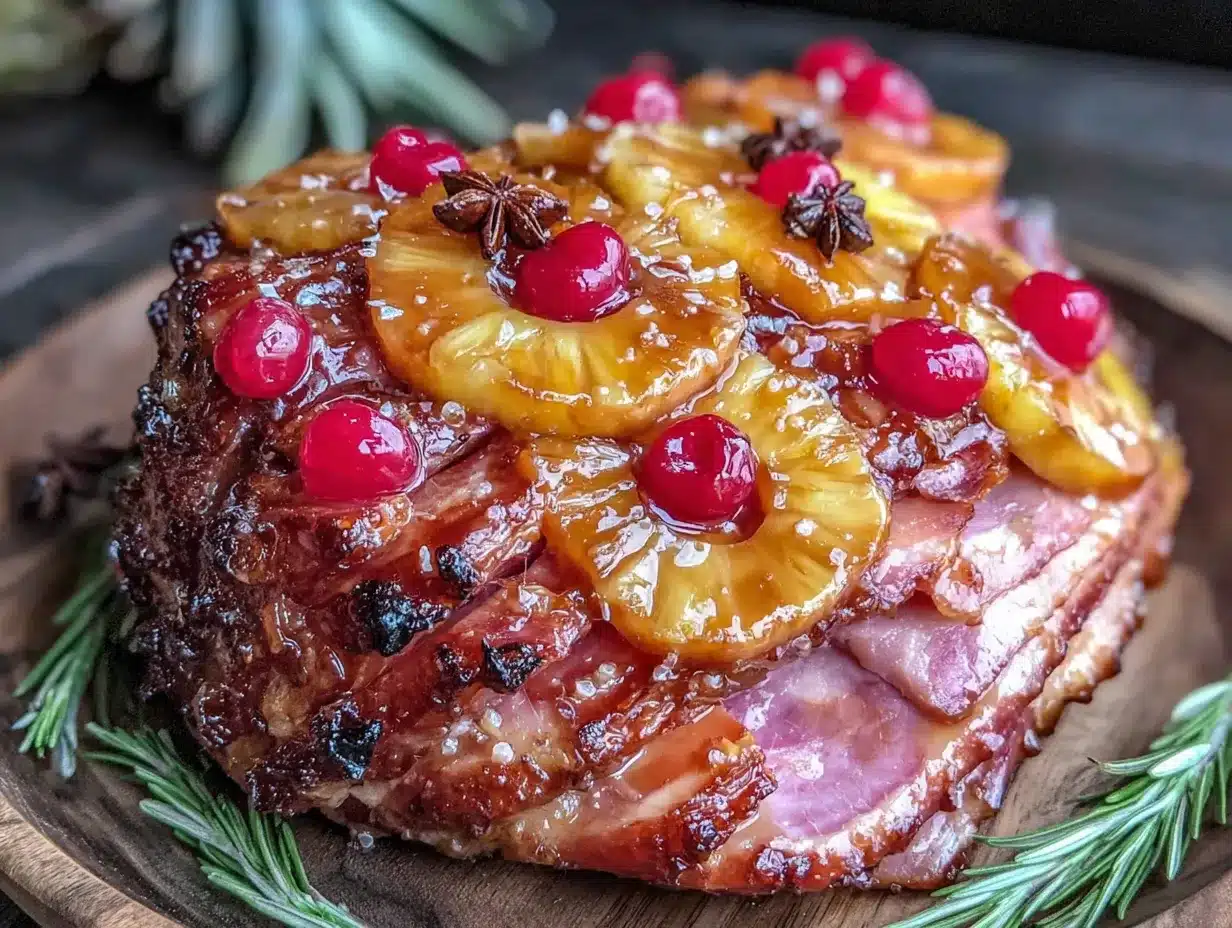
- Garnish (Optional): If you’re adding pineapple rings and cherries, arrange them on the ham during the last 15 minutes of baking. Secure them with toothpicks so they don’t slide off. They’ll get slightly caramelized and look like a holiday centerpiece.
- Rest and Serve: Once the ham hits 140°F, remove it from the oven and tent it loosely with aluminum foil. Let it rest for 15-20 minutes. This lets the juices redistribute so every slice is moist. Transfer to a cutting board, carve along the spiral cuts, and watch everyone grab their plates.
Sensory Cue: When the glaze is ready, it should coat the back of a spoon and smell like caramelized pineapple — sweet but with a little tang from the vinegar. When the ham is done, the glaze should be sticky and dark amber, and the kitchen should smell like Christmas morning.
Cooking Tips & Techniques
I’ve made this ham enough times to learn what works and what doesn’t. Let me save you some trouble.
Don’t Overcook It: This is the number one mistake. A fully cooked ham only needs to reach 140°F. If you go much higher, it’ll dry out and get tough. Use that thermometer religiously. I once left a ham in an extra 20 minutes while I was wrapping presents, and it was noticeably drier. Learn from my distraction.
Score Deep Enough: Those diamond cuts need to be about 1/4 inch deep. If you just scratch the surface, the glaze won’t penetrate and you’ll end up with a sweet crust but bland meat underneath. Go ahead and cut into the fat layer — it renders beautifully.
Save the Pan Drippings: After you carve the ham, pour those pan juices into a small bowl or jar. They’re liquid gold. Drizzle them over the sliced ham before serving, or use them to make a quick gravy. I’ve even used them to flavor green beans the next day — incredible.
Make Ahead Strategy: You can glaze and bake this ham a day ahead. Let it cool completely, then wrap it tightly in foil and refrigerate. To reheat, place it in a 300°F oven for about 20-30 minutes, basting with a little extra pineapple juice. It’ll taste just as good as fresh.
Double the Glaze: Seriously, make a double batch. You’ll want extra for passing at the table, and it keeps in the fridge for weeks. I always make extra and use it on pork chops or chicken later. It’s too good to waste.
Watch the Sugar: Brown sugar can burn if your oven runs hot. If you notice the glaze getting too dark before the ham is done, tent it loosely with foil. Better safe than smoky.
Variations & Adaptations
This recipe is flexible, and I love experimenting with different twists. Here are a few I’ve tried and loved.
Spicy Pineapple Glaze: Add 1 teaspoon of red pepper flakes or a minced chipotle pepper in adobo sauce to the glaze while it simmers. The heat balances the sweetness beautifully, and it’s amazing if you like a little kick. My brother-in-law requests this version every year.
Honey-Pineapple Version: Swap half the brown sugar for honey. It gives the glaze a floral sweetness and a slightly thinner consistency. You’ll need to simmer it a few minutes longer to thicken up. I did this one year when I ran out of brown sugar, and it was a happy accident.
Gluten-Free and Dairy-Free: This recipe is naturally both! Just double-check your Dijon mustard — most brands are gluten-free, but some add wheat-based thickeners. I use Annie’s or Maille, and we’ve never had an issue.
Orange-Pineapple Twist: Replace the apple cider vinegar with fresh orange juice and add a tablespoon of orange zest to the glaze. The citrus brightens everything up and makes it taste even more festive. I tried this for Easter one year and it was a hit.
Smoked Ham Variation: If you have a smoker, you can smoke the ham instead of baking it. Set your smoker to 225°F, apply the glaze every 30 minutes, and smoke until it reaches 140°F. The smoky flavor with the sweet glaze is next-level. I did this for a Fourth of July gathering and people lost their minds.
Leftover Makeover: Don’t throw away that ham bone! Use it to make a pot of split pea soup or ham and bean soup. The bone adds incredible flavor, and it’s like getting a second meal out of your Christmas dinner. I always plan for this.
Serving & Storage Suggestions
This ham is the star, but it plays well with others. Here’s how to serve it and keep it at its best.
Serving Temperature: Serve the ham warm, not piping hot. Let it rest for 15-20 minutes after baking, then carve and arrange on a platter. Drizzle some of the pan juices over the top for extra moisture and shine. It’s gorgeous on a bed of fresh herbs like rosemary or thyme.
What to Serve With It: This ham pairs beautifully with classic sides. Mashed potatoes, green bean casserole, roasted Brussels sprouts, or a simple salad all work. The sweetness of the glaze also loves something tangy — like a cranberry sauce or a vinegary coleslaw. I always put out a bowl of extra glaze for dipping.
Storage: Leftover ham keeps in the refrigerator for 3-5 days. Wrap it tightly in foil or place it in an airtight container. The glaze will continue to flavor the meat, so it might even taste better the next day.
Freezing: You can freeze leftover ham for up to 3 months. Slice it or chop it first, then wrap portions tightly in plastic wrap and foil. Thaw in the refrigerator overnight. It’s perfect for soups, casseroles, or quick sandwiches.
Reheating: The best way to reheat ham is gently. Place slices in a skillet with a splash of pineapple juice or water, cover, and warm over low heat for 5-7 minutes. Or microwave individual portions with a damp paper towel for 30-60 seconds. Avoid high heat — it’ll dry out the meat.
Flavor Development: Here’s a secret — this ham actually gets better after a day or two. The glaze soaks into the meat and the flavors meld together. I always save some specifically for ham sandwiches the day after Christmas. Trust me, it’s worth it.
Nutritional Information & Benefits
I’m not a nutritionist, but I can give you the basics. A 3-ounce serving of this ham (about the size of a deck of cards) contains roughly:
- Calories: 200-250
- Protein: 18-22 grams
- Fat: 8-12 grams
- Carbohydrates: 15-20 grams (from the glaze)
- Sugar: 12-16 grams (mostly added from the glaze)
Ham is a good source of protein, B vitamins (especially B6 and B12), zinc, and selenium. The pineapple in the glaze adds a small amount of vitamin C and manganese. That said, ham is also high in sodium, so if you’re watching your salt intake, go easy on the portions and balance it with low-sodium sides.
For dietary considerations: This ham is gluten-free and dairy-free as written. If you’re on a low-carb or keto diet, the glaze adds sugar, so you might want a smaller portion or a sugar-free glaze alternative. And yes, it’s totally fine for most holiday eating plans — Christmas is about celebration, after all.
I personally love that this recipe uses real, whole ingredients. No artificial flavors, no preservatives, just good food made with love. That’s the kind of cooking I believe in.
Conclusion
This Best Brown Sugar Pineapple Glazed Ham isn’t just a recipe — it’s a Christmas tradition waiting to happen. It started as a midnight experiment in a quiet kitchen, and now it’s the dish my family asks for every single year. The glaze is sweet and tangy, the ham is tender and juicy, and the whole thing comes together with ingredients you already have. What’s not to love?
I hope you’ll try it and make it your own. Maybe add a little extra pineapple, or skip the cloves if that’s not your thing. That’s the beauty of cooking — you can tweak and adjust until it’s perfect for your table. And when you take that first bite and see everyone around you smile, you’ll know it was worth it.
If you make this ham, I’d love to hear about it. Drop a comment below and tell me how it turned out, or share a photo of your Christmas table. And if you’ve got your own twist on the glaze, I’m all ears — I’m always looking for new ideas. Until then, happy cooking and Merry Christmas!
Frequently Asked Questions
Can I use a boneless ham instead of bone-in?
Yes, absolutely. Boneless hams cook faster — about 12-15 minutes per pound — and they’re easier to carve. Just keep an eye on the internal temperature and start checking early. The glaze works exactly the same way.
Do I have to use a spiral-cut ham?
Not at all. A regular bone-in ham works perfectly. You’ll just need to score it yourself and slice it after baking. Spiral-cut hams are convenient, but they’re also more expensive. A regular ham is budget-friendly and tastes just as good.
Can I make the glaze ahead of time?
Yes! You can make the glaze up to a week in advance. Store it in an airtight container in the refrigerator. When you’re ready to use it, warm it gently on the stove or in the microwave, stirring until it’s smooth and pourable.
How do I keep the ham from drying out?
The key is not overcooking it. Use a meat thermometer and pull it at 140°F. Also, basting every 20 minutes with the pan juices keeps it moist. And don’t skip the resting time — that lets the juices redistribute so every slice is tender.
What can I do with leftover ham?
So many things! Ham sandwiches, ham and cheese omelets, ham fried rice, split pea soup, ham and potato casserole, or just eat it cold straight from the fridge (no judgment here). The bone is perfect for making stock or soup. Leftovers are honestly one of the best parts of this recipe.
Pin This Recipe!
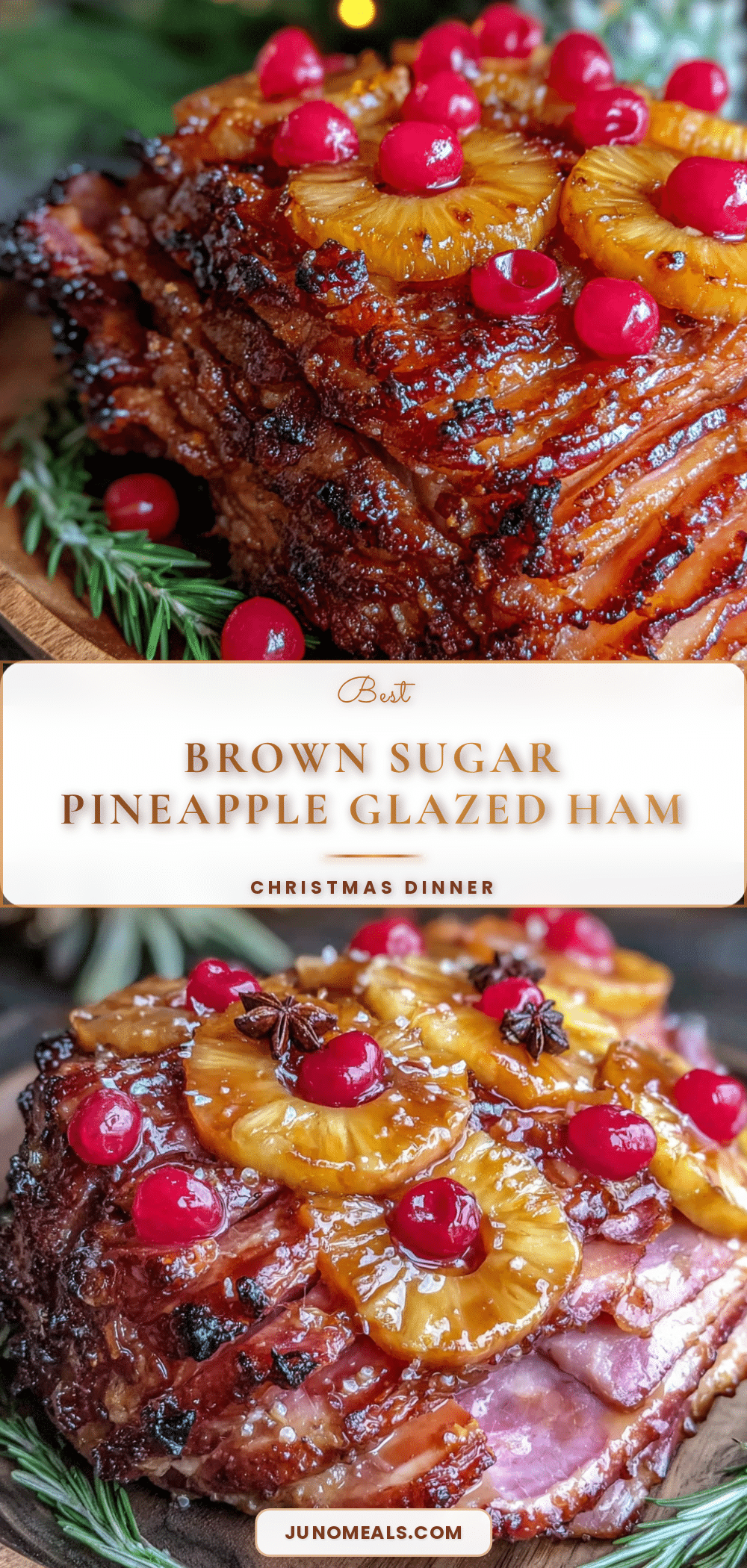
Best Brown Sugar Pineapple Glazed Ham for Christmas

A sweet and tangy glazed ham that’s perfect for Christmas dinner, made with a simple pantry-staple glaze that turns out tender and juicy every time.
- Prep Time: 15 minutes
- Cook Time: 2 hours 30 minutes
- Total Time: 2 hours 45 minutes
- Yield: 12-16 servings 1x
- Category: Main Course
- Cuisine: American
Ingredients
- 1 bone-in spiral-cut ham (8–10 lbs)
- 1 cup brown sugar, packed
- 1 cup pineapple juice
- 1/2 cup crushed pineapple, drained
- 2 tablespoons Dijon mustard
- 1 tablespoon apple cider vinegar
- 20–30 whole cloves (optional)
- Pineapple rings and maraschino cherries for garnish (optional)
Instructions
- Take the ham out of the fridge about 2 hours before baking to let it come to room temperature.
- Preheat oven to 325°F (163°C).
- Remove ham from packaging, rinse quickly under cool water, and pat dry. Place flat-side down in a roasting pan. Score the surface in a diamond pattern about 1/4 inch deep if not pre-scored.
- Stud with whole cloves at intersections of diamond scores (optional).
- In a small saucepan over medium heat, combine brown sugar, pineapple juice, crushed pineapple, Dijon mustard, and apple cider vinegar. Whisk until sugar dissolves. Bring to a gentle simmer, then reduce heat to low and cook for 5-7 minutes until slightly thickened (maple syrup consistency).
- Pour half the glaze over the ham and brush evenly over the entire surface.
- Bake ham uncovered for 15 minutes per pound (about 2 hours for 8 lbs, 2.5 hours for 10 lbs).
- Baste with pan juices every 20 minutes. If pan looks dry, add a splash of water or pineapple juice.
- About 30 minutes before done, brush on remaining glaze.
- Check internal temperature with a meat thermometer in the thickest part (avoid bone). Target 140°F (60°C) for fully cooked ham.
- If garnishing, arrange pineapple rings and cherries on ham during last 15 minutes of baking, securing with toothpicks.
- Remove ham from oven, tent loosely with foil, and let rest 15-20 minutes before carving.
Notes
For best results, don’t overcook the ham—use a thermometer and pull at 140°F. Save pan drippings to drizzle over sliced ham or make gravy. The glaze can be made up to a week ahead and stored in the refrigerator. Leftover ham keeps 3-5 days in the fridge or can be frozen for up to 3 months.
Nutrition
- Serving Size: 3 ounces
- Calories: 225
- Sugar: 14
- Sodium: 1200
- Fat: 10
- Saturated Fat: 3.5
- Carbohydrates: 17
- Protein: 20
Keywords: Christmas ham, brown sugar pineapple glazed ham, holiday ham, spiral ham, glazed ham