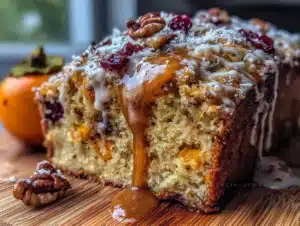
I figured apple cider donut bread would be a simple, one-bowl situation—just dump everything in and hope for the best. It took about ten minutes of staring at a gluey, sunken loaf for that fantasy to fall apart completely. The first time I tried this, I was chasing that perfect, bakery-style crumb you get from a fresh apple cider donut, but I ended up with something that tasted more like a sad, wet muffin.
Honestly, I almost gave up. But then I remembered the secret to a good donut isn’t the frying—it’s the texture. That soft, almost spongy interior with a slightly crisp edge. So I went back to the drawing board (and the kitchen) and started playing with the ratios. More apple cider, less liquid fat. A specific flour blend to mimic that chew. And of course, the real star: a thick, crackly cinnamon glaze that seeps into every warm crevice.
This loaf doesn’t pretend to be a donut. It’s better. It has all the cozy, spiced flavor of your favorite fall treat, but it’s a quick bread. No deep fryer, no yeast, no waiting around. It’s the kind of thing you make on a rainy Sunday morning, and then you find yourself cutting “just one more slice” all afternoon. The kind of recipe that makes your whole house smell like a cider mill. And really, that’s the whole point.
Why You’ll Love This Recipe
This isn’t just another apple bread recipe. After about six test loaves (someone had to eat them), I figured out the exact tricks to get that donut-shop texture without the hassle of frying. You get the best of both worlds: the moist, tender crumb of a quick bread and the iconic, spiced-sugar flavor of a classic apple cider donut.
- Quick & Easy: From mixing bowl to cooling rack in under an hour. No yeast, no proofing, no complicated steps.
- Simple Ingredients: You probably have most of this in your pantry right now. The star is good, fresh apple cider—not apple juice, which is too thin.
- Perfect for Fall Baking: This is the ultimate cozy treat for a crisp autumn morning, a Thanksgiving brunch, or just a Tuesday afternoon when you need a little comfort.
- Crowd-Pleaser: It disappears fast. Kids love the sweet glaze, and adults appreciate the deep, spiced flavor that isn’t too sugary.
- Unbelievably Delicious: That first bite—warm, with the glaze still a little soft and sticky—is pure magic. It’s like biting into a cloud that tastes like autumn.
What makes this version different? It’s the technique of reducing the apple cider first. This concentrates the apple flavor into a potent syrup, giving the bread an intense, fruity punch that a splash of cider just can’t match. It’s a small step that makes a huge difference. This isn’t just a good recipe; it’s the one you’ll make every single fall season.
What Ingredients You Will Need
This recipe uses simple, wholesome ingredients to deliver that classic donut flavor. Most are pantry staples, but a few key players make all the difference. Here’s what you’ll need to grab:
- For the Apple Cider Reduction:
- 1 cup (240 ml) apple cider (the good stuff, not filtered apple juice)
- For the Bread:
- 1 ½ cups (190g) all-purpose flour (spooned and leveled)
- 1 teaspoon baking powder
- ½ teaspoon baking soda
- ½ teaspoon salt
- 1 ½ teaspoons ground cinnamon
- ½ teaspoon ground nutmeg (freshly grated is best)
- ¼ teaspoon ground cloves
- ½ cup (1 stick / 113g) unsalted butter, softened
- ¾ cup (150g) packed light brown sugar (adds moisture and depth)
- ¼ cup (50g) granulated sugar
- 2 large eggs, at room temperature
- 1 teaspoon vanilla extract
- ¼ cup (60 ml) buttermilk (or ¼ cup milk + 1 teaspoon lemon juice, let sit 5 minutes)
- ½ cup (120 ml) reduced apple cider (from above)
- For the Cinnamon Glaze:
- 1 cup (120g) powdered sugar, sifted
- 2-3 tablespoons heavy cream (or milk for a thinner glaze)
- ½ teaspoon ground cinnamon
- ¼ teaspoon vanilla extract
- Pinch of salt
I really like using King Arthur Flour for the best structure, but any good all-purpose flour works. For the cider, look for a fresh, unfiltered variety from a local orchard or the refrigerated section of your grocery store. It has a much deeper, tarter flavor than the shelf-stable stuff. And don’t skip the buttermilk—it reacts with the baking soda to give the bread a super tender crumb. If you don’t have it, the milk-and-lemon-juice trick works perfectly.
Equipment Needed
You don’t need a bakery’s worth of gear for this one. Here’s what you’ll need to round up:
- 9×5-inch Loaf Pan: A standard metal or glass loaf pan is perfect. Line it with parchment paper for easy removal.
- Small Saucepan: For reducing the apple cider.
- Two Mixing Bowls: One for dry ingredients, one for wet.
- Electric Hand Mixer or Stand Mixer: A hand mixer is totally fine, but a stand mixer with the paddle attachment makes creaming the butter and sugar a breeze.
- Whisk and Rubber Spatula: For mixing and folding.
- Wire Cooling Rack: Essential for letting the bread cool evenly before glazing.
- Small Bowl: For whisking the glaze.
If you don’t have a hand mixer, you can absolutely cream the butter and sugar by hand with a wooden spoon. It’ll just take a little more elbow grease! I’ve done it plenty of times when my mixer was on the fritz. A good, sturdy spatula is your best friend for scraping the bowl and folding in the last bits of flour.
Preparation Method
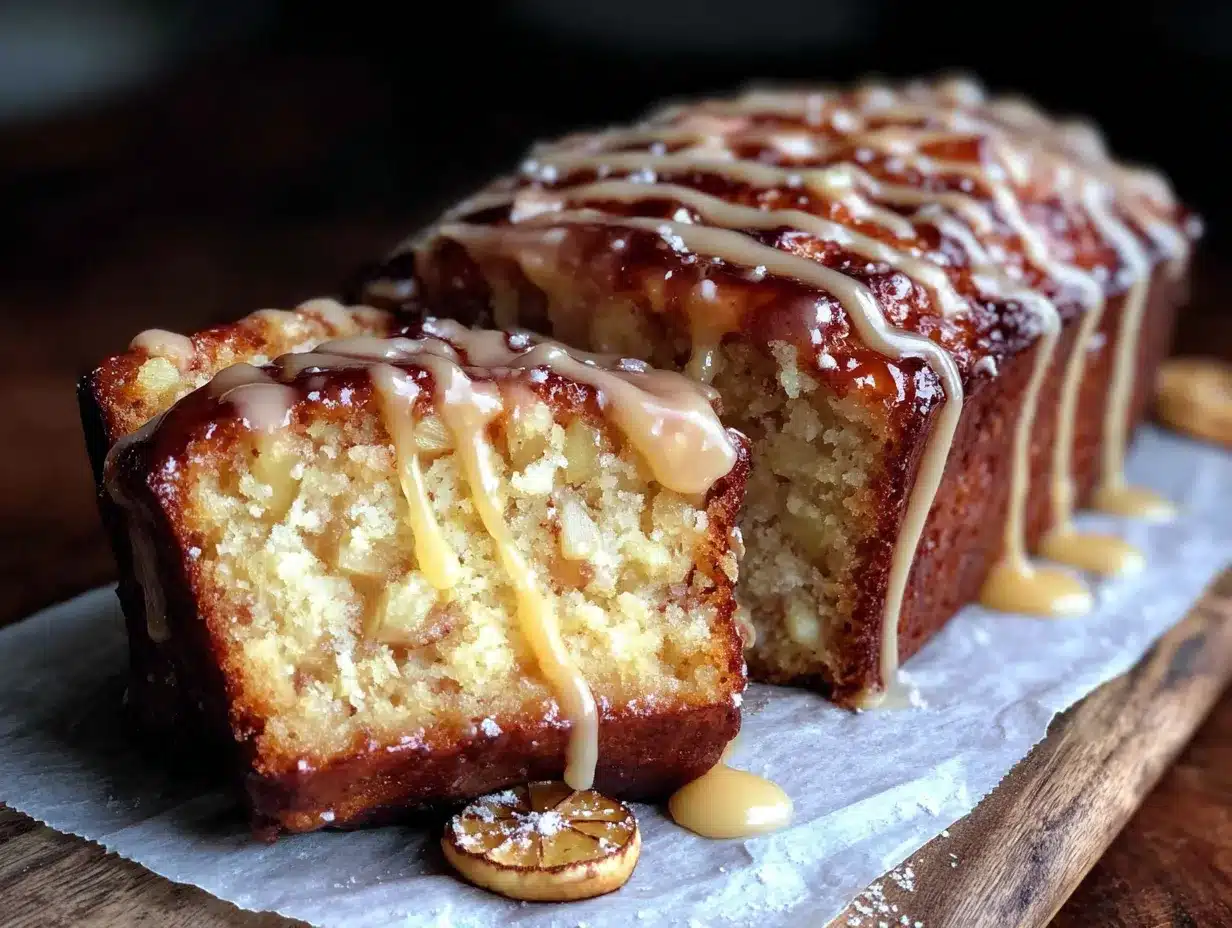
Let’s get baking! This process is straightforward, but a few key steps make all the difference. Follow along, and you’ll have a perfect loaf in no time.
- Reduce the Apple Cider: Pour the 1 cup of apple cider into a small saucepan. Bring it to a boil over medium-high heat, then reduce the heat to a simmer. Let it cook for about 12-15 minutes, stirring occasionally, until it reduces to about ¼ cup. It should be syrupy and deeply fragrant. Set it aside to cool completely. (Pro tip: don’t walk away—it can burn quickly at the end!)
- Preheat & Prep: Preheat your oven to 350°F (175°C). Grease your 9×5-inch loaf pan and line it with a strip of parchment paper, leaving overhang on the two long sides. This makes lifting the finished bread out so much easier.
- Whisk Dry Ingredients: In a medium bowl, whisk together the flour, baking powder, baking soda, salt, cinnamon, nutmeg, and cloves. Set aside.
- Cream Butter & Sugars: In a large bowl, beat the softened butter, brown sugar, and granulated sugar together until light and fluffy. This takes about 3-4 minutes with an electric mixer. You want it to look pale and airy.
- Add Eggs & Vanilla: Beat in the eggs one at a time, making sure each is fully incorporated before adding the next. Then, mix in the vanilla extract. The mixture might look a little curdled at this point—that’s totally normal.
- Alternate Wet & Dry: With the mixer on low speed, add about one-third of the dry ingredients, mixing just until combined. Then, add half of the buttermilk and the cooled, reduced apple cider, mixing again. Repeat with another third of the dry ingredients, the remaining buttermilk, and finally the last of the dry flour mixture. Mix until just combined. Do not overmix! A few streaks of flour are fine; overmixing makes the bread tough.
- Fold & Pour: Use your rubber spatula to give the batter a few gentle folds from the bottom of the bowl, ensuring everything is evenly incorporated. Pour the batter into your prepared loaf pan and spread it into an even layer.
- Bake the Bread: Bake for 50-60 minutes, or until a toothpick inserted into the center comes out clean or with just a few moist crumbs. The top should be a deep golden brown. If the top is browning too quickly (after about 40 minutes), tent it loosely with a piece of aluminum foil.
- Cool in Pan: Let the bread cool in the pan on a wire rack for about 15 minutes. Then, use the parchment paper to lift it out and transfer it to the rack to cool completely. (The bread must be completely cool before glazing, or the glaze will just melt right off.)
- Make the Glaze: While the bread cools, make the glaze. In a small bowl, whisk together the sifted powdered sugar, 2 tablespoons of heavy cream, cinnamon, vanilla, and salt. Whisk until smooth. If it’s too thick, add another tablespoon of cream. If it’s too thin, add a little more powdered sugar.
- Glaze & Serve: Once the bread is completely cool, pour the glaze over the top. Use the back of a spoon to spread it gently to the edges, letting it drip down the sides. Let the glaze set for about 15-20 minutes before slicing and serving.
Cooking Tips & Techniques
I’ve learned a few things the hard way so you don’t have to. Here are my best tips for perfect apple cider donut bread every time.
- Don’t Skip the Cider Reduction: This is non-negotiable. Reducing the cider concentrates the flavor into a sweet, tangy syrup. If you just add plain cider, your bread will be watery and bland. The reduction is the secret to that punchy apple taste.
- Room Temperature Ingredients Matter: Cold eggs and cold buttermilk will seize up your creamed butter, leading to a dense, heavy loaf. Let your eggs and buttermilk sit on the counter for 30 minutes before you start. It makes a huge difference in the texture.
- The “Muffin Method” is Your Friend: This recipe uses the creaming method, but the principle of not overmixing is still key. Mix the wet and dry ingredients until they are just combined. A few lumps are okay. Overmixing develops the gluten, which will make your tender donut bread tough and chewy.
- Check for Doneness Early: Ovens vary wildly. Start checking your loaf at the 50-minute mark with a toothpick. If it comes out clean, it’s done. If it’s still wet, give it another 5 minutes. A perfectly baked loaf will also spring back when you gently press the center.
- Patience with the Glaze: I know it’s hard to wait, but glazing a warm loaf is a disaster. The glaze will turn into a thin, sugary puddle that slides right off. Let the bread cool completely—at least an hour—before you drizzle that beautiful cinnamon glaze on top.
Variations & Adaptations
This recipe is a great base to play with. Here are a few ways I’ve changed it up when the mood strikes.
- Add Some Texture: Fold in ½ cup of chopped pecans or walnuts with the last of the flour. The crunch is a fantastic contrast to the soft crumb. I did this for a Thanksgiving brunch once, and it was a huge hit.
- Make it a Streusel Topping: Instead of the glaze, try a crumb topping! Mix ¼ cup flour, ¼ cup brown sugar, ¼ cup rolled oats, and 3 tablespoons cold butter until crumbly. Sprinkle it over the batter before baking. It gives you a crunchy, buttery top that’s just as good as the glaze.
- Spice it Up: Take the warm spices in a different direction. Add ½ teaspoon of ground ginger or a pinch of cardamom to the flour mixture. For a chai-spiced version, use a chai tea bag steeped in the cider before reducing it.
- Gluten-Free Option: I’ve had good luck substituting the all-purpose flour with a 1:1 gluten-free baking flour blend (like King Arthur’s Measure for Measure). Make sure the blend contains xanthan gum. The texture will be slightly more delicate, but the flavor is still spot-on.
- Make it a Loaf Cake: For a more decadent dessert, skip the glaze and make a cream cheese frosting. Beat 4 oz softened cream cheese with 2 tbsp butter, 1 cup powdered sugar, and ½ tsp vanilla. It’s rich, tangy, and completely over-the-top in the best way.
Serving & Storage Suggestions
This bread is wonderful in so many ways. Here’s how to enjoy it at its best.
- Serving Temperature: This bread is fantastic at room temperature, but it’s absolutely transcendent when served slightly warm. Pop a slice in the microwave for 10-15 seconds to soften the glaze and bring out the spices.
- Presentation: For a pretty presentation, slice the bread with a serrated knife. Arrange the slices on a wooden board or a pretty cake stand. A dusting of extra cinnamon on the plate looks lovely.
- What to Serve With It: A hot cup of coffee or a mug of spiced chai latte is the perfect pairing. For a more indulgent treat, serve it with a dollop of lightly sweetened whipped cream or a scoop of vanilla ice cream. It also makes a fantastic breakfast with a side of crispy bacon.
- Storage: Store the cooled, glazed bread in an airtight container at room temperature for up to 3 days. The glaze will soften slightly, but the flavor will be just as good. Do not refrigerate it, as that will dry the bread out.
- Freezing: This bread freezes beautifully. For best results, freeze the unglazed loaf. Wrap it tightly in plastic wrap, then in a layer of aluminum foil. It will keep for up to 3 months. When you’re ready to enjoy it, thaw it overnight in the refrigerator, bring it to room temperature, and then make the glaze fresh.
Nutritional Information & Benefits
While this is definitely a treat, it’s not without a few redeeming qualities. Here’s a general overview.
Estimated per slice (1/10th of loaf):
- Calories: ~320
- Fat: 14g
- Carbohydrates: 47g
- Protein: 4g
- Sugar: 30g
- Fiber: 1g
Health Benefits: The apple cider itself is a source of antioxidants and may aid in digestion. The cinnamon is a powerful spice known for its anti-inflammatory properties and can help with blood sugar regulation. This recipe is also a great source of comfort and joy, which is a nutritional benefit in its own right!
Dietary Considerations: This recipe contains gluten, dairy, and eggs. For a dairy-free version, you can substitute the butter with a high-quality vegan butter stick and use a dairy-free milk (like oat milk) in the glaze. For a gluten-free version, see the variations section above.
Conclusion
This apple cider donut bread is more than just a recipe; it’s a little slice of autumn that you can make any time you want. It’s the taste of a crisp apple orchard, a warm kitchen, and the simple joy of baking something that makes everyone around you smile. The reduced cider gives it an authentic, concentrated flavor that you just can’t get from a mix, and that cinnamon glaze is the perfect finishing touch.
I really hope you give this one a try. Don’t be afraid to make it your own—add some nuts, swap the spice blend, or double the glaze (I wouldn’t blame you). The best recipes are the ones that become a tradition in your own home. And if you make it, please come back and leave a comment telling me how it turned out. I love hearing about your baking adventures, and your feedback helps other readers too!
Happy baking, friends. Here’s to cozy kitchens and the best apple cider donut bread you’ll ever bake.
Frequently Asked Questions (FAQs)
Can I use apple juice instead of apple cider?
I really don’t recommend it. Apple juice is much thinner and sweeter, and it lacks the tart, complex flavor of real apple cider. The cider reduction is what gives this bread its signature tangy apple taste. If you use juice, the bread will be bland and overly sweet.
My glaze is too runny. How do I fix it?
No problem! If your glaze is too thin, it likely needs more powdered sugar. Add another tablespoon of sifted powdered sugar at a time and whisk until it reaches a thick, drizzly consistency. A good glaze should slowly drip off the whisk, not pour like water.
Can I make this into muffins instead of a loaf?
Absolutely! This batter makes fantastic muffins. Grease a 12-cup muffin tin or line it with paper liners. Fill the cups about ¾ full. Bake at 350°F (175°C) for 18-22 minutes, or until a toothpick inserted into the center comes out clean. Let them cool before glazing.
Why did my bread sink in the middle?
A sunken middle is usually a sign of one of two things: either the oven wasn’t hot enough, or the batter was overmixed. Make sure your oven is fully preheated to 350°F. Also, be very gentle when mixing the wet and dry ingredients together. Overmixing creates too much gluten, which can cause the bread to rise quickly and then collapse.
How do I get that perfect crackly glaze?
The secret is the ratio of liquid to powdered sugar. You want a thick glaze that holds its shape when you spoon it. Using heavy cream instead of milk adds richness and helps the glaze set with a slight crackle. Letting the bread cool completely before glazing is also crucial—a warm loaf will melt the glaze into a thin syrup.
Pin This Recipe!
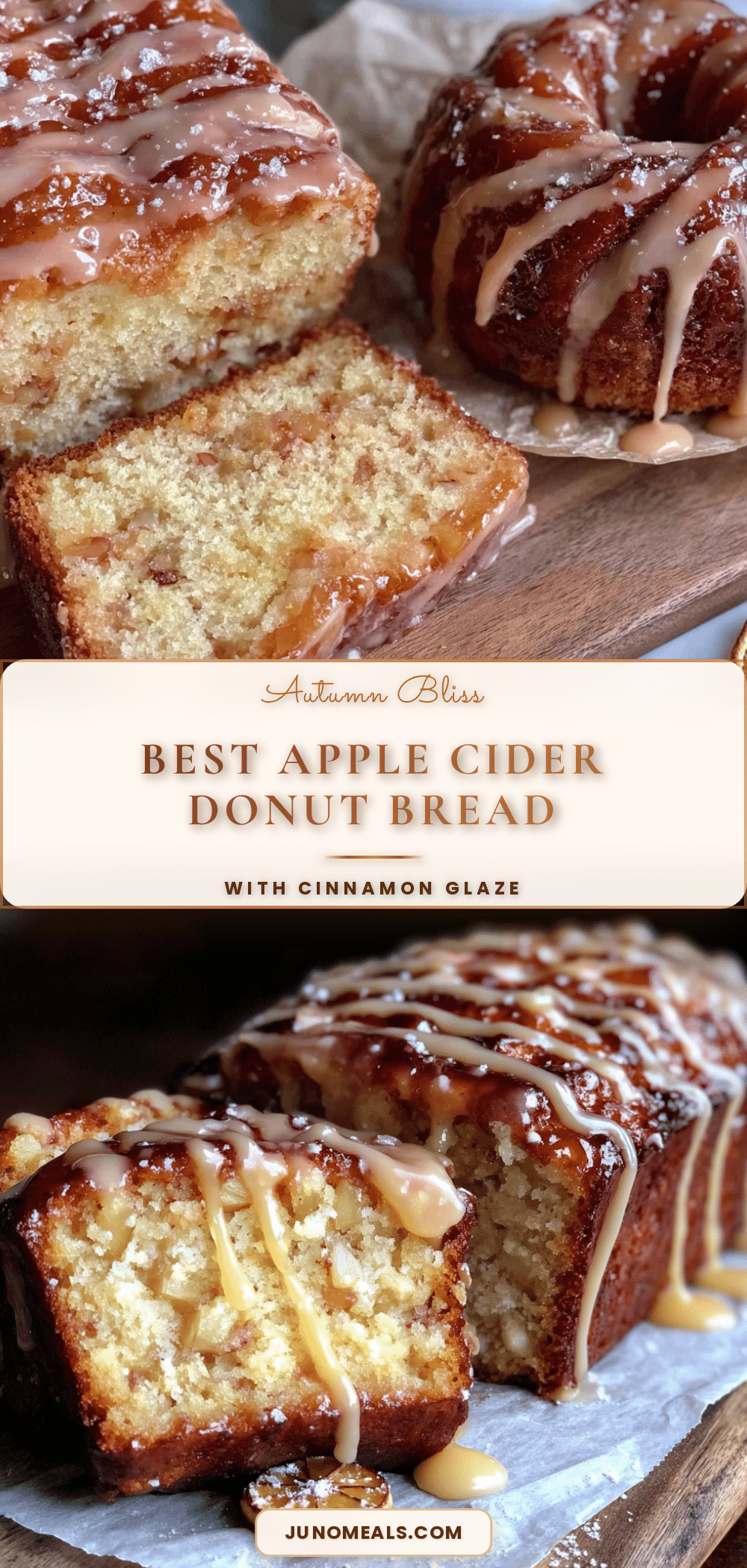
Best Apple Cider Donut Bread with Easy Cinnamon Glaze
This apple cider donut bread has all the cozy, spiced flavor of your favorite fall treat, but it’s a quick bread—no deep fryer, no yeast, no waiting around. The reduced apple cider gives it an authentic, concentrated flavor, and the cinnamon glaze is the perfect finishing touch.
- Prep Time: 15 minutes
- Cook Time: 50-60 minutes
- Total Time: 1 hour 15 minutes
- Yield: 10 servings 1x
- Category: Dessert
- Cuisine: American
Ingredients
- 1 cup (240 ml) apple cider (for reduction)
- 1 ½ cups (190g) all-purpose flour
- 1 teaspoon baking powder
- ½ teaspoon baking soda
- ½ teaspoon salt
- 1 ½ teaspoons ground cinnamon
- ½ teaspoon ground nutmeg
- ¼ teaspoon ground cloves
- ½ cup (1 stick / 113g) unsalted butter, softened
- ¾ cup (150g) packed light brown sugar
- ¼ cup (50g) granulated sugar
- 2 large eggs, at room temperature
- 1 teaspoon vanilla extract
- ¼ cup (60 ml) buttermilk
- ½ cup (120 ml) reduced apple cider (from above)
- 1 cup (120g) powdered sugar, sifted
- 2–3 tablespoons heavy cream
- ½ teaspoon ground cinnamon (for glaze)
- ¼ teaspoon vanilla extract (for glaze)
- Pinch of salt (for glaze)
Instructions
- Reduce the apple cider: Pour 1 cup of apple cider into a small saucepan. Bring to a boil over medium-high heat, then reduce to a simmer. Cook for about 12-15 minutes, stirring occasionally, until reduced to about ¼ cup. Set aside to cool completely.
- Preheat oven to 350°F (175°C). Grease a 9×5-inch loaf pan and line with parchment paper, leaving overhang on the long sides.
- In a medium bowl, whisk together flour, baking powder, baking soda, salt, cinnamon, nutmeg, and cloves. Set aside.
- In a large bowl, beat softened butter, brown sugar, and granulated sugar together until light and fluffy (about 3-4 minutes).
- Beat in eggs one at a time, then mix in vanilla extract.
- With mixer on low, add about one-third of the dry ingredients, mixing just until combined. Add half of the buttermilk and the cooled reduced apple cider, mixing again. Repeat with another third of dry ingredients, remaining buttermilk, and final third of dry ingredients. Mix until just combined; do not overmix.
- Use a rubber spatula to gently fold the batter a few times from the bottom. Pour into prepared loaf pan and spread evenly.
- Bake for 50-60 minutes, or until a toothpick inserted into the center comes out clean or with a few moist crumbs. If top browns too quickly, tent with foil after 40 minutes.
- Let bread cool in pan on a wire rack for 15 minutes, then lift out using parchment and transfer to rack to cool completely.
- While bread cools, make glaze: In a small bowl, whisk together sifted powdered sugar, 2 tablespoons heavy cream, cinnamon, vanilla, and salt until smooth. Adjust consistency with additional cream or powdered sugar as needed.
- Once bread is completely cool, pour glaze over top and spread gently to edges. Let glaze set for 15-20 minutes before slicing and serving.
Notes
Don’t skip the cider reduction—it concentrates the apple flavor. Room temperature ingredients are key for a tender crumb. Let the bread cool completely before glazing to prevent the glaze from melting off.
Nutrition
- Serving Size: 1 slice (1/10th of l
- Calories: 320
- Sugar: 30
- Sodium: 280
- Fat: 14
- Saturated Fat: 8
- Carbohydrates: 47
- Fiber: 1
- Protein: 4
Keywords: apple cider donut bread, cinnamon glaze, fall baking, quick bread, apple cider