Let me tell you, the sizzle of marinated beef hitting a hot pan, mingling with the faintly sweet and savory aroma of soy, garlic, and sesame, is enough to send your taste buds into overdrive. The first time I whipped up this savory Korean Bulgogi Beef Bowl with Kimchi, I was instantly hooked. It was one of those moments where you pause, take a deep breath, and just smile because you know you’re onto something truly special. When I was knee-high to a grasshopper, my grandma used to make these spicy, tangy kimchi bowls that felt like a warm hug on a cold day. Years ago, I tried to recreate that magic, and honestly, this recipe is my version—simple, packed with flavor, and dangerously easy to throw together.
My family couldn’t stop sneaking bites off the plates (and I can’t really blame them). Whether it was a quick weeknight dinner or a casual lunch with friends, this bulgogi beef bowl always stole the show. You know what’s great? It’s perfect for brightening up your Pinterest boards with something a little different yet comfortingly familiar. This recipe has become a staple for family gatherings and even gifting in little meal boxes. Trust me, when you make this savory Korean Bulgogi Beef Bowl with Kimchi, you’re going to want to bookmark it—and maybe make an extra batch just in case!
Why You’ll Love This Recipe
Honestly, this savory Korean Bulgogi Beef Bowl with Kimchi isn’t just good—it’s the kind of recipe that makes you close your eyes after the first bite. I’ve tested it multiple times in the name of research, of course, and it’s become a go-to for busy nights or impressing guests without breaking a sweat. Here’s why this recipe stands out:
- Quick & Easy: Comes together in under 30 minutes, perfect for last-minute cravings or a hassle-free dinner.
- Simple Ingredients: You likely already have what you need in your pantry, no special trips required.
- Perfect for Any Occasion: Whether it’s a cozy dinner or a casual weekend lunch, this bulgogi bowl fits right in.
- Crowd-Pleaser: Kids and adults alike can’t get enough of the tender, flavorful beef paired with tangy kimchi.
- Unbelievably Delicious: The sweet-savory marinade combined with spicy fermented kimchi is pure, nostalgic comfort.
What makes this recipe different? It’s all about balance—the marinade blends sweet, salty, and umami in just the right way, and the quick pickled kimchi adds that signature kick. It’s comfort food reimagined—faster, healthier, but with the same soul-soothing satisfaction. Honestly, once you try this, you’ll see why it’s become my secret weapon for effortless, flavorful meals.
What Ingredients You Will Need
This savory Korean Bulgogi Beef Bowl with Kimchi uses simple, wholesome ingredients to deliver bold flavor and satisfying texture without the fuss. Most ingredients are pantry staples, and you can often swap or adjust based on what you have on hand.
- For the Bulgogi Beef Marinade:
- 1 pound (450g) thinly sliced beef ribeye or sirloin (marbling adds richness)
- 1/4 cup (60ml) soy sauce (I prefer Kikkoman for a balanced saltiness)
- 2 tablespoons brown sugar (adds caramelized sweetness)
- 2 tablespoons sesame oil (toasty flavor essential for bulgogi)
- 4 cloves garlic, minced (fresh is best for punchy aroma)
- 1 teaspoon freshly grated ginger (brightens the marinade)
- 1/4 teaspoon black pepper
- 2 green onions, thinly sliced (for freshness)
- 1 tablespoon toasted sesame seeds (for garnish)
- For the Kimchi:
- 1 cup (about 150g) store-bought or homemade kimchi, chopped (adds tang and spice)
- For the Bowl Assembly:
- 2 cups cooked jasmine or short-grain rice (warm and fluffy is key)
- 1 cup steamed or sautéed vegetables (like spinach, mushrooms, or carrots)
- Optional: 1 fried egg per bowl (runny yolk adds richness)
Substitution tips: Use coconut aminos instead of soy sauce for gluten-free, or swap beef for thinly sliced chicken or tofu if you want a twist. For kimchi, store-bought works fine, but homemade adds a lovely fermented depth if you’re up for it.
Equipment Needed
- Large mixing bowl for marinating the beef (glass or stainless steel preferred to avoid metallic taste)
- Sharp knife and cutting board for slicing beef and veggies
- Large skillet or cast-iron pan for cooking the bulgogi beef (I love cast iron for that great sear)
- Steamer or pot for cooking vegetables and rice (or rice cooker for convenience)
- Measuring cups and spoons for precise marinade ratios
- Optional: Frying pan for cooking eggs
Don’t have a cast-iron skillet? A heavy-bottomed non-stick pan works just fine. If you’re on a budget, a good mixing bowl and basic kitchen knife are must-haves. Keep your knife sharp—it makes slicing thin beef ribbons so much easier and safer.
Preparation Method
- Prepare the Beef: Thinly slice 1 pound (450g) of ribeye or sirloin beef against the grain. If your butcher hasn’t done this, pop the beef in the freezer for 15 minutes first—it firms up and makes slicing super easy. Aim for slices about 1/8-inch (3mm) thick.
- Mix the Marinade: In a large bowl, combine 1/4 cup (60ml) soy sauce, 2 tablespoons brown sugar, 2 tablespoons sesame oil, 4 minced garlic cloves, 1 teaspoon grated ginger, and 1/4 teaspoon black pepper. Stir until the sugar dissolves.
- Marinate the Beef: Toss the sliced beef and 2 thinly sliced green onions in the marinade. Cover and let it sit for at least 20 minutes at room temperature, or up to 2 hours in the fridge. (Pro tip: marinating longer deepens flavor but don’t go beyond 4 hours or the texture gets mushy.)
- Cook the Rice and Veggies: While the beef marinates, cook 2 cups of jasmine or short-grain rice according to package instructions. Steam or sauté your choice of vegetables—spinach, mushrooms, or julienned carrots work beautifully here.
- Cook the Beef: Heat a large skillet or cast-iron pan over medium-high heat. Once hot, add the marinated beef in a single layer (you may need to do this in batches to avoid crowding). Cook for 2-3 minutes per side until browned and slightly caramelized. The beef should be tender and juicy—watch closely so it doesn’t dry out.
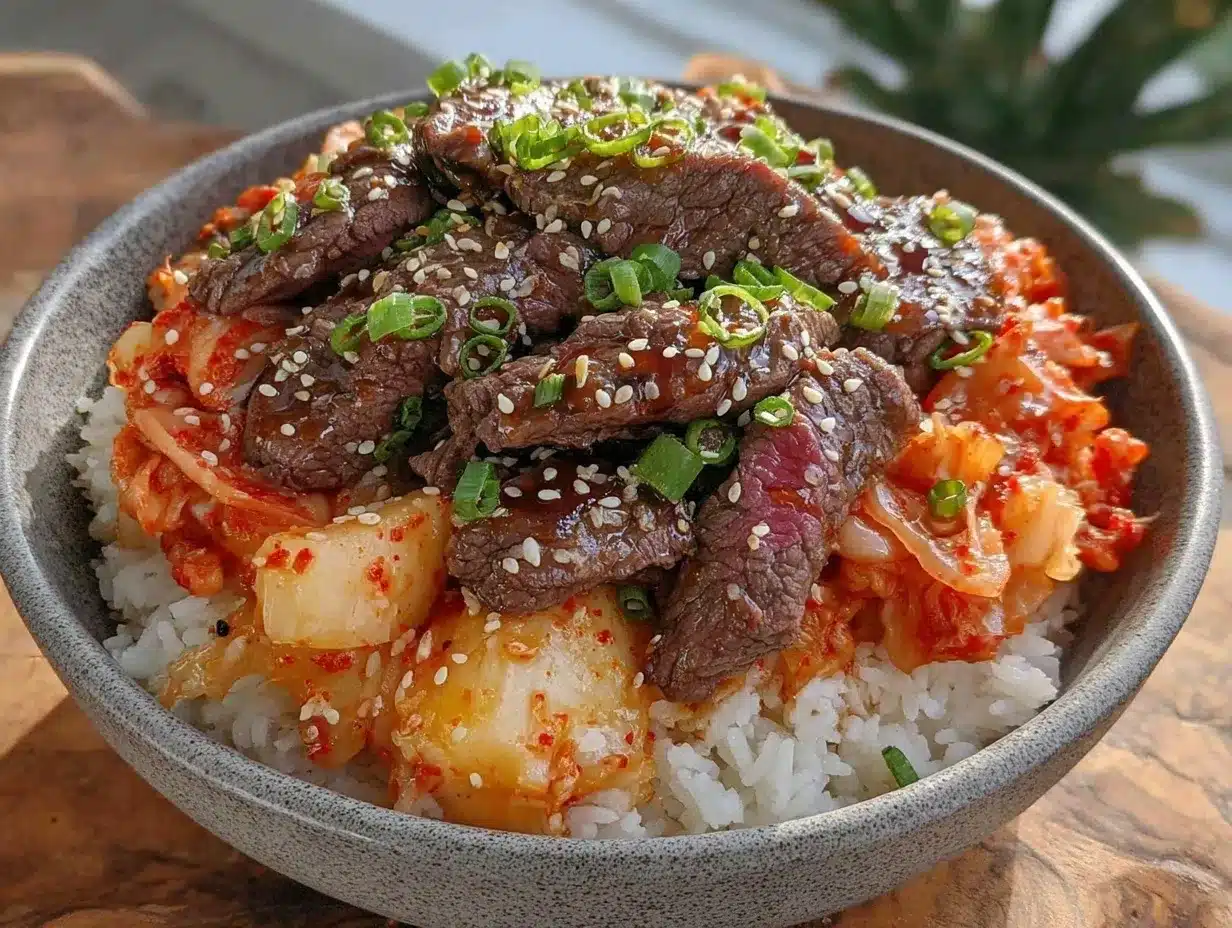
- Assemble the Bowl: Scoop warm rice into bowls, top with cooked bulgogi beef, steamed veggies, and a generous scoop of chopped kimchi. Sprinkle with toasted sesame seeds. If you’re adding fried eggs, pop one on top of each bowl for that luscious, runny yolk effect.
- Serve Immediately: Serve with extra kimchi or a drizzle of sesame oil if desired. Enjoy the burst of flavors!
If you notice the beef starts to stick, add a splash of water or a tiny bit more sesame oil. The caramelized bits on the pan are flavor gold—scrape them up and mix into the bowl for extra yum!
Cooking Tips & Techniques
Cooking bulgogi beef is all about quick, hot pan searing to lock in juices and develop that signature caramelized crust. Letting the beef marinate at room temperature for 20 minutes before cooking helps it cook evenly without chilling your pan.
One mistake I made early on was overcrowding the pan. You want each slice of beef to have contact with the pan for a perfect sear, so cook in batches if needed. Trust me, your patience pays off.
Use a sharp knife to slice the beef as thin as possible; it cooks faster and soaks up the marinade better. If you slice too thick, the texture can get chewy.
For layering flavors, don’t skip the green onions and toasted sesame seeds—they add freshness and a nutty crunch that makes all the difference. Also, keep your kimchi chilled until serving to maintain its vibrant tang and crunch.
Timing-wise, start your rice and veggies first, then marinate and cook the beef last so everything comes together warm. Multitasking helps, but if you’re new to bulgogi, focus on getting that beef cooked right—it’s the star of the show.
Variations & Adaptations
This savory Korean Bulgogi Beef Bowl with Kimchi can be tweaked to fit what you like or have on hand. Here are a few ideas I’ve tried:
- Vegetarian Version: Replace beef with thinly sliced mushrooms or tofu marinated in the same bulgogi sauce. Mushrooms soak up the flavor wonderfully.
- Spicy Kick: Add a teaspoon of gochujang (Korean chili paste) to the marinade for a fiery twist that’s still balanced.
- Low-Carb Bowl: Swap steamed rice for cauliflower rice or shredded cabbage for a lighter, carb-conscious meal.
- Seasonal Veggies: In spring or summer, fresh cucumber slices or julienned radish add a crisp, refreshing crunch.
- Different Proteins: Thinly sliced chicken breast or pork shoulder also works nicely marinated in bulgogi sauce.
Personally, I love mixing in kimchi fried rice leftovers into this bowl for a double dose of flavor and texture. The possibilities are endless, so feel free to get creative!
Serving & Storage Suggestions
Serve the bulgogi beef bowl warm, right after assembly for the best contrast of hot rice, tender meat, and cool, tangy kimchi. Presentation-wise, sprinkle a few extra sesame seeds and fresh green onion slices on top—it makes it look like you really know what you’re doing.
This bowl pairs wonderfully with a light cucumber salad or simple miso soup if you want a fuller Korean-inspired meal. For drinks, a cold barley tea or a crisp lager complements the flavors nicely.
Leftovers keep well in an airtight container in the refrigerator for up to 3 days. When reheating, I recommend warming the beef and rice separately to avoid sogginess, then assembling fresh with kimchi. You can also freeze the beef and rice separately for up to a month, but kimchi is best fresh or refrigerated.
Flavors actually deepen overnight, so if you’re not in a rush, let it rest a bit before serving. Just be sure to add fresh kimchi and garnish right before eating to keep that punchy crunch.
Nutritional Information & Benefits
This savory Korean Bulgogi Beef Bowl with Kimchi is a balanced meal packed with protein, probiotics, and essential vitamins. A typical serving provides around 450-500 calories, with roughly 30 grams of protein, making it satisfying and nourishing.
The beef offers iron and B vitamins, while kimchi contributes beneficial probiotics for gut health and a dose of vitamin C. Using sesame oil adds heart-healthy fats, and the garlic and ginger bring natural anti-inflammatory compounds.
For those following gluten-free diets, swap soy sauce for tamari or coconut aminos. This recipe is naturally low in carbs if enjoyed with cauliflower rice, and dairy-free as well. Just watch out if you have soy allergies or sensitivities to fermented foods.
From a wellness perspective, I find this meal not only comforting but a great way to sneak in probiotics and antioxidants without feeling like you’re sacrificing flavor. It’s hearty, wholesome, and just the kind of meal that makes you feel good inside and out.
Conclusion
So there you have it—this savory Korean Bulgogi Beef Bowl with Kimchi is worth every minute in your kitchen. It’s quick, packed with flavor, and perfect for mixing up your meal routine with something that feels both exotic and familiar. I love this recipe because it’s flexible, approachable, and always a crowd-pleaser. Whether you customize it with veggies, protein swaps, or spice levels, it’s bound to become a staple in your home too.
If you try this recipe, I’d love to hear how you made it your own! Drop a comment below sharing your tweaks, or tag me if you post your creation. Cooking should be fun, flavorful, and a little bit adventurous, and this bulgogi bowl hits all those notes. Here’s to many cozy, delicious meals ahead—happy cooking!
FAQs
What cut of beef is best for bulgogi?
Thinly sliced ribeye or sirloin is ideal for tender, juicy bulgogi. If you can’t find pre-sliced, freeze the beef slightly and slice very thin against the grain.
Can I make this recipe gluten-free?
Absolutely! Just swap the soy sauce for tamari or coconut aminos, and double-check your kimchi ingredients for any hidden gluten.
How spicy is the kimchi in this recipe?
The kimchi adds a mild to moderate spicy tang, but you can adjust by choosing milder or spicier kimchi varieties or adding gochujang to the marinade.
Can I prepare the bulgogi beef ahead of time?
Yes! Marinate the beef up to 2 hours ahead and keep it refrigerated. Cook just before serving for the best texture and flavor.
What can I use instead of rice for a low-carb option?
Cauliflower rice or shredded cabbage make great low-carb alternatives that keep the bowl light and fresh.
Pin This Recipe!
Savory Korean Bulgogi Beef Bowl Recipe Easy Homemade Kimchi Meal

A quick and easy Korean bulgogi beef bowl with a sweet-savory marinade, paired with tangy kimchi and steamed vegetables, perfect for a flavorful and comforting meal.
- Prep Time: 15 minutes
- Cook Time: 15 minutes
- Total Time: 30 minutes
- Yield: 4 servings 1x
- Category: Main Course
- Cuisine: Korean
Ingredients
- 1 pound (450g) thinly sliced beef ribeye or sirloin
- 1/4 cup (60ml) soy sauce
- 2 tablespoons brown sugar
- 2 tablespoons sesame oil
- 4 cloves garlic, minced
- 1 teaspoon freshly grated ginger
- 1/4 teaspoon black pepper
- 2 green onions, thinly sliced
- 1 tablespoon toasted sesame seeds
- 1 cup (about 150g) store-bought or homemade kimchi, chopped
- 2 cups cooked jasmine or short-grain rice
- 1 cup steamed or sautéed vegetables (spinach, mushrooms, or carrots)
- Optional: 1 fried egg per bowl
Instructions
- Thinly slice 1 pound (450g) of ribeye or sirloin beef against the grain, about 1/8-inch (3mm) thick. Freeze for 15 minutes if needed to firm up for easier slicing.
- In a large bowl, combine 1/4 cup (60ml) soy sauce, 2 tablespoons brown sugar, 2 tablespoons sesame oil, 4 minced garlic cloves, 1 teaspoon grated ginger, and 1/4 teaspoon black pepper. Stir until sugar dissolves.
- Toss the sliced beef and 2 thinly sliced green onions in the marinade. Cover and let sit for at least 20 minutes at room temperature or up to 2 hours in the fridge.
- Cook 2 cups of jasmine or short-grain rice according to package instructions. Steam or sauté 1 cup of vegetables such as spinach, mushrooms, or carrots.
- Heat a large skillet or cast-iron pan over medium-high heat. Add marinated beef in a single layer (cook in batches if needed). Cook 2-3 minutes per side until browned and caramelized.
- Assemble bowls by scooping warm rice, topping with cooked bulgogi beef, steamed vegetables, and a generous scoop of chopped kimchi. Sprinkle with toasted sesame seeds and add a fried egg if desired.
- Serve immediately with extra kimchi or a drizzle of sesame oil if desired.
Notes
Marinate beef for at least 20 minutes at room temperature for best flavor and even cooking. Avoid overcrowding the pan to get a good sear. Use a sharp knife to slice beef thinly. For gluten-free, substitute soy sauce with tamari or coconut aminos. Keep kimchi chilled until serving to maintain crunch.
Nutrition
- Serving Size: 1 bowl
- Calories: 475
- Sugar: 8
- Sodium: 900
- Fat: 22
- Saturated Fat: 5
- Carbohydrates: 38
- Fiber: 3
- Protein: 30
Keywords: bulgogi, Korean beef bowl, kimchi, easy Korean recipe, quick dinner, savory beef, homemade kimchi, bulgogi marinade