I did not trust the idea of pan-searing duck breast for a long time. Honestly, the thought of cooking duck skin until perfectly crisp while keeping the meat tender sounded more like a culinary fantasy than something achievable in a regular home kitchen. I’d tried duck before, sure, but it always ended up either rubbery or overly greasy. The cherry port reduction? That sounded like a fancy sauce better left to restaurant chefs, not something I could whip up without a dozen specialized ingredients.
One chilly evening, though, I decided to give it a real shot. I had a craving for something special but not complicated, so I bought a couple of duck breasts and a bottle of port wine. The kitchen filled with this rich, slightly sweet aroma as the sauce began to reduce, and I remember thinking, “Okay, maybe this isn’t a lost cause.” The crispy skin crackled under my knife, and the meat was juicy, pink, and tender—just like I’d hoped. The cherry port sauce was the perfect counterpoint, tangy and smooth, cutting through the richness of the duck without overpowering it.
That night, as I savored each bite, I quietly realized this recipe was sticking around in my kitchen repertoire. It’s the kind of dish that feels fancy but is honest and straightforward, with an easy sauce that doesn’t demand a wine cellar or hours of prep. If you’re like me, skeptical at first but open to a little magic, this pan-seared duck breast with cherry port reduction might just surprise you too.
Why You’ll Love This Recipe
This recipe has become a quiet favorite after many kitchen trials, balancing simplicity with restaurant-worthy results.
- Quick & Easy: Ready in under 40 minutes, it fits perfectly into weeknight or weekend plans without fuss.
- Simple Ingredients: No exotic spices or hard-to-find items; most are pantry staples or easy to source.
- Perfect for Special Occasions: Whether it’s a cozy dinner or a small celebration, this recipe impresses without stress.
- Crowd-Pleaser: Even those who usually avoid duck tend to come back for seconds.
- Unbelievably Delicious: The crisp skin and tender meat, paired with the fruity, rich cherry port sauce, make for next-level comfort food.
This isn’t your run-of-the-mill duck recipe. The key lies in the pan-searing technique that locks in juices while the skin crisps perfectly, plus the cherry port reduction that brings a tangy sweetness balancing the meat’s richness. I’ve tested this method multiple times, tweaking the timing and sauce consistency until it hit the sweet spot every single time.
For those who might hesitate over duck, this recipe turns the intimidating into the doable. It’s a little culinary confidence builder that rewards you with a plate you’ll quietly savor and maybe even share with someone special.
What Ingredients You Will Need
This recipe uses simple, wholesome ingredients to deliver bold flavor and satisfying texture without the fuss. Most of the ingredients are kitchen staples, with the cherry and port adding just the right touch of elegance.
- Duck Breasts: 2 skin-on duck breasts (about 6-8 ounces / 170-230 grams each). Look for fresh, high-quality duck for best flavor.
- Salt and Pepper: To season the duck generously before cooking.
- Olive Oil: 1 tablespoon for searing (neutral oil like grapeseed works too).
- Fresh Cherries: 1 cup, pitted (fresh is ideal, but frozen works fine when out of season).
- Port Wine: ½ cup (120 ml), a rich, sweet red port adds depth to the sauce. I prefer a medium ruby port for balance.
- Shallot: 1 small, finely chopped, for a subtle sweetness in the sauce.
- Balsamic Vinegar: 1 tablespoon, to add acidity and complexity to the reduction.
- Butter: 1 tablespoon, cold, to finish the sauce with silkiness.
- Fresh Thyme: A few sprigs, optional, for an herbal note in the sauce.
For substitutions, you can swap fresh cherries with frozen ones when out of season, just drain excess liquid well. If you don’t have port, a sweet red wine or sherry makes a decent alternative, though the flavor will shift slightly. Butter can be replaced with a dairy-free alternative if needed, and fresh thyme is optional but recommended for layering flavors.
Equipment Needed
- Heavy-Bottomed Skillet: Preferably cast iron or stainless steel for even heat and great searing. I’ve tried non-stick pans, but they don’t give that perfect skin crispiness.
- Tongs: Essential for flipping the duck breasts gently without piercing the meat.
- Saucepan or Small Skillet: For making the cherry port reduction sauce.
- Sharp Knife: For scoring the duck skin and slicing the cooked breasts.
- Cutting Board: For prepping ingredients and resting the meat.
If you don’t own a cast iron skillet, a heavy stainless steel pan works well too. Just make sure it can hold steady heat without hot spots. Maintaining your skillet by seasoning it regularly keeps it non-stick naturally and protects against rust.
Preparation Method
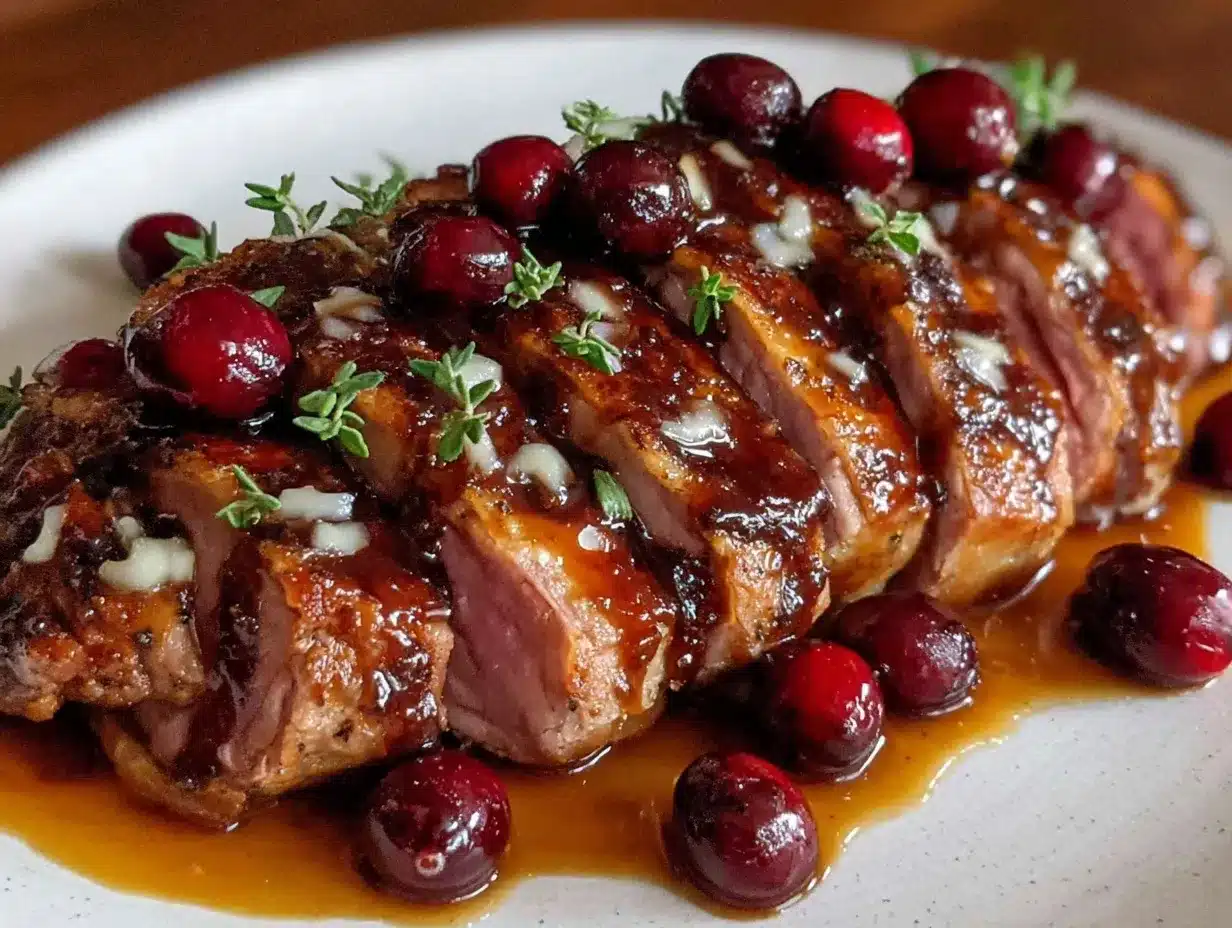
- Score the Duck Skin: Using a sharp knife, gently score the skin in a crisscross pattern without cutting into the meat. This helps render the fat and crisps the skin. Season both sides generously with salt and freshly ground pepper. (Prep time: 5 minutes)
- Heat the Skillet: Place your skillet over medium heat and add the olive oil. Let it warm until shimmering but not smoking.
- Sear the Duck Breasts: Place the duck breasts skin-side down in the pan. The skin should sizzle gently. Cook for about 6-8 minutes, adjusting the heat to avoid burning, until the skin is golden brown and crisp. You might want to press down lightly with a spatula for even contact. (Tip: The fat will render out; you can carefully pour some off if there’s too much.)
- Flip and Cook the Other Side: Turn the breasts over and cook for another 4-5 minutes, depending on thickness and your preferred doneness. For medium-rare, aim for an internal temperature around 135°F (57°C). Remove duck from the skillet and let it rest on a cutting board loosely tented with foil. Resting keeps juices locked in. (Rest time: 5-10 minutes)
- Make the Cherry Port Reduction: In a separate saucepan, add the chopped shallot and cook gently in a bit of duck fat (or olive oil) over medium heat until soft and fragrant—about 2 minutes.
- Add the fresh or thawed cherries, port wine, and balsamic vinegar to the pan. Bring to a simmer and reduce the liquid by half, stirring occasionally. This should take about 10-12 minutes. The sauce should thicken and coat the back of a spoon.
- Turn off the heat and whisk in the cold butter and fresh thyme leaves for a glossy finish.
- Slice and Serve: Slice the rested duck breasts thinly against the grain, arrange on plates, and spoon the cherry port reduction over the top or on the side.
Keep an eye on the sauce as it reduces; it can go from perfect to too thick quickly. If it gets too thick, you can whisk in a splash of water or more port to loosen it.
When slicing the duck, you’ll notice the contrast between the crisp skin and the tender, rosy meat beneath—it’s honestly worth every minute of patience.
Cooking Tips & Techniques
Cooking duck breast well can be tricky, but these pointers have saved me from a few disasters:
- Don’t skip scoring the skin: It’s key to rendering out the fat and achieving that coveted crispy texture. Just be gentle and shallow when scoring.
- Cook skin-side down first: The fat needs time to melt and crisp up. Start on medium heat and adjust so the skin browns slowly rather than burns.
- Use a meat thermometer: To avoid overcooking, check for 135°F (57°C) for medium-rare. The meat will carry over cook slightly while resting.
- Rest the meat: Letting the duck rest for at least 5 minutes keeps it juicy and easier to slice.
- Build sauce flavor early: Cooking shallots in duck fat adds richness to the cherry port reduction that you won’t get with just oil.
- Don’t rush the sauce reduction: Low and slow simmering develops depth, so patience here pays off.
Once, I rushed the sauce and ended up with a burnt edge that ruined the whole dish’s balance. Lesson learned: slow is better. Also, I learned that trimming an occasional stray piece of white membrane from the duck breast before cooking makes a huge difference in tenderness.
Variations & Adaptations
This recipe is versatile and open to tweaks:
- Fruit swaps: Instead of cherries, try cranberries or blackberries for a different sweet-tart profile—perfect for fall or winter menus.
- Gluten-Free: This recipe is naturally gluten-free, but double-check your balsamic vinegar and port labels if you have sensitivities.
- Cooking method: If you prefer, you can finish the duck breasts in a 400°F (200°C) oven after searing skin-side down for 5 minutes, then flip and roast 3-5 minutes to your preferred doneness.
- Herb variations: Rosemary or sage can be swapped in place of thyme for a different aromatic note.
- Personal twist: I sometimes add a teaspoon of honey or maple syrup to the cherry port sauce for subtle sweetness, especially when using tart frozen cherries.
For a lighter option, you can trim some of the duck fat before cooking, but that crispy skin is worth keeping most of! If you want a vegetarian twist, making a cherry port reduction over roasted mushrooms can bring some of those deep flavors without the meat.
Serving & Storage Suggestions
Serve the sliced duck breast warm, right after resting, with the cherry port reduction drizzled on top or in a small bowl alongside for dipping. The sauce is glossy and tangy, cutting through the richness.
This dish pairs beautifully with creamy mashed potatoes, roasted root vegetables, or a simple arugula salad dressed lightly with lemon juice and olive oil. A glass of red wine, such as Pinot Noir or Merlot, complements the cherry and port flavors nicely.
Leftovers keep well in an airtight container in the refrigerator for up to 2 days. Reheat gently in a low oven or skillet to avoid drying out the meat. The sauce can be reheated separately on low heat, adding a splash of water or port if it thickens too much.
Over time, the sauce flavors deepen, so it’s great for making ahead if you want to free up time on the day you serve.
Nutritional Information & Benefits
One serving of pan-seared duck breast with cherry port reduction (half the recipe) roughly contains:
| Calories | 400-450 kcal |
|---|---|
| Protein | 30-35 grams |
| Fat | 25-30 grams (mostly from duck fat) |
| Carbohydrates | 8-10 grams (from cherries and port) |
Duck is a rich source of iron, zinc, and B vitamins, supporting energy and immune health. The cherries add antioxidants and vitamin C, while port wine contributes natural polyphenols.
This recipe is naturally gluten-free and can be adapted for dairy-free diets by swapping butter with a plant-based alternative. Just keep in mind the fat content is relatively high, so balance the portion size if you’re watching intake.
Personally, I appreciate how this meal feels indulgent but still brings real nutritional benefits, making it a special treat rather than just empty calories.
Conclusion
Perfect pan-seared duck breast with cherry port reduction is a recipe that won me over slowly but surely, turning initial doubt into quiet confidence. It’s approachable enough for home cooks willing to try something a bit different and rewarding enough to serve for a memorable meal.
Feel free to adjust the sauce sweetness, herbs, or cooking method to suit your taste. This recipe has become a favorite of mine because it’s both comforting and a little bit fancy—the kind of dish you want to serve when you want to impress without stress.
If you enjoy dishes that combine simplicity with bold flavor, this duck breast recipe might just become your next kitchen staple. I’d love to hear how you make it your own, so please leave a comment sharing your tweaks or stories about cooking duck.
Happy cooking, and may your kitchen fill with the irresistible scent of crisped duck skin and rich cherry sauce!
Frequently Asked Questions
- Can I use frozen duck breasts for this recipe?
Yes, you can, but thaw them completely in the refrigerator before cooking to ensure even cooking and crispy skin. - How do I know when the duck breast is cooked properly?
Use a meat thermometer aiming for 135°F (57°C) for medium-rare. The meat should be pink but not bloody. - What if I don’t have port wine?
A sweet red wine or sherry can work as a substitute, but port is preferred for its richness and sweetness. - Can I make the cherry port reduction ahead of time?
Yes, the sauce keeps well in the fridge for up to 2 days and can be gently reheated before serving. - What sides go best with pan-seared duck breast?
Creamy mashed potatoes, roasted vegetables, or a fresh green salad complement the rich duck and tangy sauce nicely.
For more inspiration on desserts to follow this elegant main, you might enjoy the mini lemon blueberry cheesecakes recipe perfect for parties. And if you want to explore other recipes with approachable yet impressive flavors, check out the variety we have in the recipe collection.
Pin This Recipe!
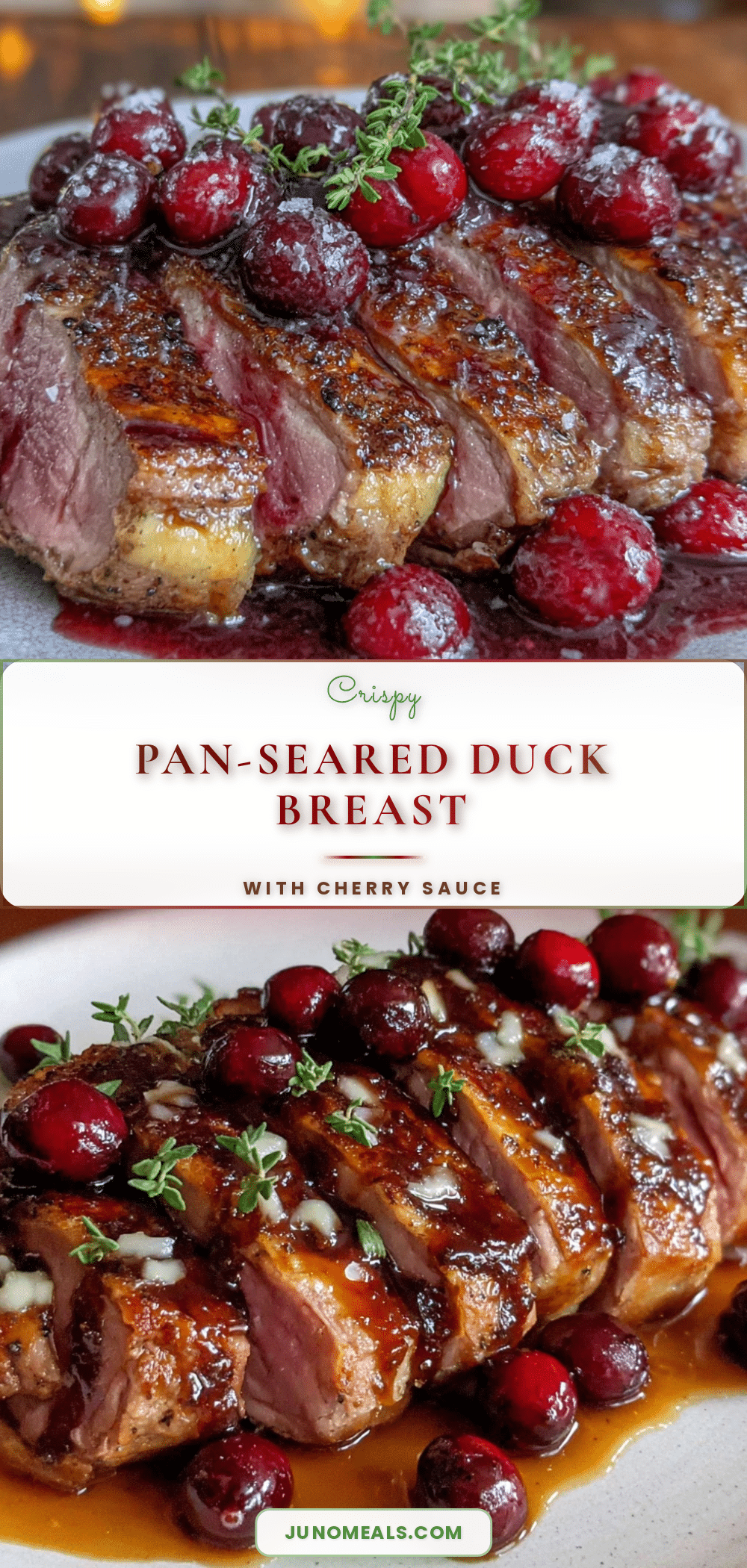
Perfect Pan-Seared Duck Breast Recipe with Easy Cherry Port Reduction

A straightforward and elegant recipe for pan-seared duck breast with perfectly crisp skin and a tangy, smooth cherry port reduction sauce. Ready in under 40 minutes, it balances simplicity with restaurant-quality results.
- Prep Time: 10 minutes
- Cook Time: 25-30 minutes
- Total Time: 35-40 minutes
- Yield: 2 servings 1x
- Category: Main Course
- Cuisine: French-inspired
Ingredients
- 2 skin-on duck breasts (about 6–8 ounces / 170–230 grams each)
- Salt and pepper, to season
- 1 tablespoon olive oil (or neutral oil like grapeseed) for searing
- 1 cup fresh cherries, pitted (frozen works if out of season)
- ½ cup (120 ml) port wine (medium ruby preferred)
- 1 small shallot, finely chopped
- 1 tablespoon balsamic vinegar
- 1 tablespoon cold butter
- A few sprigs fresh thyme (optional)
Instructions
- Score the duck skin in a crisscross pattern without cutting into the meat. Season both sides generously with salt and pepper. (Prep time: 5 minutes)
- Heat a heavy-bottomed skillet over medium heat and add olive oil. Warm until shimmering but not smoking.
- Place duck breasts skin-side down in the pan. Cook for 6-8 minutes, adjusting heat to avoid burning, until skin is golden brown and crisp. Press lightly with a spatula for even contact. Pour off excess fat if needed.
- Flip the duck breasts and cook for another 4-5 minutes for medium-rare (internal temperature about 135°F / 57°C). Remove from skillet and rest on a cutting board loosely tented with foil for 5-10 minutes.
- In a separate saucepan, cook chopped shallot gently in a bit of duck fat or olive oil over medium heat until soft and fragrant, about 2 minutes.
- Add cherries, port wine, and balsamic vinegar to the saucepan. Bring to a simmer and reduce by half, stirring occasionally, about 10-12 minutes until sauce thickens and coats the back of a spoon.
- Turn off heat and whisk in cold butter and fresh thyme leaves for a glossy finish.
- Slice rested duck breasts thinly against the grain, arrange on plates, and spoon cherry port reduction over or serve on the side.
Notes
Score the skin gently to render fat and achieve crispiness. Use a meat thermometer to reach 135°F (57°C) for medium-rare. Rest the meat for 5-10 minutes before slicing. Reduce sauce slowly to avoid burning. If sauce thickens too much, whisk in a splash of water or port to loosen.
Nutrition
- Serving Size: 1 duck breast with s
- Calories: 425
- Sugar: 7
- Sodium: 350
- Fat: 27
- Saturated Fat: 7
- Carbohydrates: 9
- Fiber: 1
- Protein: 32
Keywords: duck breast, pan-seared duck, cherry port reduction, easy duck recipe, weeknight dinner, elegant main course, crispy duck skin