I want honey garlic salmon right now. Not in an hour. Not after a trip to the grocery store. Right now. And I have everything except the energy for a complicated cleanup. That’s the real clincher, isn’t it? The craving is strong, but the dread of scrubbing a baking sheet and a separate skillet and a saucepan—that’s stronger. So I’m staring into the fridge, willing a solution to appear, and there it is. A single pack of salmon fillets, a bunch of asparagus that’s seen better days, and the usual suspects in the door: soy sauce, honey, garlic. The math solves itself. One pan. That’s the only rule tonight.
This isn’t a recipe I developed over weeks in a test kitchen. It came from a Tuesday night where takeout felt too expensive and cooking felt too exhausting. I wanted something that tasted like effort without requiring any. The honey garlic glaze does the heavy lifting—it’s sweet, salty, sticky, and just barely caramelized on the edges of the salmon. The asparagus roasts right alongside it, catching drips of that glaze and turning into the best part of the meal. Honestly, the first time I made this, I ate the asparagus before the salmon. No regrets.
The beauty of this dish is how little it asks of you. Fifteen minutes of prep, twenty minutes in the oven, and you’ve got a dinner that looks like you fussed. The salmon stays tender in the middle, the glaze reduces into something almost jammy, and the asparagus comes out crisp-tender with just a hint of char. It’s the kind of meal that makes you feel like you’ve got your life together, even if you’re eating it standing over the counter in your sweatpants. And honestly? That’s the only kind of dinner I want to make on a Tuesday.
Why You’ll Love This Recipe
Let me tell you why this one-pan honey garlic salmon has become my go-to for busy weeknights, lazy Sundays, and everything in between. I’ve tested this recipe more times than I can count, tweaking the glaze ratio and the roasting time until every element hits perfectly. Here’s what makes it stand out:
- Quick & Easy : From fridge to table in under 30 minutes. No marinating, no complicated techniques, just simple steps that deliver restaurant-quality results.
- Simple Ingredients : You probably have most of these in your pantry right now. Honey, soy sauce, garlic, and a little oil—that’s the whole glaze. No fancy grocery runs required.
- Perfect for Busy Weeknights : This is the definition of a stress-free dinner. One pan means minimal prep and even less cleanup. It’s weeknight cooking at its finest.
- Crowd-Pleaser : I’ve served this to picky eaters, seafood skeptics, and vegetable-avoiders. Every single plate came back clean. The sweet-savory glaze wins everyone over.
- Unbelievably Delicious : The salmon stays incredibly moist and flaky, while the glaze caramelizes into a sticky, glossy coating. The asparagus soaks up all that flavor and becomes the unexpected star of the show.
What sets this recipe apart from other salmon dishes is the balance. The honey isn’t cloying—it’s tempered by the saltiness of the soy sauce and the sharpness of fresh garlic. The asparagus roasts at the same temperature as the salmon, so everything finishes at the same time. No juggling multiple pans or worrying about timing. It’s a complete meal on a single sheet pan, and it works every single time.
This is the kind of recipe that makes you feel like a hero in the kitchen, even on nights when you’d rather be on the couch. It’s comfort food that’s secretly good for you—heart-healthy salmon, fiber-rich asparagus, and a glaze that tastes indulgent without being heavy. Perfect for impressing guests without breaking a sweat, or turning a regular Tuesday into something worth looking forward to.
What Ingredients You Will Need
This recipe relies on a handful of simple, wholesome ingredients that work together to create something greater than the sum of their parts. Here’s what you’ll need and why each one matters:
For the Salmon & Asparagus
- 4 salmon fillets (6 oz each) – Look for fillets that are roughly the same thickness so they cook evenly. Skin-on or skinless both work; I prefer skin-on because it helps keep the fish moist and gives you crispy skin if you sear it first.
- 1 bunch asparagus (about 1 lb) – Trim the woody ends by snapping them where they naturally break. Thicker spears hold up better to roasting and won’t get mushy.
- 2 tablespoons olive oil – Use a good quality extra virgin olive oil for drizzling. It helps the seasoning stick and promotes even browning.
- Salt and black pepper – Season generously. Kosher salt is my preference for its clean flavor and easy pinching.
- Optional: red pepper flakes – A pinch adds a subtle warmth that plays beautifully with the sweet glaze.
For the Honey Garlic Glaze
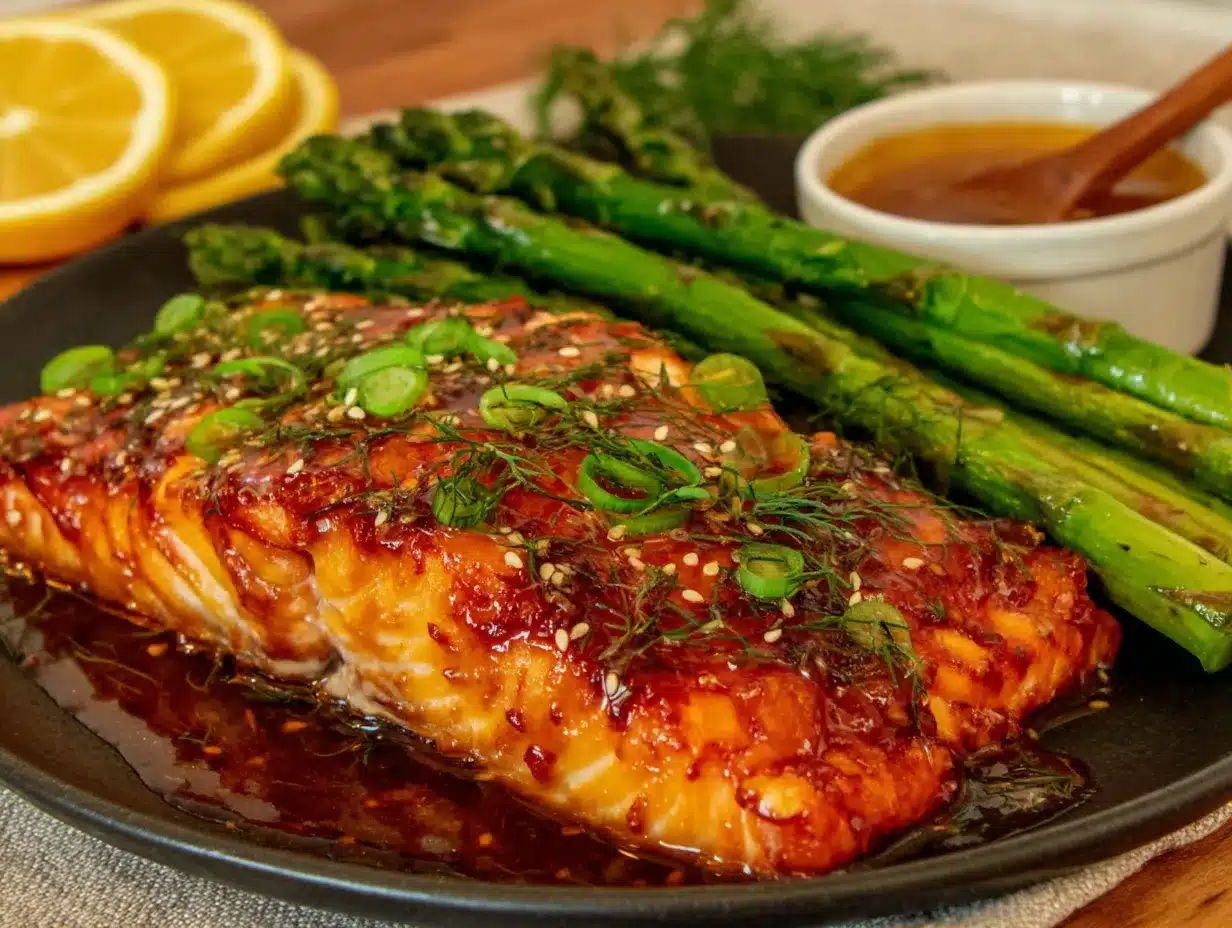
- 1/3 cup honey – Use a runny, mild honey like clover or wildflower. Avoid strongly flavored honey like buckwheat, which can overpower the dish.
- 1/4 cup low-sodium soy sauce – Low-sodium is key here; regular soy sauce will make the glaze too salty. Tamari or coconut aminos work well for gluten-free options.
- 4 cloves garlic, minced – Fresh garlic is non-negotiable. The pre-minced stuff in a jar lacks the pungent kick that makes this glaze special. I recommend using a microplane for the finest mince.
- 1 tablespoon rice vinegar – This brightens the glaze and cuts through the richness of the honey. Apple cider vinegar works in a pinch.
- 1 teaspoon sesame oil – Adds a nutty, toasty depth that makes the glaze taste complex. Don’t skip it—it’s a game-changer.
- 1 teaspoon cornstarch mixed with 2 teaspoons water – This slurry helps thicken the glaze so it clings to the salmon instead of running off. (I recommend using Argo or Bob’s Red Mill cornstarch for consistent results.)
For Garnish (Optional but Recommended)
- Sesame seeds – Toasted white or black sesame seeds add a lovely crunch and visual appeal.
- Sliced green onions – A pop of freshness and color that brightens the finished dish.
- Lemon wedges – A squeeze of lemon right before serving balances the sweetness and adds acidity.
Substitution Guidance: If you’re out of asparagus, broccoli florets or green beans work beautifully—just adjust the roasting time slightly. For a low-carb option, substitute the honey with a sugar-free honey alternative or monk fruit syrup. If you’re avoiding soy, coconut aminos are a perfect 1:1 swap for the soy sauce. And if you don’t have rice vinegar, a squeeze of fresh lemon juice will provide the acidity you need.
Equipment Needed
One of the best things about this recipe is how little equipment it requires. Here’s what you’ll need:
- Large rimmed baking sheet – A half-sheet pan (18×13 inches) is ideal. The rim catches any glaze drips and prevents messes in the oven. If you don’t have one, any oven-safe baking dish will work, but a sheet pan allows for better air circulation and more even roasting.
- Parchment paper or aluminum foil – Lining the pan makes cleanup even easier—just crumple and toss. I prefer parchment for its non-stick properties and because it doesn’t react with acidic ingredients.
- Small saucepan – For simmering the glaze. A 1-quart saucepan is perfect. If you don’t have one, you can make the glaze in a microwave-safe bowl in 30-second intervals.
- Whisk – For combining the glaze ingredients smoothly. A fork works in a pinch, but a whisk gives you better control.
- Chef’s knife and cutting board – For mincing garlic and trimming asparagus.
- Measuring spoons and liquid measuring cup – Accuracy matters with the glaze, so measure carefully.
- Instant-read thermometer – Optional but highly recommended. Salmon is perfectly cooked at 125-130°F for medium, or 135-140°F for well-done. No more guessing!
Budget-Friendly Tip: You don’t need expensive equipment for this recipe. A basic baking sheet from the grocery store costs under $10 and will last for years. Skip the fancy silicone mats—parchment paper is cheaper and works just as well.
Preparation Method
Let’s get cooking. This recipe moves fast, so I recommend reading through all the steps before you start. Here’s how to make the best one-pan honey garlic salmon of your life:
Step 1: Preheat and Prep
Preheat your oven to 400°F (200°C). While it’s heating, line your baking sheet with parchment paper or foil. This step saves you from scrubbing later, trust me. I learned this the hard way after a particularly sticky glaze disaster.
Step 2: Make the Glaze
In a small saucepan over medium heat, combine the honey, low-sodium soy sauce, minced garlic, rice vinegar, and sesame oil. Whisk everything together and bring it to a gentle simmer. Let it cook for 2-3 minutes, stirring occasionally, until the garlic becomes fragrant and the mixture thickens slightly. Now, add the cornstarch slurry—that’s the cornstarch mixed with water—and whisk continuously for about 30 seconds. The glaze will thicken noticeably, becoming glossy and smooth. Remove it from the heat and set it aside. (The glaze will continue to thicken as it cools, so don’t worry if it seems a bit thin at this stage.)
Step 3: Prep the Asparagus
Rinse the asparagus and pat it dry. Trim off the woody ends by bending each spear near the bottom—it will snap naturally where the tough part ends. Discard the ends. Arrange the asparagus spears in a single layer on your prepared baking sheet. Drizzle with 1 tablespoon of olive oil and season generously with salt and pepper. Toss gently with your hands to coat every spear. Spread them out evenly, leaving space in the center for the salmon.
Step 4: Prep the Salmon
Pat the salmon fillets dry with paper towels. This step is crucial—dry salmon browns better and the glaze will stick properly. Place the fillets skin-side down (if using skin-on) in the center of the baking sheet, nestled among the asparagus. Drizzle the remaining 1 tablespoon of olive oil over the salmon and season with salt and pepper.
Step 5: Glaze and Roast
Spoon about half of the honey garlic glaze over the salmon fillets, reserving the rest for later. Use a pastry brush or the back of a spoon to spread it evenly. Don’t drown them—you want a nice coating, not a pool of glaze. Slide the baking sheet into the preheated oven and roast for 12-15 minutes, depending on the thickness of your fillets. For 1-inch thick fillets, 13 minutes is usually perfect. The salmon should be opaque and flake easily with a fork, and the asparagus should be tender but still bright green.
Step 6: Finish and Serve
Remove the baking sheet from the oven. Immediately brush the remaining glaze over the salmon—this second coating gives you that gorgeous, sticky finish. Let everything rest for 2-3 minutes. This allows the juices to redistribute and the glaze to set. Sprinkle with sesame seeds and sliced green onions, and serve with lemon wedges on the side. (Pro tip: squeeze a little lemon over the asparagus too—it brightens everything up.)
Sensory Cue: At the 10-minute mark, your kitchen should smell like caramelized honey and roasted garlic. The edges of the salmon will look slightly darker and the glaze will be bubbling. The asparagus should be bright green with a few browned spots—that’s where the flavor lives.
Cooking Tips & Techniques
After making this recipe more times than I can count, I’ve picked up a few tricks that make a real difference. Here’s what I wish someone had told me:
Don’t overcrowd the pan. If your baking sheet is too small, the asparagus will steam instead of roast, and the salmon won’t brown properly. Use the largest sheet pan you have, or split everything between two pans. Your veggies will thank you.
Room temperature salmon cooks more evenly. Take the fillets out of the fridge 10-15 minutes before cooking. Cold salmon straight from the fridge will cook unevenly—the outside will be done while the center is still raw. Letting it come up slightly in temperature prevents this.
Watch the glaze carefully. Honey burns easily. If your glaze starts to smell like caramel or looks too dark, your oven might be running hot. I’ve definitely had a batch go from perfect to scorched in 60 seconds. Keep an eye on it during the last few minutes of roasting.
My biggest failure? The first time I made this, I skipped the cornstarch slurry. The glaze was thin and watery, and it all pooled at the bottom of the pan instead of coating the salmon. The flavor was there, but the texture was disappointing. Never skip the slurry—it’s what gives you that gorgeous, glossy finish that makes this dish look professional.
Multitasking tip: While the salmon roasts, use that time to set the table, make a quick side salad, or pour yourself a glass of wine. This recipe gives you 15 minutes of hands-off time—use it wisely.
For consistent results: Invest in an instant-read thermometer. Salmon is perfectly cooked at 125-130°F for medium (my preference) or 135-140°F for well-done. It takes the guesswork out of cooking fish and guarantees perfect results every time.
Variations & Adaptations
This recipe is incredibly versatile. Here are some of my favorite ways to change it up:
Spicy Honey Garlic Salmon: Add 1 teaspoon of sriracha or gochujang to the glaze for a fiery kick. The heat balances beautifully with the sweetness of the honey. I’ve also tried it with a pinch of cayenne pepper, and it’s fantastic if you like things spicy.
Lemon Herb Version: Swap the rice vinegar for fresh lemon juice and add 1 teaspoon of dried thyme or oregano to the glaze. Finish with extra lemon zest and fresh parsley. This version is brighter and more Mediterranean in flavor—perfect for spring and summer.
Low-Carb/Keto Adaptation: Replace the honey with a sugar-free honey alternative or monk fruit syrup. The glaze will still thicken and caramelize beautifully. Serve with extra roasted vegetables or cauliflower rice instead of traditional sides.
Sheet Pan Meal Expansion: Add cubed sweet potatoes or baby potatoes to the pan alongside the asparagus. Toss them in olive oil and seasonings first, then roast for 10 minutes before adding the salmon and asparagus. Everything finishes at the same time, and you get a complete meal in one pan.
Air Fryer Method: Cook the salmon and asparagus in an air fryer at 375°F for 8-10 minutes. The glaze gets even stickier and more caramelized in the air fryer. Just make sure your basket isn’t overcrowded.
Personal Favorite: I once added a tablespoon of Dijon mustard to the glaze on a whim, and it was incredible. The mustard adds a tangy depth that cuts through the sweetness and makes the flavor more complex. Try it—you won’t be disappointed.
Serving & Storage Suggestions
Serving Temperature: This dish is best served warm, straight from the oven. The glaze is at its stickiest and most flavorful when fresh. Let it rest for 2-3 minutes after roasting, but don’t let it sit too long—the glaze will start to harden as it cools.
Presentation: Arrange the salmon fillets on a platter with the asparagus alongside. Drizzle any remaining glaze from the pan over everything. Garnish with sesame seeds, sliced green onions, and lemon wedges. A sprinkle of flaky sea salt right before serving adds a lovely crunch and saltiness.
Complementary Dishes: This salmon pairs beautifully with steamed jasmine rice, quinoa, or couscous to soak up the extra glaze. A simple green salad with a light vinaigrette balances the richness. For a heartier meal, serve with roasted potatoes or crusty bread. And if you’re in the mood for something sweet afterward, these mini lemon blueberry cheesecakes make the perfect light and refreshing dessert.
Storage: Store leftovers in an airtight container in the refrigerator for up to 3 days. The salmon will lose some of its flakiness upon reheating, but the flavor remains delicious. I often make extra on purpose just for lunch the next day—it’s fantastic cold over a salad.
Reheating: The best way to reheat is in a 300°F oven for 5-7 minutes, or until warmed through. The microwave will work in a pinch, but it can make the salmon rubbery and the asparagus soggy. If using the microwave, heat in 30-second intervals at 50% power.
Freezer: You can freeze cooked salmon for up to 2 months. Wrap each fillet tightly in plastic wrap, then place in a freezer-safe bag. Thaw overnight in the refrigerator before reheating. The texture won’t be quite as perfect as fresh, but it’s still great for quick lunches.
Flavor Development: The glaze actually gets better after a day in the fridge—the flavors meld and deepen. Don’t be afraid to make this a day ahead if you’re planning a dinner party. Just reheat gently before serving.
Nutritional Information & Benefits
Here’s the estimated nutritional breakdown for one serving (1 salmon fillet plus asparagus):
| Nutrient | Amount per Serving |
|---|---|
| Calories | 420 |
| Protein | 38g |
| Fat | 18g |
| Carbohydrates | 28g |
| Fiber | 3g |
| Sugar | 24g |
| Sodium | 680mg |
Health Benefits: Salmon is packed with omega-3 fatty acids, which support heart and brain health. It’s also an excellent source of high-quality protein, vitamin D, and B vitamins. Asparagus is rich in fiber, folate, and vitamins A, C, and K. Together, they make a nutrient-dense meal that’s as good for you as it is delicious.
Dietary Considerations: This recipe is naturally gluten-free when using tamari or coconut aminos instead of soy sauce. It’s also dairy-free and low-carb friendly with the honey substitution mentioned earlier. The main allergens are fish and soy, so adjust accordingly for your dietary needs.
Personal Note: I love that this recipe feels indulgent but is actually packed with nutrition. It’s the kind of meal that makes you feel good—not just because it tastes amazing, but because you know you’re fueling your body well. That’s a win in my book.
Conclusion
This one-pan honey garlic salmon with asparagus is proof that you don’t need complicated techniques or a sink full of dishes to make something truly special. It’s the recipe I turn to when I want to feel like I’ve got my life together, even on the messiest of days. The sweet-savory glaze, the tender flaky salmon, the perfectly roasted asparagus—it all comes together in under 30 minutes with minimal effort.
I encourage you to make this recipe your own. Play with the glaze, swap in different vegetables, adjust the spice level to your liking. That’s the beauty of a simple dish—it leaves room for your own creativity. And when you find your perfect version, I’d love to hear about it.
Have you tried this recipe? Did you make any adaptations? Drop a comment below and let me know how it turned out. And if you’re looking for more easy, delicious dinner ideas, check out our full collection of recipes for endless inspiration. Happy cooking!
Frequently Asked Questions
Can I use frozen salmon for this recipe?
Yes, but thaw it completely in the refrigerator overnight first. Pat it very dry before cooking—frozen salmon releases more water as it thaws, which can make the glaze watery. Avoid cooking salmon straight from frozen, as it will cook unevenly.
How do I know when the salmon is fully cooked?
The easiest way is to use an instant-read thermometer. Insert it into the thickest part of the fillet—it should read 125-130°F for medium or 135-140°F for well-done. If you don’t have a thermometer, look for the salmon to be opaque and flake easily when gently pressed with a fork.
Can I make the glaze ahead of time?
Absolutely! The glaze can be made up to 3 days in advance and stored in an airtight container in the refrigerator. Let it come to room temperature before using, or warm it gently on the stove. You may need to whisk in a splash of water if it has thickened too much.
What can I use instead of asparagus?
Broccoli florets, green beans, zucchini slices, or bell pepper strips all work beautifully. Adjust the roasting time based on the vegetable—broccoli and green beans take about the same time as asparagus, while zucchini may need a few minutes less. Just make sure everything is cut to a similar size for even cooking.
How do I prevent the glaze from burning?
Keep an eye on your oven temperature—honey burns easily at high heat. If your oven runs hot, reduce the temperature to 375°F and extend the cooking time by 2-3 minutes. Also, make sure the glaze isn’t pooling in the pan; it should be brushed onto the salmon in an even layer. Any excess glaze can be brushed on after roasting.
Pin This Recipe!
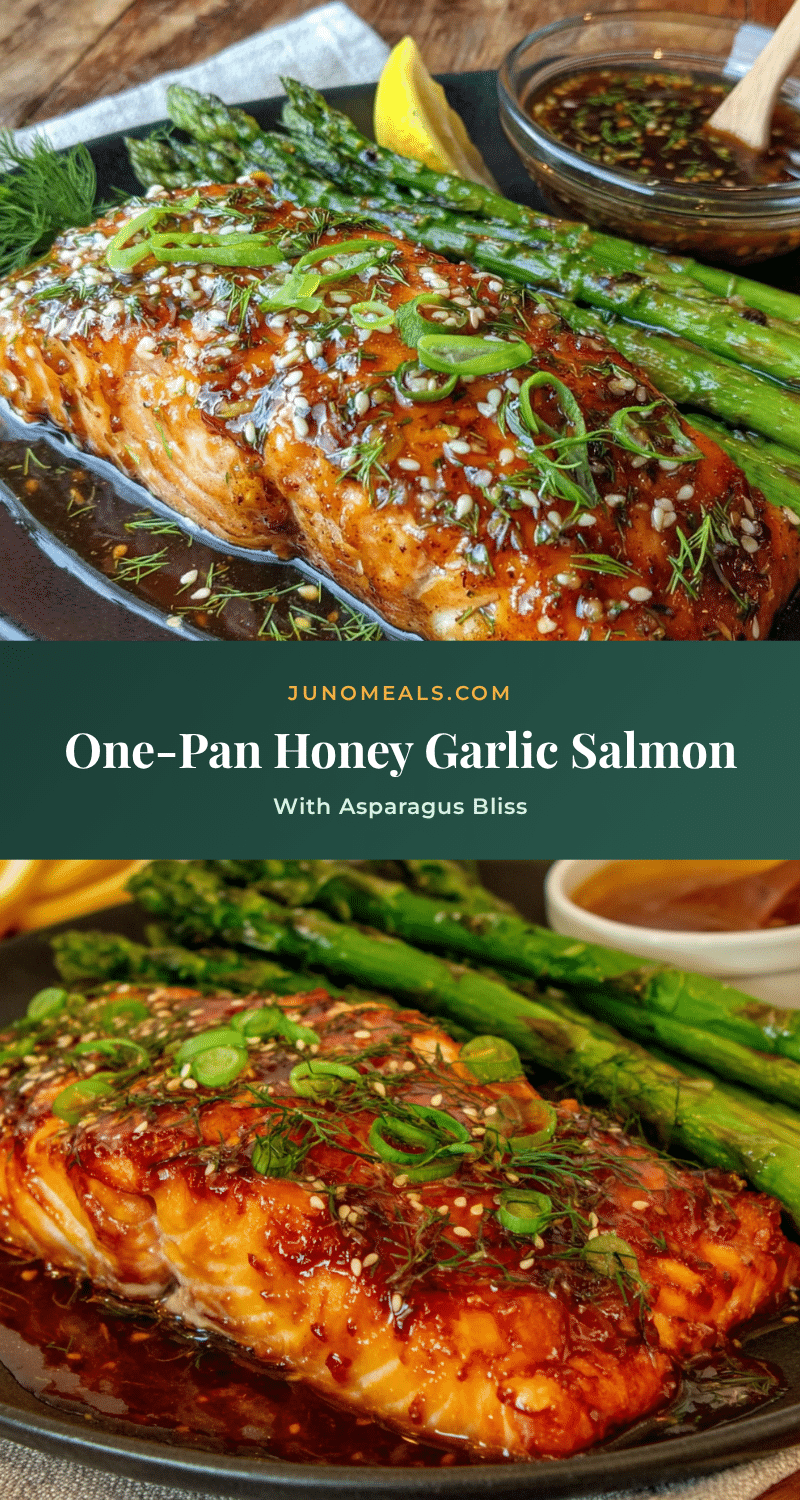
Easy One-Pan Honey Garlic Salmon with Asparagus

A quick and easy weeknight dinner featuring tender salmon fillets and crisp-tender asparagus roasted together in a sweet and savory honey garlic glaze. Ready in under 30 minutes with minimal cleanup.
- Prep Time: 15 minutes
- Cook Time: 15 minutes
- Total Time: 30 minutes
- Yield: 4 servings 1x
- Category: Main Course
- Cuisine: American
Ingredients
- 4 salmon fillets (6 oz each)
- 1 bunch asparagus (about 1 lb), trimmed
- 2 tablespoons olive oil
- Salt and black pepper to taste
- Optional: red pepper flakes
- 1/3 cup honey
- 1/4 cup low-sodium soy sauce
- 4 cloves garlic, minced
- 1 tablespoon rice vinegar
- 1 teaspoon sesame oil
- 1 teaspoon cornstarch mixed with 2 teaspoons water
- Optional: sesame seeds for garnish
- Optional: sliced green onions for garnish
- Optional: lemon wedges for serving
Instructions
- Preheat oven to 400°F (200°C). Line a large rimmed baking sheet with parchment paper or foil.
- In a small saucepan over medium heat, combine honey, soy sauce, minced garlic, rice vinegar, and sesame oil. Whisk and bring to a gentle simmer. Cook for 2-3 minutes until fragrant and slightly thickened.
- Add the cornstarch slurry (cornstarch mixed with water) and whisk continuously for about 30 seconds until the glaze thickens and becomes glossy. Remove from heat and set aside.
- Rinse asparagus and pat dry. Trim woody ends by snapping each spear near the bottom. Arrange asparagus in a single layer on the prepared baking sheet. Drizzle with 1 tablespoon olive oil, season with salt and pepper, and toss to coat. Spread evenly, leaving space in the center for the salmon.
- Pat salmon fillets dry with paper towels. Place skin-side down (if using skin-on) in the center of the baking sheet among the asparagus. Drizzle with remaining 1 tablespoon olive oil and season with salt and pepper.
- Spoon about half of the honey garlic glaze over the salmon fillets, spreading evenly. Reserve the remaining glaze.
- Roast for 12-15 minutes, depending on thickness (13 minutes for 1-inch thick fillets). Salmon should be opaque and flake easily; asparagus should be tender but bright green.
- Remove from oven. Immediately brush the remaining glaze over the salmon. Let rest for 2-3 minutes.
- Sprinkle with sesame seeds and sliced green onions. Serve with lemon wedges.
Notes
For best results, use room temperature salmon (let sit out 10-15 minutes before cooking). Do not skip the cornstarch slurry—it gives the glaze its glossy, sticky finish. Watch the glaze carefully as honey burns easily. If your oven runs hot, reduce temperature to 375°F and extend cooking time by 2-3 minutes.
Nutrition
- Serving Size: 1 salmon fillet plus
- Calories: 420
- Sugar: 24
- Sodium: 680
- Fat: 18
- Saturated Fat: 3
- Carbohydrates: 28
- Fiber: 3
- Protein: 38
Keywords: honey garlic salmon, one-pan salmon, sheet pan salmon, salmon with asparagus, easy salmon recipe, weeknight dinner, healthy salmon