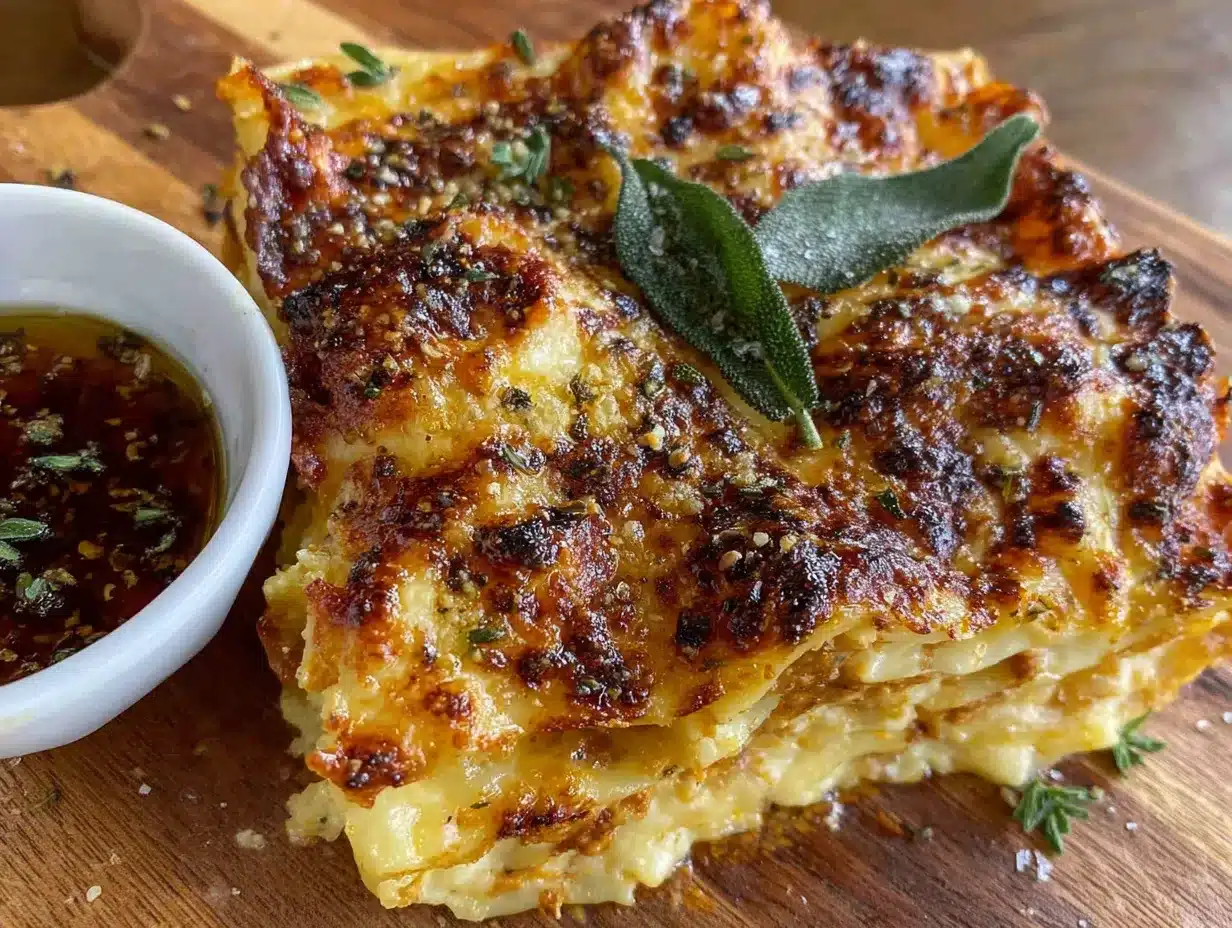
My husband took a bite of this lasagna, stopped chewing, and just stared at the pan for a solid five seconds before reaching for another serving. That’s the kind of reaction you don’t script, you know? I had spent the afternoon layering roasted squash with a creamy béchamel and crispy sage, honestly unsure if the whole thing would work or flop. Seeing him go back for thirds without saying a word told me everything I needed to know.
This creamy butternut squash lasagna with sage brown butter isn’t your average Sunday dinner. It’s the kind of dish that feels fancy enough for a holiday but simple enough that you don’t need a culinary degree to pull it off. The sweetness of the squash plays off the nutty, toasty brown butter, and each bite has that perfect balance of creamy, cheesy, and crispy edges. I’ve made a lot of lasagnas in my time—some good, some forgettable—but this one? It stuck.
The first time I tested it, I used too much béchamel and ended up with a soupy mess. The second time, I forgot the sage entirely. By the third attempt, I had learned to trust my instincts and let the ingredients do the heavy lifting. That’s the version I’m sharing with you today—the one that finally made my husband pause mid-chew and look at me like I’d just discovered fire.
Why You’ll Love This Recipe
This isn’t just another lasagna recipe floating around the internet. Here’s what makes this one different—and why you’ll find yourself making it on repeat:
- No-Boil Noodles Save Time — You don’t need to boil the noodles beforehand. They cook right in the sauce, absorbing all that creamy goodness while saving you a dirty pot.
- Simple Ingredients, Big Flavor — No exotic ingredients here. Butternut squash, butter, sage, cheese, and noodles. That’s it. You probably have most of this in your kitchen right now.
- Perfect for Fall Gatherings — This lasagna screams autumn. It’s the star of Thanksgiving sides, cozy Sunday dinners, or that dinner party where you want to impress without stress.
- Crowd-Pleaser Across Generations — Kids love the creamy texture, adults love the sophisticated sage brown butter, and everyone loves the cheesy top layer.
- Make-Ahead Friendly — Assemble it the night before, pop it in the fridge, and bake it when you’re ready. Your future self will thank you.
The real magic here is the sage brown butter. It’s not complicated—just butter and sage leaves cooked until golden and fragrant—but it transforms the entire dish. The nutty aroma fills your kitchen and makes everything taste like it’s been simmering for hours. Trust me, once you try this version, you’ll never go back to plain lasagna again.
What Ingredients You Will Need
This recipe uses simple, wholesome ingredients to deliver bold flavor and satisfying texture without the fuss. Most of these are pantry staples, but a few key players make all the difference.
For the Butternut Squash Layer
- 1 medium butternut squash (about 2-3 pounds), peeled, seeded, and cubed (look for firm, heavy squash with no soft spots)
- 2 tablespoons olive oil (extra virgin adds nice flavor, but regular works fine)
- Salt and black pepper, to taste
For the Sage Brown Butter Sauce
- 1/2 cup unsalted butter (I prefer Kerrygold for its rich, creamy taste)
- 12-15 fresh sage leaves (plus extra for garnish)
- 3 cloves garlic, minced
- 1/4 cup all-purpose flour (for thickening the béchamel)
- 3 cups whole milk, warmed (use 2% if needed, but whole milk gives the creamiest result)
- 1/2 cup heavy cream (optional but recommended for extra richness)
- 1/2 teaspoon nutmeg, freshly grated (pre-ground works, but fresh is noticeably better)
- Salt and white pepper, to taste (white pepper keeps the sauce looking pristine)
For the Lasagna Assembly
- 12 no-boil lasagna noodles (Barilla is my go-to brand; they hold up beautifully)
- 2 cups shredded mozzarella cheese (low-moisture, whole milk kind melts best)
- 1 cup grated Parmesan cheese (avoid pre-shredded if possible—freshly grated melts smoother)
- 1 cup ricotta cheese (full-fat for best texture; drain any excess liquid before using)
- 1 egg, lightly beaten (helps bind the ricotta layer)
Substitution Guidance
If you’re gluten-free, use gluten-free no-boil lasagna noodles and a 1:1 gluten-free flour blend for the béchamel. For a dairy-free version, swap the butter with vegan butter, use unsweetened oat milk, and choose dairy-free cheese shreds. The texture won’t be exactly the same, but it’ll still be delicious.
Equipment Needed
- 9×13-inch baking dish — Glass or ceramic works best for even heat distribution
- Large rimmed baking sheet — For roasting the squash
- Medium saucepan — For making the béchamel sauce
- Large skillet — For browning the butter and sage
- Chef’s knife and cutting board — For prepping the squash
- Vegetable peeler — Makes quick work of removing squash skin
- Whisk — Essential for lump-free béchamel
- Mixing bowls — For combining ricotta and other ingredients
- Aluminum foil — For covering the lasagna while baking
If you don’t have a 9×13 dish, a 10×10 square pan works too—just adjust the noodle layers accordingly. And honestly, you can skip the vegetable peeler and just buy pre-cut squash from the store. No judgment here.
Preparation Method
Step 1: Roast the Squash
Preheat your oven to 400°F (200°C). Toss the cubed butternut squash with olive oil, salt, and pepper on a baking sheet. Spread it in a single layer—crowding the pan will steam the squash instead of roasting it. Roast for 25-30 minutes, flipping halfway through, until the squash is tender and lightly caramelized around the edges. Let it cool slightly, then mash it with a fork or potato masher. You want a chunky texture, not baby food smooth.
Step 2: Make the Sage Brown Butter
While the squash roasts, melt the butter in a large skillet over medium heat. Add the fresh sage leaves and cook, swirling the pan occasionally, until the butter turns golden brown and smells nutty—about 4-5 minutes. Watch closely; brown butter can go from perfect to burnt in seconds. Remove the sage leaves and set them aside for garnish. Add the minced garlic to the brown butter and cook for 30 seconds until fragrant.
Step 3: Prepare the Béchamel
Whisk the flour into the brown butter mixture and cook for 1-2 minutes, stirring constantly. Slowly pour in the warmed milk while whisking vigorously to prevent lumps. Add the heavy cream and nutmeg, then continue whisking until the sauce thickens enough to coat the back of a spoon—about 5-7 minutes. Season with salt and white pepper. Taste it. Adjust the seasoning. Set aside.
Step 4: Mix the Ricotta Layer
In a small bowl, combine the ricotta cheese, beaten egg, 1/2 cup of Parmesan, and a pinch of salt. Mix until smooth. This layer adds creaminess and helps bind the lasagna together.
Step 5: Assemble the Lasagna
Spread a thin layer of béchamel on the bottom of your 9×13 dish. Place 4 no-boil noodles on top, slightly overlapping if needed. Spread half of the mashed squash over the noodles, followed by dollops of half the ricotta mixture. Sprinkle with 1/3 of the mozzarella and 1/4 cup of Parmesan. Repeat the layers: noodles, remaining squash, remaining ricotta, more cheese. For the final layer, add the last 4 noodles, pour the remaining béchamel over the top, and sprinkle with the rest of the mozzarella and Parmesan.
Step 6: Bake to Perfection
Cover the dish with aluminum foil and bake at 375°F (190°C) for 30 minutes. Remove the foil and bake for another 15-20 minutes until the top is golden and bubbly. Let it rest for at least 10 minutes before slicing—this is crucial. If you cut too soon, the layers will slide everywhere and you’ll end up with a beautiful mess.
Pro tip: If the top is browning too quickly, tent the foil loosely over the dish for the last 10 minutes of baking.
Cooking Tips & Techniques
I’ve made this lasagna more times than I can count, and I’ve learned a few things the hard way. Here’s what I wish someone had told me before my first attempt:
- Don’t skip roasting the squash. I tried boiling it once to save time, and the result was watery, flavorless mush. Roasting concentrates the sweetness and gives you that caramelized depth that makes this dish special.
- Warm your milk before adding it to the roux. Cold milk will seize up the flour mixture and leave you with lumpy sauce. Microwave it for 60 seconds or warm it in a small pot while you’re browning the butter.
- Let the lasagna rest. I know it’s tempting to dig in right away, but those 10 minutes are non-negotiable. The layers need time to set, and the sauce needs to thicken. Your patience will be rewarded.
- Use a sharp knife to cut. A dull blade will squish the layers and make a mess. Run your knife under hot water between cuts for cleaner slices.
- Taste your béchamel before layering. Undersalted sauce makes for bland lasagna. Don’t be shy with the salt and nutmeg.
One time, I forgot to cover the lasagna with foil for the first 30 minutes and ended up with a burnt top and undercooked noodles. Lesson learned: foil is your friend. It traps steam and ensures the noodles cook through without drying out.
Variations & Adaptations
This recipe is forgiving, so feel free to make it your own. Here are a few variations I’ve tested and loved:
- Add Italian Sausage — Brown 1 pound of Italian sausage (casings removed) and layer it with the squash for a heartier, meatier version. The fennel in the sausage plays beautifully with the sage.
- Go Vegetarian with Spinach — Sauté 5 ounces of fresh spinach with garlic until wilted, squeeze out the excess moisture, and layer it between the squash and ricotta. Adds color and nutrients.
- Swap the Squash — No butternut squash? Use sweet potatoes or pumpkin puree instead. The flavor will shift slightly, but the creamy texture stays intact.
- Make It Lighter — Use low-fat milk, part-skim mozzarella, and reduce the butter to 1/4 cup. The lasagna won’t be as decadent, but it’ll still satisfy that comfort food craving.
- Add a Crunchy Topping — Mix 1/2 cup panko breadcrumbs with 2 tablespoons melted butter and sprinkle over the cheese layer before baking. That crispy top is pure gold.
My personal favorite variation? Adding caramelized onions between the squash layers. The sweetness of the onions doubles down on the squash flavor and makes everything taste extra luxurious. It’s a small addition that goes a long way.
Serving & Storage Suggestions
This lasagna is best served warm, straight from the oven, with a generous sprinkle of crispy sage leaves on top. The contrast between the creamy interior and the golden, slightly crunchy top is what dreams are made of.
What to serve alongside: A simple arugula salad with lemon vinaigrette cuts through the richness perfectly. Crusty bread for sopping up any leftover sauce is non-negotiable. If you’re serving this for a holiday, it pairs beautifully with roasted Brussels sprouts or a mini lemon blueberry cheesecake for dessert—the bright citrus balances the savory notes.
Storage: Leftover lasagna keeps well in the refrigerator for up to 4 days. Cover the dish tightly with foil or transfer individual portions to airtight containers. The flavors actually deepen overnight, so day-two lasagna might be even better than day-one.
Freezing: This lasagna freezes beautifully. Assemble it completely but don’t bake it. Wrap the dish tightly in plastic wrap, then a layer of foil, and freeze for up to 3 months. When you’re ready to eat, thaw it in the fridge overnight and bake as directed, adding 10-15 minutes to the covered baking time.
Reheating: Microwave individual slices for 60-90 seconds, or reheat in a 350°F oven covered with foil for 15-20 minutes. Add a splash of milk on top before reheating if the lasagna seems dry.
Nutritional Information & Benefits
Here’s the thing: this lasagna is indulgent, and that’s okay. But it also packs some surprising nutritional perks. Butternut squash is loaded with vitamin A, fiber, and antioxidants that support eye health and immunity. Sage is known for its anti-inflammatory properties and adds flavor without extra salt or fat.
Estimated per serving (1/8 of recipe):
- Calories: 485
- Protein: 22g
- Fat: 28g
- Carbohydrates: 38g
- Fiber: 4g
- Sugar: 9g
Dietary considerations: This recipe contains gluten, dairy, and eggs. For a gluten-free version, use gluten-free noodles and flour. For dairy-free, substitute as mentioned in the ingredient section. It’s not low-carb by any stretch, but one serving is satisfying enough that you won’t need seconds—okay, maybe just one more slice.
I personally love that this recipe feels like comfort food but sneaks in a full serving of vegetables without anyone complaining. My kids have no idea they’re eating squash, and I’m not about to tell them.
Conclusion
This creamy butternut squash lasagna with sage brown butter is the kind of recipe that makes you look forward to leftovers. It’s rich without being heavy, fancy without being fussy, and packed with flavor that surprises you with every bite. Whether you’re making it for a holiday gathering, a cozy weekend dinner, or just because you need some comfort food in your life, this lasagna delivers.
I’d love to hear how yours turns out. Did you add sausage? Swap the squash? Forget the sage and improvise? Drop a comment below and let me know what worked for you. And if you’re looking for more cozy dinner ideas, check out more recipes on the blog that’ll make your kitchen smell amazing.
Go ahead, preheat that oven. Your future self—and whoever you’re feeding—will thank you.
Frequently Asked Questions
Can I use fresh lasagna noodles instead of no-boil?
Absolutely. If using fresh noodles, you don’t need to pre-cook them either. Just layer them directly into the dish. No-boil and fresh noodles behave similarly in terms of moisture absorption, so no adjustments needed.
Can I make this lasagna ahead of time?
Yes! Assemble the lasagna completely, cover it, and refrigerate for up to 24 hours before baking. You may need to add 10-15 minutes to the covered baking time since the dish starts cold.
Why did my béchamel turn out lumpy?
Lumpy béchamel usually happens when you add cold milk to hot roux or stop whisking. To fix it, strain the sauce through a fine-mesh sieve or blend it with an immersion blender. Next time, warm your milk and whisk constantly.
Can I use frozen butternut squash?
You can, but thaw and drain it well first to remove excess moisture. Roast it on a baking sheet at 400°F for 15-20 minutes to concentrate the flavor before mashing. Frozen squash tends to be more watery, so don’t skip this step.
How do I prevent the lasagna from being watery?
Make sure your roasted squash is well-drained and not overly wet. Also, don’t oversaturate the noodles with béchamel—a thin layer on the bottom is enough. Letting the lasagna rest after baking helps the sauce thicken and set properly.
Pin This Recipe!
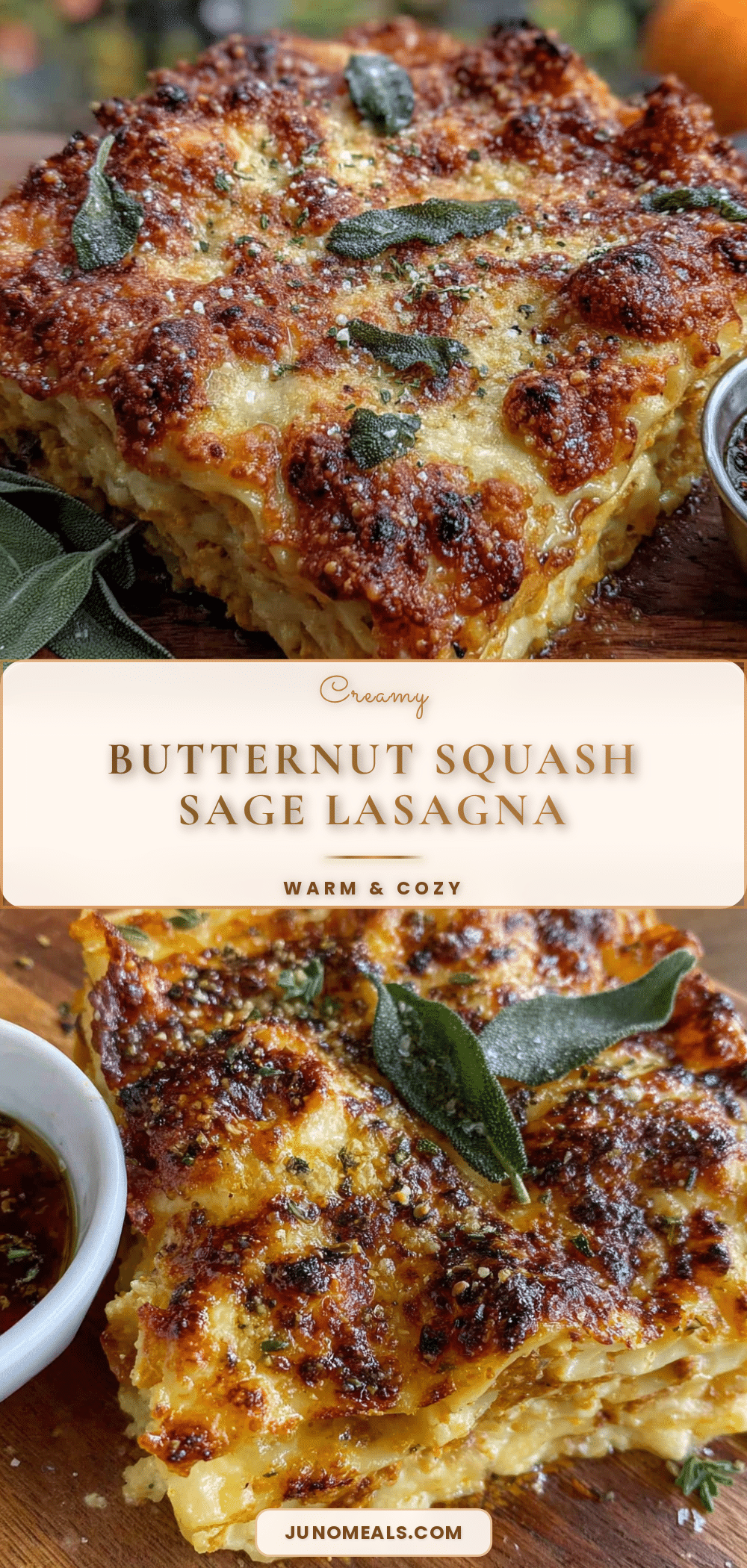
Easy Creamy Butternut Squash Lasagna with Sage Brown Butter
This creamy butternut squash lasagna with sage brown butter is a rich, comforting dish that feels fancy enough for a holiday but simple enough for a weeknight. The sweetness of roasted squash pairs perfectly with nutty brown butter and a creamy béchamel, all layered with no-boil noodles and plenty of cheese.
- Prep Time: 30 minutes
- Cook Time: 1 hour 5 minutes
- Total Time: 1 hour 35 minutes
- Yield: 8 servings 1x
- Category: Main Course
- Cuisine: Italian-American
Ingredients
- 1 medium butternut squash (about 2–3 pounds), peeled, seeded, and cubed
- 2 tablespoons olive oil
- Salt and black pepper, to taste
- 1/2 cup unsalted butter
- 12–15 fresh sage leaves (plus extra for garnish)
- 3 cloves garlic, minced
- 1/4 cup all-purpose flour
- 3 cups whole milk, warmed
- 1/2 cup heavy cream (optional)
- 1/2 teaspoon nutmeg, freshly grated
- Salt and white pepper, to taste
- 12 no-boil lasagna noodles
- 2 cups shredded mozzarella cheese (low-moisture, whole milk)
- 1 cup grated Parmesan cheese
- 1 cup ricotta cheese (full-fat)
- 1 egg, lightly beaten
Instructions
- Preheat oven to 400°F (200°C). Toss cubed butternut squash with olive oil, salt, and pepper on a baking sheet. Spread in a single layer and roast for 25-30 minutes, flipping halfway, until tender and caramelized. Let cool slightly, then mash with a fork or potato masher to a chunky texture.
- While squash roasts, melt butter in a large skillet over medium heat. Add sage leaves and cook, swirling occasionally, until butter turns golden brown and smells nutty (4-5 minutes). Remove sage leaves and set aside for garnish. Add minced garlic to brown butter and cook for 30 seconds until fragrant.
- Whisk flour into brown butter mixture and cook for 1-2 minutes, stirring constantly. Slowly pour in warmed milk while whisking vigorously to prevent lumps. Add heavy cream and nutmeg, then continue whisking until sauce thickens enough to coat the back of a spoon (5-7 minutes). Season with salt and white pepper. Set aside.
- In a small bowl, combine ricotta cheese, beaten egg, 1/2 cup Parmesan, and a pinch of salt. Mix until smooth.
- Spread a thin layer of béchamel on the bottom of a 9×13-inch baking dish. Place 4 no-boil noodles on top, slightly overlapping if needed. Spread half of the mashed squash over noodles, followed by dollops of half the ricotta mixture. Sprinkle with 1/3 of the mozzarella and 1/4 cup Parmesan. Repeat layers: noodles, remaining squash, remaining ricotta, more cheese. For final layer, add last 4 noodles, pour remaining béchamel over top, and sprinkle with remaining mozzarella and Parmesan.
- Cover dish with aluminum foil and bake at 375°F (190°C) for 30 minutes. Remove foil and bake for another 15-20 minutes until top is golden and bubbly. Let rest for at least 10 minutes before slicing.
Notes
For best results, don’t skip roasting the squash—it concentrates sweetness. Warm milk before adding to roux to prevent lumps. Let lasagna rest at least 10 minutes after baking for clean slices. If top browns too quickly, tent loosely with foil. For gluten-free, use gluten-free no-boil noodles and 1:1 gluten-free flour. For dairy-free, use vegan butter, unsweetened oat milk, and dairy-free cheese.
Nutrition
- Serving Size: 1/8 of recipe
- Calories: 485
- Sugar: 9
- Sodium: 680
- Fat: 28
- Saturated Fat: 16
- Carbohydrates: 38
- Fiber: 4
- Protein: 22
Keywords: butternut squash lasagna, sage brown butter, creamy lasagna, fall recipe, vegetarian lasagna, no-boil noodles, comfort food