The butternut squash sat on my counter for a full week. I bought it with big plans—roasted soup, maybe a curry, definitely something impressive. Then life happened, the week got away from me, and there it sat. A little lonely, a little intimidating. I had a bundle of sage wilting in the fridge, a block of cheese that needed using, and a box of pasta that was one step away from being forgotten. So I did what any reasonable person does when faced with an awkward combination of ingredients: I threw it all in a baking dish and hoped for the best. And honestly? That slightly desperate decision turned into one of my favorite meals in months. This creamy cheesy butternut squash and sage pasta bake came out of a moment of kitchen chaos, but it tastes like something you’d order at a cozy little restaurant on a chilly autumn evening. The squash gets all soft and sweet, the sage gets all crispy and fragrant, and the cheese melts into every single nook and cranny of the pasta. It’s the kind of dish that makes you slow down and actually enjoy your dinner. No fuss, no stress—just really good food that came together because I worked with what I had.
Why You’ll Love This Recipe
This isn’t just another pasta bake. It’s the kind of recipe that feels special without requiring a ton of effort. I’ve tested this one more times than I care to admit, tweaking the ratio of squash to cheese, adjusting the bake time for that perfect golden top, and honestly, I think I’ve finally nailed it. Here is why this creamy cheesy butternut squash and sage pasta bake deserves a spot in your regular rotation.
- Quick & Easy: From start to table in about 45 minutes. Perfect for those weeknights when you want something comforting but don’t have hours to spend in the kitchen.
- Simple Ingredients: No weird specialty items here. Butternut squash, sage, pasta, cheese, cream—all stuff you can find at any grocery store without a second thought.
- Perfect for Fall & Winter: This is the ultimate cozy weather meal. It warms you from the inside out and fills your kitchen with the most incredible aroma.
- Crowd-Pleaser: I’ve served this to picky kids, skeptical in-laws, and hungry friends. It disappears every single time. Even people who think they don’t like squash end up going back for seconds.
- Unbelievably Delicious: The combination of sweet roasted squash, nutty browned butter, crispy sage, and gooey melted cheese is next-level comfort food. It’s the kind of dish that makes you close your eyes after the first bite.
What makes this recipe different from the rest? It’s the way the squash gets roasted first, bringing out all its natural sweetness before it gets mixed into the creamy sauce. No watery, bland squash here. And the sage—crisped up in butter—adds this earthy, almost nutty flavor that ties everything together. This isn’t just another version of a pasta bake. It’s the best version.
What Ingredients You Will Need
This recipe relies on a handful of simple, wholesome ingredients to deliver big flavor. Most of these are pantry staples or easy to find at any grocery store. Here is what you will need and why each one matters.
- Butternut Squash (1 medium, about 3 cups cubed): The star of the show. Roasting it brings out its natural sweetness and gives it a creamy texture. Look for a squash that feels heavy for its size with firm, unblemished skin. I prefer to buy pre-cut cubes from the store when I am short on time, but cutting your own is cheaper.
- Sage Leaves (about 15-20 fresh leaves): Fresh sage is non-negotiable here. Dried sage just won’t give you that same aromatic, slightly peppery flavor. The leaves get crispy when fried in butter, adding a wonderful texture contrast to the creamy pasta.
- Pasta (12 oz, about 3 cups dry): Go with a short, sturdy shape that can hold onto the sauce. I love using rigatoni, penne, or fusilli. The ridges and hollow centers catch all that cheesy goodness. Avoid delicate shapes like angel hair or spaghetti—they will get lost in the bake.
- Unsalted Butter (4 tablespoons): We use butter for two things: crisping the sage and making the roux for the cheese sauce. Unsalted gives you control over the salt level. I am a big fan of Kerrygold for its rich flavor, but any good quality butter works.
- All-Purpose Flour (3 tablespoons): This thickens the sauce just enough to coat the pasta without being gluey. No need for anything fancy here.
- Whole Milk (2 cups): Whole milk gives the sauce a richness that low-fat or skim just can’t match. If you want an even creamier sauce, you can substitute half-and-half.
- Heavy Cream (1/2 cup): This adds that luscious, velvety texture that makes a pasta bake feel indulgent. You can skip it and use all milk, but the sauce won’t be quite as luxurious.
- Sharp Cheddar Cheese (2 cups, shredded): Cheddar brings the sharp, tangy flavor that cuts through the sweetness of the squash. I recommend shredding your own from a block—pre-shredded cheese has anti-caking agents that prevent it from melting smoothly.
- Gruyère or Fontina Cheese (1 cup, shredded): This is my secret weapon. Gruyère melts like a dream and adds a nutty, slightly sweet flavor that pairs beautifully with the squash. Fontina works great too if Gruyère is hard to find or pricey.
- Parmesan Cheese (1/2 cup, grated): For that salty, umami finish. I use Parmigiano-Reggiano when I can, but a good domestic Parmesan is fine.
- Garlic (3 cloves, minced): A little garlic goes a long way in balancing the sweetness of the squash and adding depth to the sauce.
- Nutmeg (1/4 teaspoon, freshly grated if possible): This is optional but highly recommended. Nutmeg and squash are a classic pairing—it brings out the warmth and sweetness of the squash in a subtle way.
- Salt and Black Pepper (to taste): Essential for seasoning at every stage.
- Panko Breadcrumbs (1/2 cup): For that crispy, golden topping that makes every pasta bake irresistible. Regular breadcrumbs work too, but panko gives a better crunch.
Equipment Needed
You don’t need a fancy kitchen to make this dish. Here is what you will need:
- Large Baking Sheet: For roasting the butternut squash. A rimmed baking sheet works best to catch any juices.
- Large Pot: For boiling the pasta. Make sure it is big enough to give the pasta room to move around.
- Large Skillet or Dutch Oven: For making the cheese sauce. A wide skillet gives you room to whisk without splashing.
- 9×13-inch Baking Dish: The perfect size for this recipe. A 3-quart casserole dish works too.
- Cheese Grater: Please, for the love of good food, grate your own cheese. A box grater or the grating disc on a food processor works great.
- Whisk: For making a smooth roux and cheese sauce. A silicone whisk is my favorite—it won’t scratch your pans.
- Wooden Spoon or Silicone Spatula: For stirring everything together.
- Small Skillet: For crisping the sage leaves in butter.
If you don’t have a Dutch oven, no worries. A regular large skillet works just fine for the sauce. And if you are short on baking dishes, you can use a 9-inch square pan or even individual ramekins for a fun presentation—just reduce the bake time a bit.
Preparation Method
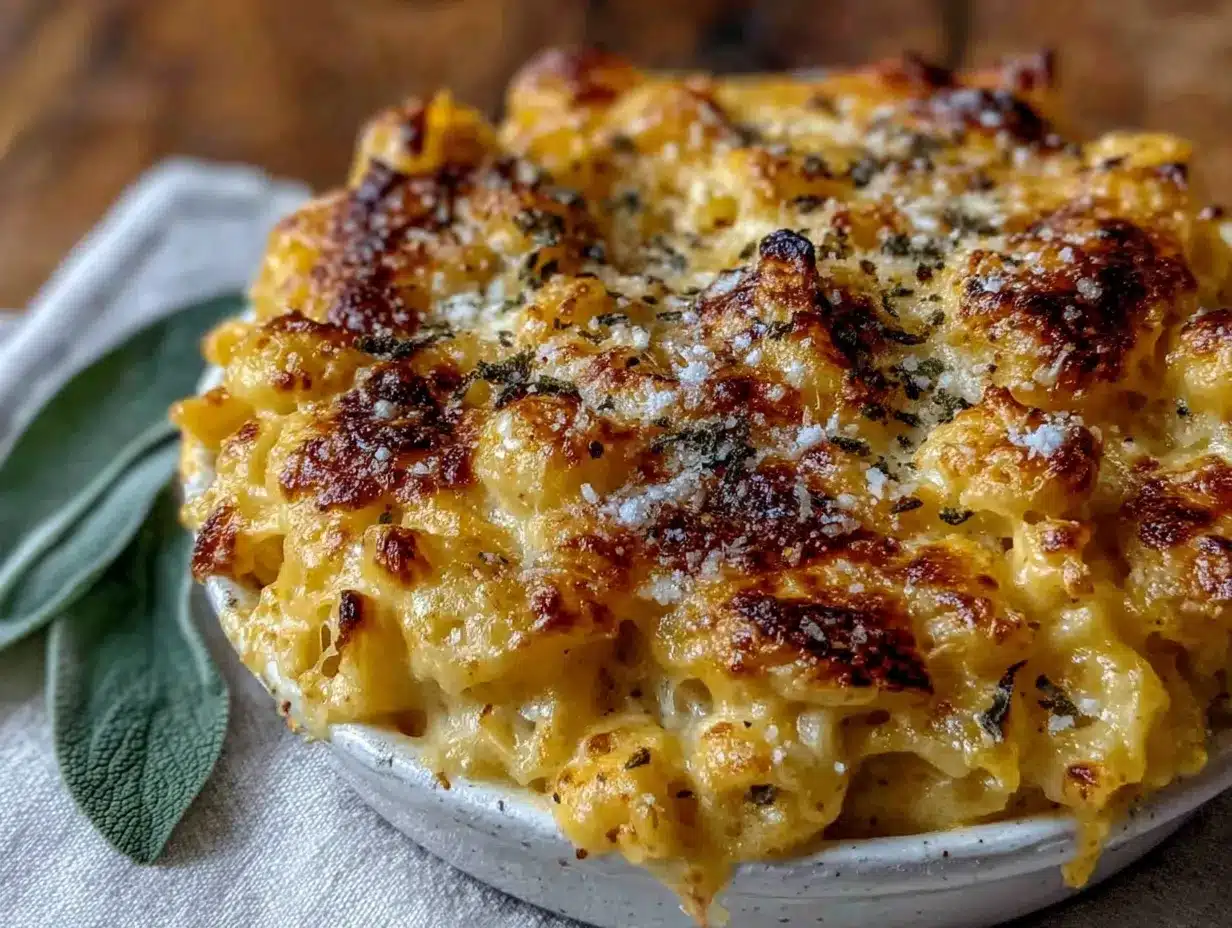
Let’s get cooking. This creamy cheesy butternut squash and sage pasta bake comes together in a few straightforward steps. Take your time with the sauce—it’s worth it.
- Preheat your oven to 400°F (200°C). Line a large baking sheet with parchment paper for easy cleanup.
- Prepare the butternut squash. Peel the squash, cut it in half lengthwise, and scoop out the seeds. Cut the flesh into 1/2-inch cubes. You should have about 3 cups. Toss the cubes with 1 tablespoon of olive oil, a pinch of salt, and a crack of black pepper. Spread them in a single layer on the prepared baking sheet. Roast for 20-25 minutes, flipping halfway through, until the cubes are tender and lightly caramelized around the edges. The squash should be fork-tender but not mushy.
- While the squash roasts, start the pasta. Bring a large pot of generously salted water to a rolling boil. Add the pasta and cook until al dente—about 1-2 minutes less than the package directions. The pasta will continue cooking in the oven, so you want it slightly firm. Drain the pasta, reserving about 1 cup of the pasta water. Do not rinse the pasta; the starch on the surface helps the sauce cling.
- Crisp the sage leaves. In a small skillet, melt 2 tablespoons of butter over medium heat. Add the sage leaves in a single layer. Cook for 1-2 minutes per side, until they turn dark green and crispy. Be careful not to burn them—they go from perfect to bitter very quickly. Transfer the crispy sage to a paper towel-lined plate. They will crisp up more as they cool.
- Make the roux. In a large skillet or Dutch oven, melt the remaining 2 tablespoons of butter over medium heat. Add the minced garlic and cook for 30 seconds until fragrant. Sprinkle the flour over the butter and garlic, whisking constantly. Cook the roux for 1-2 minutes—it should smell slightly nutty and turn a light golden color.
- Build the cheese sauce. Slowly pour in the milk while whisking vigorously to prevent lumps. Then add the heavy cream. Continue whisking until the mixture thickens, about 3-4 minutes. It should coat the back of a spoon. Reduce the heat to low.
- Add the cheese. Add the shredded cheddar, Gruyère (or fontina), and half of the grated Parmesan to the sauce. Whisk until completely melted and smooth. The sauce will be thick and glossy. Season with salt, pepper, and the freshly grated nutmeg. Taste it—yes, taste it now. Adjust the seasoning if needed. If the sauce seems too thick, stir in a splash of the reserved pasta water.
- Combine everything. Add the cooked pasta and roasted butternut squash to the cheese sauce. Gently fold everything together until the pasta and squash are evenly coated. If the mixture seems dry, add a little more pasta water to loosen it up.
- Assemble the bake. Transfer the pasta mixture to a 9×13-inch baking dish. Spread it into an even layer. Sprinkle the remaining Parmesan and the panko breadcrumbs over the top. Crumble the crispy sage leaves over the breadcrumbs.
- Bake until golden and bubbly. Place the dish in the preheated oven and bake for 15-20 minutes, until the top is golden brown and the sauce is bubbling around the edges. If you want an extra-crispy top, switch the oven to broil for the last 1-2 minutes—watch it closely so it doesn’t burn.
- Rest before serving. Let the pasta bake sit for 5-10 minutes after coming out of the oven. This allows the sauce to set slightly, making it easier to serve. The wait is hard, I know, but it’s worth it.
Cooking Tips & Techniques
After making this creamy cheesy butternut squash and sage pasta bake more times than I can count, I have a few tricks up my sleeve that make a real difference.
Don’t skip roasting the squash. I know it adds an extra step, but roasting concentrates the flavor and brings out the natural sweetness in a way that boiling or steaming just can’t. The caramelized edges add a depth of flavor that makes this dish special. I once tried to save time by using steamed squash, and the result was bland and watery. Never again.
Grate your own cheese. I cannot stress this enough. Pre-shredded cheese is coated with cellulose and other anti-caking agents that prevent it from melting smoothly. Your sauce will be grainy instead of silky. Spend the two extra minutes grating a block of cheese—your taste buds will thank you.
Undercook the pasta slightly. Pasta continues to cook in the oven, so if you cook it to al dente on the stovetop, it will end up mushy after baking. Aim for very al dente—firm to the bite but not crunchy in the center. This is one of the most common mistakes people make with pasta bakes, and it makes a huge difference in texture.
Season the sauce generously. Pasta and squash both need a fair amount of salt to taste their best. Don’t be shy with the salt in the pasta water and the sauce. Taste the sauce before you add the pasta—it should be slightly saltier than you think it needs to be because the pasta will absorb some of the salt as it bakes.
Watch the sage carefully. Crisping sage is quick work. The leaves go from perfectly crispy to burnt in about 30 seconds. Keep an eye on them and remove them from the pan as soon as they turn dark green. They will continue to crisp as they cool on the paper towel.
Let it rest. I know you are hungry. I know the kitchen smells amazing. But letting the pasta bake rest for 5-10 minutes after baking allows the sauce to thicken and set. If you serve it immediately, it will be runny and fall apart when you try to scoop it. Patience, my friend.
Variations & Adaptations
One of the best things about this creamy cheesy butternut squash and sage pasta bake is how adaptable it is. Here are some ways to make it your own.
Make it vegetarian or vegan. This recipe is already vegetarian as written. For a vegan version, use plant-based butter, unsweetened oat milk or cashew cream instead of dairy milk, and your favorite vegan cheese shreds. Nutritional yeast can add a cheesy flavor if you want to skip the vegan cheese. The texture will be slightly different, but it still tastes amazing.
Add protein. Leftover rotisserie chicken, cooked Italian sausage, or crispy bacon bits all work beautifully here. Fold them in when you combine the pasta and sauce. I’ve made this with crumbled spicy sausage, and the heat from the sausage plays nicely with the sweet squash.
Switch up the vegetables. Roasted sweet potatoes, cauliflower, or Brussels sprouts make excellent substitutes or additions. In the summer, I sometimes swap the squash for roasted zucchini and cherry tomatoes—it’s a completely different dish but just as delicious.
Try a different cheese combination. Feel free to experiment with the cheese. Smoked gouda adds a wonderful smoky flavor. Goat cheese adds tanginess. A mix of mozzarella and provolone gives you that perfect stretchy pull. Just avoid pre-shredded cheese blends—grate your own.
Make it gluten-free. Use gluten-free pasta and substitute the all-purpose flour with a gluten-free all-purpose blend or cornstarch (use half the amount of cornstarch, mixed with cold milk before adding). Gluten-free panko breadcrumbs are widely available now.
Add a little heat. A pinch of red pepper flakes in the sauce or sprinkled on top before baking adds a nice warmth without overwhelming the dish. I love this variation on cold winter nights.
Serving & Storage Suggestions
This creamy cheesy butternut squash and sage pasta bake is a complete meal on its own, but it pairs beautifully with a few simple sides.
Serve it hot. Right out of the oven, straight from the baking dish to the plate. The cheese should be stretchy, the top crispy, and the sauce creamy. A simple green salad with a tangy vinaigrette cuts through the richness perfectly. I also love serving it with roasted broccoli or steamed green beans on the side.
Pair it with a drink. A crisp white wine like Sauvignon Blanc or a light Pinot Grigio works well. For red wine drinkers, a light-bodied Pinot Noir is a great match. If you are going non-alcoholic, a sparkling water with a squeeze of lemon is refreshing.
Store leftovers properly. Let the pasta bake cool completely before storing. Transfer it to an airtight container and refrigerate for up to 4 days. The flavors actually meld together and get even better overnight—if you can resist eating it all in one sitting.
Reheat without drying it out. The best way to reheat leftovers is in the oven at 350°F (175°C) for about 15 minutes, covered with foil to prevent the top from burning. You can also microwave individual portions, but the topping won’t be as crispy. Add a splash of milk or cream before reheating if the sauce seems dry.
Freeze for later. This pasta bake freezes beautifully. Assemble the dish completely but do not bake it. Cover it tightly with foil and freeze for up to 3 months. When you are ready to eat, bake it directly from frozen at 375°F (190°C) for about 45-50 minutes, removing the foil for the last 10 minutes. You may need to add a little extra time if it is still cold in the center.
Flavor development note. If you have the patience, this dish is even better the next day. The sauce thickens, the flavors meld, and every bite is more cohesive than the first. Cold leftovers straight from the fridge are also surprisingly delicious—don’t judge me.
Nutritional Information & Benefits
Let’s be real—this is indulgent comfort food. But it also has some redeeming qualities worth mentioning.
Estimated nutritional values per serving (based on 6 servings):
- Calories: 580
- Fat: 32g
- Saturated Fat: 18g
- Carbohydrates: 52g
- Fiber: 6g
- Sugar: 8g
- Protein: 22g
- Sodium: 680mg
Health benefits of key ingredients: Butternut squash is packed with vitamin A (over 400% of your daily needs per cup), vitamin C, and fiber. It’s also rich in antioxidants like beta-carotene. Sage is known for its anti-inflammatory properties and has been used in traditional medicine for centuries. The cheese provides calcium and protein, and the whole wheat pasta option adds extra fiber.
Dietary considerations: This recipe is vegetarian. It can be made gluten-free and vegan with the substitutions mentioned above. It is not low-carb or keto-friendly due to the pasta and squash. If you have dairy sensitivities, the vegan version is your best bet.
Personal perspective: I don’t believe in labeling food as “guilty pleasures.” Food is food, and this dish is made with real, whole ingredients. It’s rich and satisfying, and one serving is genuinely enough to fill you up. Pair it with a big salad, and you have a balanced, nourishing meal that also happens to taste incredible.
Conclusion
This creamy cheesy butternut squash and sage pasta bake is the kind of recipe that becomes a staple. It’s comforting without being heavy, indulgent without being over-the-top, and simple enough for a weeknight but impressive enough for company. The combination of sweet roasted squash, aromatic sage, and melty cheese is honestly hard to beat. I love this recipe because it reminds me that some of the best dishes come from working with what you have. That lonely butternut squash on the counter? It has potential. Give this one a try, and don’t be afraid to make it your own—swap in your favorite cheese, add some protein, or throw in whatever vegetables you have lying around. I’d love to hear how it turns out for you. Drop a comment below and let me know if you made any fun variations. And if you are looking for another comforting dish to round out your meal, these mini lemon blueberry cheesecakes make a perfect dessert to follow this savory bake. Happy cooking!
Frequently Asked Questions
Can I use frozen butternut squash instead of fresh?
Yes, you can use frozen cubed butternut squash to save time. Just thaw it first and pat it dry with paper towels to remove excess moisture before roasting. The texture won’t be quite as caramelized as fresh, but it still works well in a pinch.
Can I make this pasta bake ahead of time?
Absolutely. You can assemble the entire dish up to 24 hours in advance, cover it, and refrigerate. When you are ready to bake, add about 10-15 minutes to the baking time since you are starting from a cold dish. You might also want to sprinkle a little extra cheese on top before baking.
Why is my cheese sauce grainy?
Grainy cheese sauce is usually caused by overheating or using pre-shredded cheese. Keep the heat on low when you add the cheese, and stir constantly until it melts. And please, grate your own cheese—the anti-caking agents in pre-shredded cheese are the number one cause of grainy sauce.
Can I use dried sage instead of fresh?
You can, but the flavor will be different. Dried sage is more concentrated and can be slightly bitter. If you are using dried sage, use about 1 teaspoon and add it to the sauce rather than crisping it. You will miss out on that wonderful crispy texture, though.
How do I prevent the pasta bake from being dry?
Don’t overcook the pasta before baking, and make sure your sauce is on the thinner side before you add the pasta. The pasta will absorb some of the liquid as it bakes. If the sauce seems too thick when you assemble the dish, stir in some of the reserved pasta water. And always cover the dish with foil for the first half of baking if you notice it drying out.
Pin This Recipe!
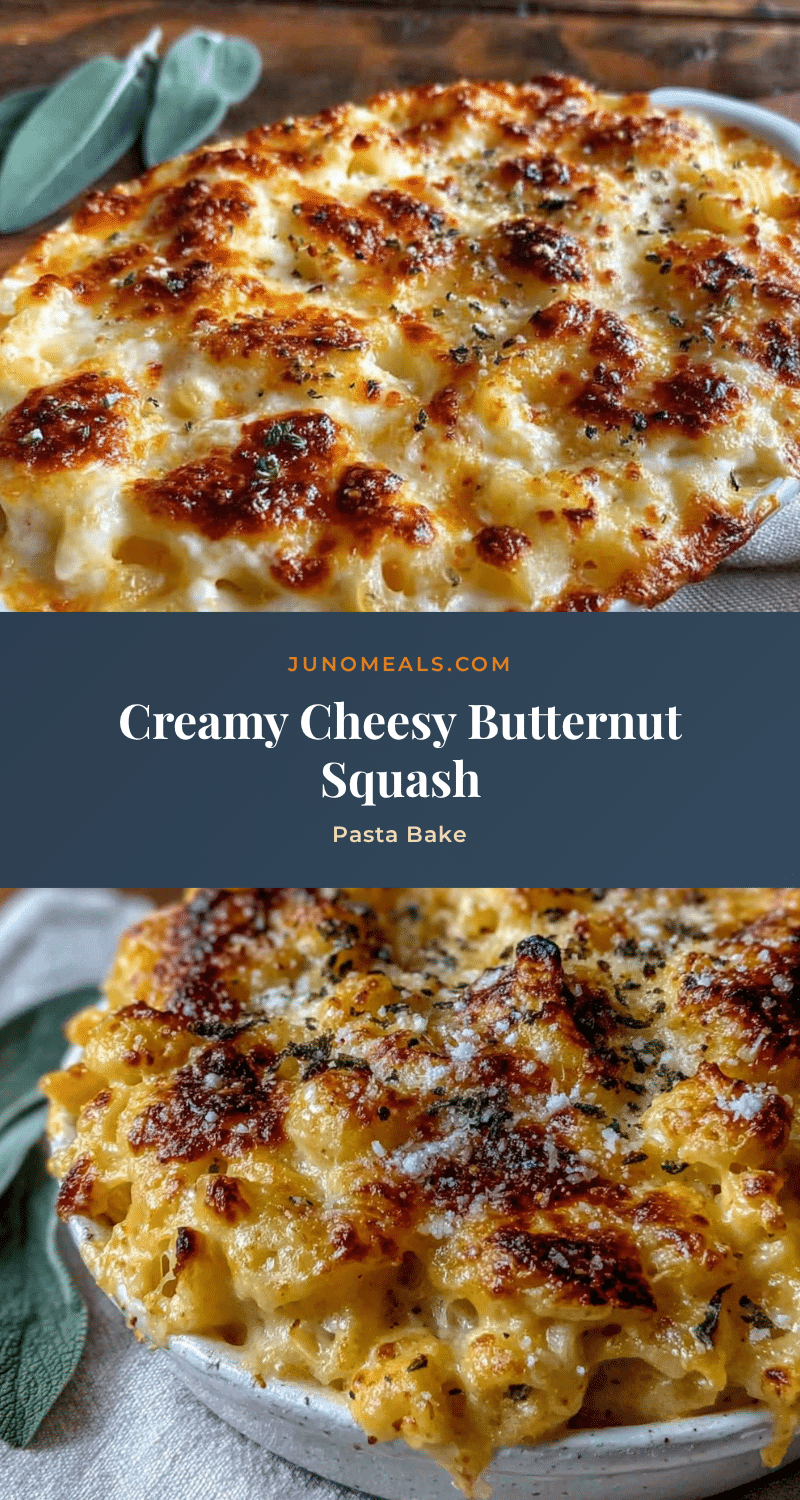
Creamy Cheesy Butternut Squash Sage Pasta Bake

A comforting pasta bake featuring sweet roasted butternut squash, crispy sage, and a creamy cheese sauce. Perfect for fall and winter weeknights.
- Prep Time: 15 minutes
- Cook Time: 30 minutes
- Total Time: 45 minutes
- Yield: 6 servings 1x
- Category: Main Course
- Cuisine: American
Ingredients
- 1 medium butternut squash (about 3 cups cubed)
- 15–20 fresh sage leaves
- 12 oz pasta (rigatoni, penne, or fusilli)
- 4 tablespoons unsalted butter
- 3 tablespoons all-purpose flour
- 2 cups whole milk
- 1/2 cup heavy cream
- 2 cups sharp cheddar cheese, shredded
- 1 cup Gruyère or Fontina cheese, shredded
- 1/2 cup Parmesan cheese, grated
- 3 cloves garlic, minced
- 1/4 teaspoon freshly grated nutmeg
- Salt and black pepper to taste
- 1/2 cup panko breadcrumbs
- 1 tablespoon olive oil
Instructions
- Preheat oven to 400°F (200°C). Line a large baking sheet with parchment paper.
- Peel the butternut squash, cut in half lengthwise, scoop out seeds, and cut into 1/2-inch cubes (about 3 cups). Toss with 1 tablespoon olive oil, salt, and pepper. Spread in a single layer on the baking sheet. Roast for 20-25 minutes, flipping halfway, until tender and caramelized.
- Bring a large pot of salted water to a boil. Cook pasta until al dente (1-2 minutes less than package directions). Drain, reserving 1 cup pasta water. Do not rinse.
- In a small skillet, melt 2 tablespoons butter over medium heat. Add sage leaves in a single layer. Cook 1-2 minutes per side until dark green and crispy. Transfer to a paper towel-lined plate.
- In a large skillet or Dutch oven, melt remaining 2 tablespoons butter over medium heat. Add minced garlic and cook 30 seconds until fragrant. Sprinkle flour over butter and whisk constantly for 1-2 minutes until light golden.
- Slowly pour in milk while whisking vigorously, then add heavy cream. Continue whisking until thickened, about 3-4 minutes. Reduce heat to low.
- Add shredded cheddar, Gruyère (or Fontina), and half the Parmesan. Whisk until melted and smooth. Season with salt, pepper, and nutmeg. If too thick, stir in a splash of reserved pasta water.
- Add cooked pasta and roasted butternut squash to the sauce. Gently fold until evenly coated. Add more pasta water if needed.
- Transfer mixture to a 9×13-inch baking dish. Spread evenly. Top with remaining Parmesan, panko breadcrumbs, and crumbled crispy sage.
- Bake for 15-20 minutes until golden and bubbly. For extra crispiness, broil for 1-2 minutes at the end.
- Let rest for 5-10 minutes before serving.
Notes
Don’t skip roasting the squash—it brings out sweetness. Grate your own cheese for a smooth sauce. Undercook pasta slightly to avoid mushiness. Let the bake rest before serving to allow the sauce to set.
Nutrition
- Serving Size: 1 serving
- Calories: 580
- Sugar: 8
- Sodium: 680
- Fat: 32
- Saturated Fat: 18
- Carbohydrates: 52
- Fiber: 6
- Protein: 22
Keywords: butternut squash pasta bake, creamy pasta bake, sage pasta, fall pasta recipe, vegetarian pasta bake