“Wait, there’s squash in this?” My brother-in-law paused mid-bite, fork hovering over a second helping. He’s the kind of guy who eyes anything green with suspicion, so watching him go back for more of what he thought was regular mac and cheese felt like a small victory. I just smiled and nodded. That was the moment I knew this creamy one-pot butternut squash mac and cheese was something special. It wasn’t planned as a trick or a health hack—it came from a cold Tuesday night when I had half a butternut squash sitting on the counter and a box of pasta staring at me from the pantry. I needed comfort food fast, and I didn’t feel like dragging out multiple pots.
Honestly, I was skeptical at first. Blending squash into cheese sauce sounded like something that would either be amazing or a total flop. There’s no middle ground, you know? But the first time I tried it, the sauce came out silky and golden, and it clung to every piece of pasta like it was made for each other. My kids didn’t notice a thing. My husband asked if I’d changed the cheese brand. That’s when I knew I had something worth sharing.
This isn’t one of those recipes that tries to hide vegetables from you. It’s a recipe that proves vegetables can make comfort food even better. The squash adds a subtle sweetness that balances the sharp cheddar, and the whole thing comes together in one pot with minimal cleanup. It’s the kind of meal that makes you feel good about feeding your family something warm and satisfying, without spending an hour scrubbing dishes afterward. Trust me on this one.
Why You’ll Love This Recipe
Let me tell you why this creamy one-pot butternut squash mac and cheese has become my go-to for busy weeknights and lazy weekends alike. I’ve tested this recipe more times than I can count, tweaking the cheese ratios and the squash consistency until it hit that perfect sweet spot. It’s not just another mac and cheese recipe—it’s the one you’ll actually want to make again and again.
- Quick & Easy: From start to finish, this comes together in about 30 minutes. One pot, one blender, and you’re done. Perfect for those evenings when you’re staring at the clock wondering what’s for dinner.
- Simple Ingredients: You probably already have most of this stuff in your kitchen. Pasta, cheddar cheese, milk, butter, and a butternut squash. No fancy grocery runs required.
- Perfect for Picky Eaters: This is my secret weapon for getting kids to eat vegetables. The squash blends right into the sauce, and the cheese does all the heavy lifting flavor-wise. They’ll never know.
- Crowd-Pleaser: I’ve brought this to potlucks and family dinners, and it always gets devoured. Even the self-proclaimed “squash haters” end up asking for the recipe.
- Unbelievably Delicious: The texture is what gets me every time. It’s creamy without being heavy, and the sauce coats every piece of pasta perfectly. It’s comfort food that feels a little bit lighter, but tastes just as indulgent.
What sets this recipe apart is the method. Instead of making a separate roux and cheese sauce, you blend the cooked squash with milk and cheese to create a velvety base that’s foolproof. No lumps, no grainy texture—just smooth, creamy perfection. It’s the kind of recipe that makes you feel like a kitchen pro, even on your most tired nights.
This recipe isn’t just good—it’s the kind that makes you close your eyes after the first bite. It’s comfort food reimagined, healthier and faster, but with the same soul-soothing satisfaction. Perfect for impressing guests without stress, or turning a simple Tuesday into something memorable.
What Ingredients You Will Need
This recipe uses simple, wholesome ingredients to deliver bold flavor and satisfying texture without the fuss. Most of these are pantry staples, and the ones that aren’t are easy to find at any grocery store. Let me walk you through what you’ll need and why each ingredient matters.
For the Squash Puree
- 1 medium butternut squash (about 2-3 pounds), peeled, seeded, and cubed (look for one that feels heavy for its size—it’ll be sweeter)
- 1 tablespoon olive oil (for roasting, adds a subtle richness)
- Pinch of salt and pepper
For the Pasta and Sauce
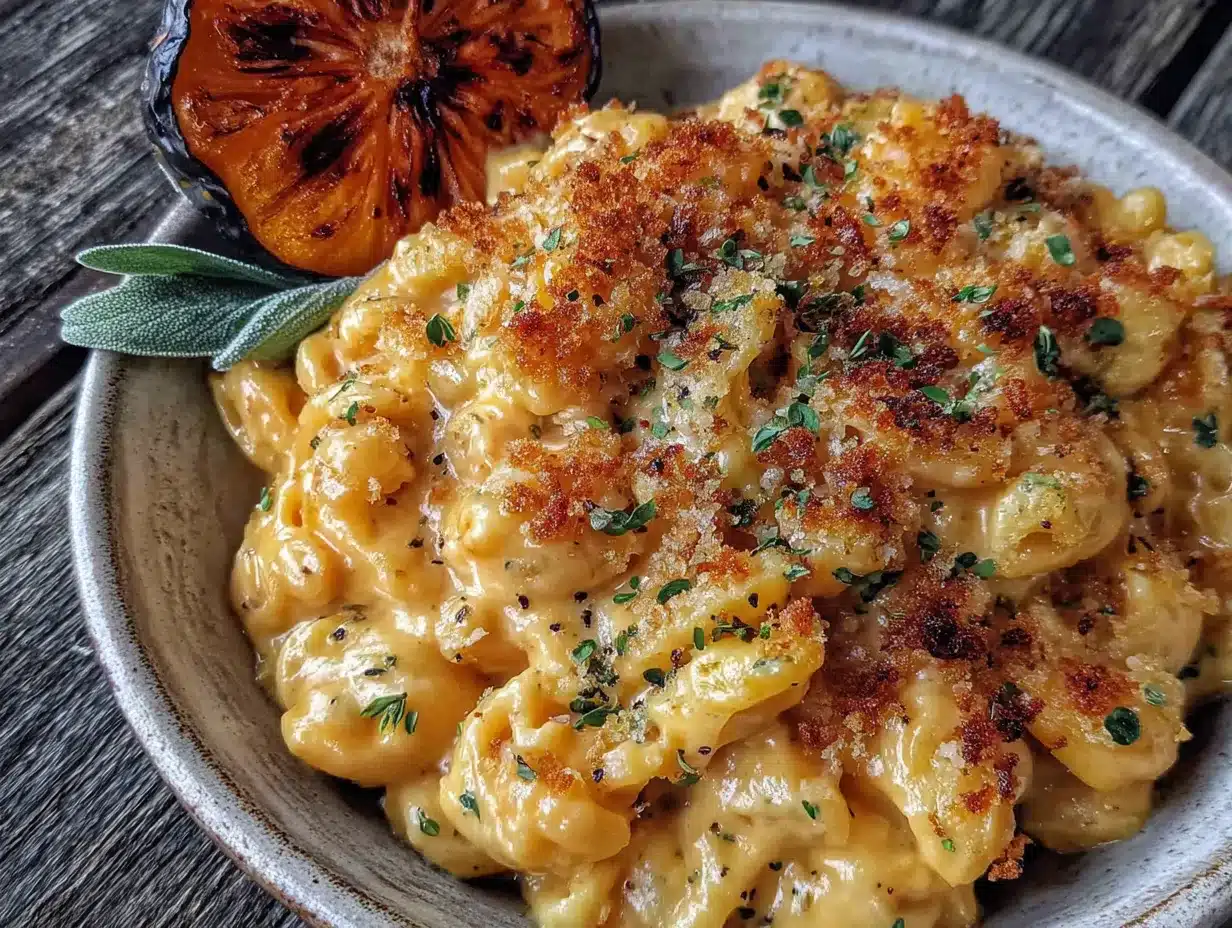
- 1 pound elbow macaroni (or any short pasta like cavatappi, shells, or rotini—I like cavatappi because the ridges hold the sauce better)
- 2 tablespoons unsalted butter (adds richness and helps the sauce cling to the pasta)
- 2 cloves garlic, minced (optional, but I never skip it—it adds depth without overpowering)
- 1 cup whole milk (use 2% if that’s what you have, but whole milk gives the creamiest result)
- 1/2 cup heavy cream (for that extra luxurious texture—you can substitute with half-and-half if needed)
- 2 cups sharp cheddar cheese, shredded (I recommend Tillamook or Cabot for the best melt—pre-shredded cheese has anti-caking agents that can make the sauce grainy)
- 1/2 cup Parmesan cheese, grated (adds a salty, nutty note that balances the sweetness of the squash)
- 1/2 teaspoon ground nutmeg (trust me on this—it brings out the sweetness of the squash and complements the cheese beautifully)
- Salt and black pepper to taste
- 1/4 cup reserved pasta water (the secret to adjusting the sauce consistency at the end)
Optional Toppings
- 1/2 cup panko breadcrumbs (for a crunchy topping if you’re feeling fancy)
- 1 tablespoon melted butter (to mix with the breadcrumbs)
- Fresh thyme or sage leaves (for garnish—adds a lovely earthy note)
If you don’t have butternut squash, you can swap in frozen squash puree (just thaw and drain it well) or even canned pumpkin puree for a similar texture and sweetness. For a dairy-free version, use unsweetened oat milk and vegan cheddar shreds—I’ve tested this with Violife and it works surprisingly well. And if you’re looking for another comforting dish that comes together quickly, you might enjoy my mini lemon blueberry cheesecakes for a sweet finish.
Equipment Needed
You don’t need a ton of fancy equipment for this one, which is part of the beauty of it. Here’s what you’ll need:
- One large pot or Dutch oven (I use a 5-quart Dutch oven—it’s perfect for cooking the pasta and mixing everything together)
- Baking sheet (for roasting the squash—a standard half-sheet pan works great)
- Blender or food processor (I prefer a high-speed blender for the smoothest puree, but an immersion blender works too if you’re careful)
- Cheese grater (please, for the love of all things cheesy, grate your own cheese—it melts so much better)
- Wooden spoon or silicone spatula (for stirring—don’t use metal on your nonstick pot)
- Measuring cups and spoons
- Sharp knife and cutting board (for prepping the squash—be careful, those things are tough)
If you don’t have a blender, you can mash the roasted squash with a potato masher until smooth. It won’t be as silky, but it’ll still taste great. I’ve done it that way when my blender was in the dishwasher, and honestly, the slightly rustic texture has its own charm. Also, if you’re using a nonstick pot, be gentle with the stirring to avoid scratching the surface.
Preparation Method
Let’s get cooking! This creamy one-pot butternut squash mac and cheese comes together in a few simple steps. I’ll walk you through each one so you know exactly what to look for.
- Preheat and prep the squash. Preheat your oven to 400°F (200°C). Peel the butternut squash with a vegetable peeler, then cut it in half lengthwise and scoop out the seeds. Cut the flesh into 1-inch cubes—try to keep them uniform so they cook evenly. Toss the cubes with olive oil, salt, and pepper, then spread them in a single layer on a baking sheet. Roast for 20-25 minutes, flipping halfway through, until the squash is fork-tender and the edges are slightly caramelized. Your kitchen will smell amazing at this point.
- Cook the pasta. While the squash roasts, bring a large pot of salted water to a boil. Add the pasta and cook according to package directions until al dente. Reserve about 1 cup of pasta water before draining, then drain the pasta and set it aside. Don’t rinse it—you want that starch to help the sauce stick.
- Make the squash puree. Transfer the roasted squash to a blender. Add 1/2 cup of the reserved pasta water and blend until completely smooth. The puree should be thick but pourable—if it’s too thick, add another tablespoon of water at a time until it reaches the right consistency. Set the puree aside.
- Start the sauce. In the same pot you used for the pasta (see, one pot!), melt the butter over medium heat. Add the minced garlic and cook for about 30 seconds until fragrant—don’t let it brown or it’ll turn bitter. Pour in the milk and heavy cream, stirring to combine. Bring the mixture to a gentle simmer, then reduce the heat to low.
- Add the cheese and squash. Gradually add the shredded cheddar and Parmesan cheese, stirring constantly in a figure-eight motion until fully melted. This helps prevent the sauce from breaking. Once the cheese is smooth, stir in the squash puree and nutmeg. The sauce should turn a beautiful golden-orange color. Taste and adjust salt and pepper as needed.
- Combine everything. Add the cooked pasta to the sauce and stir until every piece is coated. If the sauce seems too thick, add a splash of the reserved pasta water to loosen it up. The sauce will continue to thicken as it sits, so don’t be afraid to keep it on the looser side.
- Optional crispy topping. If you want that crunchy topping, preheat your broiler. Transfer the mac and cheese to a baking dish (or use an oven-safe pot), sprinkle with panko breadcrumbs mixed with melted butter, and broil for 2-3 minutes until golden brown. Watch it closely—broilers work fast and you don’t want burnt breadcrumbs.
- Rest and serve. Let the mac and cheese sit for 5 minutes before serving. This allows the sauce to set slightly so it doesn’t slide off the pasta. Garnish with fresh thyme or sage if you’re feeling fancy, and serve warm.
One thing I learned the hard way—don’t rush the cheese melting. If you add it all at once or keep the heat too high, the sauce can turn grainy. Low and slow is the way to go. And if your sauce does break, don’t panic. A splash of cold milk whisked in vigorously can sometimes bring it back together.
Cooking Tips & Techniques
Over the years of testing this recipe, I’ve picked up a few tricks that make a big difference. Here’s what I wish someone had told me the first time I made butternut squash mac and cheese.
Roast, don’t boil, the squash. I know boiling is faster, but roasting concentrates the natural sugars and gives the squash a deeper, sweeter flavor. It also removes excess moisture that can make the sauce watery. If you’re really short on time, you can microwave the cubed squash with a splash of water for 6-8 minutes, but you’ll lose some of that caramelized flavor.
Grate your own cheese. I cannot stress this enough. Pre-shredded cheese is coated with cellulose and anti-caking agents that prevent it from melting smoothly. Your sauce will be clumpy instead of creamy. It takes two extra minutes to grate a block of cheddar, and the difference is night and day.
Use the right pasta shape. Short, ridged pasta like cavatappi, shells, or fusilli hold onto the sauce much better than smooth shapes like penne or ziti. The sauce gets into all those nooks and crannies, so every bite is perfectly coated. I learned this after a disappointing batch with angel hair pasta—never again.
Don’t overcook the pasta. Cook it al dente because it will continue to cook slightly when you mix it with the hot sauce. Overcooked pasta turns mushy and can’t hold the sauce properly. Set a timer and taste a piece a minute before the package says it’s done.
Season in layers. Add salt at every stage—when roasting the squash, when cooking the pasta, and when making the sauce. This builds depth of flavor that you can’t get from just salting at the end. But go easy on the salt if you’re using a sharp cheddar, since it can be salty on its own.
I once made the mistake of adding too much nutmeg, thinking “more is better.” It turned into a weirdly spiced mess that tasted more like pumpkin pie than mac and cheese. A little nutmeg goes a long way—start with 1/4 teaspoon and taste before adding more.
Variations & Adaptations
This recipe is incredibly forgiving, so feel free to make it your own. Here are some of my favorite variations:
Add some protein. Stir in cooked, crumbled bacon, shredded rotisserie chicken, or crispy pancetta right before serving. The salty, smoky flavors pair beautifully with the sweet squash and sharp cheddar. I love adding bacon when I’m making this for a crowd—it feels extra special.
Make it spicy. Add a pinch of cayenne pepper or red pepper flakes to the sauce for a subtle kick. Or stir in 1/4 cup of diced jalapeños (pickled or fresh) for a Southwest twist. My husband loves this version, and it’s great for game day.
Try different cheeses. Sharp cheddar is classic, but you can swap in Gruyère, smoked gouda, or fontina for different flavor profiles. Smoked gouda adds a lovely smoky depth that complements the squash perfectly. Just make sure at least half of your cheese is a good melting cheese like cheddar or mozzarella.
Go gluten-free. Use gluten-free pasta and make sure your panko breadcrumbs are certified gluten-free. The sauce itself is naturally gluten-free, so this is an easy swap. I’ve tested this with Banza chickpea pasta and it worked great—just be careful not to overcook it.
Make it vegan. Use unsweetened oat milk, vegan butter, and your favorite vegan cheddar shreds. I’ve had good results with Violife and Follow Your Heart brands. The squash puree helps create a creamy texture even without dairy, so this version is surprisingly satisfying.
Add greens. Stir in a handful of fresh spinach or kale at the end, letting it wilt into the hot sauce. It adds color and nutrients without changing the flavor much. I do this when I want to feel extra virtuous about my comfort food.
For a lighter option that still feels indulgent, check out more ideas on my recipes page—I’ve got plenty of comforting dishes that won’t weigh you down.
Serving & Storage Suggestions
This mac and cheese is best served warm, straight from the pot, but it’s also great for meal prep and leftovers. Here’s how to make the most of it.
Serving temperature and presentation. Serve it hot, but let it rest for 5 minutes after cooking so the sauce sets slightly. Spoon it into bowls and top with fresh thyme, cracked black pepper, or a sprinkle of extra Parmesan. If you made the crispy panko topping, that golden crunch on top is pure magic.
What to serve with it. This mac and cheese is rich enough to be a meal on its own, but it pairs beautifully with a simple green salad dressed with lemon vinaigrette. The acidity cuts through the richness perfectly. For a heartier meal, serve it alongside roasted chicken, grilled sausages, or a mini lemon blueberry cheesecake for dessert—the bright citrus is a nice contrast.
Storage instructions. Store leftovers in an airtight container in the refrigerator for up to 4 days. The sauce will thicken as it sits, but don’t worry—that’s normal. When reheating, add a splash of milk or water to loosen it up. I like to reheat individual portions in the microwave with a damp paper towel over the bowl to add moisture.
Freezing tips. This mac and cheese freezes surprisingly well. Let it cool completely, then transfer to a freezer-safe container. It will keep for up to 3 months. Thaw overnight in the refrigerator before reheating. The texture might be slightly less creamy after freezing, but it’s still delicious. If you’re planning to freeze it, I recommend skipping the panko topping and adding it fresh after reheating.
Reheating methods. For the best texture, reheat in a pot on the stovetop over low heat, stirring frequently and adding a splash of milk as needed. If you’re in a hurry, the microwave works fine—just stir halfway through and add a little liquid. For crispy leftovers, spread the mac and cheese in a baking dish, top with fresh breadcrumbs, and bake at 350°F (175°C) for 15-20 minutes.
One thing I love about this recipe is that the flavors actually get better after a day in the fridge. The squash and cheese meld together into something even more cohesive. It’s the kind of leftovers you actually look forward to.
Nutritional Information & Benefits
Let’s talk numbers, because I know you’re curious. These values are approximate and depend on specific ingredients and portion sizes. This recipe makes about 6 servings.
| Nutrient | Per Serving (approx.) |
|---|---|
| Calories | 480-520 |
| Protein | 18-22g |
| Carbohydrates | 55-60g |
| Fiber | 6-8g |
| Fat | 22-26g |
| Saturated Fat | 12-14g |
| Sodium | 500-600mg |
| Vitamin A | 180-220% DV |
| Calcium | 25-30% DV |
The butternut squash is the real star here from a nutrition standpoint. It’s packed with vitamin A (great for eye health and immune function), vitamin C, fiber, and potassium. The cheese adds calcium and protein, so this dish is more balanced than traditional mac and cheese. It’s also vegetarian-friendly and can easily be made gluten-free or vegan.
This recipe is a great way to sneak more vegetables into your family’s diet without anyone complaining. The squash provides natural sweetness and a creamy texture that reduces the need for as much heavy cream or butter. It’s comfort food that actually has some nutritional merit—and that’s something I can feel good about.
Conclusion
This creamy one-pot butternut squash mac and cheese has become a staple in my kitchen for good reason. It’s quick, it’s comforting, and it proves that you don’t have to choose between healthy and delicious. Whether you’re feeding picky kids, impressing dinner guests, or just treating yourself to a cozy night in, this recipe delivers every time.
I love that this recipe is flexible enough to adapt to whatever you have on hand. Swap the cheese, add some protein, throw in some greens—make it your own. That’s the beauty of cooking, right? Taking a simple idea and making it work for your life.
If you try this recipe, I’d love to hear how it turned out. Did your family notice the squash? Did you add your own twist? Drop a comment below and let me know—I read every single one. And if you’re looking for more easy, comforting meals, check out my other recipes on the blog. Happy cooking, friends!
Frequently Asked Questions
Can I use frozen butternut squash instead of fresh?
Absolutely! Frozen cubed butternut squash works great and saves you the peeling and chopping. Just roast it straight from frozen—add 5-10 minutes to the roasting time and drain any excess liquid before blending. You can also steam it in the microwave if you’re in a hurry.
Why did my sauce turn out grainy?
Grainy sauce usually happens for one of two reasons: the heat was too high when you added the cheese, or you used pre-shredded cheese with anti-caking agents. Keep the heat on low and stir constantly when melting the cheese. And always grate your own cheddar from a block—it makes a world of difference.
Can I make this ahead of time?
Yes! You can prepare the entire dish a day ahead and refrigerate it. When you’re ready to serve, reheat it in a pot on the stovetop with a splash of milk, stirring until warmed through. If you’re adding the panko topping, do that fresh just before serving for the best crunch.
How do I get my kids to eat this if they’re suspicious of vegetables?
Don’t mention the squash! Seriously, just call it “creamy mac and cheese” and serve it like you normally would. The sauce is so smooth and cheesy that most kids won’t notice anything different. If they ask about the orange color, just say it’s the cheese blend. My own kids ate it for weeks before I told them what was in it, and they didn’t care one bit.
Can I use a different type of squash?
Sure! Kabocha, acorn squash, or even pumpkin all work well in this recipe. Each will give a slightly different flavor and sweetness level. Kabocha is especially creamy and sweet, while acorn squash is a bit milder. Just make sure to roast whatever squash you use until it’s fork-tender before blending.
Pin This Recipe!
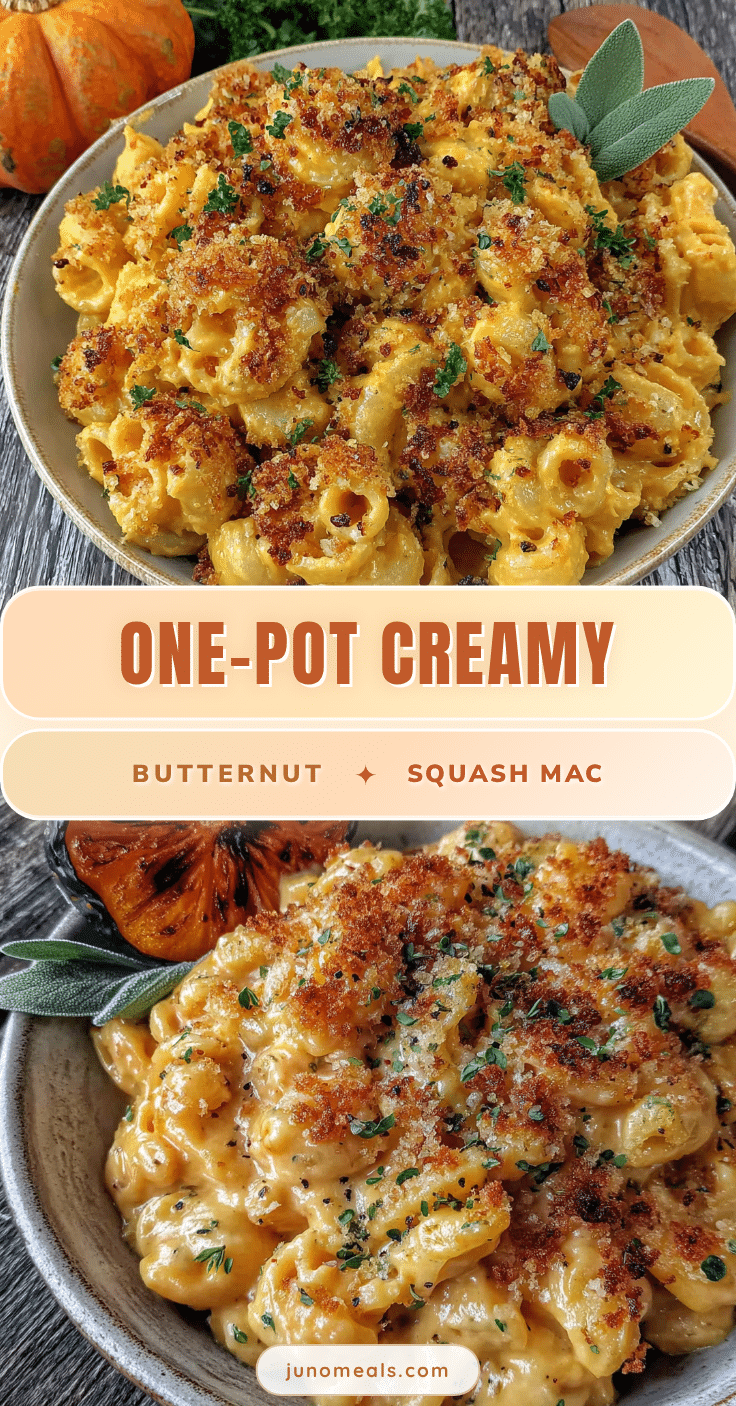
Creamy One-Pot Butternut Squash Mac and Cheese (Best Easy Recipe)

This creamy one-pot butternut squash mac and cheese is a quick, comforting dish that blends roasted squash into a velvety cheese sauce. It’s a crowd-pleaser that’s perfect for busy weeknights and picky eaters.
- Prep Time: 15 minutes
- Cook Time: 30 minutes
- Total Time: 45 minutes
- Yield: 6 servings 1x
- Category: Main Course
- Cuisine: American
Ingredients
- 1 medium butternut squash (about 2–3 pounds), peeled, seeded, and cubed
- 1 tablespoon olive oil
- Pinch of salt and pepper
- 1 pound elbow macaroni (or any short pasta like cavatappi, shells, or rotini)
- 2 tablespoons unsalted butter
- 2 cloves garlic, minced
- 1 cup whole milk
- 1/2 cup heavy cream
- 2 cups sharp cheddar cheese, shredded
- 1/2 cup Parmesan cheese, grated
- 1/2 teaspoon ground nutmeg
- Salt and black pepper to taste
- 1/4 cup reserved pasta water
- 1/2 cup panko breadcrumbs (optional)
- 1 tablespoon melted butter (optional)
- Fresh thyme or sage leaves (optional)
Instructions
- Preheat oven to 400°F (200°C). Peel butternut squash, cut in half lengthwise, scoop out seeds, and cut into 1-inch cubes. Toss with olive oil, salt, and pepper. Spread in a single layer on a baking sheet and roast for 20-25 minutes, flipping halfway, until fork-tender and edges are caramelized.
- While squash roasts, bring a large pot of salted water to a boil. Cook pasta according to package directions until al dente. Reserve 1 cup pasta water, then drain pasta (do not rinse). Set aside.
- Transfer roasted squash to a blender. Add 1/2 cup reserved pasta water and blend until smooth. Set aside.
- In the same pot, melt butter over medium heat. Add minced garlic and cook for 30 seconds until fragrant. Pour in milk and heavy cream, stirring to combine. Bring to a gentle simmer, then reduce heat to low.
- Gradually add shredded cheddar and Parmesan cheese, stirring constantly in a figure-eight motion until fully melted. Stir in squash puree and nutmeg. Season with salt and pepper to taste.
- Add cooked pasta to the sauce and stir until coated. If sauce is too thick, add a splash of reserved pasta water to loosen.
- Optional: For crispy topping, preheat broiler. Transfer mac and cheese to a baking dish, sprinkle with panko mixed with melted butter, and broil 2-3 minutes until golden brown.
- Let mac and cheese rest for 5 minutes before serving. Garnish with fresh thyme or sage if desired.
Notes
Roast the squash instead of boiling to concentrate sweetness and avoid watery sauce. Always grate your own cheese for smooth melting. Cook pasta al dente to prevent mushiness. Season in layers for depth of flavor. Use a light hand with nutmeg.
Nutrition
- Serving Size: 1 serving (approx. 1
- Calories: 500
- Sugar: 8
- Sodium: 550
- Fat: 24
- Saturated Fat: 13
- Carbohydrates: 58
- Fiber: 7
- Protein: 20
Keywords: butternut squash mac and cheese, one-pot mac and cheese, creamy mac and cheese, easy mac and cheese, vegetarian mac and cheese, healthy mac and cheese