That first wisp of cinnamon hitting cold morning air — the kind that curls into your kitchen before you’ve even fully opened your eyes — still takes me straight to that tiny apartment with the cracked linoleum floor. I was twenty-three, trying to prove I could make something beautiful out of leftovers, and my sourdough starter was growing out of control on the counter. I had pumpkin puree in the fridge from a pie I’d attempted the weekend before, and honestly, I was just tired of tossing discard down the drain. So I poured it all into a bowl with some flour and hoped for the best.
The first batch came out dense. Edible, but dense. I remember standing there in my pajamas, spatula in hand, thinking there had to be a way to get that sourdough tang to play nice with the pumpkin without sacrificing the fluff. It took a few more tries — and a few more mornings of experimental breakfasts — before I figured out the trick. The batter needed to rest. Not long, just enough for the bubbles to form and the flour to fully hydrate. That little pause changed everything.
Now these fluffy sourdough discard pumpkin pancakes are my favorite way to use up extra starter, especially when fall rolls around and I’m craving something cozy. They’re not too sweet, not too heavy, and that subtle tang from the discard cuts right through the richness of the pumpkin. It’s the kind of breakfast that feels like a warm hug, even on a Tuesday morning when you’re running late. And honestly? I think my twenty-three-year-old self would be pretty proud.
Why You’ll Love This Recipe
Let me tell you why these pancakes have earned a permanent spot in my breakfast rotation. I’ve tested this recipe more times than I care to admit, tweaking ratios and resting times until I got it just right. Here’s what makes them special:
- Uses up sourdough discard — No more throwing away that extra starter. This recipe gives it a delicious purpose.
- Perfectly fluffy — The combination of pumpkin puree and a short rest creates pancakes that are light, tender, and stack beautifully.
- Subtle tang meets warm spices — That sourdough flavor pairs surprisingly well with cinnamon, nutmeg, and pumpkin. It’s not overpowering, just balanced.
- Simple ingredients — You probably have most of these in your pantry right now. No fancy trips required.
- Great for meal prep — Make a big batch on Sunday and reheat them throughout the week. They freeze beautifully too.
What really sets these apart from other pumpkin pancake recipes is the resting time. I know, it feels counterintuitive — you’re hungry, the batter is ready, why wait? But that short pause allows the sourdough discard to work its magic, creating air pockets that make the pancakes significantly fluffier. I’ve tried skipping it, and trust me, the difference is noticeable.
This isn’t just another pumpkin pancake recipe. It’s the one that makes you close your eyes after the first bite, because that tangy-sweet combo hits just right. It’s comfort food that uses up what you already have, which honestly feels like a small victory every time.
What Ingredients You Will Need
This recipe uses simple, wholesome ingredients to deliver bold flavor and satisfying texture without the fuss. Most of these are pantry staples, especially if you keep a sourdough starter going.
- All-purpose flour — 1 cup (120g). I prefer unbleached for better texture. King Arthur Flour works great here.
- Baking powder — 1 ½ teaspoons. Make sure it’s fresh for maximum lift.
- Baking soda — ½ teaspoon. Helps balance the acidity from the sourdough discard.
- Ground cinnamon — 1 teaspoon. I use Saigon cinnamon for a warmer, more aromatic flavor.
- Ground nutmeg — ½ teaspoon. Freshly grated if you have it, but pre-ground works fine.
- Ground ginger — ¼ teaspoon. Adds a subtle warmth without overpowering.
- Salt — ¼ teaspoon. Just enough to enhance everything.
- Pumpkin puree — ½ cup (120g). Not pumpkin pie filling — make sure it’s 100% pure pumpkin. Libby’s is my go-to.
- Sourdough discard — ½ cup (120g). Unfed, straight from the fridge. This is the star ingredient.
- Milk — ½ cup (120ml). Whole milk gives the richest texture, but any milk works. I’ve used oat milk successfully too.
- Large egg — 1, room temperature. Helps bind everything together.
- Brown sugar — 2 tablespoons, packed. Light or dark both work. Dark adds more molasses depth.
- Vanilla extract — 1 teaspoon. Pure, not imitation, for the best flavor.
- Butter or oil — For the pan. I use unsalted butter for flavor, but coconut oil works for dairy-free.
Substitution tips: If you’re gluten-sensitive, swap the all-purpose flour with a good 1:1 gluten-free baking blend. I’ve had success with Bob’s Red Mill. For a dairy-free version, use oat or almond milk and coconut oil in the pan. The texture will be slightly different but still delicious. And if you don’t have pumpkin puree on hand, sweet potato puree works as a substitute — just make sure it’s smooth.
Equipment Needed
- Large mixing bowl — For combining dry ingredients.
- Medium mixing bowl — For wet ingredients.
- Whisk — A good whisk helps incorporate everything smoothly without overmixing.
- Non-stick skillet or griddle — I prefer cast iron for even heat distribution, but non-stick works beautifully too.
- Spatula — A thin, flexible spatula makes flipping easier.
- Measuring cups and spoons — Accuracy matters for the fluff factor.
- Ladle or ¼-cup measure — For consistent pancake sizes.
- Cooling rack — Keeps pancakes from getting soggy if you’re making a big batch.
If you don’t have a griddle, a large non-stick skillet works just fine. Just cook in batches to avoid overcrowding. I’ve used a well-seasoned cast iron pan for years, and it gives the pancakes a beautiful golden crust. Budget-friendly tip: a basic non-stick pan from any kitchen store will do the job perfectly.
Preparation Method
- Mix the dry ingredients. In a large bowl, whisk together 1 cup all-purpose flour, 1 ½ teaspoons baking powder, ½ teaspoon baking soda, 1 teaspoon cinnamon, ½ teaspoon nutmeg, ¼ teaspoon ginger, and ¼ teaspoon salt. Make sure everything is evenly distributed — nobody wants a pocket of baking powder in their pancake.
- Combine the wet ingredients. In a separate medium bowl, whisk together ½ cup pumpkin puree, ½ cup sourdough discard, ½ cup milk, 1 large egg, 2 tablespoons packed brown sugar, and 1 teaspoon vanilla extract. Whisk until smooth and fully combined. The mixture should be a uniform orange color with no streaks.
- Combine wet and dry. Pour the wet ingredients into the dry ingredients. Stir gently with a spatula or whisk until just combined. A few lumps are totally fine — overmixing will make the pancakes tough. The batter will be thick but should still be scoopable. If it seems too thick, add a tablespoon more milk.
- Let the batter rest. This is the crucial step. Cover the bowl and let the batter sit at room temperature for 15-20 minutes. During this time, the sourdough discard will start to create tiny bubbles, and the flour will fully hydrate. You’ll notice the batter becomes slightly airier and more cohesive. Don’t skip this — it’s what makes these pancakes fluffy instead of dense.
- Preheat your pan. Place your skillet or griddle over medium heat. Add a pat of butter or a drizzle of oil. Let it melt and sizzle slightly. You want the pan hot but not smoking — a drop of water should dance on the surface before evaporating.
- Cook the pancakes. Using a ladle or ¼-cup measure, pour batter onto the hot pan. Spread it gently into a circle if needed. Cook until bubbles form on the surface and the edges look set, about 2-3 minutes. The bottom should be golden brown. Flip carefully with your spatula and cook for another 1-2 minutes on the other side. The pancake should feel springy when pressed lightly.
- Keep warm while cooking. Transfer cooked pancakes to a cooling rack set over a baking sheet, and place them in a 200°F (90°C) oven to stay warm while you finish the batch. This prevents them from steaming and getting soggy.
- Repeat with remaining batter. Add more butter or oil to the pan between batches as needed. Stir the batter occasionally — the pumpkin can settle at the bottom.
Sensory cue: The pancakes should smell deeply of cinnamon and pumpkin as they cook, with a faint sour note from the discard. The edges will look slightly dry when it’s time to flip, and the surface will be covered in tiny bubbles that pop and leave small holes.
Cooking Tips & Techniques
I learned most of these the hard way — through batches that came out flat, burnt, or just disappointing. Here’s what I wish someone had told me:
Don’t overmix the batter. I know it’s tempting to keep stirring until it’s perfectly smooth, but that develops the gluten and makes pancakes tough. A few lumps are your friend. Stop mixing as soon as the flour disappears.
Let the batter rest. I cannot stress this enough. The first time I made these, I was in a hurry and skipped the rest. The pancakes were edible but dense — nothing like the fluffy ones you get when you wait those 15 minutes. The sourdough discard needs time to react with the baking soda and create those air pockets. Set a timer if you have to.
Watch your heat. Medium heat is your sweet spot. Too high, and the outside burns before the inside cooks through. Too low, and they turn pale and dense. I usually start at medium and adjust slightly down after the first pancake. If your first pancake comes out too dark, lower the heat and let the pan cool slightly before continuing.
Test with a small pancake first. I always cook one small pancake as a tester. It tells me if the heat is right and if the batter consistency is good. Plus, you get to eat a test pancake — that’s a win in my book.
Keep pancakes warm in the oven. This is a game-changer for serving a crowd. A 200°F oven keeps them warm without drying them out. I place them on a wire rack over a baking sheet so air circulates around them.
Variations & Adaptations
One of the best things about this recipe is how flexible it is. I’ve tried several variations, and here are my favorites:
Chocolate chip version. Fold in ⅓ cup of semi-sweet chocolate chips after combining the wet and dry ingredients. The chocolate melts into little pockets of richness that pair beautifully with the pumpkin and tangy sourdough. My kids request this version constantly.
Vegan adaptation. Replace the egg with a flax egg (1 tablespoon ground flaxseed mixed with 3 tablespoons water, let sit for 5 minutes) and use plant-based milk and butter. The texture is slightly less fluffy but still delicious. I’ve made this for dairy-free friends and they always ask for the recipe.
Spiced-up version. Add ¼ teaspoon of cardamom and a pinch of cloves along with the other spices. It gives the pancakes a chai-like warmth that’s perfect for chilly mornings. I discovered this by accident when I grabbed the wrong jar, and it turned out to be a happy mistake.
Gluten-free option. Use a 1:1 gluten-free baking flour blend. The batter will be slightly thicker, so you might need an extra tablespoon of milk. The pancakes won’t be quite as fluffy, but they’re still very good.
Savory twist. Reduce the brown sugar to 1 tablespoon, omit the vanilla, and add ¼ teaspoon of black pepper and a pinch of cayenne. Serve with a fried egg on top. It sounds unusual, but the savory-sweet-tangy combo is surprisingly addictive.
Serving & Storage Suggestions
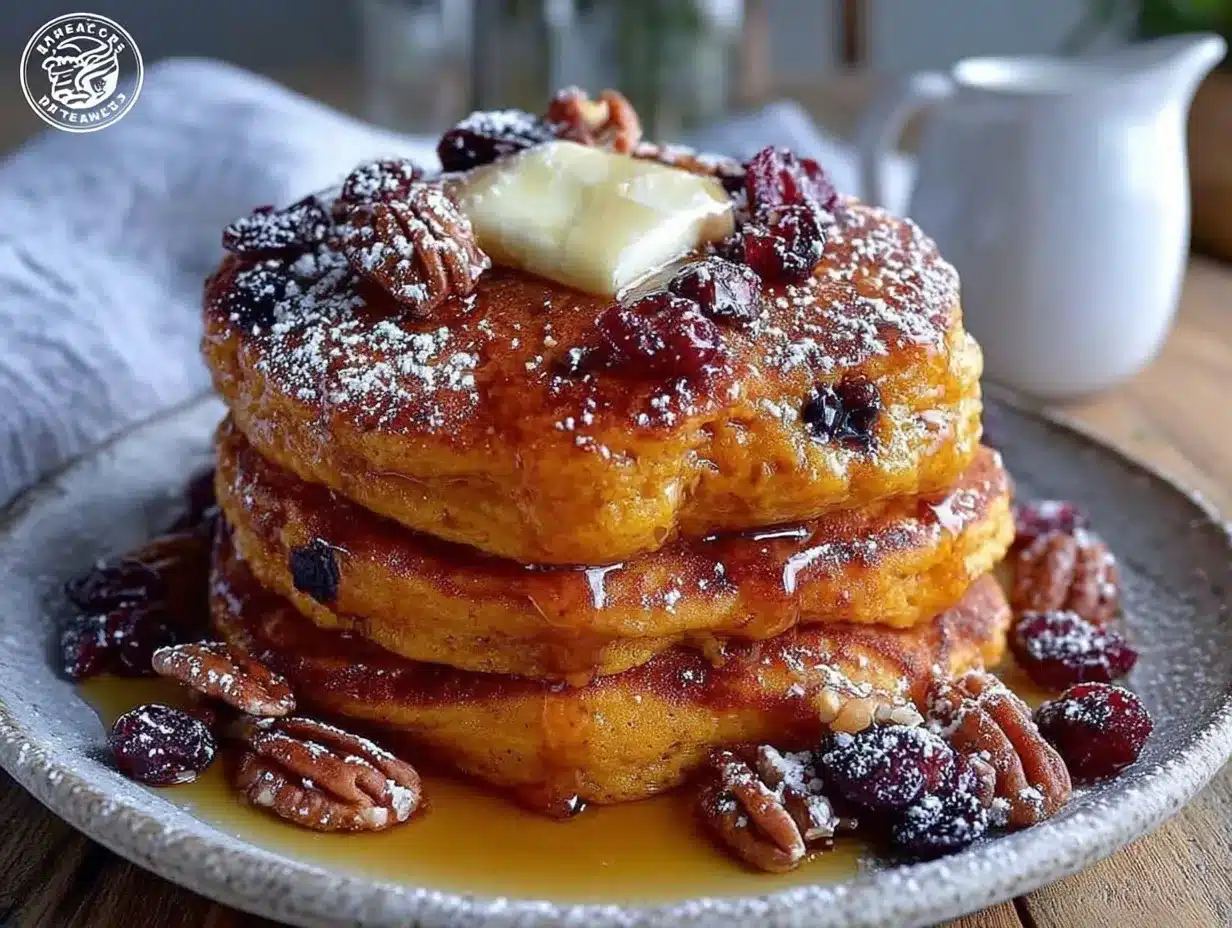
These pancakes are best served warm, straight from the skillet, with a generous pat of butter melting on top. I love drizzling them with pure maple syrup — the slight bitterness of the maple cuts through the sweetness beautifully. A sprinkle of chopped pecans or walnuts adds a nice crunch, and a dollop of Greek yogurt or whipped cream makes them feel extra special.
For a full breakfast spread, I like to serve these alongside crispy bacon or breakfast sausage. The salty-savory contrast is perfect. If you’re hosting a fall brunch, they pair wonderfully with a warm apple cider or a pumpkin spice latte. I’ve also served them at a casual dinner party with a side of roasted sweet potatoes and a simple green salad — unconventional, but everyone loved it.
Storage: Leftover pancakes keep well in the refrigerator for up to 3 days. Stack them with a piece of parchment paper between each pancake to prevent sticking, then wrap tightly in plastic wrap or place in an airtight container.
Freezing: These freeze beautifully. Lay the pancakes in a single layer on a baking sheet and freeze until solid, about 1 hour. Transfer to a freezer-safe bag or container. They’ll keep for up to 2 months. To reheat, pop them in the toaster or microwave for about 30 seconds per pancake. The toaster gives them slightly crispy edges, which I actually prefer.
Reheating tip: If you’re reheating a large batch, place them on a baking sheet in a 350°F oven for 5-7 minutes. They come out tasting almost as fresh as the day you made them.
Flavor development: Honestly, these pancakes taste even better the next day. The flavors meld together overnight, and the sourdough tang becomes more pronounced. I sometimes make a double batch just so I have leftovers for the week.
Nutritional Information & Benefits
Per serving (3 pancakes, without toppings): approximately 280 calories, 8g protein, 45g carbohydrates, 6g fat, 4g fiber, 12g sugar.
These pancakes offer more than just comfort. Pumpkin is packed with vitamin A and antioxidants, which support eye health and immune function. The sourdough fermentation process makes the grains easier to digest and may improve gut health. Plus, using sourdough discard means you’re reducing food waste — which feels good in a different way.
Dietary considerations: This recipe can be made dairy-free and gluten-free with simple substitutions. It’s vegetarian as written. The sugar content is moderate, and you can reduce the brown sugar to 1 tablespoon if you prefer less sweetness. The pancakes are relatively low in saturated fat, especially if you use oil instead of butter in the pan.
I love that I can serve these to my family knowing they’re getting a solid dose of vegetables (yes, pumpkin counts!) and beneficial probiotics from the sourdough. It’s comfort food that doesn’t leave you feeling heavy or guilty.
Conclusion
These fluffy sourdough discard pumpkin pancakes have become a staple in my kitchen for good reason. They use up ingredients you probably already have, they come together quickly once you factor in that crucial rest time, and they deliver that perfect balance of tangy and sweet that makes breakfast feel special. Whether you’re a seasoned sourdough baker looking for new ways to use discard, or someone who just loves a good pumpkin pancake, this recipe is worth trying.
I’d love to hear how yours turn out. Did you add chocolate chips? Try the savory version? Serve them with bacon and maple syrup? Drop a comment below and let me know — your variations might inspire someone else’s next breakfast adventure. And if you’re looking for another great way to use up ingredients, you might enjoy these mini lemon blueberry cheesecakes for a sweet treat that’s perfect for sharing.
Happy cooking, and remember — the best pancakes are the ones made with a little patience and a lot of love.
Frequently Asked Questions
Can I use active sourdough starter instead of discard?
Yes, you can. If you use active starter, reduce the milk by 1-2 tablespoons since active starter is thinner than discard. The pancakes will be slightly less tangy but still delicious.
Why did my pancakes turn out dense?
Most likely, you either overmixed the batter or skipped the resting time. Overmixing develops gluten, and skipping the rest doesn’t give the sourdough time to create air pockets. Try again with a gentle hand and that 15-minute pause.
Can I make the batter the night before?
I don’t recommend it. The baking powder will lose its effectiveness overnight, and the pancakes won’t rise as well. If you want to prep ahead, mix the dry ingredients and wet ingredients separately, then combine and rest them in the morning.
How do I know when the pan is hot enough?
Sprinkle a few drops of water on the pan. If they dance and evaporate quickly, it’s ready. If they sit and boil, the pan isn’t hot enough. If they evaporate immediately, it’s too hot.
Can I use canned pumpkin pie filling instead of puree?
I wouldn’t recommend it. Pumpkin pie filling has added sugar and spices, which will throw off the balance of the recipe. Stick with 100% pure pumpkin puree for the best results. If you only have pie filling, reduce the brown sugar to 1 tablespoon and omit the spices.
Pin This Recipe!
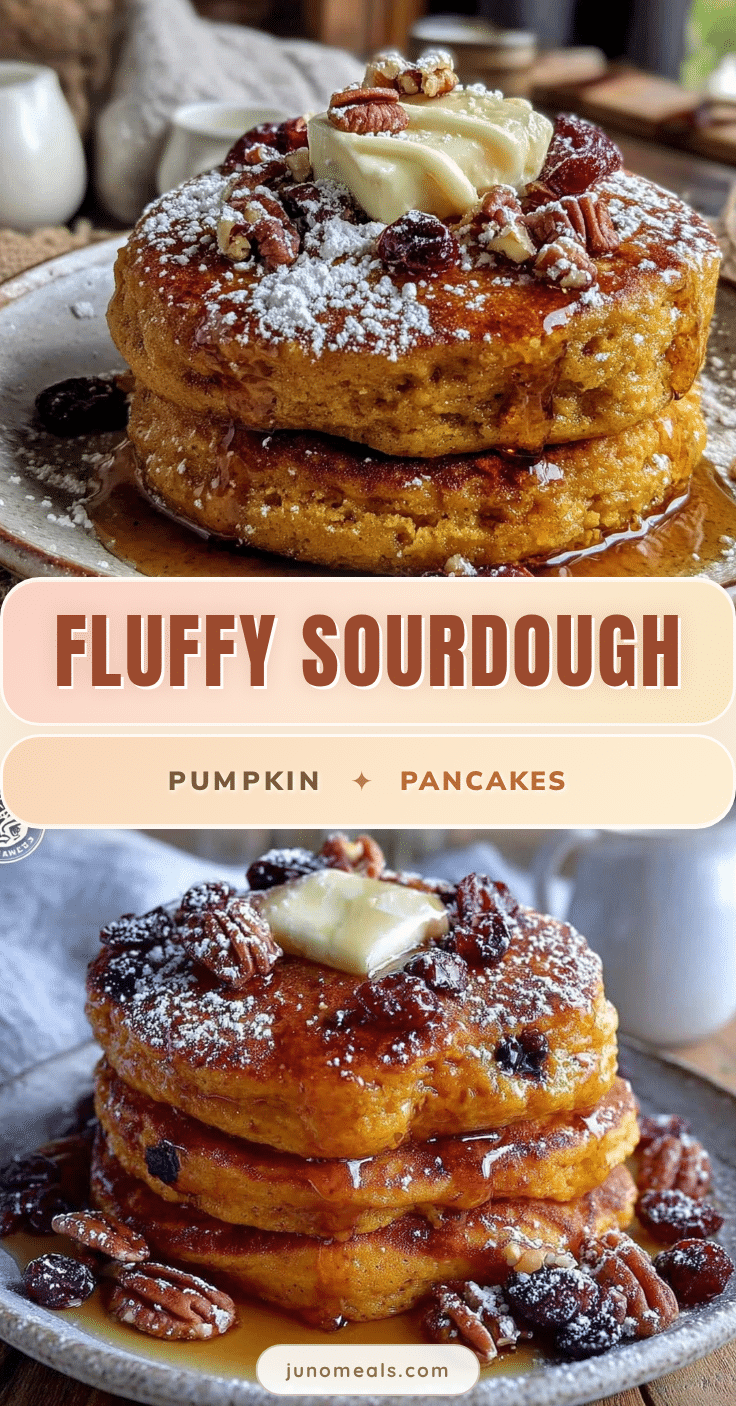
Best Fluffy Sourdough Discard Pumpkin Pancakes
These fluffy sourdough discard pumpkin pancakes are the perfect way to use up extra starter, combining a subtle tang with warm pumpkin spices for a cozy breakfast that feels like a warm hug.
- Prep Time: 10 minutes
- Cook Time: 15 minutes
- Total Time: 40 minutes (includes 15-20 minutes resting time)
- Yield: 4 servings (about 12 pancakes, 3 per serving) 1x
- Category: Breakfast
- Cuisine: American
Ingredients
- 1 cup (120g) all-purpose flour
- 1 ½ teaspoons baking powder
- ½ teaspoon baking soda
- 1 teaspoon ground cinnamon
- ½ teaspoon ground nutmeg
- ¼ teaspoon ground ginger
- ¼ teaspoon salt
- ½ cup (120g) pumpkin puree (100% pure, not pie filling)
- ½ cup (120g) sourdough discard (unfed, straight from the fridge)
- ½ cup (120ml) milk (whole milk preferred, or any milk)
- 1 large egg (room temperature)
- 2 tablespoons packed brown sugar (light or dark)
- 1 teaspoon vanilla extract (pure)
- Butter or oil for the pan
Instructions
- Mix the dry ingredients: In a large bowl, whisk together 1 cup all-purpose flour, 1 ½ teaspoons baking powder, ½ teaspoon baking soda, 1 teaspoon cinnamon, ½ teaspoon nutmeg, ¼ teaspoon ginger, and ¼ teaspoon salt until evenly distributed.
- Combine the wet ingredients: In a separate medium bowl, whisk together ½ cup pumpkin puree, ½ cup sourdough discard, ½ cup milk, 1 large egg, 2 tablespoons packed brown sugar, and 1 teaspoon vanilla extract until smooth and fully combined.
- Combine wet and dry: Pour the wet ingredients into the dry ingredients. Stir gently with a spatula or whisk until just combined. A few lumps are fine; do not overmix. The batter should be thick but scoopable. If too thick, add a tablespoon more milk.
- Let the batter rest: Cover the bowl and let the batter sit at room temperature for 15-20 minutes. This allows the sourdough discard to create air pockets and the flour to hydrate, resulting in fluffier pancakes.
- Preheat your pan: Place a non-stick skillet or griddle over medium heat. Add a pat of butter or a drizzle of oil. Let it melt and sizzle slightly. The pan is ready when a drop of water dances on the surface before evaporating.
- Cook the pancakes: Using a ladle or ¼-cup measure, pour batter onto the hot pan. Spread gently into a circle if needed. Cook until bubbles form on the surface and edges look set, about 2-3 minutes. Flip carefully and cook for another 1-2 minutes on the other side, until golden brown and springy to the touch.
- Keep warm while cooking: Transfer cooked pancakes to a cooling rack set over a baking sheet and place in a 200°F (90°C) oven to keep warm without getting soggy.
- Repeat with remaining batter: Add more butter or oil to the pan between batches as needed. Stir the batter occasionally to prevent pumpkin from settling.
Notes
Don’t skip the resting time—it’s crucial for fluffiness. Overmixing will make pancakes tough. For best results, use 100% pure pumpkin puree, not pumpkin pie filling. Leftover pancakes can be refrigerated for up to 3 days or frozen for up to 2 months. Reheat in a toaster or oven at 350°F for 5-7 minutes.
Nutrition
- Serving Size: 3 pancakes
- Calories: 280
- Sugar: 12
- Sodium: 450
- Fat: 6
- Saturated Fat: 2
- Carbohydrates: 45
- Fiber: 4
- Protein: 8
Keywords: sourdough discard, pumpkin pancakes, fluffy pancakes, fall breakfast, sourdough pumpkin pancakes, easy pancake recipe