I had been looking for a bowl of spicy ramen that actually tasted like something I’d want to eat again—not just salty broth with sad noodles floating in it. For a while, I just accepted that homemade ramen wasn’t going to taste like the stuff from my favorite little shop downtown. The kind with the deep, funky miso kick and that slow-building heat that makes you sniffle but keep going anyway. I tried doctoring up instant packs, simmering broth for hours, even buying those fancy refrigerated noodles. Nothing clicked.
Then one night, after a long week where cooking felt like the last thing I wanted to do, I threw a bunch of stuff into one pot out of pure stubbornness. I wasn’t trying to be clever. I just didn’t have the energy to dirty more dishes. But something happened in that pot—the miso paste melted into the garlic and ginger, the chili oil swirled into the broth, and the whole thing smelled so good I actually stood there stirring it for a minute, just breathing it in. (My kitchen smelled like a tiny ramen shop, which honestly made my whole evening.)
That accidental pot of noodles became the version I make now, all the time. It’s not fancy. It’s not traditional. But it’s the one I actually want to eat. And that’s the thing about this Flavorful One-Pot Spicy Miso Ramen Upgrade—it doesn’t ask you to do much, but it gives you a bowl that feels like you put in real effort. You don’t need a dozen special ingredients or a culinary degree. You just need one pot, a little patience, and maybe a bigger appetite than you thought you had.
Why You’ll Love This Recipe
Look, I’ve tested a lot of ramen recipes over the years. Some were too complicated. Some were bland. Some required ingredients I couldn’t find at my regular grocery store. This one is different because it actually works for real life. Here’s what makes it stand out:
- One Pot, Minimal Mess : Everything comes together in a single pot—no separate pans for broth, no extra bowls for toppings. You cook, you eat, you wash one pot. That’s it.
- Deep, Layered Flavor Without the Wait : Most good ramen needs hours of simmering. This one builds serious umami in under 30 minutes using a clever combination of miso paste, chili oil, and a few pantry staples. You get that slow-cooked taste without the slow cook.
- Customizable Heat Level : The spicy element comes from gochujang and chili oil, which means you can dial it up or down depending on your mood. Want it mild? Use less chili oil. Want to sweat a little? Go ahead and add that extra spoonful.
- Uses Real Ingredients You Can Pronounce : No mysterious seasoning packets or processed flavor bases. Just miso, garlic, ginger, soy sauce, and fresh veggies. Your body will thank you.
- Perfect for Weeknights or Lazy Weekends : It’s fast enough for a Tuesday dinner but feels special enough for a Saturday lunch. I’ve made it on both and it never disappoints.
- Crowd-Pleaser Status : I’ve served this to friends who swear they don’t like spicy food and watched them go back for seconds. Something about that rich, savory broth just hooks people.
This isn’t just another ramen recipe you’ll bookmark and forget. It’s the one you’ll actually make—again and again—because it delivers that soul-warming, nose-running, deeply satisfying bowl of noodles without the fuss.
What Ingredients You Will Need
This recipe uses simple, wholesome ingredients to deliver bold flavor and satisfying texture without the fuss. Most of these are probably already in your kitchen, or at least easy to find at any standard grocery store. Here’s what you’ll need:
For the Broth Base
- 4 cups low-sodium vegetable or chicken broth – The foundation of your soup. I prefer using a good-quality boxed broth (Pacific Foods or Imagine are my go-to brands) because they have cleaner flavor without being overly salty.
- 3 tablespoons white or yellow miso paste – This is where the deep, savory umami comes from. White miso is milder and slightly sweet; yellow miso has more punch. Either works beautifully here.
- 2 tablespoons gochujang (Korean chili paste) – This gives the broth its signature spicy kick and a subtle sweetness. Look for it in the international aisle or your local Asian market.
- 1 tablespoon chili oil (plus more for drizzling) – Adds heat and a lovely red color to the broth. I like using Lao Gan Ma brand, but any chili oil will do.
- 3 cloves garlic, minced – Fresh garlic is non-negotiable here. The pre-minced stuff in a jar just won’t give you the same pungent, aromatic depth.
- 1 tablespoon fresh ginger, grated – Use a microplane or the small side of a box grater. Fresh ginger adds warmth and brightness that dried powder can’t replicate.
- 2 tablespoons soy sauce (or tamari for gluten-free) – Adds saltiness and additional umami layers.
- 1 teaspoon toasted sesame oil – A little goes a long way. Drizzle this in at the end for that nutty, aromatic finish.
For the Noodles & Add-ins
- 2 packs (about 6 ounces each) fresh or dried ramen noodles – Fresh noodles from the refrigerated section are ideal if you can find them. Dried ramen noodles (the kind without the seasoning packet) work great too. Avoid using instant ramen blocks unless that’s all you have.
- 1 cup shiitake mushrooms, sliced – These add an earthy, meaty texture that soaks up the broth beautifully. You can use fresh or rehydrated dried shiitakes.
- 2 cups baby spinach or bok choy – For a pop of green and some gentle bitterness that balances the rich broth. Bok choy is more traditional; spinach is easier to find.
- 2 soft-boiled eggs, halved – That jammy yolk running into the spicy broth is pure magic. (I’ll walk you through how to make perfect soft-boiled eggs in the tips section.)
- 2 green onions, sliced – For freshness and a mild oniony crunch on top.
- 1 sheet nori (seaweed), torn into pieces – Optional but highly recommended. It adds a subtle oceanic flavor that complements miso beautifully.
- Sesame seeds and extra chili oil for garnish – Because we eat with our eyes first, right?
Ingredient Substitutions
- Gluten-free option : Use rice noodles or soba noodles made from 100% buckwheat, and swap soy sauce for tamari or coconut aminos.
- Lower sodium : Use low-sodium broth and reduce the soy sauce to 1 tablespoon. You can always add more salt at the end.
- No miso? : You can use 2 tablespoons of miso paste mixed with 1 additional tablespoon of soy sauce, but honestly, miso is the star here. I’d recommend picking some up.
- No gochujang? : Mix 1 tablespoon of sriracha with 1 teaspoon of honey or brown sugar as a substitute. It won’t be exactly the same, but it’ll still be delicious.
Equipment Needed
The beauty of this recipe is that you don’t need much. Here’s what you’ll want to have on hand:
- A large pot or Dutch oven (5-6 quart) – This is your main vessel. A heavy-bottomed pot distributes heat evenly and prevents the miso from scorching. I use my trusty enameled cast iron Dutch oven, but any large pot works.
- A wooden spoon or silicone spatula – For stirring the aromatics and broth. Wooden spoons are gentle on your pot and won’t scratch non-stick surfaces.
- A microplane or fine grater – For grating the ginger and garlic. Trust me, you don’t want to try mincing ginger with a knife—it’s frustrating and you’ll end up with stringy bits.
- A small bowl – For whisking the miso paste with a bit of hot broth before adding it to the pot. This prevents clumps and ensures smooth incorporation.
- A sharp knife and cutting board – For prepping your veggies and aromatics. A dull knife makes everything harder and more frustrating.
- A slotted spoon or tongs – For removing the noodles and toppings from the broth. Tongs work better for grabbing eggs and nori.
- Serving bowls – Wide, deep bowls are ideal for ramen. They let you arrange the toppings beautifully and keep the broth from spilling.
If you don’t have a Dutch oven, any large soup pot will do. I’ve made this in a stainless steel stockpot and it turned out just fine. The key is using a pot that’s big enough to hold all the liquid and noodles without boiling over.
Preparation Method
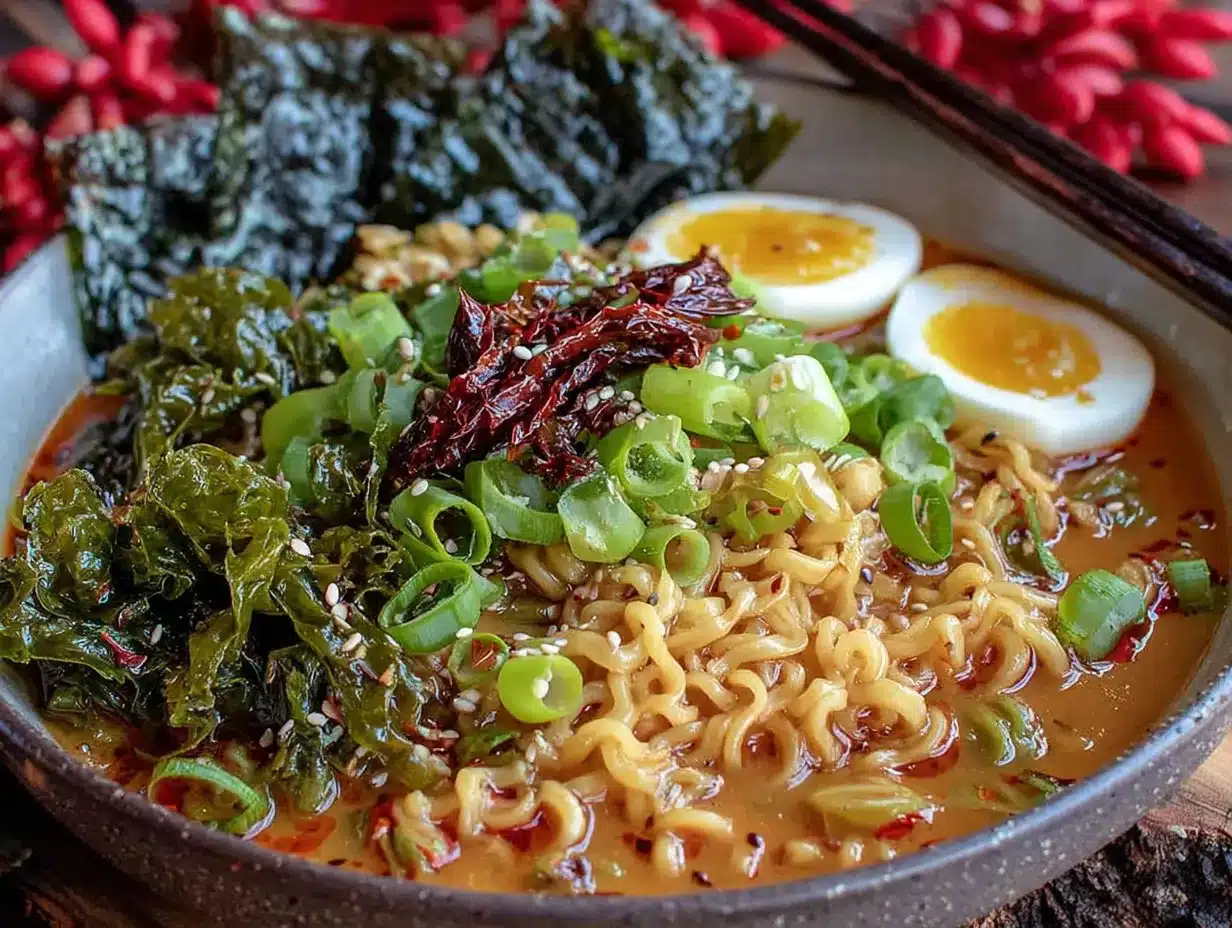
Let’s get cooking! This whole process takes about 25-30 minutes from start to finish. I’ve broken it down into clear steps so you can follow along without stress.
- Start your soft-boiled eggs first (if using). Bring a small saucepan of water to a gentle boil. Carefully lower in 2 eggs (room temperature is best) using a slotted spoon. Boil for exactly 6 minutes and 30 seconds for jammy yolks. Immediately transfer them to a bowl of ice water to stop the cooking. Let them sit while you prepare everything else. Pro tip: tap the shells gently all over before peeling—it makes the process way less frustrating.
- Heat your pot over medium heat. Add 1 tablespoon of vegetable or avocado oil (not sesame oil—that goes in later). Once the oil shimmers, add the minced garlic and grated ginger. Stir constantly for about 30 seconds until fragrant. Don’t let them brown—you want them soft and aromatic, not crispy. Your kitchen should smell amazing at this point.
- Add the sliced shiitake mushrooms to the pot. Cook for 2-3 minutes, stirring occasionally, until they start to soften and release their moisture. The mushrooms will shrink a bit and turn golden on the edges. Season with a tiny pinch of salt to help them cook down faster.
- Pour in the broth (4 cups) and bring it to a gentle simmer. Don’t let it boil hard—a gentle bubble is what you’re after. While it’s heating up, add the soy sauce and gochujang. Whisk the gochujang into the broth until it’s fully dissolved. You might see some little red flecks floating around; that’s totally normal and actually pretty.
- Prepare the miso slurry. In a small bowl, scoop out about 1/2 cup of the hot broth from the pot. Add the 3 tablespoons of miso paste and whisk until smooth. This step is crucial—if you add miso directly to the boiling broth, it can become grainy and lose its flavor. Pour the miso slurry back into the pot and stir gently. Turn the heat down to low.
- Add your noodles to the pot. If using fresh ramen noodles, they’ll cook in about 2-3 minutes. Dried noodles may take 4-5 minutes, depending on thickness. Stir them occasionally to prevent sticking. Taste a noodle after 3 minutes—it should be tender but still have a slight chew (al dente, basically).
- Add the spinach or bok choy in the last minute of cooking. Stir it into the broth until it just wilts—about 30 seconds for spinach, 1 minute for bok choy. You want it bright green and tender, not sad and mushy.
- Finish with sesame oil. Remove the pot from the heat and stir in 1 teaspoon of toasted sesame oil. This adds that final layer of nutty aroma that makes the broth taste complete. Taste the broth and adjust seasoning if needed—maybe a little more soy sauce for saltiness, or another drizzle of chili oil for heat.
- Assemble your bowls. Ladle the broth, noodles, and vegetables into serving bowls. Peel your soft-boiled eggs (run them under cold water to help the shell come off), slice them in half lengthwise, and place two halves in each bowl. Top with sliced green onions, torn nori pieces, a sprinkle of sesame seeds, and an extra drizzle of chili oil if you’re feeling brave.
- Serve immediately. Ramen waits for no one. The noodles will continue to absorb broth and get soft, so eat this right away while everything is hot and the textures are perfect.
Sensory Checkpoints: The broth should look rich and slightly opaque, with a reddish-orange hue from the gochujang and chili oil. It should smell deeply savory with a hint of sweetness and a warming kick of spice. When you slurp a spoonful, you should taste the miso’s earthiness first, followed by the slow-building heat of the chili. The noodles should be tender but springy, and the egg yolk should be jammy and golden, not liquid or chalky.
Cooking Tips & Techniques
I’ve made this recipe probably a dozen times now, and I’ve learned a few things the hard way. Here are my best tips to help you avoid my mistakes:
Don’t boil the miso. This is the most important rule. Miso is a fermented ingredient, and high heat kills its beneficial probiotics and makes it taste flat. Always dissolve it in a bit of warm broth before adding it to the pot, and keep the heat low once it’s in. I learned this after making a batch that tasted like salty water—so disappointing.
Cook noodles separately if you’re meal prepping. If you’re planning to have leftovers, cook the noodles separately and add them to individual bowls when serving. Otherwise, they’ll soak up all the broth overnight and turn into a mushy mess. Trust me on this—I’ve had sad leftover ramen more times than I’d like to admit.
Toast your sesame seeds. It takes 30 seconds in a dry pan over medium heat, and it makes a huge difference in flavor. Keep shaking the pan so they don’t burn. You’ll know they’re done when they start to pop and smell nutty. I usually do this while the eggs are boiling.
Perfect soft-boiled eggs every time. The 6-minute-30-second rule works, but only if your eggs are at room temperature. Cold eggs will throw off the timing. Also, use eggs that are at least a week old—fresh eggs are harder to peel. If you’re struggling with peeling, try adding a splash of vinegar to the boiling water. It helps the egg whites set faster.
Taste as you go. This sounds obvious, but I still catch myself skipping it sometimes. The broth might need more salt, more heat, or more acidity. A squeeze of fresh lime juice at the end can brighten up the whole bowl if it feels too heavy. Don’t be afraid to adjust.
Work in batches if making for a crowd. This recipe serves 2 generously, but you can easily double it. Just don’t overcrowd the pot—cook the noodles in batches if needed, and keep the broth warm on low heat while you assemble each bowl.
Variations & Adaptations
One of the best things about this recipe is how flexible it is. Here are some ways to make it your own:
Vegetarian/Vegan Version : Use vegetable broth and skip the eggs. Add extra protein like cubed tofu (firm or extra-firm, pan-fried until golden) or edamame. The miso and gochujang are already plant-based, so you’re most of the way there. I’ve made this for my vegetarian friends and they always ask for the recipe.
Protein Boost : Add shredded rotisserie chicken, sliced pork belly, or even leftover steak. Warm the protein in the broth for a minute before serving. I sometimes use leftover chicken from other weeknight meals—it’s an easy way to stretch ingredients and reduce food waste.
Milder Version : Reduce the gochujang to 1 tablespoon and skip the chili oil drizzle. You’ll still get that lovely miso flavor without the heat. This is great for kids or anyone with a sensitive palate. My partner prefers it this way, so I often make a milder base and add extra chili oil to my own bowl.
Extra Veggie Load : Throw in whatever vegetables you have on hand—bell peppers, snap peas, corn, bean sprouts, or shredded carrots. Add heartier veggies (like carrots or bell peppers) earlier so they soften, and delicate ones (like bean sprouts) right at the end. This is a fantastic way to clean out your fridge.
Noodle Swap : Try this with udon noodles for a thicker, chewier texture, or use rice vermicelli for a lighter option. Each noodle type changes the character of the dish, but the broth works beautifully with all of them. I’ve even used leftover spaghetti in a pinch—don’t judge until you try it.
Miso Variety : Experiment with different miso pastes. Red miso is saltier and more intense; white miso is sweeter and milder. A mix of both can be really interesting. I once used a barley miso and it added a nutty depth that was unexpectedly wonderful.
Serving & Storage Suggestions
Serving : Serve this ramen piping hot in deep bowls. Arrange the toppings artfully—egg halves on one side, green onions scattered over the top, nori pieces tucked in like little flags. A drizzle of chili oil on top makes it look restaurant-worthy. I like to serve this with a side of pickled ginger or kimchi for a tangy contrast.
What to Drink With It : A cold beer (something crisp like a lager or pilsner) cuts through the richness beautifully. For a non-alcoholic option, try iced green tea or sparkling water with a squeeze of lime. The acidity helps balance the spice.
Storage : If you have leftovers, store the broth and noodles separately. The broth keeps in an airtight container in the refrigerator for up to 3 days. The noodles should be stored separately in a container with a drizzle of sesame oil to prevent sticking. The soft-boiled eggs are best eaten fresh, but you can store them in a bowl of cold water in the fridge for up to 2 days.
Reheating : Reheat the broth in a pot over medium heat until bubbling. Add the noodles and cook for 1-2 minutes until warmed through. If the broth has thickened from sitting, add a splash of water or extra broth to thin it out. I don’t recommend microwaving—it makes the noodles rubbery and the broth can splatter everywhere.
Flavor Development : Interestingly, the broth actually tastes better the next day. The flavors meld together overnight and become even more cohesive. If you’re planning ahead, make the broth base a day in advance and just cook fresh noodles when you’re ready to eat. This is my secret for weeknight ramen that tastes like it took hours.
Nutritional Information & Benefits
This recipe isn’t health food, but it’s not junk either. Here’s a rough estimate per serving (based on 2 servings with eggs and all toppings):
- Calories : Approximately 450-500 per bowl
- Protein : 18-22 grams (thanks to the eggs and miso)
- Carbohydrates : 55-60 grams
- Fat : 18-22 grams (mostly from the sesame oil and egg yolks)
- Fiber : 4-6 grams
- Sodium : 1200-1500 mg (use low-sodium broth to reduce this)
Health Highlights : Miso paste is a fermented food, which means it contains probiotics that support gut health. It’s also rich in antioxidants and B vitamins. Ginger and garlic have anti-inflammatory properties, and shiitake mushrooms provide immune-boosting beta-glucans. The spinach adds iron and vitamin K. So yes, this ramen is delicious—but it’s also doing some good work for your body.
Dietary Considerations : This recipe can be made gluten-free (use tamari and rice noodles), dairy-free (it already is), and vegan (skip the eggs and use vegetable broth). It contains soy (miso, soy sauce) and sesame (sesame oil), so be aware if you have allergies to those ingredients.
Conclusion
This Flavorful One-Pot Spicy Miso Ramen Upgrade has become my go-to for those nights when I need something warm, satisfying, and a little bit indulgent without spending hours in the kitchen. It’s the kind of meal that makes you feel like you’ve treated yourself, even though it’s just noodles in a pot. That’s the magic of good cooking—it doesn’t have to be complicated to be memorable.
I hope you give this recipe a try and make it your own. Maybe you’ll add extra chili oil because you like it hot. Maybe you’ll throw in some leftover veggies from the fridge. Maybe you’ll serve it to someone you love and watch them close their eyes after that first bite. That’s the best part, honestly.
If you do make this, I’d love to hear how it turned out. Drop a comment below and let me know what variations you tried, or tag me in your photos if you share them online. And if you’re looking for more easy, comforting meals, check out my other one-pot recipes—they’re all tested in my own kitchen, and they all prioritize flavor without the fuss.
Now go make some ramen. You deserve it.
Frequently Asked Questions
Can I use instant ramen noodles for this recipe?
Yes, you can! Just discard the seasoning packet that comes with the noodles. Cook the instant ramen noodles according to the package directions (usually 3 minutes) and add them to the broth at the end. Keep in mind that instant noodles are thinner and won’t have the same chewy texture as fresh or dried ramen noodles, but they’ll still taste great in this broth.
How can I make this recipe less spicy?
Easy—just reduce or omit the gochujang and chili oil. Start with 1 tablespoon of gochujang and skip the chili oil drizzle. You’ll still get the wonderful miso flavor without the heat. If you want a tiny bit of warmth without the burn, add just 1 teaspoon of gochujang. You can also serve extra chili oil on the side so everyone can adjust their own bowl.
Can I freeze the broth for later?
Absolutely! The broth freezes beautifully for up to 3 months. Let it cool completely, then transfer it to a freezer-safe container or zip-top bag. Leave a little room for expansion. When you’re ready to eat, thaw it in the refrigerator overnight and reheat it on the stovetop. Cook fresh noodles and toppings when you serve it—don’t freeze the noodles, as they’ll turn mushy.
What’s the best substitute for gochujang?
If you can’t find gochujang, mix 1 tablespoon of sriracha with 1 teaspoon of honey or brown sugar. This gives you a similar sweet-spicy profile. Alternatively, use 1 tablespoon of chili garlic sauce (like Sambal Oelek) for a more straightforward heat without the sweetness. The flavor won’t be identical, but it’ll still be delicious.
How do I make the perfect soft-boiled egg every time?
The secret is timing and an ice bath. Bring water to a gentle boil, lower in room-temperature eggs, and boil for exactly 6 minutes and 30 seconds. Immediately transfer the eggs to a bowl of ice water and let them sit for at least 5 minutes. Tap the shells gently all over before peeling under running cold water. The ice water stops the cooking process, so you get that perfect jammy yolk every single time.
Pin This Recipe!
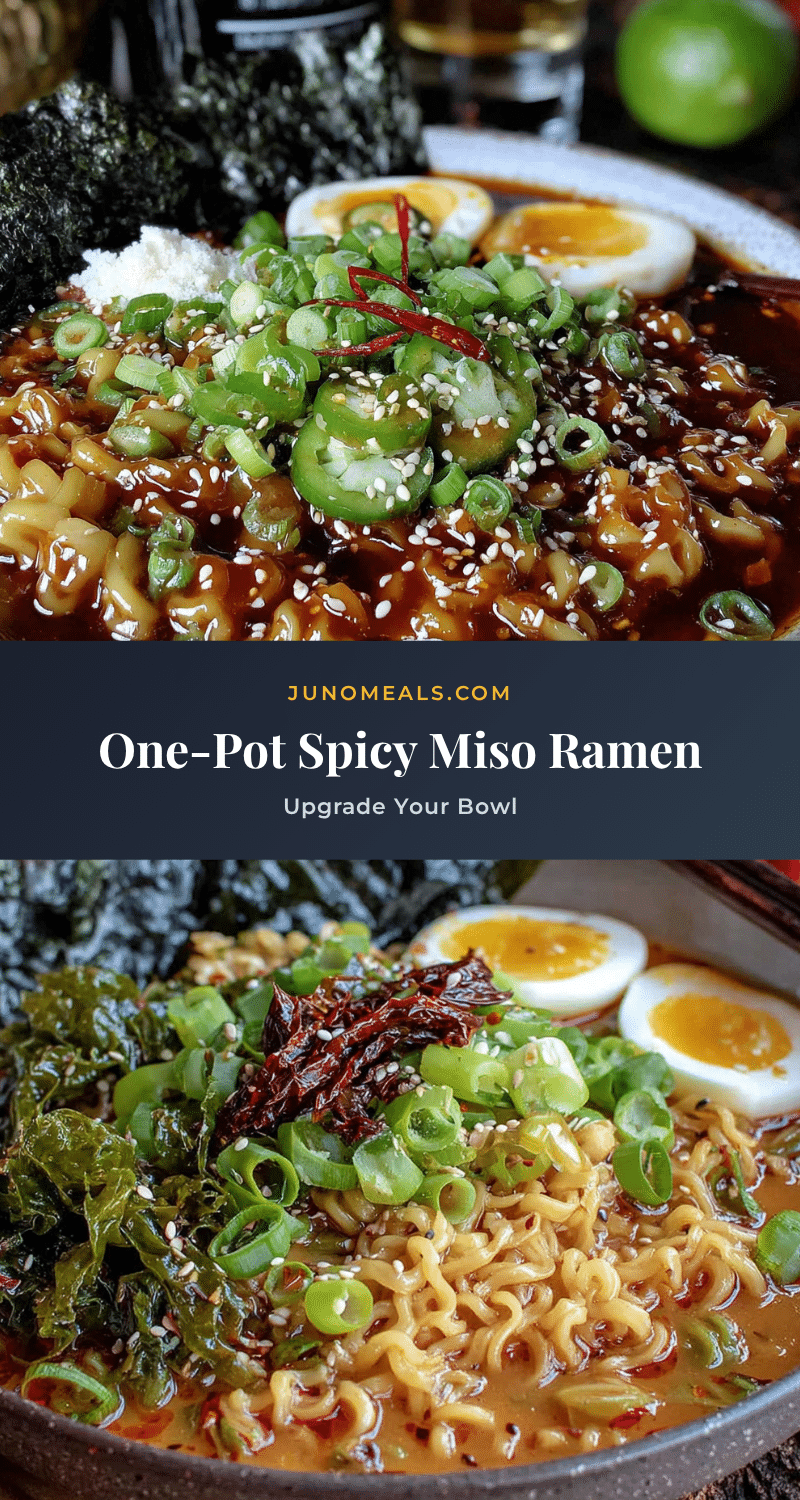
Upgrade Your Ramen with One-Pot Spicy Miso
This one-pot spicy miso ramen delivers deep, layered umami and a slow-building heat in under 30 minutes. It’s a quick, customizable weeknight dinner that tastes like it simmered for hours.
- Prep Time: 10 minutes
- Cook Time: 20 minutes
- Total Time: 30 minutes
- Yield: 2 servings 1x
- Category: Main Course
- Cuisine: Japanese-Korean Fusion
Ingredients
- 4 cups low-sodium vegetable or chicken broth
- 3 tablespoons white or yellow miso paste
- 2 tablespoons gochujang (Korean chili paste)
- 1 tablespoon chili oil (plus more for drizzling)
- 3 cloves garlic, minced
- 1 tablespoon fresh ginger, grated
- 2 tablespoons soy sauce (or tamari for gluten-free)
- 1 teaspoon toasted sesame oil
- 2 packs (about 6 ounces each) fresh or dried ramen noodles
- 1 cup shiitake mushrooms, sliced
- 2 cups baby spinach or bok choy
- 2 soft-boiled eggs, halved
- 2 green onions, sliced
- 1 sheet nori (seaweed), torn into pieces
- Sesame seeds and extra chili oil for garnish
- 1 tablespoon vegetable or avocado oil (for cooking)
Instructions
- Start your soft-boiled eggs first. Bring a small saucepan of water to a gentle boil. Carefully lower in 2 room-temperature eggs using a slotted spoon. Boil for exactly 6 minutes and 30 seconds for jammy yolks. Immediately transfer them to a bowl of ice water to stop the cooking. Let them sit while you prepare everything else.
- Heat your pot over medium heat. Add 1 tablespoon of vegetable or avocado oil. Once the oil shimmers, add the minced garlic and grated ginger. Stir constantly for about 30 seconds until fragrant. Do not let them brown.
- Add the sliced shiitake mushrooms to the pot. Cook for 2-3 minutes, stirring occasionally, until they start to soften and release their moisture. Season with a tiny pinch of salt.
- Pour in the broth (4 cups) and bring it to a gentle simmer. Add the soy sauce and gochujang. Whisk the gochujang into the broth until fully dissolved.
- Prepare the miso slurry. In a small bowl, scoop out about 1/2 cup of the hot broth from the pot. Add the 3 tablespoons of miso paste and whisk until smooth. Pour the miso slurry back into the pot and stir gently. Turn the heat down to low.
- Add your noodles to the pot. Fresh ramen noodles cook in about 2-3 minutes; dried noodles may take 4-5 minutes. Stir occasionally to prevent sticking. Taste a noodle after 3 minutes—it should be tender but still have a slight chew.
- Add the spinach or bok choy in the last minute of cooking. Stir until just wilted—about 30 seconds for spinach, 1 minute for bok choy.
- Remove the pot from the heat and stir in 1 teaspoon of toasted sesame oil. Taste the broth and adjust seasoning if needed.
- Assemble your bowls. Ladle the broth, noodles, and vegetables into serving bowls. Peel the soft-boiled eggs, slice them in half lengthwise, and place two halves in each bowl. Top with sliced green onions, torn nori pieces, a sprinkle of sesame seeds, and an extra drizzle of chili oil.
- Serve immediately.
Notes
Don’t boil the miso—high heat kills its flavor. Cook noodles separately if meal prepping to avoid mushiness. For perfect soft-boiled eggs, use room-temperature eggs and an ice bath. Toast sesame seeds in a dry pan for 30 seconds for extra flavor. Taste as you go and adjust seasoning.
Nutrition
- Serving Size: 1 bowl
- Calories: 475
- Sugar: 6
- Sodium: 1350
- Fat: 20
- Saturated Fat: 3.5
- Carbohydrates: 58
- Fiber: 5
- Protein: 20
Keywords: spicy miso ramen, one-pot ramen, easy ramen recipe, miso ramen, gochujang ramen, quick ramen, weeknight dinner