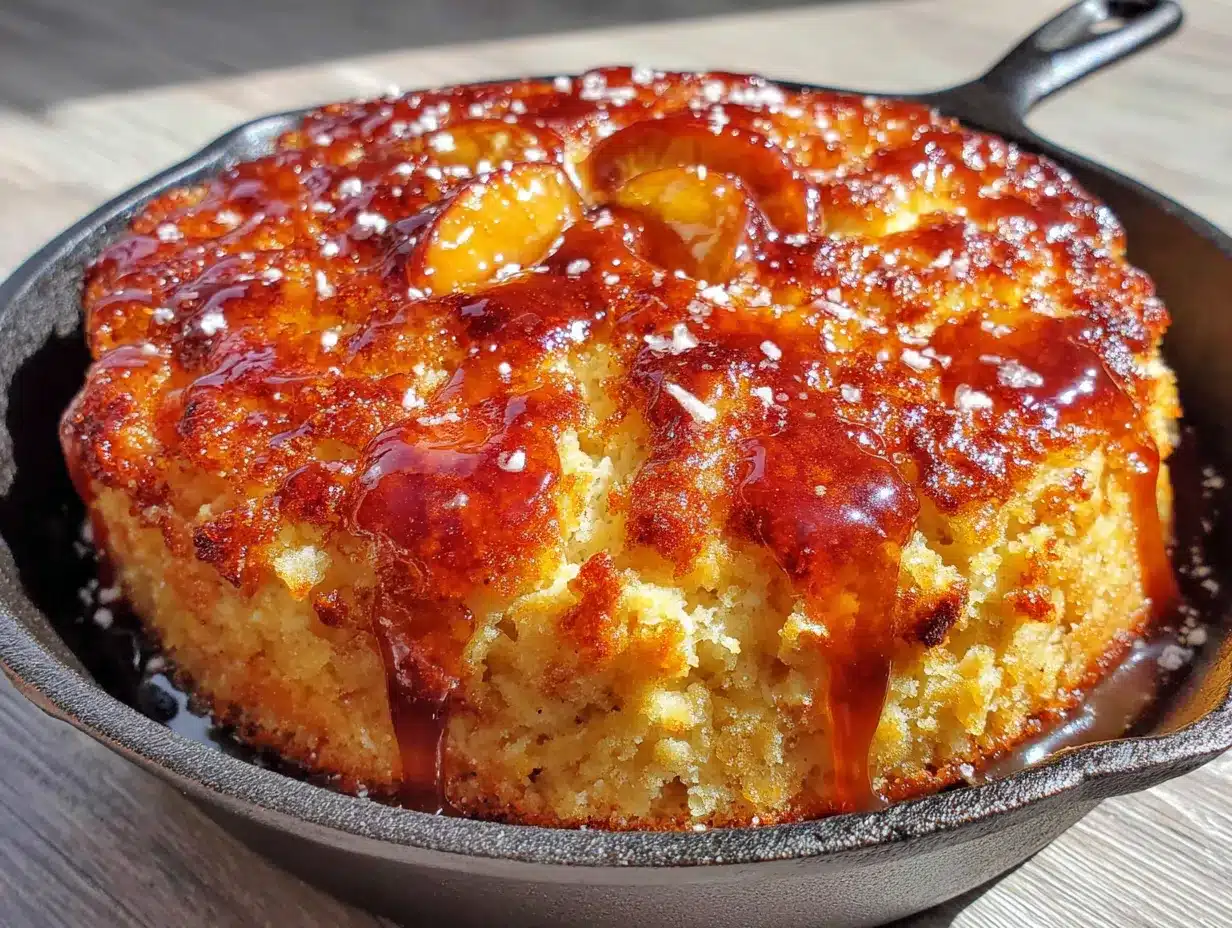
I burned the first peach cornbread skillet cake I ever made. Not just a little singed on the bottom—I mean, the top was black, the edges were carbon, and the kitchen smelled like a campfire that had gone rogue. The peaches were still raw in the middle, somehow. I was so frustrated I almost threw the cast iron skillet out the window. But I couldn’t let it go. There was something about the idea of sweet, jammy peaches nestled into a tender, buttery cornbread that felt like it should work. It should be the perfect summer dessert. So I tried again. And again. And somewhere around attempt number four, I stopped trying to force it and started listening to what the skillet was telling me.
The problem was I was treating it like a cake when it really wanted to be a cornbread that just happened to have fruit in it. Once I figured that out—once I stopped adding too much sugar and started treating the peaches like they were the star, not an afterthought—everything clicked. This Perfect Peach Cornbread Skillet Cake is the result of all those failures, and honestly, it’s better for them. It’s the kind of dessert that doesn’t need frosting or fancy plating. It just needs a spoon and maybe a scoop of vanilla ice cream melting into the warm crevices.
I make this every summer when peaches are at their peak, and it never lasts more than a day in my house. There’s something about pulling that hot skillet out of the oven, the edges bubbling with caramelized peach juice, that feels like a small victory. Every time. This recipe isn’t about perfection—it’s about getting it right enough that you want to make it again.
Why You’ll Love This Recipe
This isn’t your average cornbread, and it’s not your average peach dessert either. It’s the sweet spot between the two, and I’ve tested it enough times to know exactly what makes it work. Here’s why this one stands out:
- One-Skillet Wonder: Everything comes together in a single cast iron skillet. Less cleanup, more time enjoying that first warm bite.
- Perfectly Balanced Sweetness: The cornbread is lightly sweetened so the peaches can shine. No sugar overload here—just pure, honest fruit flavor.
- Simple, Everyday Ingredients: You probably already have cornmeal, flour, butter, and eggs in your kitchen. The only special item is fresh peaches, and they’re worth the trip.
- Summer in a Bite: This cake captures everything good about summer—warm peaches, golden cornbread, and that irresistible caramelized edge from the skillet.
- Foolproof Once You Know the Tricks: I’ve made every mistake possible so you don’t have to. The tips in this recipe come from real, messy experience.
What makes this different from other peach cornbread recipes? It’s the technique. Most recipes dump peaches into a standard cornbread batter and hope for the best. I spent months figuring out that the cornbread needs to be slightly richer, the peaches need to be macerated first, and the skillet needs to be screaming hot before the batter hits it. That’s the difference between a soggy mess and a cake with a golden, buttery crust that makes everyone ask for the recipe.
This is the kind of dessert that makes you close your eyes after the first bite. It’s comfort food reimagined—simpler, faster, and somehow more satisfying than anything you’d get from a bakery. Perfect for impressing guests without stress, or turning a Tuesday night into something worth remembering.
What Ingredients You Will Need
This recipe uses simple, wholesome ingredients that work together to create something greater than the sum of their parts. Most of these are pantry staples, but a few deserve a little extra attention.
For the Peach Layer
- 3 medium ripe peaches, sliced into wedges (about 1/4 inch thick—not too thin or they’ll disappear into the batter)
- 2 tablespoons granulated sugar (helps draw out the natural juices and creates that syrupy, caramelized layer)
- 1 tablespoon lemon juice (fresh is best—it balances the sweetness and keeps the peaches from browning)
- 1/4 teaspoon cinnamon (optional, but I love the warmth it adds—use Ceylon cinnamon for a milder flavor)
For the Cornbread Batter
- 1 cup yellow cornmeal (I prefer stone-ground for better texture—avoid fine cornmeal or it’ll turn out gummy)
- 1 cup all-purpose flour (spooned and leveled—don’t scoop straight from the bag or you’ll get too much)
- 1/2 cup granulated sugar (just enough to complement the peaches without overwhelming them)
- 2 teaspoons baking powder (make sure it’s fresh—test by dropping a bit in water; if it fizzes, you’re good)
- 1/2 teaspoon baking soda
- 1/2 teaspoon salt (I use fine sea salt—it distributes more evenly than kosher salt in batters)
- 1 cup buttermilk (room temperature—if you don’t have buttermilk, add 1 tablespoon lemon juice to regular milk and let it sit for 5 minutes)
- 2 large eggs (room temperature—cold eggs will seize the melted butter)
- 1/3 cup unsalted butter, melted and slightly cooled (I use Kerrygold for its rich flavor, but any good unsalted butter works)
- 2 tablespoons honey (adds moisture and a subtle floral note that pairs beautifully with peaches—local honey is a nice touch if you have it)
For Topping (Optional but Recommended)
- 1 tablespoon turbinado sugar (for that crunchy, sparkly top—regular sugar works too, but the coarse texture is worth it)
- Vanilla ice cream or whipped cream (for serving—let’s be real, this cake was made for ice cream)
I’ve tested this with frozen peaches when fresh ones weren’t available, and it works in a pinch—just thaw and drain them well first, and reduce the sugar slightly since frozen peaches are often packed in syrup. For a gluten-free version, swap the all-purpose flour with a good 1:1 gluten-free baking blend. I’ve had good results with Bob’s Red Mill, but any blend with xanthan gum should work.
Equipment Needed
You don’t need a fancy kitchen to make this cake, but a few key tools make a real difference. Here’s what you’ll need:
- 10-inch cast iron skillet (this is non-negotiable—the even heat distribution and heat retention are what create that perfect golden crust. If you don’t have one, a 9-inch oven-safe skillet works, but you’ll need to adjust the baking time by a few minutes)
- Mixing bowls (one large for dry ingredients, one medium for wet ingredients)
- Whisk (for combining the dry ingredients and the wet ingredients separately)
- Rubber spatula (for folding the batter—don’t overmix, and a spatula helps you be gentle)
- Measuring cups and spoons (accurate measurements matter in baking—I use a kitchen scale for flour when I’m being extra precise)
- Paring knife (for slicing peaches—a sharp knife makes clean cuts that hold their shape during baking)
- Cooling rack (optional but helpful—lets air circulate under the skillet so the bottom doesn’t get soggy)
I’ve made this cake in a ceramic baking dish when my cast iron was otherwise occupied, and it worked okay—the crust just wasn’t as crispy. If you’re investing in one piece of equipment for this recipe, make it a cast iron skillet. They’re budget-friendly (Lodge makes great ones for around $20) and last forever if you take care of them. Season it well, and it’ll only get better with time.
Preparation Method
This recipe comes together in about 45 minutes, including baking time. The key is to work efficiently—get the peaches macerating first, then prep the batter while they sit. Here’s how it goes:
- Preheat your oven to 375°F (190°C). Place your cast iron skillet inside the oven while it preheats. This is crucial—the hot skillet creates that instant sizzle when the batter hits it, which gives you a crispy, golden bottom crust. Don’t skip this step.
- Prepare the peaches. In a medium bowl, combine the sliced peaches, 2 tablespoons sugar, lemon juice, and cinnamon (if using). Gently toss everything together with your hands or a spatula. Let this sit for 10-15 minutes while you make the batter. The sugar will draw out the peach juices, creating a natural syrup that caramelizes beautifully in the oven.
- Mix the dry ingredients. In a large bowl, whisk together the cornmeal, flour, 1/2 cup sugar, baking powder, baking soda, and salt. Make sure everything is evenly distributed—lumps of baking powder will create bitter spots in the finished cake.
- Combine the wet ingredients. In a medium bowl, whisk together the buttermilk, eggs, melted butter, and honey until smooth. The mixture should look pale yellow and slightly thick. If your butter solidifies when it hits cold buttermilk, don’t panic—just whisk vigorously and it’ll come together.
- Make the batter. Pour the wet ingredients into the dry ingredients and stir with a rubber spatula until just combined. A few small lumps are fine—overmixing will make the cornbread tough. The batter should be thick but pourable, like a thick pancake batter. If it seems too stiff, add a tablespoon more buttermilk.
- Assemble the cake. Carefully remove the hot skillet from the oven (use oven mitts—it’s screaming hot). Pour the batter into the skillet—it should sizzle and spread immediately. Arrange the peach slices on top of the batter in a single layer, slightly overlapping. Don’t press them in; they’ll sink naturally as the batter rises around them. Pour any remaining juices from the peach bowl over the top.
- Sprinkle with turbinado sugar. If you’re using it, sprinkle the tablespoon of turbinado sugar evenly over the top. This creates a crunchy, sparkly crust that contrasts beautifully with the tender cake underneath.
- Bake for 25-30 minutes. The cake is done when the edges are golden brown and pulling away from the skillet slightly, and a toothpick inserted in the center comes out clean or with a few moist crumbs. The top should be golden and the peaches should be bubbling around the edges. Start checking at 25 minutes—ovens vary, and you don’t want to overbake.
- Cool for 10 minutes. Place the skillet on a cooling rack and let it rest for at least 10 minutes before serving. This allows the cake to set so it doesn’t fall apart when you cut into it. The waiting is the hardest part, I know.
- Serve warm. Spoon the cake directly from the skillet—that’s the beauty of this recipe. Top with a scoop of vanilla ice cream or a dollop of whipped cream, and watch it disappear.
A few things I’ve learned the hard way: If the top is browning too quickly but the center isn’t done, tent the skillet loosely with foil for the last 5-7 minutes. And if your peaches are very juicy, don’t worry if the cake seems a little wet in the center—it’ll continue to set as it cools. The first time I made this, I panicked and left it in the oven too long, and the cornbread turned out dry. Trust the toothpick test.
Cooking Tips & Techniques
After burning, undercooking, and generally messing up this recipe more times than I care to admit, I’ve gathered a few tips that make all the difference. Here’s what I wish someone had told me:
- Don’t skip preheating the skillet. This is the single most important step. A hot skillet creates an instant crust that seals the bottom of the cake and prevents it from getting soggy. I once forgot to preheat the skillet and ended up with a pale, greasy bottom that nobody wanted to eat. Learn from my mistake.
- Use ripe but firm peaches. Overripe peaches will turn to mush in the oven, while underripe ones won’t soften enough. Look for peaches that give slightly when you press them near the stem—they should smell like summer. If your peaches are a little underripe, let them sit on the counter for a day or two before using them.
- Let the peaches macerate. That 10-15 minute rest isn’t optional—it’s what creates the syrupy, caramelized layer that makes this cake special. The sugar draws out moisture, which then concentrates as it bakes, creating pockets of jammy sweetness throughout the cake.
- Don’t overmix the batter. I know I’ve said this already, but it’s worth repeating. Overmixing develops gluten, which makes cornbread tough and rubbery. Stir until the flour disappears into the batter, then stop. A few lumps are your friends.
- Use room temperature ingredients. Cold eggs and buttermilk will cause the melted butter to solidify into small chunks, which creates an uneven texture. Take everything out of the fridge 30 minutes before you start baking. If you forget, place the eggs in a bowl of warm water for 5 minutes and microwave the buttermilk for 10 seconds.
- Test for doneness with your senses. The toothpick test is reliable, but also pay attention to how the cake smells and looks. A fully baked cornbread skillet cake smells nutty and sweet, with a hint of caramelized peach. The edges should be pulling away from the skillet, and the top should be golden brown with darker spots where the peach juices have bubbled up.
Variations & Adaptations
One of the best things about this recipe is how adaptable it is. I’ve tried several variations over the years, and here are my favorites:
- Berry Cornbread Skillet Cake: Swap the peaches for 1 1/2 cups fresh blueberries, raspberries, or blackberries. Reduce the sugar to 1/3 cup since berries are less sweet than peaches, and add an extra tablespoon of lemon juice to balance the tartness. This version is amazing with a lemon glaze drizzled over the top.
- Savory-Sweet Twist: Add 1/2 teaspoon fresh thyme leaves or 1/4 teaspoon black pepper to the peach mixture. The herbaceous notes cut through the sweetness and make this cake perfect for serving alongside grilled pork chops or roasted chicken. I made this for a dinner party once, and people couldn’t stop talking about it.
- Gluten-Free Version: Substitute the all-purpose flour with 1 cup of a good 1:1 gluten-free baking blend (I use Bob’s Red Mill). Add 1/4 teaspoon xanthan gum if your blend doesn’t already include it. The texture will be slightly more crumbly, but the flavor is spot-on. This works beautifully for anyone with gluten sensitivities.
- Spiced Peach Version: Add 1/2 teaspoon ground ginger, 1/4 teaspoon nutmeg, and a pinch of cardamom to the dry ingredients. These warm spices complement the peaches beautifully and make the cake feel extra cozy—perfect for a fall evening when you’re clinging to the last of summer’s peaches.
- Vegan Adaptation: Replace the eggs with two flax eggs (2 tablespoons ground flaxseed mixed with 6 tablespoons water, left to sit for 5 minutes), use plant-based butter (I like Miyoko’s), and swap the buttermilk for 1 cup oat milk mixed with 1 tablespoon apple cider vinegar. The texture is a bit denser, but the flavor is still wonderful.
I’ve personally tried the berry version and the savory-sweet twist, and both are keepers. The berry version is especially good if you’re making this for a brunch—it feels a little more elegant, somehow. And if you’re looking for another dessert that uses fresh fruit in a similar way, you might enjoy these mini lemon blueberry cheesecakes—they have that same bright, fruity energy that makes summer desserts so special.
Serving & Storage Suggestions
This cake is best served warm, straight from the skillet, with a generous scoop of vanilla ice cream melting into every crevice. The contrast between the warm, tender cake and the cold, creamy ice cream is the whole point. If you’re feeling fancy, a dollop of lightly sweetened whipped cream works beautifully too.
For a complete summer spread, serve this cake alongside fresh berries, a drizzle of honey, and maybe a glass of iced tea or a chilled rosé. It’s also wonderful with a cup of coffee in the morning—don’t judge me, I’ve definitely had it for breakfast more than once. If you’re hosting a brunch, this pairs perfectly with a simple frittata or a fresh green salad to balance the sweetness.
To store leftovers (if there are any), cover the skillet tightly with foil or transfer the cake to an airtight container. It will keep at room temperature for up to 2 days, or in the refrigerator for up to 4 days. The texture will soften slightly as it sits, but the flavor actually improves—the peach juices continue to soak into the cornbread, making it even more moist and flavorful.
For reheating, I recommend warming individual slices in a 350°F oven for 5-7 minutes, or in the microwave for 20-30 seconds if you’re in a hurry. The oven method is better for restoring some of that crispy edge, while the microwave is faster but will soften the crust. You can also reheat the entire skillet in a 325°F oven for 10-15 minutes—just cover it with foil to prevent the top from over-browning.
This cake freezes surprisingly well. Wrap the cooled skillet (or individual slices) tightly in plastic wrap, then in foil, and freeze for up to 3 months. Thaw overnight in the refrigerator and reheat as directed above. The texture won’t be quite as perfect as fresh, but it’s still a solid option for when summer peaches are a distant memory.
Nutritional Information & Benefits
Let’s be real—this is a dessert, and it’s meant to be enjoyed. But there are a few redeeming qualities worth mentioning. Here’s the approximate nutritional breakdown per serving (based on 8 servings):
- Calories: 320
- Fat: 12g
- Carbohydrates: 48g
- Fiber: 3g
- Sugar: 22g
- Protein: 6g
The peaches are the real star here nutritionally. They’re a good source of vitamin C, vitamin A, and fiber, and they contain antioxidants like chlorogenic acid that may help reduce inflammation. The cornmeal adds complex carbohydrates and a small amount of iron and B vitamins. And the buttermilk provides calcium and probiotics (if you use live-culture buttermilk).
For dietary considerations, this recipe contains gluten, dairy, and eggs. For a gluten-free option, see the variations section above. For a dairy-free version, use a plant-based butter and a dairy-free milk alternative mixed with lemon juice. The vegan adaptation listed earlier covers all bases.
I’m not a nutritionist, and I don’t pretend to be one. What I can tell you is that this cake makes people happy, and there’s something to be said for that. It’s made with real, whole ingredients, and it’s not loaded with preservatives or artificial anything. Enjoy it in moderation, and don’t overthink it.
Conclusion
This Perfect Peach Cornbread Skillet Cake is the dessert I turn to every summer, and it never lets me down. It’s simple enough for a Tuesday night but special enough for a dinner party. It’s forgiving—I’ve made it with slightly underripe peaches, with frozen peaches in January, and with a gluten-free flour blend, and it’s always been good. Not perfect, but good. And honestly, that’s the point.
I hope you’ll try this recipe and make it your own. Add more cinnamon if that’s your thing. Swap in berries when peaches aren’t in season. Serve it for breakfast with a cup of coffee—I won’t tell. The best recipes are the ones that evolve with you, and this one has plenty of room for your personal touch.
If you make this cake, I’d love to hear about it. Drop a comment below and let me know how it turned out—did you add any twists? Did your family fight over the last piece? (Mine did.) And if you’re looking for more summer dessert inspiration, check out our full recipe collection for more seasonal favorites. Happy baking, friends—go make something delicious.
Frequently Asked Questions
Can I use canned peaches instead of fresh?
You can, but I don’t recommend it. Canned peaches are packed in syrup and have a much softer texture that tends to break down too much during baking. If fresh peaches aren’t available, frozen peaches are a better option—just thaw and drain them well first, and reduce the sugar slightly since frozen peaches are often sweetened.
Why did my cornbread turn out dry?
Dry cornbread is usually a sign of overbaking or too much flour. Make sure you’re measuring your flour correctly (spoon it into the measuring cup and level it off, don’t scoop directly from the bag). Also, check your oven temperature with an oven thermometer—many ovens run hot, which can dry out baked goods. Start checking for doneness at 25 minutes.
Can I make this recipe in a regular baking dish?
Yes, but the texture won’t be quite the same. A cast iron skillet provides even heat distribution and creates that signature crispy crust. If you use a ceramic or glass baking dish, preheat it in the oven just like you would the skillet, and expect a slightly softer bottom. You may also need to increase the baking time by 3-5 minutes.
How do I know when the peaches are ripe enough?
Ripe peaches should give slightly when you press them gently near the stem, and they should smell sweet and fragrant. Avoid peaches that are rock-hard (they’ll be tart and crunchy) or have soft spots (they’re overripe and will turn mushy in the oven). If your peaches are a little underripe, let them sit on the counter for a day or two.
Can I double this recipe?
Absolutely. Double all the ingredients and use a 12-inch cast iron skillet or a 9×13-inch baking dish. You’ll need to increase the baking time to 35-40 minutes, and you may need to tent the top with foil halfway through to prevent over-browning. Keep an eye on it and use the toothpick test to check for doneness.
Pin This Recipe!
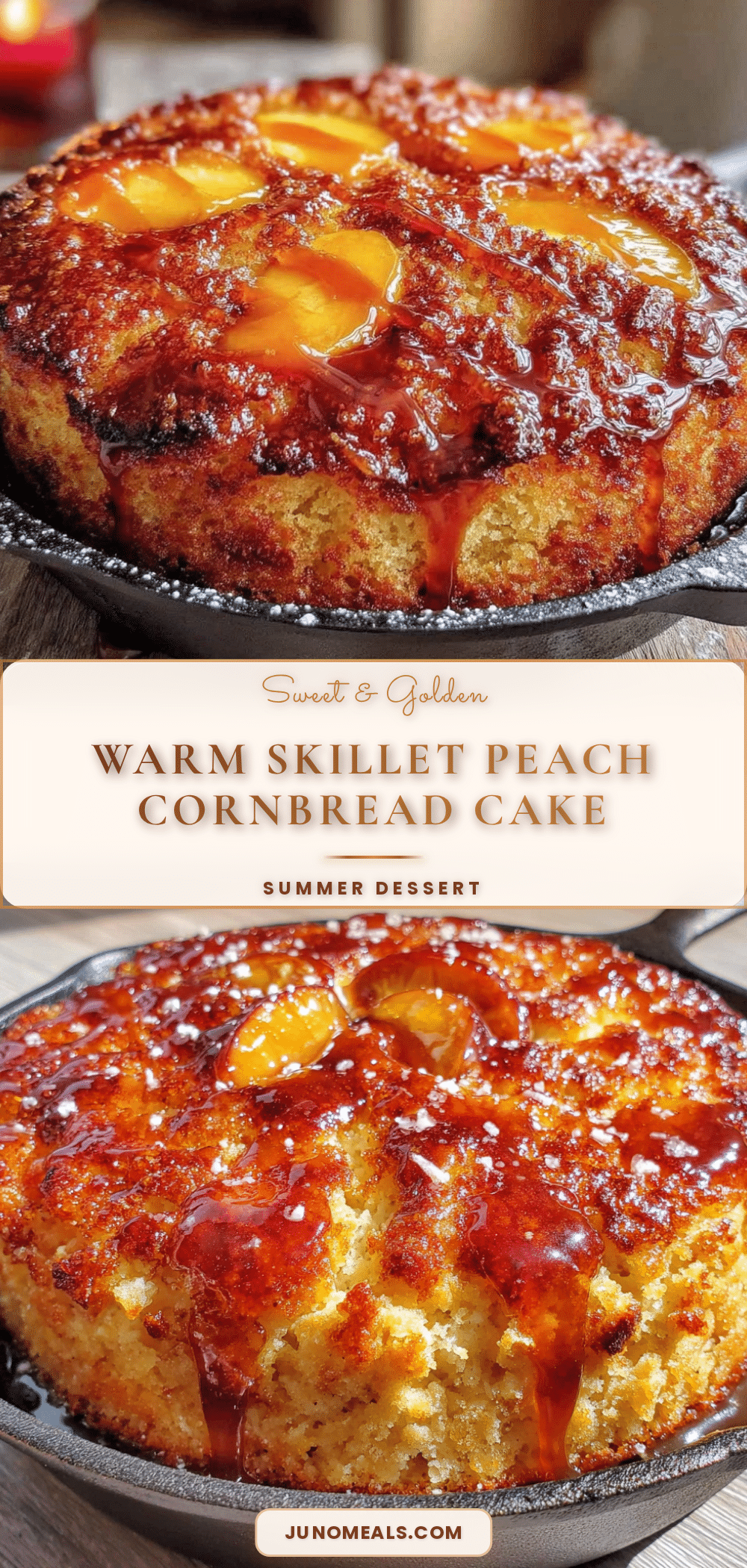
Perfect Peach Cornbread Skillet Cake: Easy Summer Dessert

This Perfect Peach Cornbread Skillet Cake is the sweet spot between cornbread and peach dessert, featuring sweet, jammy peaches nestled into a tender, buttery cornbread. It’s a one-skillet wonder that’s simple enough for a Tuesday night but special enough for a dinner party.
- Prep Time: 15 minutes
- Cook Time: 30 minutes
- Total Time: 45 minutes
- Yield: 8 servings 1x
- Category: Dessert
- Cuisine: American
Ingredients
- 3 medium ripe peaches, sliced into wedges (about 1/4 inch thick)
- 2 tablespoons granulated sugar
- 1 tablespoon lemon juice (fresh)
- 1/4 teaspoon cinnamon (optional)
- 1 cup yellow cornmeal (stone-ground preferred)
- 1 cup all-purpose flour (spooned and leveled)
- 1/2 cup granulated sugar
- 2 teaspoons baking powder
- 1/2 teaspoon baking soda
- 1/2 teaspoon fine sea salt
- 1 cup buttermilk (room temperature)
- 2 large eggs (room temperature)
- 1/3 cup unsalted butter, melted and slightly cooled
- 2 tablespoons honey
- 1 tablespoon turbinado sugar (for topping, optional)
- Vanilla ice cream or whipped cream (for serving, optional)
Instructions
- Preheat your oven to 375°F (190°C). Place your cast iron skillet inside the oven while it preheats.
- In a medium bowl, combine the sliced peaches, 2 tablespoons sugar, lemon juice, and cinnamon (if using). Gently toss and let sit for 10-15 minutes.
- In a large bowl, whisk together the cornmeal, flour, 1/2 cup sugar, baking powder, baking soda, and salt.
- In a medium bowl, whisk together the buttermilk, eggs, melted butter, and honey until smooth.
- Pour the wet ingredients into the dry ingredients and stir with a rubber spatula until just combined (a few lumps are fine).
- Carefully remove the hot skillet from the oven. Pour the batter into the skillet—it should sizzle. Arrange the peach slices on top in a single layer, slightly overlapping. Pour any remaining juices over the top.
- Sprinkle with turbinado sugar if using.
- Bake for 25-30 minutes, until edges are golden brown and a toothpick inserted in the center comes out clean or with a few moist crumbs.
- Cool in the skillet on a rack for at least 10 minutes before serving.
- Serve warm, topped with vanilla ice cream or whipped cream if desired.
Notes
Don’t skip preheating the skillet—it creates a crispy crust. Use ripe but firm peaches. Let peaches macerate for 10-15 minutes. Don’t overmix the batter. Use room temperature ingredients. If top browns too quickly, tent with foil. For frozen peaches, thaw and drain well, reduce sugar slightly. For gluten-free, use a 1:1 gluten-free baking blend.
Nutrition
- Serving Size: 1 slice (1/8 of cake
- Calories: 320
- Sugar: 22
- Sodium: 380
- Fat: 12
- Saturated Fat: 7
- Carbohydrates: 48
- Fiber: 3
- Protein: 6
Keywords: peach cornbread, skillet cake, summer dessert, cast iron, peach dessert, cornbread cake, easy dessert