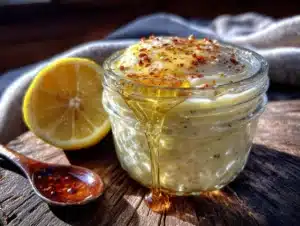
It was 10:47 PM on a very ordinary Wednesday, and I was staring at a wilting head of romaine lettuce like it had personally offended me. The craving hit hard—not for the salad itself, but for the dressing. You know that feeling when a specific tangy, sharp, and slightly sweet flavor just takes over your brain? I wanted a lemon vinaigrette, the kind that makes you actually look forward to eating your greens. But here’s the thing: I didn’t have a fresh lemon. I had bottled lemon juice (the kind you buy when you’re being optimistic about your cooking habits) and one lonely shallot that was starting to look a little sad. Honestly, I almost gave up and poured straight balsamic on my lettuce like a heathen. But something about the late hour made me stubborn. I chopped that shallot, grabbed my jar, and decided to see what happened. The result? A dressing so good I literally licked the spoon—and then made another batch the next morning with a proper lemon, just to prove it wasn’t a fluke. This quick 5-minute lemon shallot vinaigrette is the reason I now keep shallots in my pantry at all times. It’s the kind of recipe that feels like cheating, but tastes like you spent way more effort than you actually did. And honestly, on a tired weeknight, that’s exactly what we all need.
Why You’ll Love This Recipe
Let me tell you why this lemon shallot vinaigrette has become my go-to for every single salad I make. I’ve tested this dressing at least a dozen times—with different oils, different acids, different ratios—and this version is the one that wins every time.
- Quick & Easy : It comes together in literally 5 minutes flat. No chopping herbs, no mincing garlic, no complicated emulsifying techniques. Just shake, taste, and pour.
- Simple Ingredients : You probably have everything in your kitchen right now. Lemons, shallots, olive oil, mustard, honey, salt, and pepper. That’s it. No fancy grocery trips required.
- Perfect for Weeknights : When you’re tired and hungry and the last thing you want to do is spend 20 minutes making a dressing, this recipe saves the day. It’s the weeknight hero you didn’t know you needed.
- Crowd-Pleaser : I’ve brought this to potlucks and family dinners, and people always ask for the recipe. Even my picky nephew, who claims to hate “fancy salad stuff,” asked for seconds.
- Unbelievably Delicious : The combination of sharp lemon, mellow shallot, and smooth olive oil creates this perfect balance that makes any salad taste restaurant-quality. It’s next-level comfort food for your greens.
What makes this dressing different from the rest? It’s the technique. Most vinaigrettes call for a slow drizzle of oil while whisking constantly—who has time for that on a Tuesday night? This method uses a jar, a good shake, and a little patience. The result is a perfectly emulsified dressing that stays creamy, not separated and sad. Plus, the shallots get a quick soak in the lemon juice before you add the oil, which mellows their bite and infuses the whole dressing with that sweet-oniony flavor. It’s not just another vinaigrette—it’s your best version.
This recipe isn’t just good—it’s the kind that makes you close your eyes after the first bite. It’s comfort food reimagined: faster, fresher, but with the same soul-soothing satisfaction. Perfect for impressing guests without stress, or turning a simple weeknight salad into something memorable.
What Ingredients You Will Need
This recipe uses simple, wholesome ingredients to deliver bright, bold flavor without any fuss. Most of these are pantry staples, which means you can whip up this dressing anytime the mood strikes.
- Fresh lemon juice, 3 tablespoons (from about 1 large lemon) — freshly squeezed is best for that bright, clean flavor. Bottled works in a pinch, but fresh really makes a difference here.
- Shallot, 1 small, finely minced (about 2 tablespoons) — shallots are milder and sweeter than onions, which is exactly what you want in a vinaigrette. Look for firm, dry shallots with no green sprouts.
- Extra-virgin olive oil, 1/3 cup — use a good-quality oil here since it’s the star of the dressing. I prefer California Olive Ranch for everyday use—it’s smooth and not too peppery.
- Dijon mustard, 1 teaspoon — this helps emulsify the dressing and adds a subtle tang. Grey Poupon is my go-to for consistent results.
- Honey, 1 teaspoon — just a touch of sweetness to balance the acidity. You can substitute maple syrup or agave if you prefer.
- Salt, 1/4 teaspoon, plus more to taste — kosher salt dissolves easily and seasons evenly.
- Black pepper, 1/8 teaspoon, freshly ground — fresh-ground makes a noticeable difference in flavor.
Substitution guidance: If you don’t have a shallot, you can use 1 tablespoon of finely minced red onion plus a pinch of sugar. For a dairy-free version, this recipe is already dairy-free! For a low-FODMAP option, use the green parts of a spring onion instead of shallot. And if you’re out of Dijon, a pinch of dry mustard powder works in a pinch—just whisk it into the lemon juice first.
Equipment Needed
One of the best things about this recipe is how little equipment it requires. You don’t need a blender, food processor, or any fancy gadgets.
- Mason jar with tight-fitting lid (16-ounce size works perfectly) — this is your mixing vessel and storage container in one. I’ve been using the same wide-mouth Ball jar for years, and it’s never let me down.
- Cutting board and sharp knife — for mincing the shallot. A dull knife will bruise the shallot and make it release too much moisture.
- Measuring spoons — for accuracy, though honestly, after you make this a few times, you’ll just eyeball it.
- Citrus juicer or reamer — not strictly necessary, but it makes juicing a lemon much easier and gets more juice out. I use a simple handheld wooden reamer that cost me $3.
- Small bowl (optional) — if you want to let the shallots soak in the lemon juice before adding to the jar.
If you don’t have a mason jar, any container with a tight-sealing lid will work—just make sure it’s not going to leak when you shake it. I’ve used an old jam jar in a pinch, and it worked fine. No need to buy anything special for this recipe.
Preparation Method
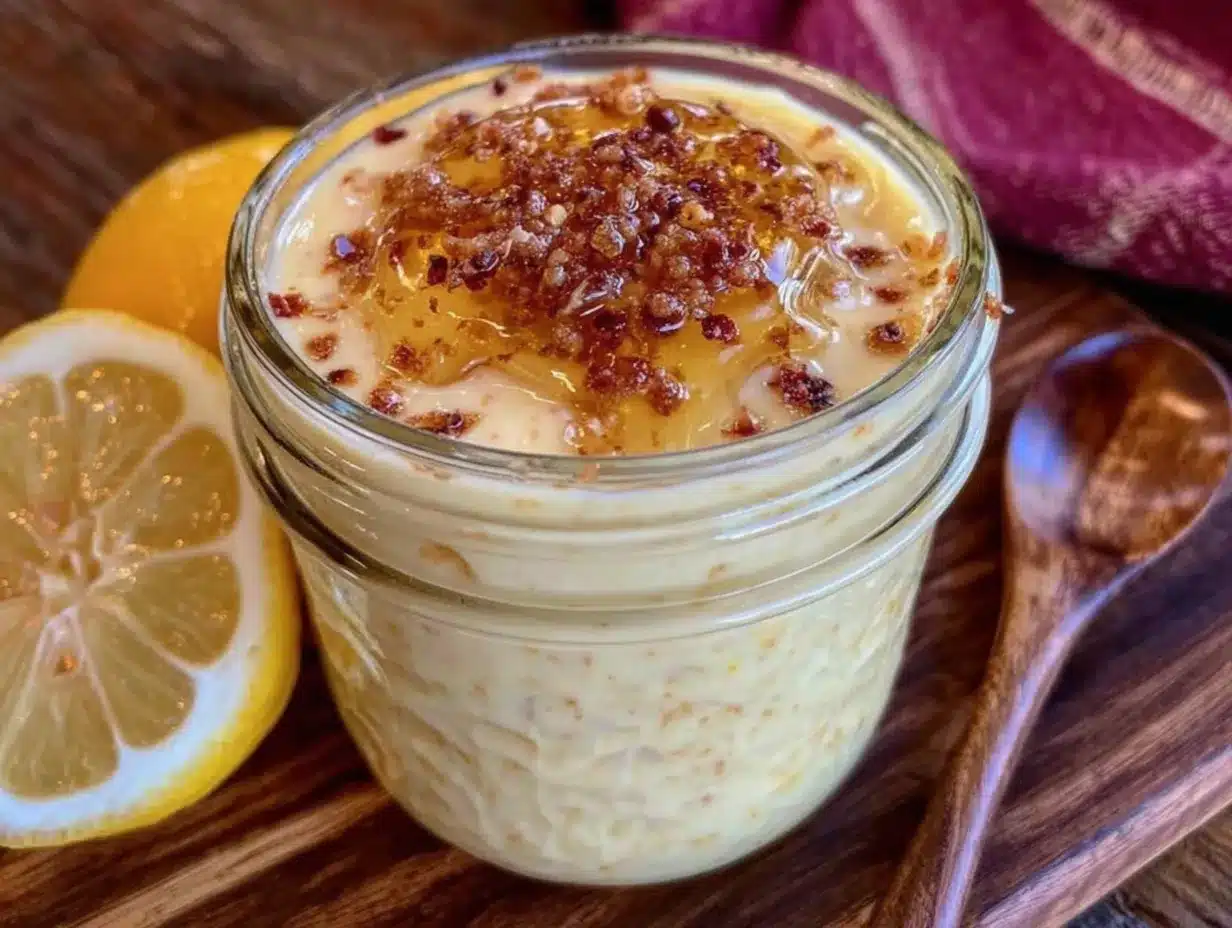
Follow these steps, and you’ll have a perfect vinaigrette in less time than it takes to wash your salad greens.
- Mince the shallot finely. Peel the shallot, cut it in half lengthwise, then make thin slices lengthwise and crosswise until you have tiny pieces. The smaller you mince it, the more flavor it releases into the dressing. Aim for pieces about the size of a grain of rice. Pro tip: If your eyes start watering, pop the shallot in the freezer for 5 minutes before cutting—it really helps.
- Combine lemon juice and shallot in a small bowl. Pour the 3 tablespoons of fresh lemon juice over the minced shallot. Let it sit for 2-3 minutes. This step is crucial—the acid in the lemon juice “cooks” the shallot slightly, mellowing its sharp bite and infusing the juice with that sweet onion flavor. You’ll notice the shallot pieces start to look slightly translucent. That’s exactly what you want.
- Add the remaining ingredients to your jar. Spoon in the Dijon mustard, drizzle in the honey, and add the salt and pepper. Pour in the lemon juice and shallot mixture. Don’t add the olive oil yet—we’re building the base first.
- Whisk the base together. Use a small whisk or a fork to stir everything together until the mustard and honey are fully dissolved into the lemon juice. This creates an emulsion base that will help the oil incorporate smoothly later. If you skip this step, your dressing might separate more quickly.
- Add the olive oil. Pour the 1/3 cup of olive oil into the jar. Here’s where the magic happens.
- Screw the lid on tightly. Make sure it’s secure—you don’t want a kitchen counter covered in vinaigrette. Give it a quick test shake over the sink if you’re nervous.
- Shake vigorously for 20-30 seconds. Really go for it. You want the oil and lemon juice to emulsify into a creamy, slightly thickened dressing. You’ll hear the sound change from sloshy to more muffled as it emulsifies. When you open the lid, the dressing should look uniformly pale yellow and slightly opaque, not separated into oil and liquid layers.
- Taste and adjust. Dip a clean spoon in and taste it. Does it need more salt? Another squeeze of lemon? A touch more honey for sweetness? Trust your palate here. I usually end up adding an extra pinch of salt and a few grinds of pepper. Remember: you can always add more, but you can’t take it out.
- Shake again if needed. If you added any adjustments, give it another 10-second shake to incorporate everything evenly.
- Use immediately or refrigerate. This dressing is best within the first hour, but it keeps beautifully for up to a week in the fridge. Note: the olive oil will solidify slightly when cold, so let it sit at room temperature for 10 minutes and give it a good shake before using.
Troubleshooting tip: If your dressing separates after a few hours (which is normal for vinaigrettes without added emulsifiers like mayonnaise), just give it another vigorous shake. The Dijon mustard helps keep it together longer than a simple oil-and-vinegar dressing would.
Cooking Tips & Techniques
After making this dressing approximately 47 times (yes, I counted), I’ve learned a few things that make the difference between a good vinaigrette and a great one.
The shallot soak is non-negotiable. I learned this the hard way. The first time I made this dressing, I threw everything in the jar at once and shook it like a Polaroid picture. The result? A dressing where the shallot flavor was harsh and overpowering, like eating raw onion in liquid form. By letting the shallot sit in the lemon juice for just 2-3 minutes, you tame that aggressive bite and let the sweet, mellow notes shine through. It’s a tiny step that makes a huge difference.
Room temperature ingredients emulsify better. Cold olive oil doesn’t want to blend with cold lemon juice. If your ingredients are straight from the fridge, let them sit on the counter for 10 minutes before you start. Your dressing will come together smoother and stay emulsified longer. I learned this after making a sad, separated dressing on a cold winter morning.
Don’t overshake. Yes, I just told you to shake vigorously for 20-30 seconds, but there is such a thing as too much shaking. Over-emulsifying can make the dressing turn slightly bitter and thicken it too much, almost like a mayonnaise texture. Stop when it looks creamy and uniform. If it starts to look thick and almost spreadable, you’ve gone too far. Just add a teaspoon of water and shake gently to thin it out.
Common mistake: using too much acid. Three tablespoons of lemon juice might not seem like a lot, but it’s the perfect balance for 1/3 cup of oil. I’ve seen recipes that call for equal parts oil and acid, and honestly, that’s too sharp for most palates. The 3:1 ratio (oil to acid) is the gold standard for a reason. It coats your greens without making them soggy or puckering your mouth.
Timing strategy: Make this dressing while your protein is cooking or your greens are drying in the salad spinner. It takes less time than either of those tasks, so you’re not wasting any precious weeknight minutes. I often make it while my chicken is resting after cooking—it’s the perfect multitasking moment.
Variations & Adaptations
This basic lemon shallot vinaigrette is a fantastic starting point, but don’t be afraid to play around with it. Here are some variations I’ve tried and loved.
Herb-infused version: Add 1 tablespoon of finely chopped fresh herbs to the jar before shaking. Dill is amazing with lemon, tarragon adds a lovely anise note, and parsley keeps it bright and fresh. I made a lemon-dill version last summer for a salmon salad, and it was honestly the best thing I ate all week. Pro tip: add the herbs after you shake the base dressing, then shake gently just to incorporate—this prevents the herbs from getting bruised and turning dark.
Spicy kick variation: Add a small pinch of red pepper flakes or a tiny squeeze of sriracha to the jar. The heat cuts through the richness of the olive oil beautifully. I did this on a whim one night when I was craving something with more punch, and now it’s my go-to for taco salads or grain bowls. Start with less than you think you need—you can always add more heat.
Creamy version: Add 1 tablespoon of Greek yogurt or mayonnaise to the jar before shaking. This transforms the vinaigrette into a creamy dressing that clings to greens beautifully. It’s perfect for kale salads or as a dip for raw vegetables. I use this version when I’m making a kale caesar salad and want something lighter than the traditional anchovy-heavy dressing.
Seasonal adaptations: In summer, swap the lemon for lime and add a pinch of cumin for a Mexican-inspired dressing. In fall, use apple cider vinegar instead of lemon and add a tiny pinch of cinnamon. In winter, try blood orange juice when they’re in season—the color alone is worth it. Each season brings a new opportunity to play with this basic formula.
Dietary modifications: For a low-FODMAP version, skip the shallot and use the green parts of a spring onion instead. For a sugar-free option, omit the honey or use a monk fruit sweetener. For a nut-free version, this recipe is already nut-free. For a whole30 version, use date paste instead of honey.
Serving & Storage Suggestions
This dressing is incredibly versatile, and how you serve it can change the whole meal experience.
Serving temperature: Serve this dressing at room temperature for the best flavor and texture. If it’s been in the fridge, let it sit on the counter for 10-15 minutes before using. Cold dressing can make your greens feel limp and sad, while room-temperature dressing coats them beautifully. I keep a small jar on my counter during the week for this very reason—it’s always ready to go.
How to dress your salad: Don’t dump all the dressing on at once. Start with about 2 tablespoons for a large salad bowl (enough for 4-6 cups of greens). Toss gently with your hands (yes, use your hands—it distributes the dressing more evenly than tongs) and add more if needed. You want every leaf lightly coated, not drowning. Remember: you can always add more, but you can’t take it out.
What to serve with it: This vinaigrette is amazing on simple green salads, but don’t stop there. Drizzle it over roasted vegetables (try it on roasted broccoli or cauliflower—trust me), use it as a marinade for chicken or fish, or toss it with cooked grains like quinoa or farro for a quick side dish. I even use it as a dipping sauce for crusty bread when I’m feeling fancy. It pairs beautifully with a simple grilled chicken or as a bright finish for a roasted vegetable bowl.
Storage instructions: Keep this dressing in a sealed jar in the refrigerator for up to one week. The flavors actually meld and deepen after a day or two, so don’t be afraid to make it ahead. One note: the shallot flavor will become more pronounced over time, so if you prefer a milder dressing, use it within 3-4 days.
Reheating (yes, really): If your dressing has solidified in the fridge, don’t microwave it—that will ruin the emulsion. Instead, run the jar under warm water for 30 seconds, then shake vigorously. The warmth will loosen the olive oil, and the shaking will re-emulsify everything perfectly.
How flavors develop: Freshly made, this dressing is bright and sharp with a distinct shallot bite. After a day in the fridge, the flavors mellow and blend together into something more harmonious. The shallot becomes sweeter, the lemon less aggressive, and the olive oil takes center stage. Both versions are delicious—just different. I personally prefer it on day two, when everything has had a chance to get to know each other.
Nutritional Information & Benefits
This dressing is surprisingly good for you, considering how indulgent it tastes. Here’s the breakdown per 2-tablespoon serving (based on the standard recipe):
- Calories: 120
- Total fat: 12g (mostly heart-healthy monounsaturated fat from olive oil)
- Saturated fat: 1.5g
- Carbohydrates: 3g
- Sugar: 2g (from honey and natural lemon sugars)
- Fiber: 0g
- Protein: 0g
- Sodium: 95mg
- Vitamin C: 6mg (10% of daily value)
Health benefits: Extra-virgin olive oil is packed with antioxidants and anti-inflammatory compounds. It’s one of the healthiest fats you can consume, linked to better heart health and reduced risk of chronic disease. Lemons are an excellent source of vitamin C, which supports immune function and helps your body absorb iron from your greens. Shallots contain quercetin, a flavonoid with anti-inflammatory properties, plus prebiotic fibers that support gut health. Even the honey, in small amounts, provides antioxidants and natural antibacterial properties.
Dietary considerations: This dressing is naturally gluten-free, dairy-free, nut-free, soy-free, and vegan (if you use maple syrup instead of honey). It’s also whole30-friendly with the date paste substitution. The only potential allergen is mustard, which is a common allergen for some people. If you need to avoid mustard, you can skip it—the dressing will separate more quickly, but it will still taste delicious. Just give it an extra shake before using.
Personal wellness perspective: I love that this dressing lets me eat a giant bowl of greens without feeling like I’m punishing myself. The healthy fats from the olive oil help me absorb the fat-soluble vitamins from the vegetables (vitamins A, D, E, and K), and the bright flavor makes me actually crave salad instead of dreading it. It’s a small way to make healthy eating feel like a treat rather than a chore.
Conclusion
This quick 5-minute lemon shallot vinaigrette has genuinely changed the way I eat salads. Before this recipe, I was that person who bought bottled dressing and felt vaguely guilty about it. Now, I make a batch every Sunday and have delicious, restaurant-quality salads all week long without any effort. It’s the kind of recipe that makes you feel like you’ve hacked the system—maximum flavor with minimum work.
I encourage you to make this your own. Play with the ratios, try different herbs, experiment with different acids. The basic formula is forgiving and adaptable, so don’t be afraid to get creative. Maybe you’ll discover a version that becomes your signature dressing, the one friends ask you to bring to every gathering. That’s exactly what happened to me with this recipe.
Honestly, I make this dressing more than any other recipe in my kitchen. It’s the one I turn to when I need something quick, reliable, and absolutely delicious. And every time I shake that jar and watch the ingredients come together into something creamy and beautiful, I remember that night at 10:47 PM when I almost gave up on dinner. I’m so glad I didn’t.
Now it’s your turn. Try this dressing, tweak it to your taste, and let me know how it goes. Drop a comment below with your favorite variation, or tag me in your salad photos. I can’t wait to see what you create!
Frequently Asked Questions
Can I make this dressing ahead of time?
Absolutely! This dressing actually gets better after a day or two in the fridge as the flavors meld together. Make it up to a week ahead and store it in a sealed jar in the refrigerator. Just remember to let it come to room temperature and give it a good shake before using.
Why did my dressing separate?
Separation is completely normal for vinaigrettes, especially if they don’t contain strong emulsifiers. The Dijon mustard helps, but over time, oil and acid naturally want to separate. Just shake it vigorously for 10-15 seconds, and it will come back together. If it’s been in the fridge, let it warm up slightly first—cold ingredients are harder to emulsify.
Can I use bottled lemon juice instead of fresh?
Yes, in a pinch. Fresh lemon juice has a brighter, cleaner flavor that really shines in this simple dressing, but bottled works when you’re in a hurry or don’t have fresh lemons. If using bottled, look for one without added preservatives or sugar. You might need to adjust the amount slightly—bottled juice can be more acidic or less acidic than fresh.
How do I make this dressing thicker?
If you prefer a thicker dressing that clings more to your greens, try adding an extra teaspoon of Dijon mustard or a tablespoon of Greek yogurt. You can also reduce the amount of lemon juice slightly and increase the olive oil. For a very thick, creamy version, blend in a tablespoon of mayonnaise or silken tofu.
Can I use this dressing as a marinade?
Yes, it works beautifully as a marinade for chicken, fish, or vegetables. The acid in the lemon juice helps tenderize proteins, while the olive oil keeps everything moist. Marinate chicken for 30 minutes to 2 hours (any longer and the acid can start to “cook” the meat), and fish for 15-20 minutes. For vegetables, 30 minutes is plenty.
Pin This Recipe!
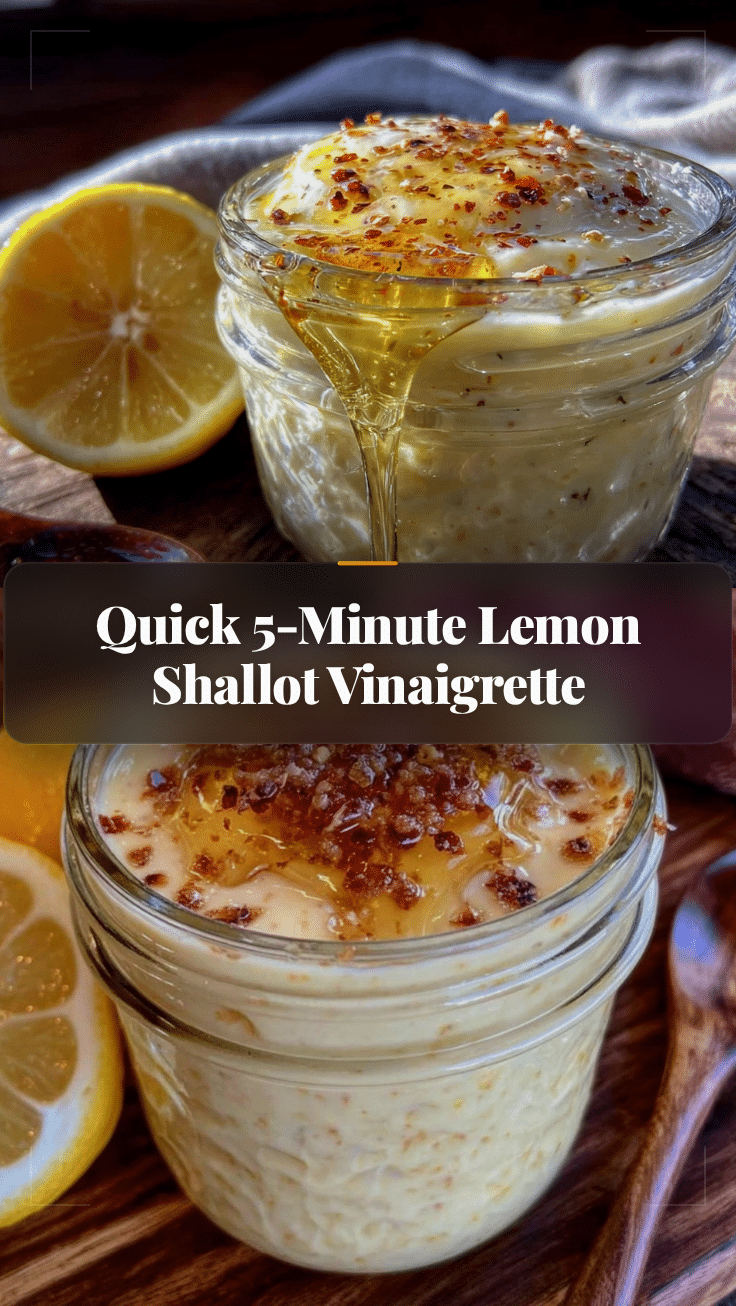
5-Minute Lemon Shallot Vinaigrette: Easy Homemade Salad Dressing
This quick 5-minute lemon shallot vinaigrette is the reason I now keep shallots in my pantry at all times. It’s the kind of recipe that feels like cheating, but tastes like you spent way more effort than you actually did.
- Prep Time: 5 minutes
- Cook Time: 0 minutes
- Total Time: 5 minutes
- Yield: 4 servings 1x
- Category: Salad Dressing
- Cuisine: American
Ingredients
- 3 tablespoons fresh lemon juice (from about 1 large lemon)
- 1 small shallot, finely minced (about 2 tablespoons)
- 1/3 cup extra-virgin olive oil
- 1 teaspoon Dijon mustard
- 1 teaspoon honey
- 1/4 teaspoon salt, plus more to taste
- 1/8 teaspoon freshly ground black pepper
Instructions
- Mince the shallot finely. Peel the shallot, cut it in half lengthwise, then make thin slices lengthwise and crosswise until you have tiny pieces. Aim for pieces about the size of a grain of rice.
- Combine lemon juice and shallot in a small bowl. Pour the 3 tablespoons of fresh lemon juice over the minced shallot. Let it sit for 2-3 minutes. This step is crucial—the acid in the lemon juice ‘cooks’ the shallot slightly, mellowing its sharp bite and infusing the juice with that sweet onion flavor.
- Add the remaining ingredients to your jar. Spoon in the Dijon mustard, drizzle in the honey, and add the salt and pepper. Pour in the lemon juice and shallot mixture. Don’t add the olive oil yet—we’re building the base first.
- Whisk the base together. Use a small whisk or a fork to stir everything together until the mustard and honey are fully dissolved into the lemon juice. This creates an emulsion base that will help the oil incorporate smoothly later.
- Add the olive oil. Pour the 1/3 cup of olive oil into the jar.
- Screw the lid on tightly. Make sure it’s secure—you don’t want a kitchen counter covered in vinaigrette. Give it a quick test shake over the sink if you’re nervous.
- Shake vigorously for 20-30 seconds. Really go for it. You want the oil and lemon juice to emulsify into a creamy, slightly thickened dressing. You’ll hear the sound change from sloshy to more muffled as it emulsifies.
- Taste and adjust. Dip a clean spoon in and taste it. Does it need more salt? Another squeeze of lemon? A touch more honey for sweetness? Trust your palate here. I usually end up adding an extra pinch of salt and a few grinds of pepper.
- Shake again if needed. If you added any adjustments, give it another 10-second shake to incorporate everything evenly.
- Use immediately or refrigerate. This dressing is best within the first hour, but it keeps beautifully for up to a week in the fridge. Note: the olive oil will solidify slightly when cold, so let it sit at room temperature for 10 minutes and give it a good shake before using.
Notes
Let the shallot soak in the lemon juice for 2-3 minutes to mellow its bite. Use room temperature ingredients for better emulsification. Don’t overshake—stop when creamy and uniform. If dressing separates, just shake again. For a thicker dressing, add extra Dijon mustard or Greek yogurt.
Nutrition
- Serving Size: 2 tablespoons
- Calories: 120
- Sugar: 2
- Sodium: 95
- Fat: 12
- Saturated Fat: 1.5
- Carbohydrates: 3
Keywords: lemon shallot vinaigrette, homemade salad dressing, quick vinaigrette, easy dressing, 5-minute dressing, lemon vinaigrette, shallot dressing