My coworker Linh wasn’t trying to impress anyone. I’d stopped by her apartment on a rainy Tuesday to pick up a book I’d lent her, and the smell hit me before I even got through the doorway. It was this deep, savory-sweet fragrance—like caramelized sugar meeting garlic and fish sauce—that made my stomach actually growl out loud. Embarrassing, honestly.
She just shrugged and said, “Oh, it’s just thit kho trung. My mom’s recipe. I’m having it for dinner this week.” Just thit kho trung. Like it was nothing special. But let me tell you, that casual, almost dismissive attitude made me even more curious. She pulled the lid off her little clay pot, and I saw these gorgeous, mahogany-colored pieces of pork belly nestled next to hard-boiled eggs that had soaked up all that dark, glossy sauce. I mean, it looked like something from a fancy restaurant menu, not a quick weeknight meal she threw together after work.
She spooned some over a bowl of steaming jasmine rice, handed me a fork, and said, “Here, try it. It’s not fancy.” And that first bite? The pork was so tender it practically fell apart, the fat had rendered into this silky, melt-in-your-mouth texture, and the eggs had these little pockets of savory-sweet caramel sauce trapped in the crevices. I stood there in her tiny kitchen, eating over her counter, and I knew I had to learn how to make this. Maybe you’ve been there—you taste something so simple, so perfect, and you just know you need it in your regular rotation. That’s exactly what this Vietnamese caramelized pork belly and eggs recipe became for me. It’s the weeknight hero I never knew I needed.
Why You’ll Love This Recipe
Let’s be real for a second. After a long day of work, wrangling kids, or just surviving Tuesday, the last thing you want is a complicated dinner that requires fifteen steps and a trip to three different grocery stores. This easy thit kho trung recipe is the exact opposite of that. It’s the kind of meal that makes you look like a kitchen wizard when really, you just let the stovetop do all the heavy lifting.
Here’s why this Vietnamese caramelized pork belly recipe is about to become your weeknight secret weapon:
- Quick & Easy: This comes together in about an hour, with only about 15 minutes of active hands-on time. The rest is just simmering—perfect for chopping veggies for a salad or, you know, finally sitting down for five minutes.
- Simple Ingredients: You probably already have most of these things in your pantry. Fish sauce, sugar, garlic, shallots—these are weeknight staples in my house now. No fancy trips to a specialty store required.
- Perfect for Meal Prep: This is one of those recipes that actually tastes better the next day. Make it on Sunday, and you’ve got amazing lunches or dinners all week long. The flavors just get deeper and more complex.
- Crowd-Pleaser: My kids, who are usually suspicious of anything “different,” absolutely demolish this. Something about that sweet-savory sauce and tender meat just works for everyone.
- Unbelievably Delicious: The caramelization process creates this incredible depth of flavor that you usually only get from hours of braising. The pork belly gets fork-tender, the eggs soak up all that goodness, and the sauce is basically liquid gold over rice.
What makes this version different from the rest? It’s the technique. I learned from watching Linh that day—you have to be patient with the caramel. Let it get that deep amber color without burning it. That’s where the magic happens. And I’ve tested this so many times to get the perfect balance of salty, sweet, and savory. It’s not just another recipe—it’s the one I make when I need a hug in a bowl after a long day.
What Ingredients You Will Need
This recipe uses simple, everyday ingredients to create something truly spectacular. Most of these are pantry staples in my kitchen now, and they work together to build that signature Vietnamese caramelized pork flavor.
- Pork Belly (800g / 1.75 lbs): This is the star. Look for a piece with a good balance of meat and fat—the fat renders down and makes everything unbelievably tender. I prefer skin-on pork belly for extra texture, but skin-off works too. If you can’t find pork belly, you can use pork shoulder, but the texture will be a bit leaner.
- Hard-Boiled Eggs (6 large eggs): These are non-negotiable for me. They soak up the caramel sauce and become these little savory-sweet flavor bombs. Make sure they’re hard-boiled and peeled before you start cooking.
- Fish Sauce (3 tablespoons): This is the backbone of the dish. I recommend using a good-quality fish sauce like Red Boat or Three Crabs. It adds that umami depth that you just can’t get from anything else. Don’t skip it, and don’t substitute it—it’s essential.
- Granulated Sugar (3 tablespoons): This is for the caramel. White sugar works best because it gives you a clean, clear caramel color. You can use brown sugar in a pinch, but it will change the flavor slightly.
- Coconut Water (1 cup / 240 ml): This is the secret ingredient that makes the sauce so special. It adds a subtle sweetness and helps tenderize the pork. I use plain, unsweetened coconut water—the kind you’d drink after a workout. If you don’t have it, you can use regular water, but it won’t be quite as good.
- Shallots (3 medium, thinly sliced): These add a mild, sweet onion flavor that’s perfect with the pork. If you don’t have shallots, you can use half a small yellow onion, finely chopped.
- Garlic (4 cloves, minced): Fresh garlic is a must here. Don’t use the jarred stuff—it just doesn’t have the same punch.
- Black Pepper (1 teaspoon, freshly ground): A generous amount of black pepper is traditional. It cuts through the richness of the pork and adds a nice little kick.
- Salt (½ teaspoon): Just a little to balance the flavors.
- Water (1 cup / 240 ml): For the braising liquid.
- Green Onions (optional, for garnish): Adds a fresh, bright finish to the dish.
Equipment Needed
You don’t need a ton of fancy equipment for this recipe, which is part of why I love it so much. Here’s what you’ll need:
- A Heavy-Bottomed Pot or Dutch Oven (4-5 quart): This is crucial. A heavy pot distributes heat evenly and prevents the caramel from burning. I use my trusty Le Creuset dutch oven, but any heavy pot will work. A regular stainless steel pot is fine, but you’ll need to watch the heat more carefully.
- A Small Saucepan: For boiling the eggs. Nothing fancy needed.
- A Sharp Knife: For cutting the pork belly into even pieces. A good chef’s knife makes this much easier.
- A Cutting Board: Preferably one that’s easy to clean—pork belly can be a bit messy.
- A Slotted Spoon: For removing the eggs from the pot without breaking them.
- Tongs: For flipping the pork pieces during the caramelization process.
- Measuring Spoons and Cups: Accuracy matters here, especially with the fish sauce and sugar.
- A Bowl: For holding the peeled hard-boiled eggs.
If you don’t have a dutch oven, don’t worry. A heavy-bottomed pot from IKEA or Target works just fine. The key is to avoid thin pots that create hot spots—those will burn your caramel every time.
Preparation Method
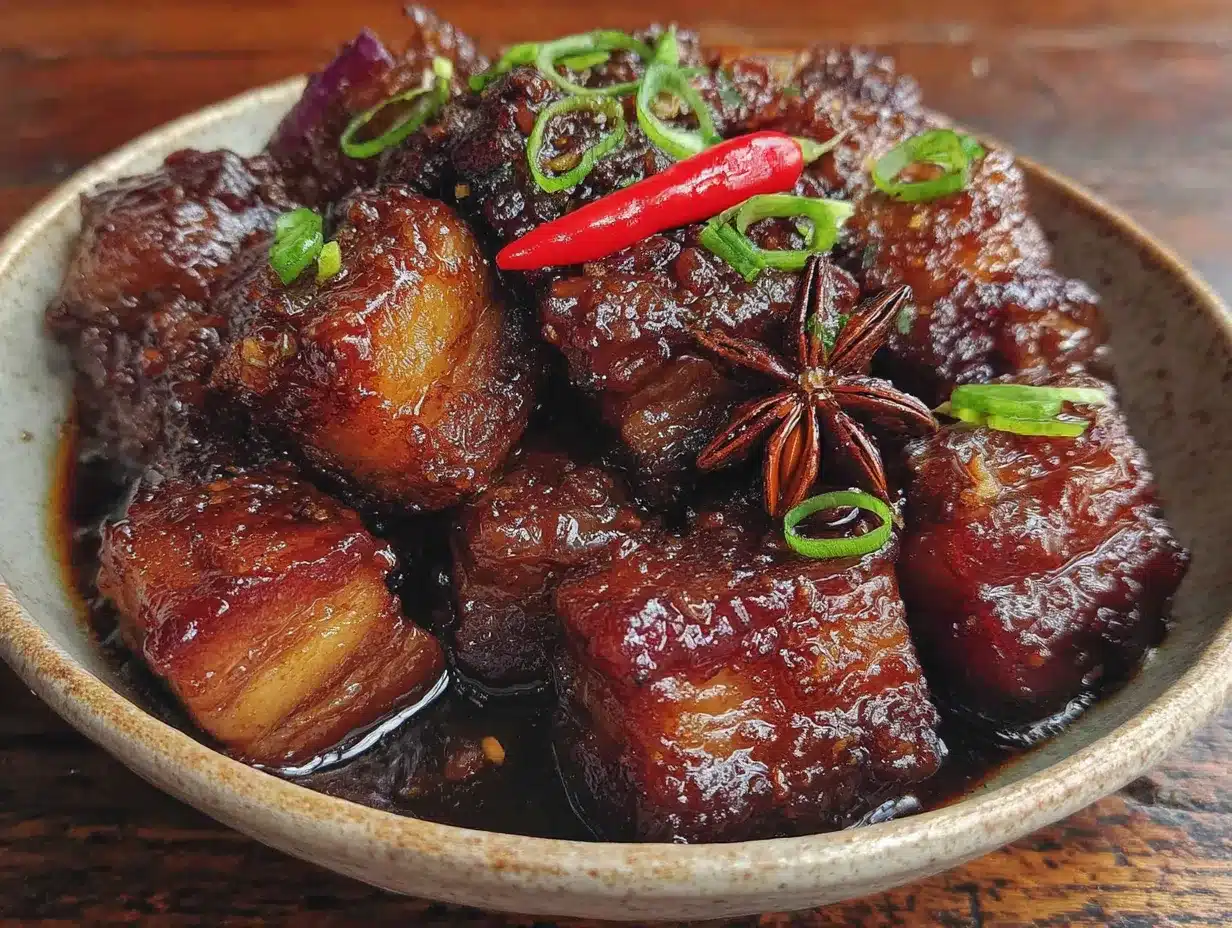
Alright, let’s get cooking! This might look like a lot of steps, but I promise it’s mostly hands-off. The key is to get your ingredients prepped before you start—that’s the real weeknight time-saver.
- Boil the Eggs (10 minutes): Place your 6 eggs in a small saucepan and cover them with cold water by about an inch. Bring to a boil over high heat, then immediately reduce the heat to a gentle simmer. Let them cook for exactly 8 minutes for hard-boiled eggs with a firm but not rubbery yolk. While they’re cooking, prepare an ice bath in a bowl. When the timer goes off, transfer the eggs to the ice bath and let them cool completely—this makes peeling them so much easier. Once cool, peel them and set them aside.
- Prep the Pork (5 minutes): While the eggs are boiling, cut your pork belly into 1½-inch cubes. You want them to be roughly the same size so they cook evenly. Pat them dry with paper towels—this helps them brown better. Don’t skip this step, I’ve made that mistake before and ended up with pale, sad pork.
- Make the Caramel (5 minutes): In your heavy-bottomed pot, combine the 3 tablespoons of sugar with 2 tablespoons of water. Swirl the pot gently to combine—don’t stir it with a spoon, or the sugar can crystallize. Place it over medium heat and let it cook, swirling occasionally, until it turns a deep amber color. This takes about 4-5 minutes. Watch it carefully—it can go from perfect to burnt in seconds. You’re looking for the color of an old penny.
- Caramelize the Pork (5 minutes): Once your caramel is that beautiful amber color, carefully add the pork belly pieces. Be careful—the caramel will bubble up and sputter a bit. Use your tongs to stir the pork and coat each piece evenly with the caramel. Cook for about 3-4 minutes, turning occasionally, until the pork is nicely browned on all sides. This step is where the magic starts.
- Add the Aromatics (2 minutes): Add the sliced shallots and minced garlic to the pot. Stir them into the pork and caramel, and cook for about 1 minute until they become fragrant. You’ll know it’s ready when your kitchen smells absolutely incredible.
- Add the Liquids (1 minute): Pour in the 1 cup of coconut water, 1 cup of regular water, and 3 tablespoons of fish sauce. Add the ½ teaspoon of salt and 1 teaspoon of black pepper. Stir everything together, scraping up any browned bits from the bottom of the pot—that’s pure flavor right there.
- Simmer the Pork (40 minutes): Bring the liquid to a boil, then reduce the heat to low. Cover the pot with a lid slightly ajar to let some steam escape. Let it simmer gently for 30 minutes. The pork should be starting to get tender at this point.
- Add the Eggs (30 minutes): After 30 minutes, carefully add your peeled hard-boiled eggs to the pot. Gently push them down into the liquid so they’re mostly submerged. Cover again and let everything simmer for another 20-30 minutes, or until the pork is fork-tender and the sauce has reduced by about half. The eggs will turn that gorgeous caramel color as they absorb the sauce.
- Check and Adjust (2 minutes): Taste the sauce. It should be salty, sweet, and savory all at once. If it’s too salty, add a splash more coconut water. If it’s not salty enough, add a tiny bit more fish sauce. Remember, the sauce will concentrate more as it cools, so don’t over-correct.
- Rest and Serve (5 minutes): Remove the pot from the heat and let it rest for 5 minutes. This allows the flavors to settle and the pork to relax a bit. Serve the pork and eggs over steamed jasmine rice, spooning plenty of that glorious sauce over everything. Garnish with sliced green onions if you’re feeling fancy.
Cooking Tips & Techniques
I’ve made this recipe more times than I can count, and I’ve definitely learned a few things the hard way. Here are my best tips to make sure your first time is a success:
- Don’t Rush the Caramel: This is the most important tip. If your caramel is too light, the dish won’t have that deep, complex flavor. If it’s too dark, it’ll be bitter. Watch for that amber color and trust your eyes. If you see wisps of smoke, you’ve gone too far—start over. It’s worth it.
- Pat the Pork Dry: I cannot stress this enough. Wet pork won’t brown, and browning is where the flavor lives. Take the extra 30 seconds to pat those cubes dry with paper towels.
- Use Coconut Water, Not Soda: Some recipes call for coconut soda, but I find it’s too sweet and artificial. Real coconut water gives you that subtle sweetness without being cloying. Plus, it’s healthier—you can drink the rest while you cook!
- Don’t Overcrowd the Pot: If you’re doubling the recipe, use a bigger pot. The pork needs room to brown properly. If it’s all crammed in there, it’ll steam instead of caramelize, and you’ll lose that beautiful color.
- Let It Rest: I know it’s tempting to dig in right away, but letting the dish rest for 5-10 minutes makes a difference. The sauce thickens slightly, the flavors meld, and the pork becomes even more tender.
- Make It Ahead: This is my favorite weeknight trick. Make the entire dish the day before, let it cool, and store it in the fridge. The next day, just reheat it gently on the stove. The flavors are even better, and you’ve got dinner ready in 10 minutes.
Variations & Adaptations
One of the best things about this Vietnamese caramelized pork belly recipe is how adaptable it is. Here are some ways to make it your own:
- Spicy Version: Add 1-2 thinly sliced Thai bird chilies or 1 teaspoon of chili flakes along with the shallots and garlic. The heat cuts through the richness beautifully. I do this when I’m cooking just for myself—it’s my favorite variation.
- Leaner Option: If pork belly feels too indulgent (no judgment here), you can use pork shoulder or even pork loin. The texture will be different—leaner and firmer—but it still works. Just reduce the cooking time by about 10 minutes since leaner meat cooks faster.
- Gluten-Free Adaptation: This recipe is naturally gluten-free as long as you use a gluten-free fish sauce. Most traditional fish sauces are made from just anchovies and salt, so you’re probably fine. But always check the label if you’re serving someone with celiac disease.
- Add More Vegetables: Some versions of thit kho include daikon radish or carrots. Add them along with the eggs for a more complete one-pot meal. The daikon soaks up the sauce and becomes incredibly tender.
- Instant Pot Version: For an even faster weeknight dinner, you can make this in an Instant Pot. Follow the same steps for the caramel and browning (use the sauté function), then pressure cook on high for 20 minutes with a natural release. Add the eggs after pressure cooking and let them warm through in the sauce for 10 minutes.
Serving & Storage Suggestions
This easy thit kho trung is incredibly versatile when it comes to serving. Here’s how I like to enjoy it:
- Serving Temperature: Serve it hot, straight from the pot. The sauce should be bubbling and the pork should be steaming. Spoon it over a generous mound of jasmine rice—the rice soaks up all that caramel sauce and it’s honestly the best part.
- Perfect Pairings: I love serving this with a simple cucumber salad on the side—just sliced cucumbers with a little rice vinegar and salt. The cool, crisp cucumber balances the rich, savory pork. A side of steamed bok choy or Chinese broccoli is also lovely.
- For Leftovers: This is one of those rare dishes that’s actually better the next day. The flavors continue to develop and meld together. Store leftovers in an airtight container in the refrigerator for up to 5 days.
- Freezing Instructions: This freezes beautifully. Let the dish cool completely, then transfer it to a freezer-safe container. It will keep for up to 3 months. Thaw overnight in the refrigerator before reheating.
- Reheating Tips: The best way to reheat is gently on the stovetop over low heat. Add a splash of water or coconut water if the sauce has thickened too much. You can also microwave individual portions, but the pork won’t be quite as tender. If you’re reheating from frozen, let it simmer on the stove for 10-15 minutes until everything is heated through.
One thing I love about this dish is how the eggs transform over time. Fresh out of the pot, they’re soft and the whites have just started to soak up the sauce. After a day in the fridge, they become firmer and the flavor penetrates all the way through. Both versions are delicious in their own way.
Nutritional Information & Benefits
Let’s be honest—this is not a diet dish. It’s rich, it’s indulgent, and it’s meant to be enjoyed as a comforting treat. But that doesn’t mean it’s without its merits.
Pork belly is high in fat, but it’s also a good source of protein and B vitamins, especially B12 and thiamine. The fat from pasture-raised pork contains oleic acid, the same healthy monounsaturated fat found in olive oil. Eggs are a nutritional powerhouse—they’re packed with high-quality protein, choline for brain health, and antioxidants like lutein and zeaxanthin.
Here’s an approximate nutritional breakdown per serving (based on 6 servings):
- Calories: 520
- Protein: 28g
- Fat: 38g
- Carbohydrates: 12g
- Fiber: 0g
- Sugar: 10g
- Sodium: 890mg
For a balanced meal, I recommend serving this with plenty of vegetables and a reasonable portion of rice. It’s also naturally gluten-free and dairy-free, making it suitable for many dietary needs. If you’re watching your sodium, you can reduce the fish sauce slightly, but it will change the flavor profile.
Conclusion
I still think about that rainy Tuesday at Linh’s apartment whenever I make this dish. The way she shrugged off something so incredible, the way that first bite made me close my eyes without even thinking about it—that’s the power of a really good recipe. This thit kho trung has become my go-to for those weeks when I need something comforting, something that feels like a warm hug in a bowl.
It’s not fancy. It’s not complicated. But it’s honest, it’s delicious, and it’s the kind of meal that makes you feel like you’ve got your life together even when you definitely don’t. I hope you give it a try and make it your own. Maybe add a little extra pepper, or throw in some chilies, or serve it with a side of pickled vegetables. However you make it, I promise it’ll become a regular in your weeknight rotation.
I’d love to hear how it turns out for you! Drop a comment below and let me know if you made any changes, or tag me in your photos on social media. Happy cooking, friends!
Frequently Asked Questions
Can I use a different cut of pork?
Absolutely! Pork shoulder works well as a leaner alternative. Just cut it into similar-sized cubes and reduce the cooking time by about 10 minutes. The texture will be firmer, but it’s still delicious. You can even use pork chops in a pinch, though the flavor won’t be as rich.
Why did my caramel burn?
This happens to everyone at least once. The most common culprit is heat that’s too high. Always cook the caramel over medium heat, and watch it carefully. The moment it turns amber, add the pork. If you see smoke or smell a burnt sugar smell, you’ve gone too far. Just start over—it’s only sugar and water, so it’s not a big loss.
Can I make this without fish sauce?
Fish sauce is really essential to the authentic flavor of this dish. That said, you can substitute with soy sauce or tamari in a pinch, but the flavor will be completely different. It will still be tasty, just not traditional thit kho. If you’re vegan, try using soy sauce and a splash of mushroom broth for umami.
How do I peel hard-boiled eggs easily?
The key is to use eggs that are at least a week old—fresh eggs are harder to peel. After boiling, transfer them immediately to an ice bath and let them cool completely. Then, gently crack the shell all over and peel under running cold water. The water helps separate the shell from the egg white.
Can I double this recipe?
Yes, absolutely! Just make sure you’re using a large enough pot—the pork needs room to brown properly. You may need to increase the simmering time by about 10-15 minutes since there’s more liquid. The eggs can be added at the same time as before. Leftovers freeze beautifully, so doubling is a great meal prep strategy.
Pin This Recipe!
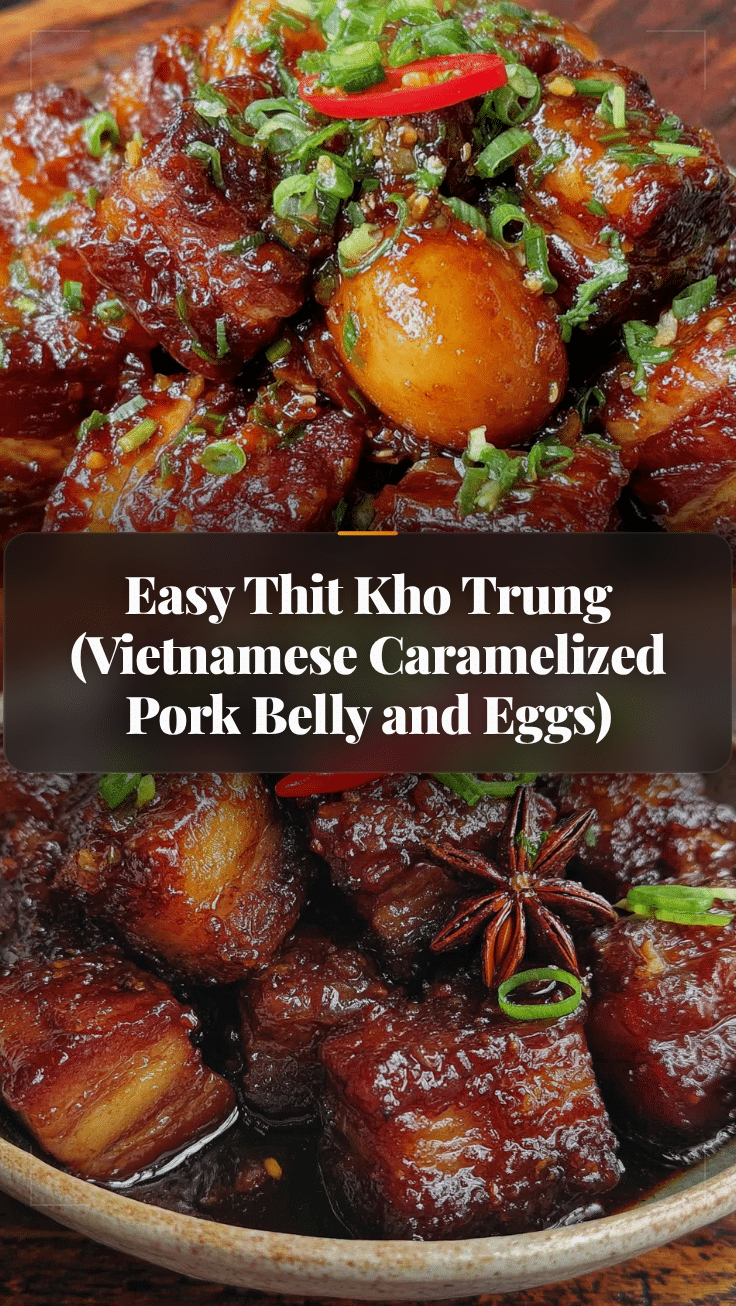
Easy Thit Kho Trung: Best Vietnamese Caramelized Pork Belly
This Vietnamese caramelized pork belly and eggs recipe is a weeknight hero—simple ingredients, minimal hands-on time, and incredibly tender, savory-sweet results that taste even better the next day.
- Prep Time: 15 minutes
- Cook Time: 45 minutes
- Total Time: 1 hour
- Yield: 6 servings 1x
- Category: Main Course
- Cuisine: Vietnamese
Ingredients
- 800g (1.75 lbs) pork belly, cut into 1½-inch cubes
- 6 large eggs, hard-boiled and peeled
- 3 tablespoons fish sauce
- 3 tablespoons granulated sugar
- 1 cup (240 ml) coconut water
- 3 medium shallots, thinly sliced
- 4 cloves garlic, minced
- 1 teaspoon freshly ground black pepper
- ½ teaspoon salt
- 1 cup (240 ml) water
- Green onions (optional, for garnish)
Instructions
- Boil the eggs: Place eggs in a small saucepan, cover with cold water by 1 inch. Bring to a boil, then reduce to a gentle simmer. Cook for 8 minutes. Transfer to an ice bath, cool completely, peel, and set aside.
- Prep the pork: Cut pork belly into 1½-inch cubes. Pat dry with paper towels.
- Make the caramel: In a heavy-bottomed pot, combine sugar and 2 tablespoons water. Swirl gently. Cook over medium heat until deep amber (about 4-5 minutes). Do not stir.
- Caramelize the pork: Carefully add pork to the caramel. Stir with tongs to coat evenly. Cook for 3-4 minutes, turning occasionally, until browned on all sides.
- Add aromatics: Add shallots and garlic. Cook for 1 minute until fragrant.
- Add liquids: Pour in coconut water, water, fish sauce, salt, and pepper. Stir, scraping up browned bits from the bottom.
- Simmer the pork: Bring to a boil, then reduce heat to low. Cover with lid slightly ajar. Simmer for 30 minutes.
- Add the eggs: After 30 minutes, add peeled hard-boiled eggs to the pot, pushing them into the liquid. Cover and simmer for another 20-30 minutes until pork is fork-tender and sauce has reduced by half.
- Check and adjust: Taste the sauce. Adjust with more fish sauce or coconut water if needed.
- Rest and serve: Remove from heat and let rest for 5 minutes. Serve over steamed jasmine rice, spooning sauce over everything. Garnish with sliced green onions if desired.
Notes
Don’t rush the caramel—watch for a deep amber color. Pat pork dry for better browning. Use coconut water for subtle sweetness. Let the dish rest before serving. Make ahead for even better flavor.
Nutrition
- Serving Size: 1 serving (about 1/6
- Calories: 520
- Sugar: 10
- Sodium: 890
- Fat: 38
- Saturated Fat: 14
- Carbohydrates: 12
- Protein: 28
Keywords: thit kho trung, Vietnamese caramelized pork belly, pork belly and eggs, Vietnamese braised pork, easy Vietnamese recipe, weeknight dinner, comfort food