“You’re going to want to try these,” my friend texted me one hectic afternoon. I was knee-deep in a whirlwind of packed lunches, last-minute emails, and the usual scramble to get dinner on the table. Honestly, the idea of making samosas—those deep-fried, flaky little pockets of joy—felt like a luxury I couldn’t afford. But these weren’t just any samosas; hers were healthy baked vegetable samosas with crispy flaky crust. Skeptical but intrigued, I gave it a shot that evening.
The smell as they baked—warm, spiced, and inviting—was nothing like the greasy versions I’d expected. Each bite was flaky, crunchy, and bursting with savory veggies, a little miracle that changed my mind about what samosas could be. It quickly became my go-to snack and a crowd-pleaser at every casual get-together since. The best part? No guilt, no mess, just a satisfying crunch and comforting spices.
What stuck with me was how this recipe didn’t feel like a compromise. Instead, it was a fresh take that fit perfectly into my busy life without skimping on flavor or texture. If you’ve ever loved samosas but hesitated because of the frying or heavy ingredients, this recipe might just be your new favorite. Let’s get into how you can make this crunchy, healthy treat happen in your kitchen.
Why You’ll Love This Recipe
Having tested and tweaked the recipe several times, I can honestly say these healthy baked vegetable samosas with crispy flaky crust are a game-changer for busy cooks and snack lovers alike. Here’s why they’ve earned a permanent spot in my rotation:
- Quick & Easy: Ready in about 40 minutes, perfect for those nights when you want something tasty without the wait.
- Simple Ingredients: Mostly pantry staples and fresh veggies—no fancy trips to specialty markets needed.
- Perfect for Parties & Snacks: They work brilliantly as appetizers, lunchbox treats, or cozy evening bites.
- Crowd-Pleaser: Kids and adults alike rave about the crisp crust and flavorful filling.
- Unbelievably Delicious: The crust is buttery and flaky, almost like a homemade pastry, but without the deep-fried greasiness.
Unlike traditional samosas, this recipe uses baking instead of frying, which means less oil but all the satisfying crunch. The secret lies in the dough technique and how the vegetables are spiced and cooked just right before filling. There’s a balanced blend of spices that wakes up your taste buds without overwhelming the natural veggie flavors.
Honestly, it’s the kind of recipe that makes you pause mid-bite and smile because it’s comfort food done smartly. If you’ve been curious about baking samosas or want a healthier appetizer option, this is the one you’ll want to hold onto.
What Ingredients You Will Need
This recipe uses simple, wholesome ingredients to deliver bold flavor and satisfying texture without the fuss. Most are common in many kitchens, and substitutions can be made easily depending on what you have on hand.
For the Dough
- All-purpose flour – 2 cups (240g), sifted for smooth dough
- Cold unsalted butter – 6 tbsp (85g), cubed (adds richness and flakiness)
- Ice-cold water – 1/2 cup (120ml), adjust as needed for dough consistency
- Salt – 1/2 tsp, to enhance flavor
- Oil (vegetable or olive) – 1 tbsp, for dough pliability
For the Filling
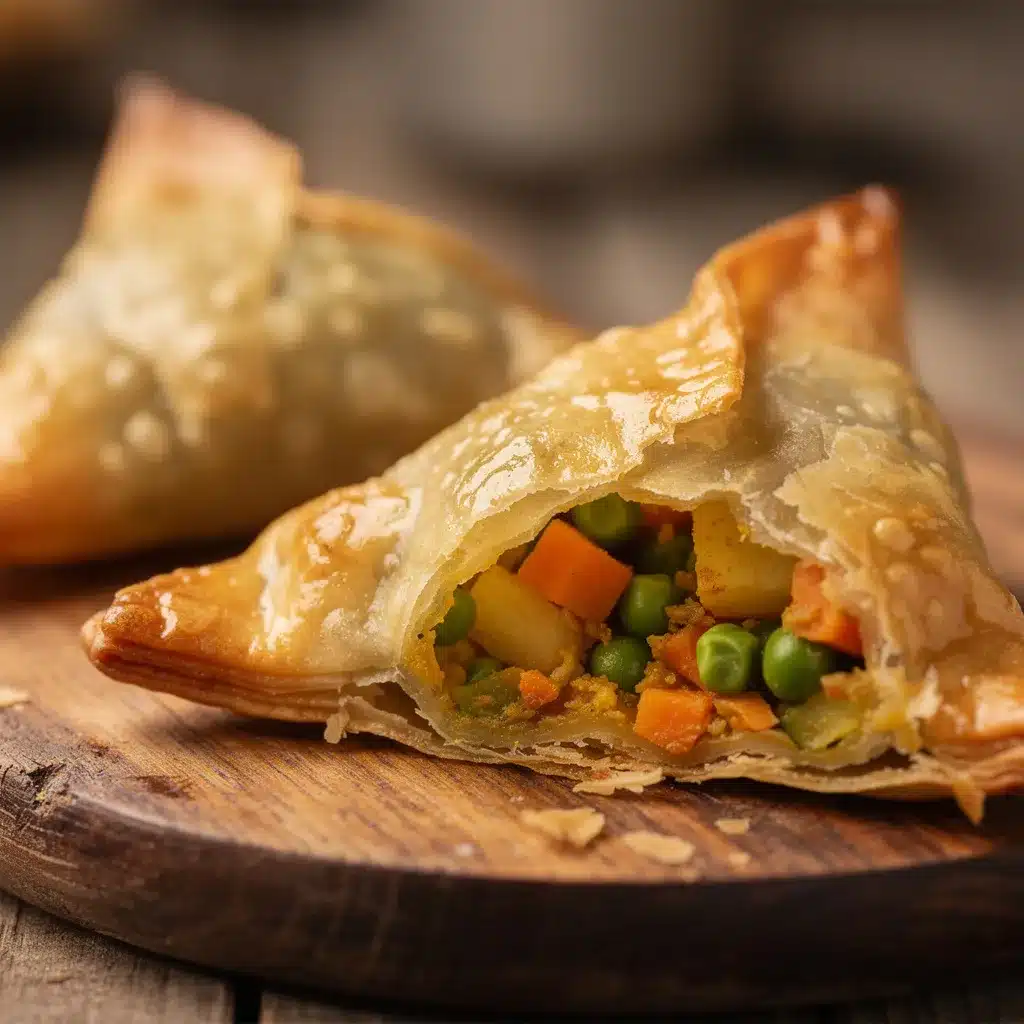
- Potatoes – 2 medium (about 300g), boiled and mashed
- Green peas – 1/2 cup (75g), fresh or frozen
- Carrots – 1 medium, finely diced
- Onion – 1 small, finely chopped
- Green chili – 1, finely chopped (optional, for mild heat)
- Ginger – 1 tsp, freshly grated
- Garlic – 1 clove, minced
- Cumin seeds – 1 tsp, adds a warm earthiness
- Coriander powder – 1 tsp
- Garam masala – 1/2 tsp, for that signature spice blend
- Turmeric powder – 1/4 tsp, for color and subtle flavor
- Salt and pepper – to taste
- Fresh cilantro – 2 tbsp, chopped, adds freshness
- Lemon juice – 1 tsp, brightens the filling
Ingredient tips: I prefer using fresh green peas when in season, but frozen works just fine. For a gluten-free option, substitute the all-purpose flour with a gluten-free pastry flour blend, though the texture might be slightly different. When selecting potatoes, waxy varieties like Yukon Gold hold their shape better in the filling.
Equipment Needed
- Mixing bowls – for dough and filling preparation
- Rolling pin – to roll out the dough thinly and evenly (a small wine bottle can work in a pinch)
- Baking sheet – lined with parchment paper for easy cleanup
- Pastry brush – to apply oil or water on the dough edges for sealing
- Non-stick skillet or sauté pan – for cooking the filling vegetables
- Sharp knife – for chopping vegetables finely
- Measuring cups and spoons – to keep ingredient quantities precise
If you don’t have a pastry brush, your clean fingers work just as well for sealing the samosas. I’ve used silicone baking mats instead of parchment paper—both do the job well. For rolling, a wooden rolling pin gives the best control, but a non-stick one can help prevent sticking.
Preparation Method
- Make the dough: In a large bowl, mix the all-purpose flour and salt. Add the cold, cubed butter. Using your fingers or a pastry cutter, rub the butter into the flour until the mixture resembles coarse crumbs with some pea-sized bits. This helps create that flaky texture. Slowly add ice-cold water (start with 1/3 cup), mixing until the dough just comes together. Add more water, a tablespoon at a time, if needed. Form into a ball, cover with a damp cloth, and let it rest for 30 minutes. (This rest period relaxes the gluten, making rolling easier.)
- Prepare the filling: Heat a teaspoon of oil in a non-stick skillet over medium heat. Add cumin seeds and let them sizzle for 30 seconds until fragrant. Toss in chopped onions, ginger, garlic, and green chili. Sauté until onions are translucent, about 3-4 minutes. Add diced carrots and peas; cook until tender, about 5 minutes. Stir in mashed potatoes, coriander powder, turmeric, garam masala, salt, and pepper. Mix well and cook for another 2 minutes to blend flavors. Turn off heat, add chopped cilantro and lemon juice, then set aside to cool.
- Roll out the dough: Divide the dough into 8 equal portions. On a lightly floured surface, roll each portion into a thin oval about 6 inches (15 cm) long. Keep the dough covered while rolling the others to prevent drying out.
- Shape and fill samosas: Cut each oval in half lengthwise to form two semi-circles. Take one semi-circle, fold into a cone shape by bringing the straight edge corners together. Seal the edge with a little water using your finger or a pastry brush. Fill the cone with 2 tablespoons of the vegetable filling. Pinch and seal the open edges tightly to form a triangular pocket. Repeat with remaining dough and filling.
- Bake the samosas: Preheat your oven to 400°F (200°C). Place samosas on the baking sheet lined with parchment paper. Brush each samosa lightly with oil to encourage browning. Bake for 25-30 minutes, flipping halfway through, until golden and crisp. You’ll notice the crust puffing slightly and turning beautifully flaky.
- Serve: Let samosas cool for 5 minutes before serving with your favorite chutney or yogurt dip.
If the dough feels sticky while rolling, dust lightly with flour but avoid over-flouring to keep the crust tender. If any samosas leak filling while baking, it’s usually from seams not sealed well—just patch with a small dough piece next time!
Cooking Tips & Techniques
Getting that perfect crispy flaky crust without frying takes some finesse, but a few tricks help every time. First, cold butter is your best friend. When you rub cold butter into the flour, you create layers that puff up during baking, making the crust flaky and light. Don’t melt the butter or your crust might turn dense.
Another key is resting the dough for at least 30 minutes. I once skipped this step (impatient, I know), and the dough was tough and hard to roll. The rest lets the gluten relax, making the dough easier to handle and preventing shrinkage during baking.
For the filling, cooking the vegetables just right is crucial. Overcooked veggies can get mushy and wet, making the dough soggy. I usually sauté until tender but still firm, which keeps the filling fresh and avoids sogginess.
When sealing the samosas, make sure edges are damp but not soaked with water. A damp edge acts like glue. If you use too much water, the dough can get soggy and tear. Also, don’t overfill; it’s tempting, but too much filling can cause bursting in the oven.
Lastly, flipping the samosas halfway through baking encourages even browning on both sides, giving you that golden crunch all around.
Variations & Adaptations
- Gluten-Free: Swap all-purpose flour with a gluten-free flour blend designed for pastries. Add a teaspoon of xanthan gum if your blend doesn’t contain it, to improve dough elasticity.
- Vegan: This recipe is naturally vegan if you use oil instead of butter for the dough. I’ve tested olive oil and coconut oil—both work well, but olive oil gives a richer flavor.
- Spice Level: Adjust green chili quantity or add red chili flakes for a bolder kick. For a milder version, omit chilies and add a pinch of smoked paprika for warmth without heat.
- Filling Variations: Swap carrots and peas for diced bell peppers, corn, or even cooked lentils for a protein boost. I once tried a spinach and feta twist inspired by Mediterranean flavors—delicious!
- Cooking Method: Prefer air frying? These samosas crisp up nicely in an air fryer at 375°F (190°C) for 15-18 minutes, flipping halfway.
Serving & Storage Suggestions
These samosas are best enjoyed warm, fresh out of the oven when the crust is at its crispiest. I like serving them with tangy tamarind chutney or cooling mint yogurt dip to balance the spices.
For a casual meal, pair with a fresh cucumber salad or a simple lentil soup for a wholesome plate. They also make fantastic finger foods at brunches or potluck gatherings, where their flaky crust always impresses.
Store leftovers in an airtight container in the refrigerator for up to 3 days. To reheat, use a toaster oven or conventional oven at 350°F (175°C) for 8-10 minutes to revive the crispiness; microwaving tends to make the crust soggy.
Over time, the flavors meld nicely, so these samosas can be made a day ahead and baked just before serving, saving time on busy days. The crust remains crisp if reheated properly, which is a big plus in my book.
Nutritional Information & Benefits
This recipe is a healthier take on a classic snack, providing good fiber from potatoes, peas, and carrots, plus vitamins A and C from the veggies. Baking cuts down on oil compared to traditional frying, reducing fat and calories significantly.
Each samosa roughly contains:
Calories: 150-180 kcal
Carbohydrates: 25g
Fat: 5g
Protein: 3g
Fiber: 3g
Using fresh vegetables adds antioxidants and nutrients, while the spices like turmeric and cumin offer anti-inflammatory benefits. This snack fits well into balanced eating patterns, and with a gluten-free dough option, it’s accessible for different dietary needs.
Keep in mind the recipe contains gluten and potential allergens if you add dairy-based dips, so adjust accordingly. Overall, it’s a guilt-free way to enjoy a crunchy, savory treat that’s full of flavor and nutrition.
Conclusion
These healthy baked vegetable samosas with crispy flaky crust have become one of my favorite ways to combine comfort food with mindful eating. They check all the boxes: easy to make, satisfyingly crunchy, and bursting with a mellow, spiced veggie filling.
Feel free to tweak the spices, fillings, or dough to match your taste and lifestyle. I love that this recipe makes it simple to enjoy a traditionally indulgent snack without the deep-fried guilt trip. It’s proof that smart cooking can still deliver on flavor and texture.
Give it a try and see how this recipe fits into your kitchen rhythm. And if you like treats with a fresh twist, you might enjoy the mini lemon blueberry cheesecakes I made for a recent party—they have that same balance of indulgence and fresh ingredients.
Cooking is all about experimenting and making recipes your own. I’d love to hear how your samosas turn out or any fun variations you come up with. Happy baking!
FAQs
Can I use frozen vegetables for the samosa filling?
Yes, frozen peas and carrots work well. Just thaw and drain any excess moisture before cooking to avoid soggy filling.
How do I make the samosa dough without butter?
You can substitute butter with an equal amount of oil, such as olive or vegetable oil, for a vegan-friendly dough. The texture will be slightly less flaky but still tasty.
Can I freeze the samosas before baking?
Absolutely. Assemble the samosas, place them on a baking sheet to freeze individually, then transfer to a freezer bag. Bake directly from frozen, adding a few extra minutes to the baking time.
What can I serve with baked vegetable samosas?
They pair wonderfully with chutneys like tamarind or mint, yogurt dips, or a simple cucumber salad for a refreshing contrast.
Is this recipe suitable for gluten-free diets?
Yes, by swapping all-purpose flour with a gluten-free pastry flour blend, you can make gluten-free samosas. Just adjust water as needed for dough consistency.
Pin This Recipe!
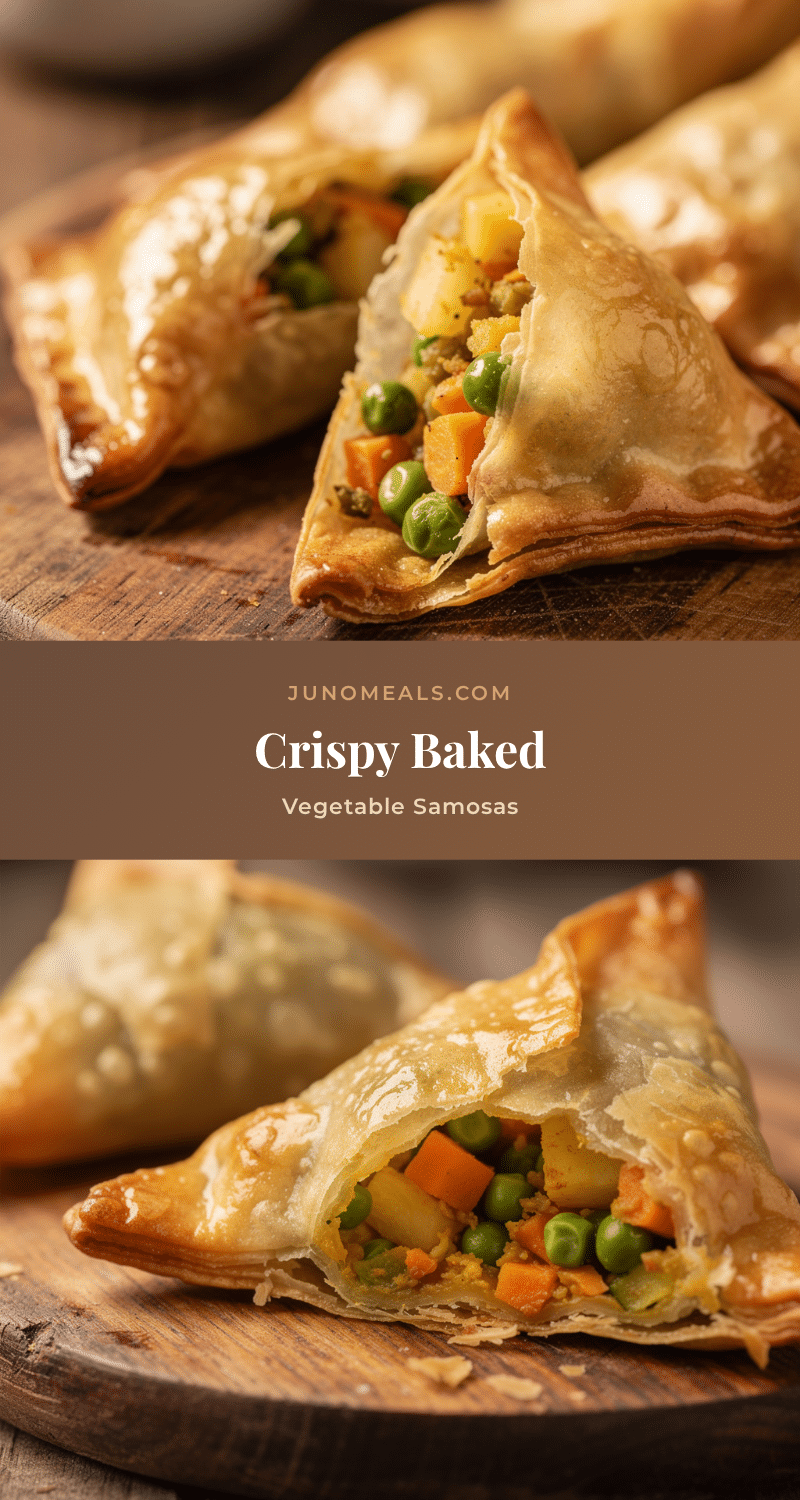
Healthy Baked Vegetable Samosas

These healthy baked vegetable samosas feature a crispy flaky crust and a savory spiced vegetable filling, offering a guilt-free alternative to traditional fried samosas. Perfect as a snack or appetizer, they are easy to make and crowd-pleasing.
- Prep Time: 15 minutes
- Cook Time: 30 minutes
- Total Time: 45 minutes
- Yield: 8 servings 1x
- Category: Appetizer
- Cuisine: Indian
Ingredients
- 2 cups (240g) all-purpose flour, sifted
- 6 tbsp (85g) cold unsalted butter, cubed
- 1/2 cup (120ml) ice-cold water, adjust as needed
- 1/2 tsp salt
- 1 tbsp vegetable or olive oil (for dough pliability)
- 2 medium potatoes (about 300g), boiled and mashed
- 1/2 cup (75g) green peas, fresh or frozen
- 1 medium carrot, finely diced
- 1 small onion, finely chopped
- 1 green chili, finely chopped (optional)
- 1 tsp freshly grated ginger
- 1 clove garlic, minced
- 1 tsp cumin seeds
- 1 tsp coriander powder
- 1/2 tsp garam masala
- 1/4 tsp turmeric powder
- Salt and pepper to taste
- 2 tbsp fresh cilantro, chopped
- 1 tsp lemon juice
Instructions
- Make the dough: In a large bowl, mix the all-purpose flour and salt. Add the cold, cubed butter. Rub the butter into the flour until the mixture resembles coarse crumbs with some pea-sized bits. Slowly add ice-cold water (start with 1/3 cup), mixing until the dough just comes together. Add more water, a tablespoon at a time, if needed. Form into a ball, cover with a damp cloth, and let it rest for 30 minutes.
- Prepare the filling: Heat 1 tsp oil in a non-stick skillet over medium heat. Add cumin seeds and let them sizzle for 30 seconds. Add chopped onions, ginger, garlic, and green chili; sauté until onions are translucent, about 3-4 minutes. Add diced carrots and peas; cook until tender, about 5 minutes. Stir in mashed potatoes, coriander powder, turmeric, garam masala, salt, and pepper. Cook for another 2 minutes. Turn off heat, add cilantro and lemon juice, then set aside to cool.
- Roll out the dough: Divide dough into 8 equal portions. On a lightly floured surface, roll each portion into a thin oval about 6 inches (15 cm) long. Keep dough covered while rolling others.
- Shape and fill samosas: Cut each oval in half lengthwise to form two semi-circles. Fold one semi-circle into a cone shape by bringing straight edge corners together. Seal edge with a little water. Fill cone with 2 tablespoons of filling. Pinch and seal open edges to form a triangular pocket. Repeat with remaining dough and filling.
- Bake the samosas: Preheat oven to 400°F (200°C). Place samosas on a parchment-lined baking sheet. Brush each samosa lightly with oil. Bake for 25-30 minutes, flipping halfway through, until golden and crisp.
- Serve: Let samosas cool for 5 minutes before serving with chutney or yogurt dip.
Notes
Use cold butter to create a flaky crust. Rest dough for 30 minutes to relax gluten. Avoid overfilling samosas to prevent bursting. Flip samosas halfway through baking for even browning. For vegan option, substitute butter with oil. For gluten-free, use gluten-free pastry flour blend and add xanthan gum if needed.
Nutrition
- Serving Size: 1 samosa
- Calories: 165
- Sugar: 3
- Sodium: 150
- Fat: 5
- Saturated Fat: 2.5
- Carbohydrates: 25
- Fiber: 3
- Protein: 3
Keywords: healthy samosas, baked samosas, vegetable samosas, crispy samosas, flaky crust, vegetarian snack, Indian appetizer, baked snacks