Let me tell you, the moment the sweet and savory aroma of marinated beef bulgogi sizzling on the pan fills your kitchen, you know you’re in for something special. The vibrant colors of fresh vegetables, perfectly cooked rice, and that golden fried egg on top—it’s like a flavor party for your senses. The first time I made this flavorful Korean Bibimbap Bowl with marinated beef bulgogi, I was instantly hooked. It was one of those rare cooking moments where you pause, take a deep breath, and just smile because you know you’re onto something truly special.
Years ago, when I was knee-high to a grasshopper, my grandma used to bring home Korean goodies from her friend’s market stall, but it wasn’t until a rainy weekend last year that I finally tried recreating this iconic dish myself. Honestly, I wish I had discovered this recipe ages ago—it brings pure, nostalgic comfort with every bite. My family couldn’t stop sneaking spoonfuls off the serving bowl (and I can’t really blame them). This bibimbap bowl has become a staple for our family gatherings and quick weeknight dinners alike. It’s dangerously easy to make, packed with flavor, and perfect for brightening up your Pinterest recipe board or impressing friends without breaking a sweat.
Whether you’re craving a sweet treat for your taste buds or a hearty meal that feels like a warm hug, this Korean bibimbap bowl with marinated beef bulgogi is going to be your new go-to. After testing this recipe multiple times (in the name of research, of course), I’m excited to share how you can make it a favorite in your kitchen too.
Why You’ll Love This Recipe
Honestly, this flavorful Korean Bibimbap Bowl with marinated beef bulgogi stands out for so many reasons. I’ve spent countless hours tweaking and testing this recipe to get every bite just right, blending authentic techniques with easy home cooking. Here’s why it’ll quickly become a family favorite:
- Quick & Easy: You can have this colorful bowl on your table in under 45 minutes, perfect for those busy weeknights when you want something satisfying without fuss.
- Simple Ingredients: No need for exotic stores—most ingredients are pantry staples or easy to find at your local market.
- Perfect for Any Occasion: Whether it’s a casual lunch, dinner party, or cozy weekend meal, bibimbap fits right in.
- Crowd-Pleaser: Kids and adults alike rave about this dish—there’s something magical about mixing all those flavors and textures together.
- Unbelievably Delicious: The marriage of sweet and savory bulgogi with fresh veggies and that signature gochujang sauce is pure comfort food magic.
This recipe isn’t just another bibimbap bowl—it’s a perfected version with tender, marinated beef bulgogi that melts in your mouth and a balance of crisp veggies that keep every bite exciting. You know what makes it special? The little touches like toasting sesame seeds for that nutty punch and frying the egg just right so the yolk runs over the rice. It’s comfort food reimagined—accessible, flavorful, and soul-satisfying. You’re going to want to bookmark this one.
What Ingredients You Will Need
This flavorful Korean Bibimbap Bowl with marinated beef bulgogi uses simple, wholesome ingredients to deliver bold flavor and satisfying texture without the fuss. Most are pantry staples or fresh produce that you can swap based on seasonality.
- For the Marinated Beef Bulgogi:
- 1 lb (450g) thinly sliced beef ribeye or sirloin (look for well-marbled meat for tenderness)
- 3 tbsp soy sauce (I prefer Kikkoman for its rich umami)
- 2 tbsp brown sugar (adds caramelized sweetness)
- 1 tbsp sesame oil (toasted variety is best)
- 4 cloves garlic, minced
- 1 tsp freshly grated ginger
- 2 green onions, chopped
- 1 tsp black pepper
- 1 tbsp toasted sesame seeds (for garnish)
- For the Bibimbap Bowl:
- 2 cups cooked short-grain white rice (or brown rice for a healthier option)
- 1 cup julienned carrots (fresh or lightly sautéed)
- 1 cup fresh spinach (blanched quickly in boiling water)
- 1 cup bean sprouts (blanched and drained)
- 4 shiitake mushrooms, sliced and sautéed
- 1 cucumber, thinly sliced or julienned
- 4 large eggs (for frying sunny-side up)
- Gochujang (Korean chili paste) to taste (start with 2 tbsp)
- Optional: seaweed strips for garnish
If you want to swap ingredients, almond flour rice crackers or cauliflower rice work well for a low-carb twist. Use coconut aminos instead of soy sauce if you want gluten-free. For a vegan variation, tofu marinated in bulgogi sauce replaces beef beautifully.
Equipment Needed
- A large mixing bowl to combine and marinate the beef bulgogi
- Non-stick skillet or cast iron pan for cooking the beef and frying eggs (I love my cast iron for its heat retention)
- Medium saucepan for blanching vegetables
- Rice cooker or pot for perfectly cooked rice
- Sharp knife and cutting board for prepping veggies and beef
- Measuring spoons and cups for accurate seasoning
If you don’t have a cast iron skillet, a good non-stick pan works just fine—just watch the heat to avoid burning the marinade. A rice cooker makes life easier but cooking rice on the stove with a tight lid works too. I often find that a sharp knife makes the prep quicker and safer, so it’s worth investing in a good one if you cook often.
Preparation Method
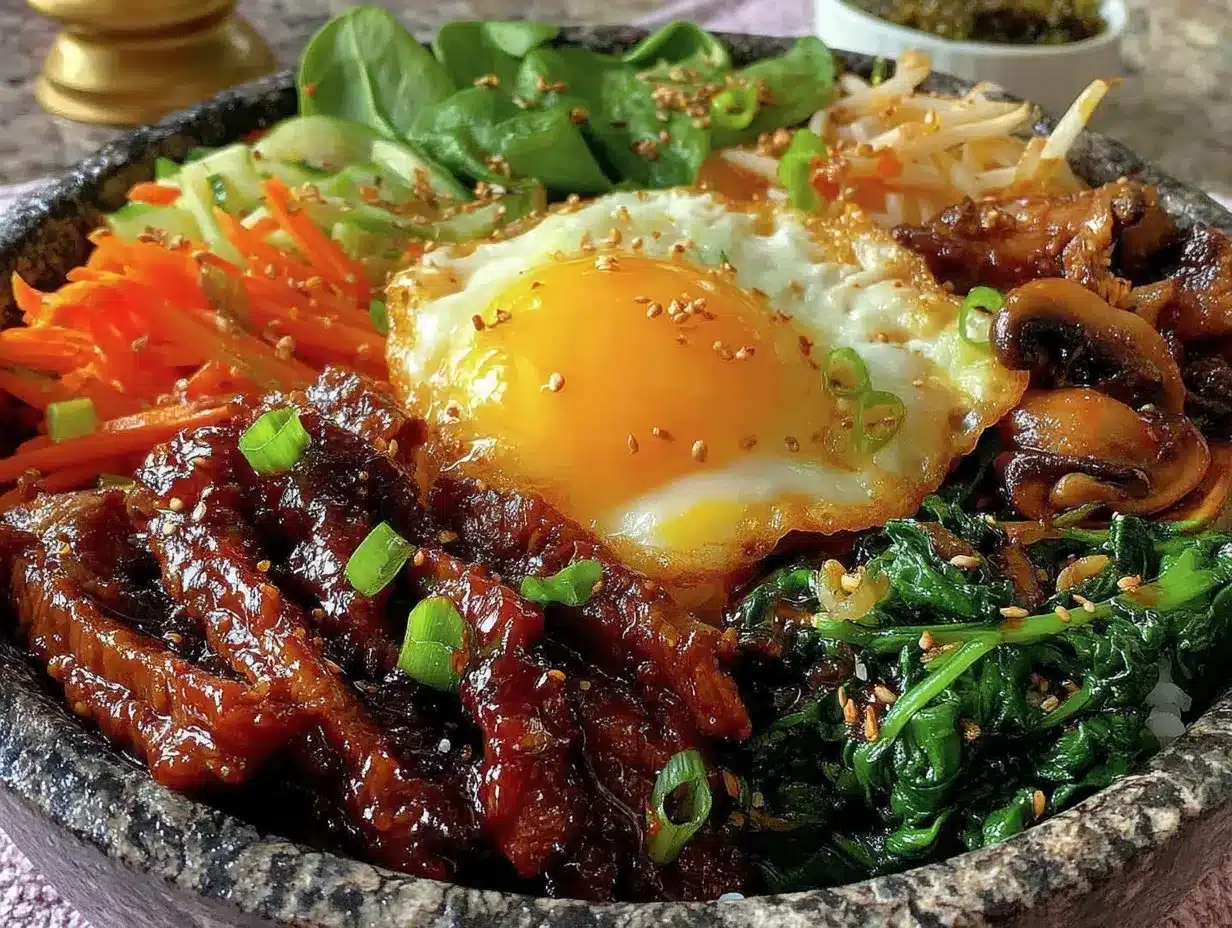
- Marinate the Beef Bulgogi (15 minutes prep, 30 minutes marinate): In a large bowl, combine soy sauce, brown sugar, sesame oil, minced garlic, grated ginger, chopped green onions, and black pepper. Add the thinly sliced beef and toss to coat evenly. Cover and let marinate in the fridge for at least 30 minutes (or up to 2 hours for deeper flavor).
- Cook the Rice: While the beef marinates, cook your rice according to package instructions or in a rice cooker. Fluff the rice when done and keep warm.
- Prepare the Vegetables (20 minutes): Blanch the spinach and bean sprouts in boiling water for about 1 minute each, then drain and squeeze out excess water. Lightly sauté the shiitake mushrooms in a bit of sesame oil until tender. Julienne or thinly slice carrots and cucumber (raw carrots add crunch; you can sauté if you prefer softer). Season the spinach and bean sprouts with a pinch of salt and a drizzle of sesame oil for extra flavor.
- Cook the Beef Bulgogi (5-7 minutes): Heat a skillet over medium-high heat. Add the marinated beef in a single layer and cook until browned and caramelized, about 5 to 7 minutes. Avoid overcrowding the pan to get a nice sear. Remove from heat and sprinkle with toasted sesame seeds.
- Fry the Eggs (3-4 minutes): In the same skillet, add a little oil and fry eggs sunny-side up until whites are set but yolks remain runny—this is key for that luscious sauce effect when mixed in.
- Assemble the Bibimbap Bowl: Start with a base of warm rice, then neatly arrange the cooked beef bulgogi, spinach, bean sprouts, carrots, mushrooms, and cucumber on top in sections. Place the fried egg in the center. Add a generous dollop of gochujang on the side (or more if you like it spicy). Sprinkle with seaweed strips if using.
- Serve and Mix: Let everyone mix their bowl right before eating to enjoy the harmony of flavors and textures. The runny egg yolk plus spicy-sweet gochujang creates a sauce that ties everything together beautifully.
Cooking Tips & Techniques
Cooking this flavorful Korean bibimbap bowl with marinated beef bulgogi is straightforward, but a few tips make a world of difference. First, marinate the beef for at least 30 minutes—trust me, the longer, the better the flavor. When cooking the beef, don’t crowd the pan; otherwise, it steams instead of caramelizes. I learned this the hard way after ending up with soggy meat rather than that perfect bite.
Blanching the vegetables quickly keeps their vibrant color and crunch intact, which is half the fun of bibimbap. For the egg, frying sunny-side up with a slightly runny yolk is crucial because it acts like a silky sauce when mixed with the gochujang and rice. If you prefer, soft-boiled eggs work too.
Timing-wise, prepare your veggies while the beef marinates and your rice cooks. Multitasking here saves loads of time. A quick tip: toast your sesame seeds in a dry pan for a minute or two before sprinkling—they add an irresistible nuttiness that you don’t want to miss.
Variations & Adaptations
There are lots of ways to make this Korean bibimbap bowl with marinated beef bulgogi your own:
- Vegetarian/Vegan: Swap the beef for marinated tofu or tempeh, and replace the egg with avocado slices or a vegan egg substitute.
- Grain Alternatives: Use quinoa, cauliflower rice, or brown rice for a different texture or lower carb option.
- Seasonal Veggies: In summer, swap spinach and carrots for fresh zucchini ribbons, bell peppers, or fresh bean sprouts from your garden.
- Spice Level: Adjust the gochujang quantity or mix it with a little honey for a milder, sweeter sauce.
- Cooking Method: Try grilling the bulgogi for a smoky flavor instead of pan-frying, or roast the vegetables for extra depth.
One variation I love is adding kimchi on the side for an extra punch of fermented goodness—it makes the bowl feel even more authentic and lively.
Serving & Storage Suggestions
Serve this Korean bibimbap bowl hot, fresh from the pan, with the egg still runny for that perfect sauce texture. For presentation, arrange the veggies and beef in colorful sections around the rice to make it visually stunning—Pinterest-worthy, honestly!
It pairs beautifully with a light cucumber salad, a side of kimchi, or a crisp Asian pear for palate refreshment. A cold barley tea or light lager complements the savory flavors well.
If you have leftovers, store components separately in airtight containers in the fridge for up to 2 days. Rice tends to dry out, so keep it moist by covering tightly. Reheat gently in a pan or microwave, adding a splash of water to keep rice fluffy. The flavors deepen over time, making leftovers even better the next day.
Nutritional Information & Benefits
This bibimbap bowl is a balanced meal packed with protein, fiber, and vitamins. The beef bulgogi provides ample protein and iron, while the fresh vegetables add antioxidants and fiber. Using brown rice boosts the fiber content and provides sustained energy. Sesame oil contributes heart-healthy fats, and gochujang contains fermented ingredients that support digestion.
For those with dietary restrictions, swapping soy sauce for tamari makes it gluten-free. This dish is naturally low in added sugars and can be tailored to fit low-carb or vegan diets with simple substitutions.
Personally, I find this meal satisfying and nourishing—a wholesome way to enjoy bold flavors without feeling heavy afterward.
Conclusion
This flavorful Korean Bibimbap Bowl with marinated beef bulgogi truly deserves a spot on your regular meal rotation. It’s a recipe that’s approachable yet packed with authentic tastes, customizable for any diet or occasion. I love how it brings a mix of textures and flavors to the table with minimal fuss—plus, it’s always a hit with family and friends.
Don’t be shy about making it your own by swapping veggies or protein to suit your taste. I’d love to hear how your bibimbap bowls turn out, so please leave a comment or share your variations! Trust me, once you try this, it’s going to be a recipe you’ll come back to again and again.
Happy cooking and enjoy every delicious bite!
FAQs
What cut of beef is best for bulgogi?
Thinly sliced ribeye or sirloin works best due to their tenderness and marbling, which keep the beef juicy and flavorful.
Can I make bibimbap without gochujang?
Yes! You can substitute with a mix of chili garlic sauce and a bit of soy sauce or even a mild sriracha if you prefer less heat.
How do I keep the vegetables fresh and crisp?
Blanching vegetables briefly in boiling water then shocking in ice water helps retain color and crunch.
Is it okay to prepare bibimbap ingredients ahead of time?
Absolutely. You can prep all veggies and marinate the beef in advance, then quickly cook and assemble when ready to eat.
Can I freeze leftover bulgogi?
Yes, cooked bulgogi freezes well. Store in airtight containers and reheat gently to avoid drying out the meat.
Pin This Recipe!
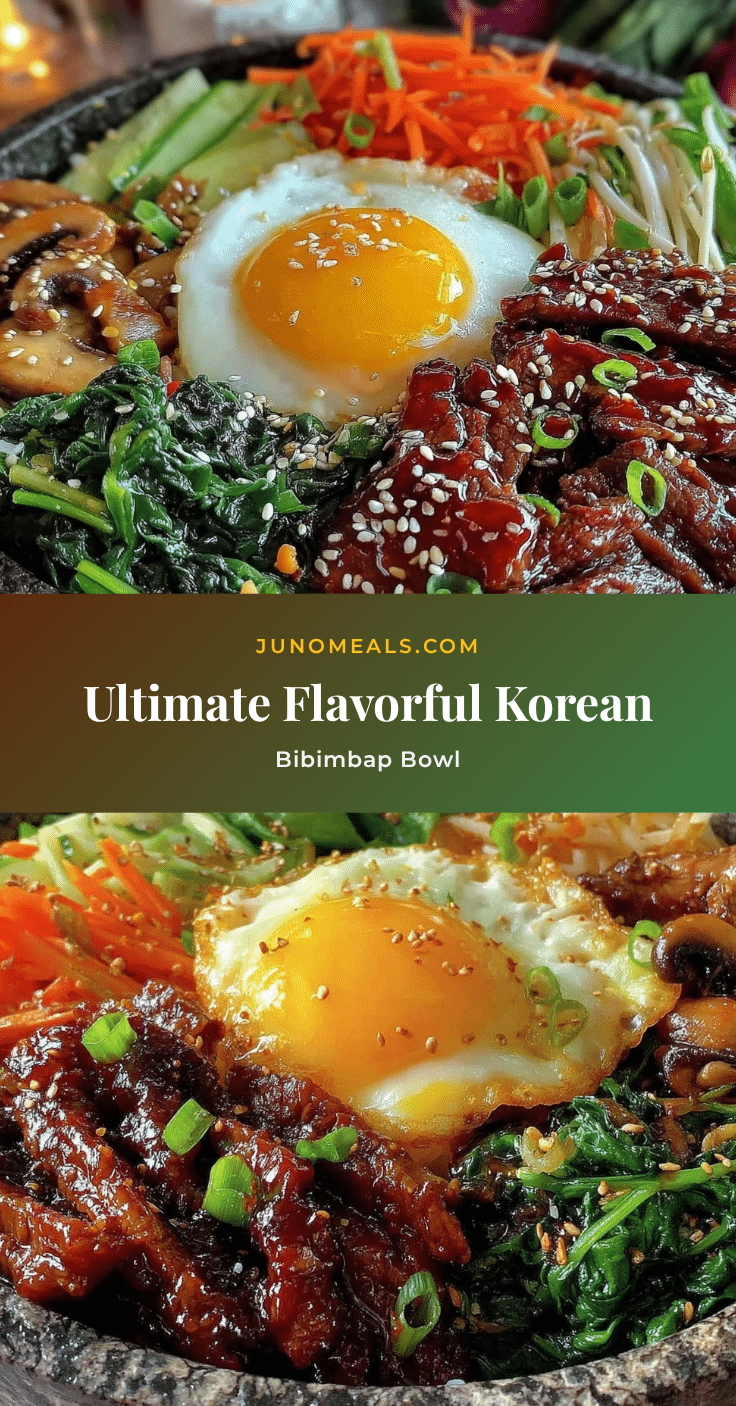
Flavorful Korean Bibimbap Bowl with Marinated Beef Bulgogi
A vibrant and flavorful Korean bibimbap bowl featuring tender marinated beef bulgogi, fresh vegetables, perfectly cooked rice, and a golden fried egg, all topped with spicy-sweet gochujang sauce.
- Prep Time: 15 minutes
- Cook Time: 30 minutes
- Total Time: 45 minutes
- Yield: 4 servings 1x
- Category: Main Course
- Cuisine: Korean
Ingredients
- 1 lb (450g) thinly sliced beef ribeye or sirloin
- 3 tbsp soy sauce
- 2 tbsp brown sugar
- 1 tbsp toasted sesame oil
- 4 cloves garlic, minced
- 1 tsp freshly grated ginger
- 2 green onions, chopped
- 1 tsp black pepper
- 1 tbsp toasted sesame seeds (for garnish)
- 2 cups cooked short-grain white rice (or brown rice)
- 1 cup julienned carrots (fresh or lightly sautéed)
- 1 cup fresh spinach (blanched quickly in boiling water)
- 1 cup bean sprouts (blanched and drained)
- 4 shiitake mushrooms, sliced and sautéed
- 1 cucumber, thinly sliced or julienned
- 4 large eggs (for frying sunny-side up)
- 2 tbsp gochujang (Korean chili paste), or to taste
- Optional: seaweed strips for garnish
Instructions
- In a large bowl, combine soy sauce, brown sugar, sesame oil, minced garlic, grated ginger, chopped green onions, and black pepper. Add the thinly sliced beef and toss to coat evenly. Cover and marinate in the fridge for at least 30 minutes (up to 2 hours for deeper flavor).
- Cook the rice according to package instructions or in a rice cooker. Fluff and keep warm.
- Blanch spinach and bean sprouts in boiling water for about 1 minute each, then drain and squeeze out excess water. Lightly sauté shiitake mushrooms in sesame oil until tender. Julienne or thinly slice carrots and cucumber. Season spinach and bean sprouts with a pinch of salt and a drizzle of sesame oil.
- Heat a skillet over medium-high heat. Add marinated beef in a single layer and cook until browned and caramelized, about 5 to 7 minutes. Avoid overcrowding the pan. Remove from heat and sprinkle with toasted sesame seeds.
- In the same skillet, add a little oil and fry eggs sunny-side up until whites are set but yolks remain runny.
- Assemble the bibimbap bowl by placing warm rice as the base. Arrange cooked beef bulgogi, spinach, bean sprouts, carrots, mushrooms, and cucumber on top in sections. Place the fried egg in the center. Add a dollop of gochujang on the side and sprinkle with seaweed strips if using.
- Serve and let everyone mix their bowl before eating to enjoy the combined flavors and textures.
Notes
Marinate beef for at least 30 minutes for best flavor. Avoid overcrowding the pan when cooking beef to ensure caramelization. Fry eggs sunny-side up with runny yolks for a silky sauce effect. Toast sesame seeds before garnishing for extra nuttiness. Vegetables can be blanched quickly to retain color and crunch. Variations include using tofu for vegan option, cauliflower rice for low-carb, and adjusting gochujang for spice level.
Nutrition
- Serving Size: 1 bowl (including be
- Calories: 550
- Sugar: 8
- Sodium: 900
- Fat: 22
- Saturated Fat: 5
- Carbohydrates: 55
- Fiber: 6
- Protein: 35
Keywords: bibimbap, bulgogi, Korean recipe, marinated beef, gochujang, Korean bowl, easy Korean dinner, healthy Korean food