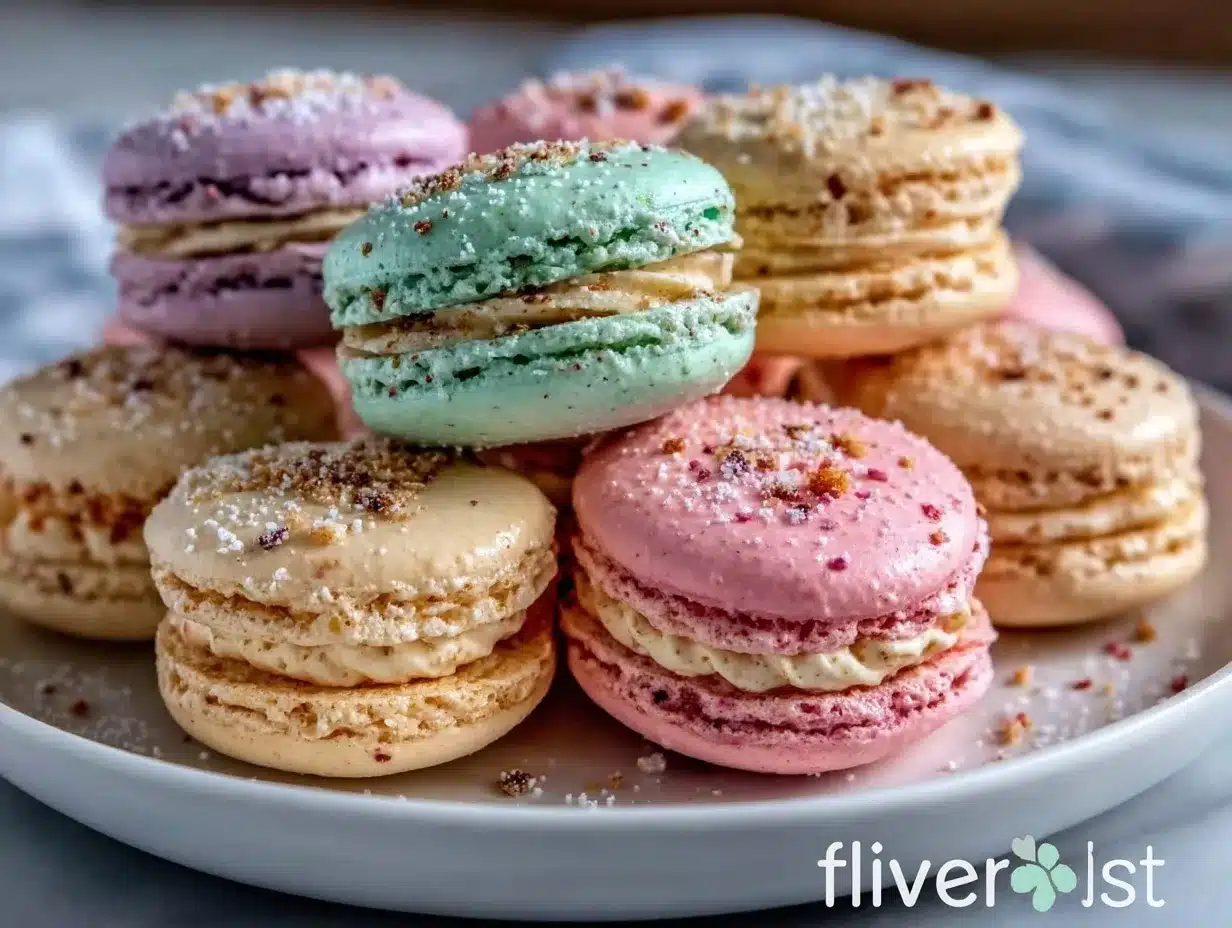
There’s something almost magical about the delicate crunch of a Perfect French Macaron giving way to a tender, chewy center, followed by a luscious burst of flavored filling. Honestly, the first time I baked these beauties, the almond scent wafting through the kitchen was enough to make me pause and just grin like a kid on Christmas morning. I was knee-high to a grasshopper when my grandma introduced me to these dainty treats, and ever since, they’ve held a special spot in my heart (and my cookie jar!).
The first batch I tackled was a rainy weekend experiment that turned into a full-on obsession. The kind of moment where you pause, take a deep breath, and just smile because you know you’re onto something truly special. My family couldn’t stop sneaking them off the cooling rack (and I can’t really blame them). These Perfect French Macarons have become my go-to for everything from sweet gifts to brightening up Pinterest cookie boards, and honestly, once you get the hang of them, they’re dangerously easy to whip up.
Let’s face it, mastering macarons can feel intimidating, but this step-by-step guide breaks it down into manageable parts, making it perfect for beginners and seasoned bakers alike. I’ve tested this recipe more times than I can count (in the name of research, of course), and it’s become a staple for family gatherings and special occasions. If you’re ready to impress your friends and treat yourself to pure, nostalgic comfort, you’re going to want to bookmark this one.
Why You’ll Love This Recipe
After countless trials and tweaks, I can confidently say this Perfect French Macarons recipe hits all the right notes. Here’s why it stands out:
- Quick & Easy: Comes together in about 90 minutes, making it perfect for busy weekends or last-minute celebrations.
- Simple Ingredients: No exotic pantry raids needed—just classic staples you probably already have.
- Perfect for Any Occasion: Whether it’s a bridal shower, holiday treat, or afternoon tea, these macarons always steal the show.
- Crowd-Pleaser: Kids and adults alike rave about the light texture and rich flavors.
- Unbelievably Delicious: The smooth almond shells paired with silky buttercream or ganache filling deliver a next-level sweet experience.
This isn’t just another macaron recipe floating around online. The secret lies in the folding technique—getting that perfect “macaronage” consistency—and the balanced almond-to-sugar ratio that creates the iconic smooth tops and “feet.” Plus, I’ve included tips on aging egg whites and choosing the right almond flour to guarantee success. This recipe feels like comfort food with a delicate, sophisticated twist, perfect for impressing guests or treating yourself without the stress.
What Ingredients You Will Need
This recipe uses simple, wholesome ingredients to deliver that bold flavor and satisfying texture without fuss. Most are pantry staples, but a few tips on quality help ensure your macarons come out flawless.
- Almond flour: 110g (about 1 cup), finely ground, sifted for smooth shells (I prefer Bob’s Red Mill for consistent texture)
- Powdered sugar: 200g (about 1 2/3 cups), sifted to avoid lumps
- Granulated sugar: 50g (about 1/4 cup), for the meringue
- Egg whites: 90g (about 3 large), aged at room temperature for 24 hours (this helps build stable meringue)
- Cream of tartar: 1/4 teaspoon, to stabilize the egg whites (optional but recommended)
- Food coloring: gel or powder form, optional for vibrant shells (avoid liquid to keep batter consistency)
- Filling of choice: buttercream, ganache, or jam (about 1 cup total)
If you’re gluten-free, no worries—this recipe is naturally gluten-free. For a dairy-free filling, try coconut cream-based buttercreams or fruit preserves. Also, if almond flour isn’t an option, finely ground pistachios or hazelnuts can be a fun twist, though it changes the flavor profile.
Equipment Needed
- Mixing bowls: One large for dry ingredients, another for egg whites
- Electric mixer or stand mixer: For whipping stiff meringue (essential for success)
- Sifter or fine mesh sieve: To sift almond flour and powdered sugar
- Silicone spatula: For gentle folding of ingredients
- Piping bag with round tip (about 1/2 inch): For shaping macarons evenly
- Baking sheets: Heavy-duty preferred for even heat distribution
- Parchment paper or silicone baking mats: To prevent sticking
- Oven thermometer: Optional but handy for accurate oven temperature
If you don’t have a stand mixer, a handheld electric mixer works just fine—though your arm might get a little workout! I’ve also used parchment paper instead of silicone mats with great results, but mats help get a more even bake. For budget-friendly options, thrift stores often have good quality mixing bowls and baking sheets.
Preparation Method
- Prep the dry ingredients (15 minutes): Sift the almond flour and powdered sugar together into a large bowl, repeating twice to ensure no lumps. This step is key for smooth macaron shells that aren’t grainy. Set aside.
- Age your egg whites (optional, 24 hours): Separate egg whites from yolks carefully and leave uncovered in a clean bowl at room temperature overnight. This ages them, helping achieve a more stable meringue.
- Make the meringue (10 minutes): Using an electric mixer, whip the egg whites on medium speed until foamy. Add cream of tartar, then gradually add granulated sugar while increasing speed to high. Beat until stiff, glossy peaks form. You’ll know it’s ready when the meringue holds a firm peak that doesn’t droop.
- Color the meringue (optional): Add a few drops of gel or powdered food coloring and gently fold with a spatula until evenly combined. Avoid liquid colors—they can throw off consistency.
- Macaronage: fold dry ingredients into meringue (5-7 minutes): Add sifted almond flour and powdered sugar mixture to the meringue in three parts. Using a spatula, fold gently but thoroughly, scraping the bowl’s sides and bottom. The batter should flow like lava—thick but smooth and able to slowly drip off the spatula. If you overmix, it gets runny; undermix, and it’s too stiff.
- Pipe the shells (10 minutes): Transfer batter to a piping bag fitted with a round tip. On lined baking sheets, pipe 1.5-inch circles spaced about 1 inch apart. Once piped, tap the baking sheets firmly on the counter a few times to release air bubbles.
- Rest the shells (30-60 minutes): Let the piped shells sit at room temperature until a dry skin forms on top—test by gently touching; it shouldn’t stick to your finger. This step helps create the signature “feet” during baking.
- Bake (14-16 minutes): Preheat oven to 300°F (150°C). Bake one sheet at a time on the middle rack. Macarons are done when they have risen “feet” and don’t wobble when nudged. Avoid opening the oven door during baking to prevent cracking.
- Cool completely (30 minutes): Let shells cool on the baking sheet before carefully peeling off parchment or silicone mats.
- Fill and assemble (10 minutes): Match shells of similar size and pipe your chosen filling onto one side. Sandwich together gently.
- Mature the macarons (24 hours in fridge): For best flavor and texture, refrigerate assembled macarons in an airtight container overnight. This step allows the flavors to meld and the shells to soften slightly inside.
Cooking Tips & Techniques
Macarons can be temperamental, but a few tricks from my kitchen mishaps and wins can help you nail them every time. First off, patience is your best friend—don’t rush the resting phase. Skipping this leads to cracked shells or missing feet. I learned this the hard way after a dozen cracked attempts!
When folding the batter, think of it as coaxing the air just right. Too much folding, and the batter becomes too runny; too little, and the macarons turn out lumpy. The “lava” consistency is your sweet spot—slowly dripping but not liquid.
Another common mistake is oven temperature. Every oven is different. I always recommend using an oven thermometer to avoid burning or underbaking. If you notice browning too early, lower the temperature by 10 degrees next time.
Finally, always sift your dry ingredients twice. It may feel tedious, but it prevents gritty shells and helps with the smooth tops everyone craves. And don’t forget to age your egg whites if possible; it really makes a difference in meringue stability.
Variations & Adaptations
Once you’ve mastered the classic recipe, it’s fun to mix things up:
- Flavor twists: Add citrus zest (lemon, orange) to the batter or fillings for a bright pop. I once made raspberry macarons with a fresh raspberry buttercream that vanished in minutes.
- Diet-friendly swaps: Use aquafaba (chickpea brine) instead of egg whites for a vegan version, though expect slightly different texture. For gluten-free or nut-free options, try oat flour—but the classic almond flavor is hard to beat.
- Different fillings: Chocolate ganache, salted caramel, or even flavored jams work beautifully. I like experimenting with lavender honey buttercream for a fancy touch.
You can also adjust baking times slightly for larger or smaller macarons, and some folks try baking in convection ovens with good results. Just keep an eye on them!
Serving & Storage Suggestions
Serve your Perfect French Macarons at room temperature—they’re best when the filling is soft but the shells still have a slight snap. They make a stunning centerpiece on dessert tables or a sweet pairing for afternoon tea and coffee.
Store macarons in an airtight container in the fridge for up to 4 days or freeze for up to 2 weeks. When reheating frozen macarons, let them thaw in the fridge overnight for the best texture. Avoid microwaving—they tend to become chewy or soggy.
Fun fact: flavors deepen and meld beautifully after a day or two, so if you can resist, let them rest before serving. This patience pays off with richer, more harmonious bites that keep everyone coming back for more.
Nutritional Information & Benefits
Each Perfect French Macaron shell is relatively light—about 70-80 calories depending on size—mostly from almonds and sugar. The real caloric punch comes from the filling, so choose wisely if you’re watching intake.
Almond flour brings healthy fats, fiber, and a nice dose of vitamin E to the party, making macarons a slightly more nutrient-dense treat than your average cookie. This recipe is naturally gluten-free, and with dairy-free filling options, it can fit a variety of dietary needs.
Just a heads-up: the recipe contains nuts and egg whites, so it’s not suitable for those with allergies. But for those who can enjoy them, macarons offer a little indulgence with a touch of wholesome almond goodness.
Conclusion
If you’ve ever hesitated to try making Perfect French Macarons because they seemed too tricky, this guide will change your mind. With a bit of patience and the right steps, you’ll be creating those smooth, shiny shells with delicate feet and irresistible fillings in no time. Customize the colors, flavors, and fillings to suit your mood or occasion—it’s a recipe that invites creativity and rewards you with show-stopping results.
Personally, I adore how these macarons bring a touch of elegance to everyday moments and special celebrations alike. I’d love to hear how your baking adventure goes—drop a comment, share your flavor combos, or tell me about your first macaron success! Remember, every batch gets better, so keep at it and enjoy the sweet journey.
Happy baking, and may your kitchen be filled with the delightful scent of almonds and sugar!
FAQs About Perfect French Macarons
Why did my macarons crack?
Cracks usually happen if the shells didn’t rest long enough before baking or if the oven temperature is too high. Let the piped shells form a dry skin for 30-60 minutes and use an oven thermometer to ensure accurate temperature.
How do I know when the meringue is stiff enough?
When you lift the mixer beaters, the meringue should hold a firm peak that stands straight without drooping. It should be glossy and smooth.
Can I use liquid food coloring?
It’s best to avoid liquid colors because they add moisture and can alter batter consistency. Gel or powdered colors work much better for vibrant shells.
How long can I store macarons?
Store them in an airtight container in the fridge for up to 4 days or freeze for up to 2 weeks. Always let frozen macarons thaw in the fridge overnight before serving.
What’s the best filling for macarons?
Classic choices include buttercream, ganache, or jam. For beginners, a simple vanilla or chocolate buttercream is easy and delicious. Feel free to get creative once you’re comfortable!
Pin This Recipe!
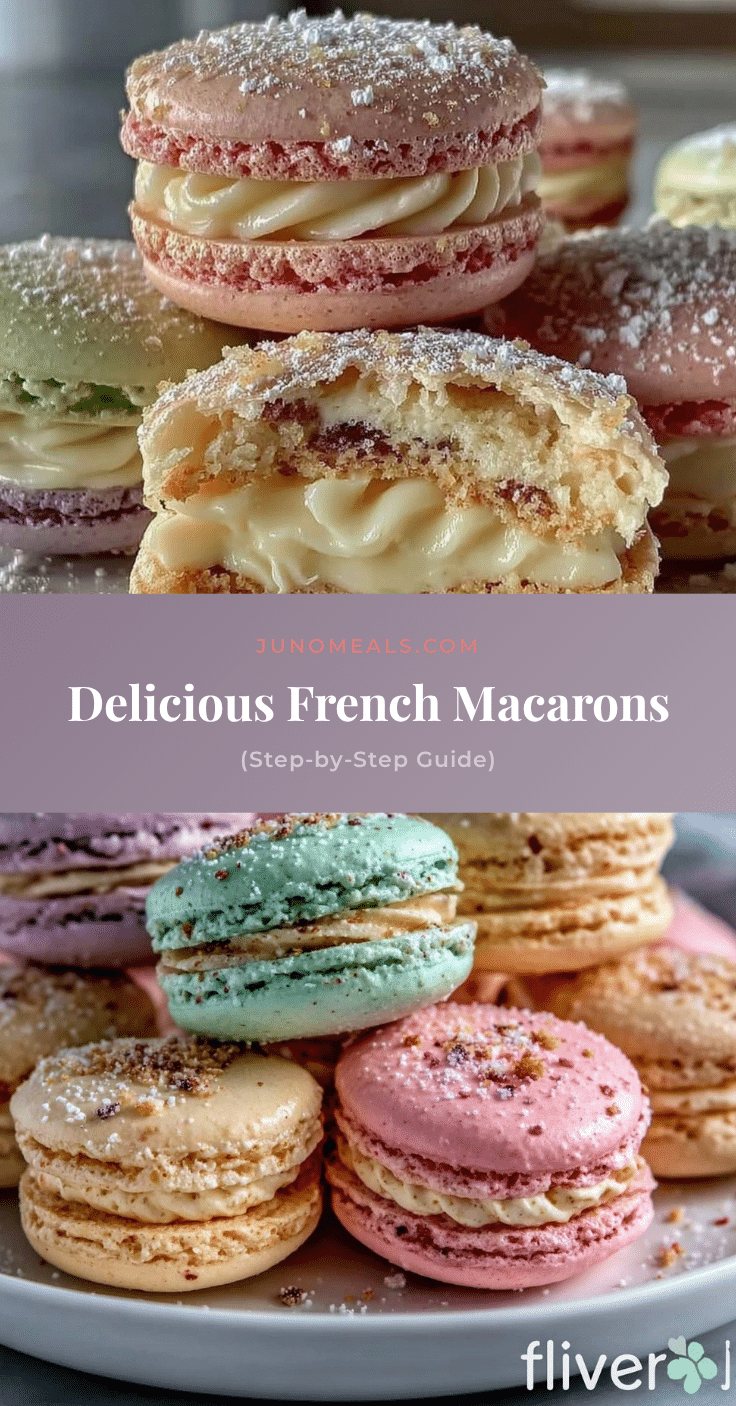
Perfect French Macarons

Delicate French macarons with a crunchy shell and chewy center, filled with luscious buttercream, ganache, or jam. This easy step-by-step guide is perfect for beginners and seasoned bakers alike.
- Prep Time: 15 minutes
- Cook Time: 14-16 minutes
- Total Time: 90 minutes
- Yield: About 20-24 macarons (depending on size) 1x
- Category: Dessert
- Cuisine: French
Ingredients
- 110g (about 1 cup) almond flour, finely ground and sifted
- 200g (about 1 2/3 cups) powdered sugar, sifted
- 50g (about 1/4 cup) granulated sugar
- 90g (about 3 large) egg whites, aged at room temperature for 24 hours
- 1/4 teaspoon cream of tartar (optional)
- Gel or powdered food coloring (optional)
- About 1 cup filling of choice: buttercream, ganache, or jam
Instructions
- Prep the dry ingredients (15 minutes): Sift almond flour and powdered sugar together twice into a large bowl to ensure no lumps. Set aside.
- Age your egg whites (optional, 24 hours): Separate egg whites from yolks and leave uncovered in a clean bowl at room temperature overnight to stabilize meringue.
- Make the meringue (10 minutes): Whip egg whites on medium speed until foamy using an electric mixer. Add cream of tartar, then gradually add granulated sugar while increasing speed to high. Beat until stiff, glossy peaks form.
- Color the meringue (optional): Add gel or powdered food coloring and gently fold until evenly combined. Avoid liquid colors.
- Macaronage: fold dry ingredients into meringue (5-7 minutes): Add sifted almond flour and powdered sugar mixture to meringue in three parts. Fold gently but thoroughly until batter flows like lava, thick but smooth and slowly dripping off spatula.
- Pipe the shells (10 minutes): Transfer batter to a piping bag with a 1/2 inch round tip. Pipe 1.5-inch circles spaced 1 inch apart on lined baking sheets. Tap sheets firmly on counter to release air bubbles.
- Rest the shells (30-60 minutes): Let piped shells sit at room temperature until a dry skin forms on top; it should not stick to your finger.
- Bake (14-16 minutes): Preheat oven to 300°F (150°C). Bake one sheet at a time on middle rack until macarons have risen feet and do not wobble when nudged. Avoid opening oven door during baking.
- Cool completely (30 minutes): Let shells cool on baking sheet before peeling off parchment or silicone mats.
- Fill and assemble (10 minutes): Match shells of similar size and pipe chosen filling onto one side. Sandwich together gently.
- Mature the macarons (24 hours in fridge): Refrigerate assembled macarons in airtight container overnight for best flavor and texture.
Notes
Patience is key—do not rush the resting phase to avoid cracked shells or missing feet. Use an oven thermometer to ensure accurate temperature. Sift dry ingredients twice for smooth shells. Aging egg whites improves meringue stability. Avoid liquid food coloring to maintain batter consistency. Macarons mature best after 24 hours in the fridge.
Nutrition
- Serving Size: 1 macaron shell with
- Calories: 7080
- Sugar: 8
- Sodium: 10
- Fat: 4
- Saturated Fat: 0.5
- Carbohydrates: 9
- Fiber: 1
- Protein: 2
Keywords: French macarons, macaron recipe, almond cookies, meringue cookies, gluten-free dessert, French dessert, baking macarons, buttercream filling, ganache filling