I did not believe a football-shaped charcuterie board was worth the extra effort until I watched my cousin’s boyfriend spend twenty minutes carefully arranging salami roses on a regular wooden board last Super Bowl Sunday. He was so proud of that thing. And you know what? Nobody ate from the center. People grabbed from the edges, the cheese got warm too fast, and by halftime the whole thing looked like a crime scene. That’s when it hit me—shaping it like a football isn’t just for looks. It actually solves the biggest problem with party platters: accessibility. When you build this best loaded football-shaped charcuterie board for game day, every single bite is within arm’s reach. No awkward leaning. No sad empty spots in the middle. Honestly, it’s the smartest thing I’ve done for a party spread, and I’ve been making charcuterie boards for over a decade. Let me tell you how I got there.
It started with a cheap cutting board from Target and a lot of frustration. I kept trying to force round boards into oval shapes, and everything kept sliding off. Then I found an actual football-shaped board online, and the whole game changed. The first time I loaded it up for a playoff game, my brother-in-law—who never compliments food—said, “Okay, this is actually cool.” That’s when I knew I had something worth sharing. This isn’t just another grazing board. It’s a crowd-feeding, conversation-starting, touchdown-worthy centerpiece that makes you look like you planned for days when really it takes under an hour to assemble.
So whether you’re hosting the big game, a draft party, or just a casual Sunday with friends who love snacks, this board delivers. It’s built for sharing, built for dipping, and built to disappear before the fourth quarter. Trust me on this one.
Why You’ll Love This Recipe
I’ve tested this board at three different parties now, and every single time it gets the same reaction: people stop and take a picture before they even grab a cracker. That’s the kind of energy you want at a game day gathering. Here’s why this particular board stands out from every other platter you’ve seen on Pinterest.
- Game Day Ready in 45 Minutes: From fridge to table in under an hour. No cooking required, just smart arranging. You can even prep everything the night before and assemble right before guests arrive.
- Simple Grocery List: You don’t need a specialty food store. Everything on this board comes from a regular supermarket. I’m talking block cheese, deli meat, crackers, and fresh produce. Nothing fancy, nothing fussy.
- Perfect for Crowds: This board serves 8 to 12 people easily. It’s designed for grazing over several hours, which is exactly what happens during a football game. No one wants to sit down for a formal meal during the fourth quarter.
- Always a Showstopper: The football shape does something magical. It makes people smile. Even non-football fans will comment on it. It’s the kind of food that gets shared on social media before anyone takes a bite.
- Fully Customizable: Don’t like certain meats? Swap them. Need it vegetarian? Easy. This board is a template, not a strict recipe. You make it your own.
What makes this board different from every other charcuterie platter out there is the intentional layout. Most boards are just piles of ingredients thrown together. This one has strategy. The meats form the base of the football shape, the cheeses create contrast, and the dips anchor the ends so everything stays put. It’s not just pretty—it’s functional. And honestly, that’s what you want when you’re hosting. Food that looks good, tastes great, and doesn’t require constant fussing.
The first time I served this, my friend Jen—who is notoriously picky about party food—said, “I could eat this whole thing myself.” She wasn’t joking. That’s the kind of reaction that tells me this board works. It’s not just about impressing people. It’s about making something that actually gets eaten and enjoyed. And that, my friends, is the whole point.
What Ingredients You Will Need
This recipe uses a mix of savory, salty, creamy, and crunchy ingredients to create a balanced board that keeps people coming back for more. The key is variety—different textures, flavors, and colors make the board visually interesting and satisfying to eat. Here’s exactly what I use for my best loaded football-shaped charcuterie board for game day.
- For the Meats (the base of the football):
- 8 ounces Genoa salami, thinly sliced (I prefer Boar’s Head for consistent quality)
- 6 ounces prosciutto, thinly sliced (look for a brand with minimal added water)
- 6 ounces pepperoni slices (the small round ones work best for layering)
- 4 ounces capicola or soppressata (adds a spicy kick that cuts through the cheese)
- For the Cheeses (the texture contrast):
- 8 ounces sharp cheddar, cut into cubes (I use Cabot for its creaminess)
- 6 ounces aged gouda, sliced thin (smoked gouda also works beautifully)
- 4 ounces brie, left whole or cut into wedges (keep it at room temp for spreadability)
- 4 ounces fresh mozzarella pearls (adds a soft, milky bite between salty meats)
- For the Crunch (the filler and structure):
- 1 box (about 8 ounces) water crackers or butter crackers (Ritz or Club crackers work great)
- 1 bag (about 6 ounces) pita chips or pretzel crisps (adds crunch and holds dips well)
- 1 cup mixed nuts (roasted and salted almonds, cashews, or pecans)
- For the Dips and Spreads (the anchors at each end):
- 1/2 cup hummus (classic or roasted red pepper—both work)
- 1/2 cup spinach artichoke dip (store-bought is fine, but homemade tastes better)
- 1/4 cup honey (for drizzling over brie or gouda)
- 1/4 cup whole grain mustard (optional, but adds a tangy pop)
- For the Fresh Elements (the color and brightness):
- 1 cup seedless red grapes, washed and separated into small clusters
- 1 cup cherry tomatoes, halved if large
- 1/2 cup cornichons or small pickles (adds acidity to cut the richness)
- Fresh rosemary sprigs or thyme (for garnish—makes the board look intentional)
- For the Garnish (the finishing touch):
- Small bowl of olives (kalamata or castelvetrano—both are great)
- Dried apricots or figs (adds sweetness and chewiness)
- Edible flowers or microgreens (optional, but makes it photo-ready)
When I’m shopping for ingredients, I always look for items that are at their peak. Grapes should be firm and not wrinkled. Cheese should smell fresh, not ammonia-like. Meats should be sliced thin and not dried out at the edges. If you’re buying pre-sliced meats, check the package date. Nothing ruins a board faster than sad, dried-out salami.
For substitutions, you can easily swap out any meat for a vegetarian option like roasted red peppers or marinated artichokes. If you’re dairy-free, use vegan cheese alternatives and skip the brie. The beauty of this board is its flexibility. You don’t have to follow the list exactly. Use what you love and what’s available at your store. The football shape will still work.
Equipment Needed
You don’t need a lot of fancy tools to make this board, but having the right equipment makes the process smoother and the final result more polished. Here’s what I use every time I build my best loaded football-shaped charcuterie board for game day.
- Football-Shaped Cutting Board or Serving Platter: This is the star of the show. You can find them online at Amazon or at stores like Target and HomeGoods. If you don’t have one, use a large rectangular board and arrange the ingredients in a football shape in the center. It works, but the actual football board makes it look way more intentional.
- Small Ramekins or Bowls (3 to 4): For dips, honey, and olives. I use small ceramic bowls that fit snugly into the board. Silicone bowls work too, but ceramic stays put better.
- Cheese Knives (at least 2): One for hard cheese, one for soft. I have a small set from IKEA that cost under $10 and they work perfectly.
- Tongs or Small Spoons: For serving. People don’t want to use their fingers for everything. Tongs for the meats and spoons for the dips keep things tidy.
- Parchment Paper or Cheese Paper: If you’re using a wooden board, a layer of parchment underneath makes cleanup a breeze. It also prevents the board from getting stained by olive oil or mustard.
- Small Cutting Board (optional): If you’re prepping cheese cubes, having a separate board keeps your main board clean until assembly.
I learned the hard way that using a regular rectangular board without any shape guidance makes the football look lopsided. The first time I tried, it looked more like a potato than a football. So spend the $15 on an actual football-shaped board. Your guests will notice the difference.
Preparation Method
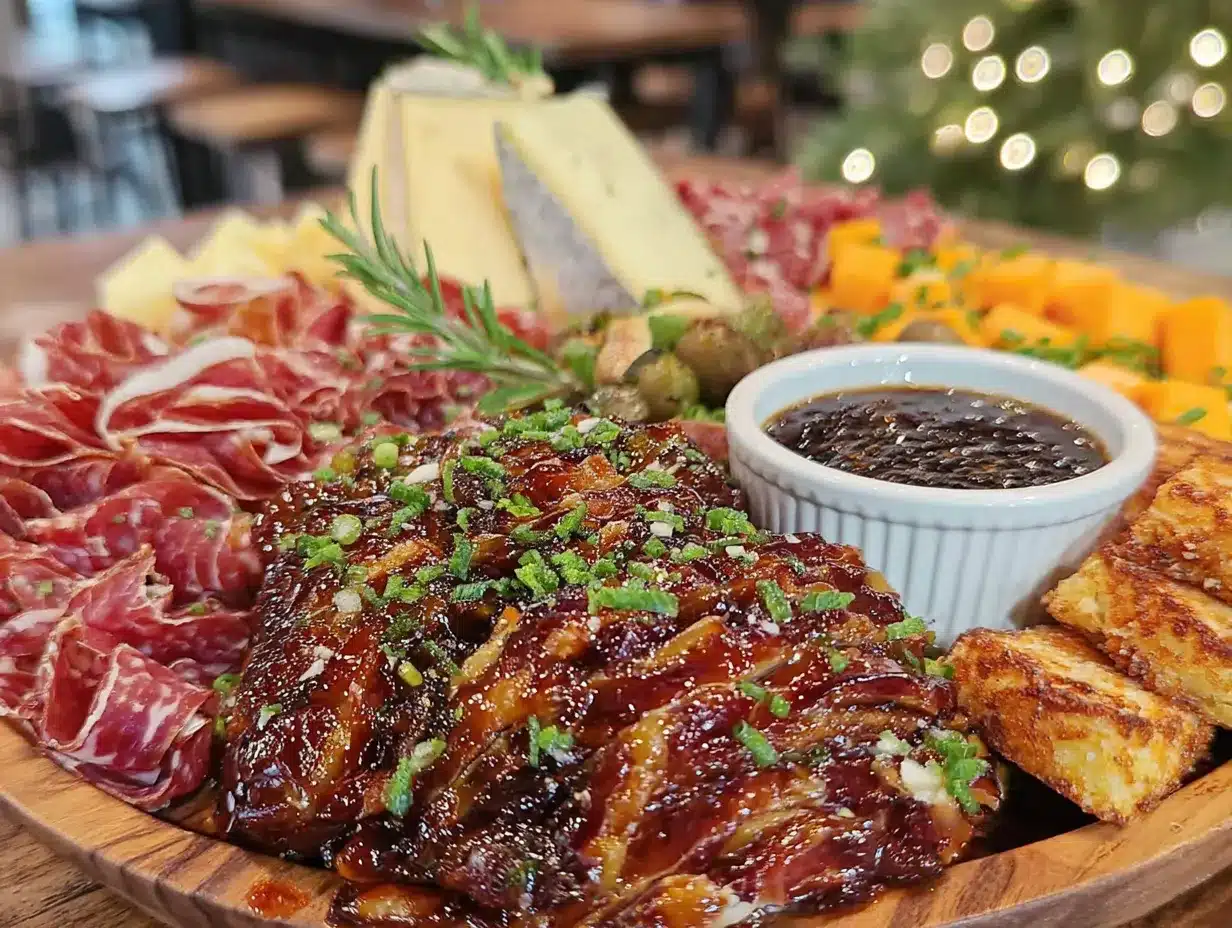
Building this board is more about strategy than skill. The order matters. If you just throw everything on randomly, you’ll end up with a messy pile that doesn’t look like a football. Follow these steps and you’ll get a beautiful, functional board every time.
- Start with the dips (the anchors): Place your small bowls of hummus and spinach artichoke dip at opposite ends of the board. These act as the “points” of the football. Position them slightly inside the edges so they don’t fall off. If your board is long enough, you can also add a third bowl of honey or mustard in the center. (Tip: Use a small piece of double-sided tape under the bowls if they slide around on a smooth board.)
- Build the meat base (the body of the football): Arrange your salami, prosciutto, and pepperoni in a loose oval shape between the two dip bowls. Fold the salami slices in half or roll them into small cylinders. Layer them in overlapping rows so they create a solid base. Think of this as the foundation—everything else will sit on top or around it. Use about 70% of your meat here; save the rest for later adjustments.
- Add the cheese (the texture layer): Place the cheddar cubes, gouda slices, and brie wedges in clusters around the meat. Don’t spread them evenly. Instead, create three or four distinct cheese zones. This makes the board look more curated and gives people options. The mozzarella pearls go in the gaps between the larger cheese pieces. (Sensory cue: The cheese should feel cool to the touch but not cold. Let it sit out for 15 minutes before serving for best flavor.)
- Fill in the gaps with crackers and nuts (the filler): Tuck water crackers, pita chips, and pretzel crisps into the empty spaces around the cheese and meat. Don’t stack them. Lay them flat so people can grab them easily. The crackers should act like puzzle pieces, filling in any bare spots. Sprinkle the mixed nuts over the top for texture and visual interest.
- Add the fresh elements (the color): Place small clusters of red grapes and cherry tomatoes in the remaining open areas. These should be scattered, not piled. The grapes add sweetness that balances the salty meats. The tomatoes add acidity. Cornichons go next to the mustard or honey bowl for easy pairing.
- Garnish and finish (the polish): Tuck fresh rosemary sprigs or thyme leaves around the edges of the board. This adds a pop of green that makes the whole thing look professional. Add the olives in a small bowl or scatter them directly on the board if you’re feeling bold. Drizzle a little honey over the brie or gouda for a sweet-salty combo that people love.
- Final check and adjust: Step back and look at your board. Does it look like a football? If not, shift the dips slightly inward or outward. Add more meat to one end if it looks lopsided. The goal is a balanced, symmetrical shape that reads as a football from across the room. (Time estimate: This whole process takes about 30 to 45 minutes, depending on how much you fuss with the arrangement.)
The first time I made this, I spent way too long trying to make every salami roll perfect. Don’t do that. Imperfect folds look more natural and rustic. People aren’t inspecting each piece—they’re grabbing and eating. Trust me on this.
Cooking Tips & Techniques
After making this board for several game days, I’ve picked up a few tricks that make the process easier and the final result more impressive. Here are the lessons I learned the hard way so you don’t have to.
Keep the meats at room temperature before arranging. Cold salami is stiff and hard to fold. Let it sit out for 10 minutes before you start. It will roll and layer much more easily. I made the mistake of using fridge-cold meat once, and the folds kept springing open. Not a good look.
Don’t overload the board. It’s tempting to pile everything on, but a crowded board looks messy and is hard to eat from. Leave about 10 to 15 percent of the board surface visible. This creates negative space that makes the ingredients pop. Plus, people need room to grab things without knocking over a bowl of hummus.
Use the dips as stabilizers. The bowls of hummus and spinach artichoke dip act like bookends. They keep the meat and cheese from sliding off the ends of the board. If your board is particularly slippery, place the bowls first and build everything around them. It’s a structural choice as much as a flavor one.
Prep everything before you start arranging. Cut the cheese cubes, wash the grapes, and open all the packages before you touch the board. Once you start placing ingredients, you don’t want to stop to slice more cheddar. It breaks the flow and makes the board look uneven. I learned this the hard way during a playoff game when I had to pause to cut more cheese while guests were already eating.
Timing is everything. Assemble the board no more than one hour before serving. Any earlier and the crackers get soft, the cheese sweats, and the grapes start to wilt. If you need to prep ahead, chop everything the night before and store it in separate containers in the fridge. Assemble right before guests arrive. It takes 20 minutes once everything is prepped.
One more thing—don’t skip the garnish. Fresh herbs aren’t just for looks. They add a subtle aroma that makes the whole board smell fresh and inviting. Rosemary and thyme are my go-to because they’re sturdy and don’t wilt quickly. Plus, they make the board look like it came from a fancy catering company instead of your kitchen counter.
Variations & Adaptations
This board is incredibly flexible. I’ve made it for vegetarians, for people with dairy allergies, and for crowds who prefer spicy over mild. Here are some of my favorite variations that still work with the football shape.
Vegetarian Version: Skip the meats entirely and double up on the cheese and fresh elements. Add roasted red peppers, marinated artichoke hearts, and grilled zucchini strips. The dips become even more important here—use a bold roasted red pepper hummus and a creamy baba ganoush. I made this for a friend’s birthday party and everyone, even the meat-eaters, loved it.
Spicy Game Day Board: Swap the mild salami for spicy Calabrese salami. Use pepper jack cheese instead of cheddar. Add pickled jalapeños and a chipotle hummus. The heat cuts through the richness and keeps people reaching for more. This version disappears fastest at my house. Seriously, I can’t keep it on the board for more than a quarter.
Sweet and Savory Board: Add dried figs, dried apricots, and a small bowl of dark chocolate chips. Drizzle honey over everything. Use a milder cheese like havarti or fontina. This version is great for a dessert course or for guests who prefer sweet over salty. I served this at a brunch once and it was a hit.
Low-Carb or Keto-Friendly: Skip the crackers and nuts. Use cucumber slices, bell pepper strips, and celery sticks as the crunchy elements. Add extra cheese and meats. The dips should be high-fat—think guacamole or a creamy ranch made with sour cream. This version stays true to the football shape but caters to a specific diet.
Seasonal Adaptations: In summer, use fresh berries, sliced peaches, and heirloom tomatoes. In fall, add roasted butternut squash cubes and candied pecans. In winter, use pomegranate seeds and persimmons. The football shape works year-round, but the ingredients should reflect what’s fresh and available.
I’ve also tried a breakfast version with mini pancakes, bacon strips, and fruit skewers arranged in the football shape. It was ridiculous and wonderful. Don’t be afraid to experiment. The shape is just a starting point.
Serving & Storage Suggestions
This board is best served at room temperature. Take it out of the fridge 20 to 30 minutes before guests arrive. The cheese will be softer, the meats will be more pliable, and the flavors will be more pronounced. Cold cheese tastes like nothing. Room temperature cheese tastes like cheese. Trust me on this.
For presentation, place the board on a large table or kitchen island where people can gather around it. Put small plates and napkins nearby. If you’re serving drinks, keep them on a separate surface so the board doesn’t get crowded. A football-shaped board is a conversation piece—let it be the center of attention.
As for storage, this board doesn’t keep well once assembled. The crackers get soft, the grapes get warm, and the dips start to separate. If you have leftovers, remove the meats and cheeses and store them in separate airtight containers in the fridge. The dips can be refrigerated for up to three days. The crackers and nuts should be stored in a sealed bag at room temperature. Don’t try to reassemble the board the next day. It won’t look the same.
If you’re planning ahead, you can prep all the components the night before. Cube the cheese, wash the grapes, and slice the meats. Store everything in separate containers in the fridge. The next day, just assemble. It takes 20 minutes tops. This is what I do for every game day party, and it saves so much stress.
One more thing—flavors actually develop overnight. The cheese absorbs the aromas of the meats and herbs. If you’re making a batch of the dips from scratch, make them a day ahead. They’ll taste better. I’ve noticed that hummus and spinach artichoke dip both improve after 24 hours in the fridge. The flavors meld and deepen. It’s a small thing, but it makes a difference.
Nutritional Information & Benefits
This board is indulgent, but it also has some surprising nutritional upsides. Here’s a rough estimate for a standard serving size (about 1/8 of the board). Keep in mind that actual values depend on the specific brands and quantities you use.
| Nutrient | Per Serving (approx.) |
|---|---|
| Calories | 450-550 |
| Protein | 20-25g |
| Fat | 30-35g |
| Carbohydrates | 25-30g |
| Fiber | 3-5g |
| Sugar | 10-15g |
| Sodium | 800-1000mg |
The protein from the meats and cheese helps keep you full during a long game. The nuts and seeds add healthy fats and fiber. The grapes and tomatoes provide antioxidants and vitamins. Even the olives contribute heart-healthy monounsaturated fats. So while this isn’t a health food, it’s not empty calories either.
If you’re watching your sodium intake, opt for low-sodium meats and unsalted nuts. The cheese will still provide plenty of flavor. For a lower-calorie version, skip the crackers and use cucumber slices or bell pepper strips as the base. You can also reduce the amount of cheese and increase the fresh produce. The football shape still works with fewer calories.
Potential allergens include dairy (cheese), gluten (crackers), and tree nuts (almonds, cashews). If you’re serving a crowd with allergies, label the board clearly or provide a separate allergen-free option. I always keep a small bowl of gluten-free crackers and dairy-free cheese on the side for guests with restrictions. It’s a small gesture that goes a long way.
Conclusion
This best loaded football-shaped charcuterie board for game day has become my go-to for every football party, and it’s easy to see why. It’s simple to assemble, completely customizable, and always gets the best reactions. People take pictures, they talk about it, and most importantly, they eat it. I’ve never had leftovers from this board. Not once.
What I love most about this recipe is how forgiving it is. You don’t have to be a professional chef or a Pinterest-perfect hostess to pull it off. Just follow the shape, use ingredients you love, and don’t stress about perfection. The dips anchor the ends, the meats form the body, and everything else fills the gaps. It works every time.
So go ahead and try it for your next game day gathering. Customize it based on what your crowd likes—spicy, mild, vegetarian, or loaded with everything. Make it your own. And when your guests ask where you got the idea, tell them you figured it out after watching someone struggle with a sad, round board at a Super Bowl party. That’s the truth, and it’s a pretty good story.
If you make this board, I’d love to hear about it. Drop a comment below and tell me what ingredients you used. Did you go spicy? Sweet? Did you add something unexpected? Share your version. And if you’re looking for another easy party recipe, check out my mini lemon blueberry cheesecakes—they’re perfect for the dessert table. For more recipe ideas, browse the full recipe collection on the site. Happy game day, and happy snacking!
Frequently Asked Questions
Can I make this board ahead of time?
Yes, but only the components. Cube the cheese, wash the grapes, and slice the meats the night before. Store everything separately in the fridge. Assemble the board no more than one hour before serving. The crackers will get soft if they sit on the board too long.
What if I don’t have a football-shaped board?
No problem. Use a large rectangular board or a baking sheet. Arrange the dips at opposite ends to create the points of the football shape. Build the meats and cheese in a wide oval between them. It won’t be as precise, but it will still look like a football.
How many people does this board serve?
This board serves 8 to 12 people as a snack or appetizer. If it’s the main dish for a meal, it serves 6 to 8. For a large party, make two boards or double the ingredients. People will eat more than you expect—trust me.
Can I make this vegetarian or vegan?
Absolutely. For vegetarian, skip the meats and double up on cheese, nuts, and fresh produce. For vegan, use vegan cheese alternatives, skip the honey (use agave instead), and add extra roasted vegetables and dips. The football shape works with any ingredients.
How do I keep the board from looking messy?
The key is layering and leaving space. Start with the dips as anchors, then build the meats in overlapping rows. Add cheese in clusters, not scattered. Fill gaps with crackers and nuts. Leave about 10 percent of the board visible. Less is more. A clean board looks intentional and professional.
Pin This Recipe!
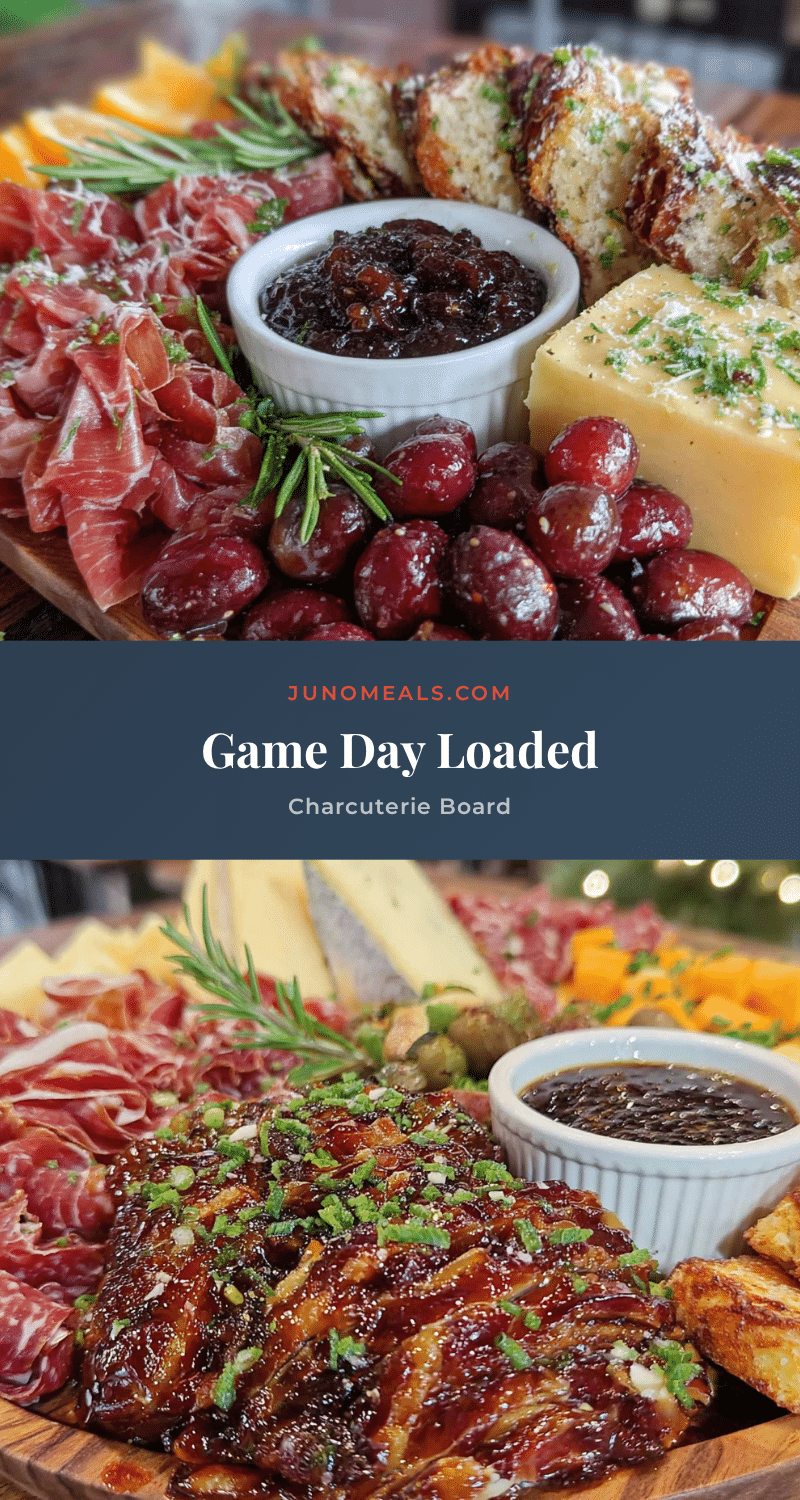
Best Loaded Football Charcuterie Board for Easy Game Day
A football-shaped charcuterie board that solves the accessibility problem of party platters, with every bite within arm’s reach. It’s a crowd-feeding, conversation-starting centerpiece that takes under an hour to assemble.
- Prep Time: 30 minutes
- Cook Time: 0 minutes
- Total Time: 45 minutes
- Yield: 8 to 12 servings 1x
- Category: Appetizer
- Cuisine: American
Ingredients
- 8 ounces Genoa salami, thinly sliced
- 6 ounces prosciutto, thinly sliced
- 6 ounces pepperoni slices
- 4 ounces capicola or soppressata
- 8 ounces sharp cheddar, cut into cubes
- 6 ounces aged gouda, sliced thin
- 4 ounces brie, left whole or cut into wedges
- 4 ounces fresh mozzarella pearls
- 1 box (about 8 ounces) water crackers or butter crackers
- 1 bag (about 6 ounces) pita chips or pretzel crisps
- 1 cup mixed nuts (roasted and salted almonds, cashews, or pecans)
- 1/2 cup hummus
- 1/2 cup spinach artichoke dip
- 1/4 cup honey
- 1/4 cup whole grain mustard (optional)
- 1 cup seedless red grapes, washed and separated into small clusters
- 1 cup cherry tomatoes, halved if large
- 1/2 cup cornichons or small pickles
- Fresh rosemary sprigs or thyme for garnish
- Small bowl of olives (kalamata or castelvetrano)
- Dried apricots or figs
- Edible flowers or microgreens (optional)
Instructions
- Start with the dips (the anchors): Place small bowls of hummus and spinach artichoke dip at opposite ends of the board to act as the points of the football.
- Build the meat base (the body of the football): Arrange salami, prosciutto, and pepperoni in a loose oval shape between the dip bowls. Fold or roll slices and layer them in overlapping rows to create a solid base.
- Add the cheese (the texture layer): Place cheddar cubes, gouda slices, and brie wedges in clusters around the meat, creating three or four distinct cheese zones. Fill gaps with mozzarella pearls.
- Fill in the gaps with crackers and nuts (the filler): Tuck water crackers, pita chips, and pretzel crisps into empty spaces around cheese and meat. Sprinkle mixed nuts over the top.
- Add the fresh elements (the color): Scatter small clusters of red grapes and cherry tomatoes in remaining open areas. Place cornichons next to mustard or honey bowl.
- Garnish and finish (the polish): Tuck fresh rosemary sprigs or thyme leaves around the edges. Add olives in a small bowl or scatter directly. Drizzle honey over brie or gouda.
- Final check and adjust: Step back and ensure the board looks like a football. Shift dips or add more meat if needed. The process takes 30 to 45 minutes.
Notes
Keep meats at room temperature before arranging for easier folding. Don’t overload the board; leave about 10-15% visible. Use dips as stabilizers. Prep all components before arranging. Assemble no more than one hour before serving. Don’t skip the garnish—fresh herbs add aroma and visual appeal.
Nutrition
- Serving Size: 1/8 of the board
- Calories: 450550
- Sugar: 1015
- Sodium: 8001000
- Fat: 3035
- Saturated Fat: 1015
- Carbohydrates: 2530
- Fiber: 35
- Protein: 2025
Keywords: football charcuterie board, game day snack, party platter, charcuterie board, football shaped board, easy appetizer, crowd pleasing snack