I had a half-full jar of sourdough discard staring at me from the fridge, a single can of pumpkin puree I’d bought on a whim, and this overwhelming craving for something that tasted like fall but didn’t require a full day of baking. You know that feeling? When you want the comfort of a project without the commitment of a massive loaf that’ll go stale before you finish it? That’s exactly where this cozy small-batch pumpkin sourdough discard bread was born.
Honestly, I was skeptical at first. Could sourdough discard—that tangy, often-discarded byproduct of maintaining a starter—actually work in a sweet, spiced pumpkin bread? Would the pumpkin overpower the subtle sour notes, or would they fight each other? The first time I pulled this loaf out of the oven, I stood there, oven mitts on, just breathing it in. The crust had this gorgeous deep amber color, cracked perfectly across the top, and when I sliced into it (while it was still warm, because patience is a virtue I clearly don’t possess), the texture was exactly what I’d hoped for—tender, moist, with that subtle sourdough tang playing hide-and-seek with the warm pumpkin spice.
This isn’t just another pumpkin bread recipe. It’s the one I’ve made every single week since that first accidental success. It’s the one that uses up your discard, satisfies that cozy baking urge, and gives you a loaf that feels special without overwhelming your kitchen or your schedule. And honestly? It tastes like the kind of bread you’d pay twelve dollars for at a fancy bakery—but you made it yourself, with stuff you already had.
Why You’ll Love This Recipe
Let me tell you why this cozy small-batch pumpkin sourdough discard bread has become my absolute favorite fall bake. It checks every single box I look for in a recipe, and then some.
- Perfectly Sized for Two: This loaf is intentionally small—it fits an 8×4 inch pan perfectly. No more staring at half a stale loaf a week later, wondering what went wrong with your life choices.
- Uses Up Your Discard: If you maintain a sourdough starter, you know the struggle. This recipe turns that “waste” into something genuinely delicious. It’s practically kitchen alchemy.
- Quick & Easy: From mixing bowl to oven in under 15 minutes. No complicated folding techniques, no long fermentation times. Just stir, pour, and bake.
- Simple Ingredients: You probably have everything in your pantry right now. Pumpkin puree, flour, sugar, spices, and that jar of discard you’ve been meaning to use.
- Unbelievably Delicious: The texture is where this bread shines. It’s moist without being gummy, tender without being crumbly, and has this subtle tang that makes every bite interesting.
- Crowd-Pleaser: I brought this to a small gathering last month, and three people asked for the recipe before I’d even finished my coffee.
What makes this recipe different from every other pumpkin bread out there? It’s the sourdough discard. That little bit of fermented flour and water adds a complexity you just can’t get from baking soda and buttermilk alone. The tang doesn’t scream for attention—it whispers, making the pumpkin and spices taste deeper, more rounded. It’s the kind of bread that makes you close your eyes after the first bite, not because it’s fancy, but because it tastes like home.
What Ingredients You Will Need
This recipe uses simple, wholesome ingredients that come together to create something genuinely special. No weird specialty items, no trips to three different stores. Just real food that works.
- All-Purpose Flour (1 cup / 120g): The backbone of this bread. I’ve tested this with bread flour, and it works, but all-purpose gives you that perfect tender crumb. King Arthur Flour is my go-to for consistent results.
- Sourdough Discard (½ cup / 120g): This is the star. Use unfed discard straight from the fridge—no need to feed it first. The tangier your discard, the more pronounced the sourdough flavor will be in the finished bread. If your discard is young and mild, the tang will be subtle.
- Pumpkin Puree (½ cup / 120g): Not pumpkin pie filling! Make sure you’re grabbing 100% pure pumpkin puree. Libby’s is reliable, but any brand works. If you’re feeling ambitious, homemade roasted pumpkin puree takes this to another level.
- Granulated Sugar (½ cup / 100g): Just enough sweetness to balance the pumpkin and tang. You can reduce this to ⅓ cup if you prefer a less sweet bread, but I wouldn’t go lower than that.
- Brown Sugar (¼ cup / 50g, packed): This adds moisture and that warm, molasses-y depth that makes pumpkin bread taste like fall. Light or dark brown sugar both work—dark gives a richer flavor.
- Vegetable Oil (¼ cup / 60ml): Keeps the bread incredibly moist. You can substitute melted coconut oil or melted butter, but vegetable oil gives the most consistent texture.
- Egg (1 large): Room temperature, please. Cold eggs can seize up the batter and affect the rise. If you forget to take it out ahead of time, place it in a bowl of warm water for 5 minutes.
- Pumpkin Pie Spice (1½ teaspoons): You can use store-bought or make your own with ½ teaspoon cinnamon, ¼ teaspoon nutmeg, ¼ teaspoon ginger, and ⅛ teaspoon cloves. I prefer making my own—it’s fresher and you can adjust the ratios.
- Cinnamon (½ teaspoon): Because you can never have too much cinnamon in pumpkin bread. I add a little extra because I’m that person.
- Baking Soda (½ teaspoon): This provides the lift. The acidity in the sourdough discard activates the baking soda, so no additional acid is needed.
- Salt (¼ teaspoon): Don’t skip this. Salt doesn’t make it salty—it makes everything else taste more like itself.
- Vanilla Extract (1 teaspoon): Pure vanilla extract if you have it, imitation works fine. It rounds out the flavors beautifully.
Equipment Needed
You don’t need a professional bakery setup for this cozy small-batch pumpkin sourdough discard bread. Here’s what you’ll need:
- 8×4 Inch Loaf Pan: This is crucial. A standard 9×5 pan will give you a flat, sad loaf. I use a USA Pan brand loaf pan, and it’s never let me down. If you only have a 9×5, you can still make it—just check for doneness 10-15 minutes earlier.
- Mixing Bowls: One medium bowl for dry ingredients, one large bowl for wet ingredients. Nothing fancy needed.
- Whisk: For combining dry ingredients evenly. A fork works in a pinch.
- Rubber Spatula: For folding the batter together without overmixing. This is your best friend for tender bread.
- Parchment Paper: Line your loaf pan for easy removal. I tear two strips and criss-cross them in the pan—works like a charm every time.
- Cooling Rack: Essential for even cooling. If you don’t have one, you can use the oven rack (turned off, obviously) or just be patient and let it cool in the pan longer.
- Kitchen Scale: Not required, but highly recommended for consistent results. Flour measurement by volume can vary wildly—a scale takes the guesswork out.
Preparation Method
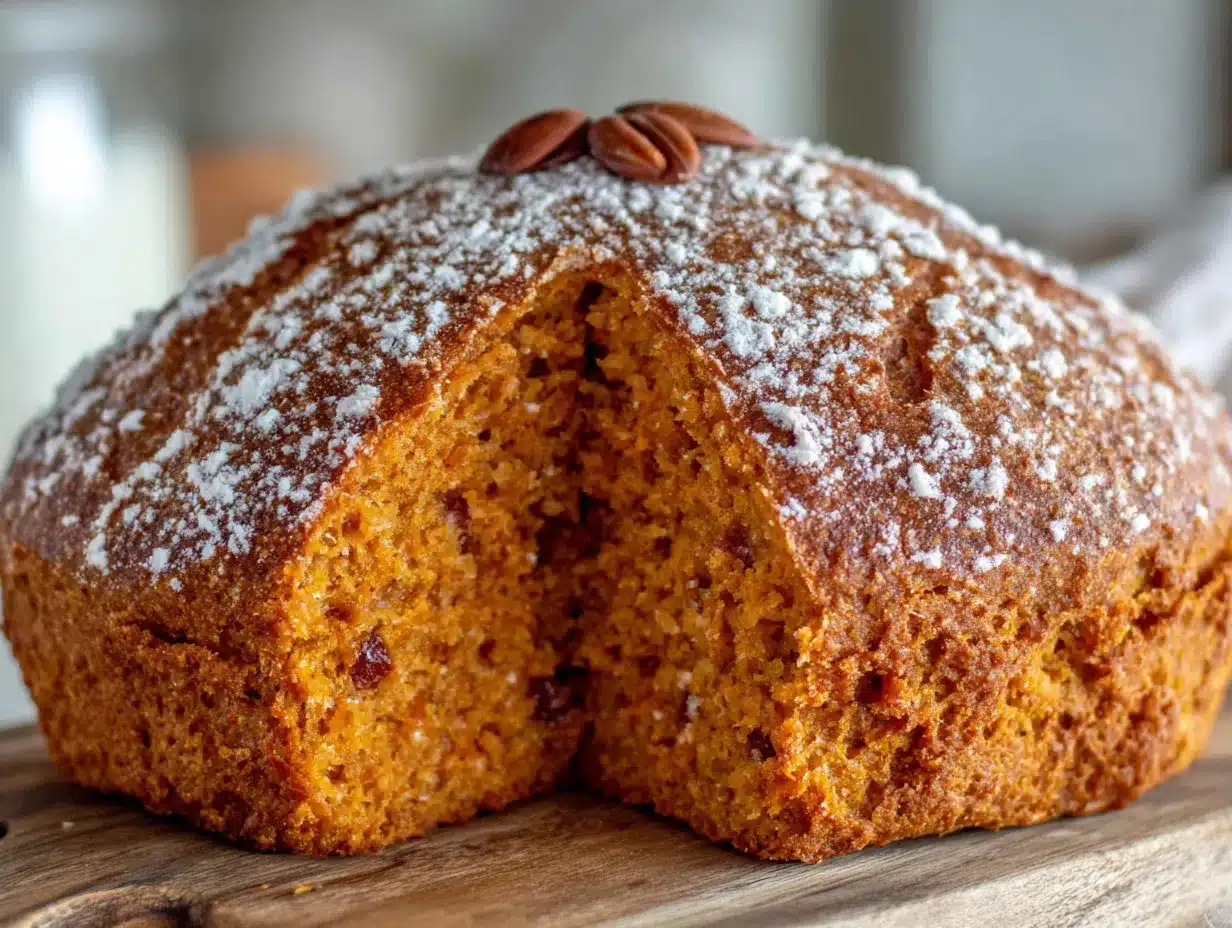
Ready to bake? Let me walk you through this step by step. I’ve made this bread more times than I can count, and these are the exact steps that work every single time.
- Preheat and Prep: Preheat your oven to 350°F (175°C). Position the rack in the center of the oven. Line your 8×4 inch loaf pan with parchment paper, leaving enough overhang on the long sides to use as handles later. Lightly grease the exposed ends of the pan with butter or cooking spray.
- Mix Dry Ingredients: In a medium bowl, whisk together 1 cup (120g) all-purpose flour, 1½ teaspoons pumpkin pie spice, ½ teaspoon cinnamon, ½ teaspoon baking soda, and ¼ teaspoon salt. Whisk until everything is evenly distributed—about 20 seconds. This ensures your spices are evenly dispersed throughout the bread.
- Combine Wet Ingredients: In a large bowl, whisk together ½ cup (120g) sourdough discard, ½ cup (120g) pumpkin puree, ½ cup (100g) granulated sugar, ¼ cup (50g) packed brown sugar, ¼ cup (60ml) vegetable oil, 1 large egg (room temperature), and 1 teaspoon vanilla extract. Whisk until smooth and well combined. The mixture should be a beautiful orange-brown color and smell incredible already.
- Fold Dry into Wet: Pour the dry ingredients into the wet ingredients. Using your rubber spatula, fold gently until just combined. Stop as soon as you no longer see streaks of flour. Overmixing at this stage will develop gluten and make your bread tough. A few small lumps are perfectly fine—they’ll bake out.
- Pour and Smooth: Transfer the batter into your prepared loaf pan. It should be thick but pourable. Use your spatula to spread it evenly into the corners and smooth the top. Give the pan a gentle tap on the counter to release any air bubbles.
- Bake: Place the pan in the preheated oven and bake for 40-45 minutes. At the 30-minute mark, check the bread—if the top is browning too quickly, tent it loosely with aluminum foil. My oven runs hot, so I usually add the foil at 25 minutes.
- Test for Doneness: At 40 minutes, insert a toothpick or skewer into the center of the loaf. If it comes out clean or with just a few moist crumbs attached, it’s done. If there’s wet batter on the toothpick, give it 3-5 more minutes and test again. The internal temperature should read 200-205°F (93-96°C) on an instant-read thermometer.
- Cool: Let the bread cool in the pan on a wire rack for 15 minutes. Then, using the parchment paper handles, lift the bread out of the pan and transfer it directly to the cooling rack. Let it cool completely before slicing—about 1-2 hours. I know it’s tempting, but warm bread is fragile and will crumble if you cut it too soon.
Cooking Tips & Techniques
After making this cozy small-batch pumpkin sourdough discard bread more times than I care to admit, I’ve learned a few things the hard way. Here are my best tips to save you from my mistakes.
Don’t Overmix the Batter. This is the number one mistake I see people make. When you add the dry ingredients to the wet, use a gentle hand. Overmixing develops gluten, and gluten makes bread tough. You want a tender, cake-like crumb here, not a chewy bread texture. Fold until just combined—about 10-15 strokes with your spatula.
Use Room Temperature Ingredients. Cold eggs and cold discard can make your batter seize up and lead to uneven baking. Take your egg and discard out of the fridge 30 minutes before you start baking. If you forget (I do, constantly), place the egg in a bowl of warm water for 5 minutes and microwave the discard for 10-15 seconds.
Check Your Oven Temperature. Ovens lie. I learned this when my first loaf came out with a burnt crust and a raw center. An oven thermometer costs about ten dollars and will change your baking life. My oven runs 25 degrees hot, so I set it to 325°F when the recipe calls for 350°F.
Trust the Toothpick, Not the Clock. Every oven is different, and pan material affects baking time too. A dark metal pan will bake faster than a glass one. Start checking at 35 minutes and go from there. The toothpick test never lies.
Let It Cool Completely. I know, I know. The smell alone is torture. But cutting into warm bread is like cutting into a soufflé—it collapses, gets gummy, and you’ll be disappointed. Give it the full cooling time. I promise it’s worth the wait.
Variations & Adaptations
One of the best things about this cozy small-batch pumpkin sourdough discard bread is how adaptable it is. Here are some of my favorite variations I’ve tested over the months.
Chocolate Chip Pumpkin Bread: Fold in ⅓ cup (60g) of semi-sweet chocolate chips along with the dry ingredients. The chocolate and pumpkin combination is absolutely divine. I’ve also used dark chocolate chunks for a more intense flavor.
Gluten-Free Version: Substitute the all-purpose flour with a 1:1 gluten-free baking flour blend that contains xanthan gum. I’ve tested this with Bob’s Red Mill 1:1 Baking Flour, and it works beautifully. The texture is slightly more delicate, so handle with care when removing from the pan.
Vegan Adaptation: Replace the egg with a flax egg (1 tablespoon ground flaxseed mixed with 3 tablespoons water, let sit for 5 minutes). Use coconut oil or a neutral vegetable oil. The bread will be slightly denser but still delicious. I’ve made this version for a vegan friend, and she asked for the recipe immediately.
Spiced-Up Version: Add ¼ teaspoon of cardamom and a pinch of black pepper to the spice mix. The cardamom adds an unexpected floral note, and the black pepper (trust me) enhances the warmth of the other spices without making it spicy.
Nutty Pumpkin Bread: Fold in ¼ cup (30g) of toasted pecans or walnuts along with the dry ingredients. Toast the nuts first in a dry pan over medium heat for 3-4 minutes until fragrant—this brings out their oils and makes them infinitely more flavorful.
Streusel Topping: Mix 2 tablespoons flour, 2 tablespoons brown sugar, 1 tablespoon cold butter, and ¼ teaspoon cinnamon. Sprinkle over the batter before baking. It creates this gorgeous, crunchy top that contrasts beautifully with the tender bread beneath.
Serving & Storage Suggestions
This cozy small-batch pumpkin sourdough discard bread is wonderful in so many ways. Here’s how I like to serve and store it.
Serving: This bread is absolutely perfect at room temperature, but I also love it lightly toasted. Slice it, pop it in the toaster for 2-3 minutes, and spread a generous layer of salted butter on top while it’s still warm. The butter melts into the nooks and crannies, and the toasting brings out the pumpkin spice aromas. It’s also divine with a dollop of cream cheese frosting if you’re feeling extra indulgent.
Storage: Store the bread in an airtight container at room temperature for up to 3 days. I wrap mine tightly in plastic wrap and then place it in a zip-top bag. The bread actually gets better on day two—the flavors meld and deepen overnight. If your kitchen is particularly warm, you can refrigerate it, but the texture will be slightly denser when cold.
Freezing: This bread freezes beautifully. Wrap the completely cooled loaf tightly in plastic wrap, then in aluminum foil, and place it in a freezer-safe bag. It will keep for up to 3 months. When you’re ready to enjoy it, thaw it overnight in the refrigerator or at room temperature for a few hours. You can also freeze individual slices for quick breakfasts or snacks—just pop them in the toaster straight from the freezer.
Reheating: For a single slice, the toaster is your best friend. For a whole loaf, wrap it in foil and warm it in a 300°F (150°C) oven for 10-15 minutes. This brings back that fresh-from-the-oven warmth without drying it out.
Nutritional Information & Benefits
While I wouldn’t call this a health food, it’s certainly a more wholesome treat than most store-bought options. Here’s what you need to know.
Estimated Per Slice (based on 8 slices): Approximately 220 calories, 8g fat, 34g carbohydrates, 2g fiber, 18g sugar, 4g protein. These values will vary based on exact ingredients and any modifications you make.
Health Benefits: Pumpkin is packed with vitamin A (in the form of beta-carotene), which supports eye health and immune function. It’s also a good source of fiber, which helps with digestion and keeps you feeling full. The sourdough fermentation process makes the bread more digestible for some people, as the fermentation breaks down some of the gluten and phytic acid in the flour.
Dietary Considerations: This recipe can be adapted for vegan and gluten-free diets as noted in the variations section. It contains wheat flour and eggs in its standard form, so it’s not suitable for those with celiac disease or egg allergies without modification.
My Personal Take: I love that this bread feels like a treat but uses real, whole food ingredients. It’s the kind of thing I feel good about eating for breakfast, as an afternoon snack, or even as a simple dessert. It’s comfort food that doesn’t leave you feeling heavy or guilty.
Conclusion
This cozy small-batch pumpkin sourdough discard bread has genuinely become a staple in my kitchen. It’s the recipe I turn to when I want to bake something special without committing to a massive project. It uses up ingredients I already have, fills my home with the most incredible fall aromas, and delivers a loaf that tastes like it came from a fancy bakery.
What I love most about this recipe is how forgiving it is. Whether you’re a seasoned sourdough baker or someone who just started maintaining a starter last week, this bread works. It doesn’t require perfect technique or fancy equipment. It just requires a little bit of time, a few simple ingredients, and the desire to create something warm and wonderful.
I’d love to hear how yours turns out! Did you add chocolate chips? Try the vegan version? Accidentally ate half the loaf before it cooled? (No judgment here—I’ve been there.) Drop a comment below and let me know. And if you’re looking for more cozy baking inspiration, don’t forget to browse our other recipes for more delicious ideas. Happy baking, friends!
Frequently Asked Questions
Can I use active sourdough starter instead of discard?
Yes, you absolutely can. If you use active starter, reduce the baking soda slightly to ¼ teaspoon since the active starter will have more leavening power. The texture will be slightly lighter and airier, but still delicious.
Why did my pumpkin bread sink in the middle?
This usually happens for one of three reasons: the bread was underbaked, you opened the oven door too early (before the structure set), or the baking soda was old and not active enough. Make sure your baking soda is fresh—test it by dropping a little in vinegar; it should fizz vigorously.
Can I make this into muffins instead of a loaf?
Yes! Divide the batter into a greased or lined 12-cup muffin tin, filling each cup about ¾ full. Bake at 350°F (175°C) for 15-18 minutes, or until a toothpick inserted in the center comes out clean. Perfect for grab-and-go breakfasts.
How do I know if my sourdough discard is too old to use?
Discard that’s been in the fridge for a week or two is perfectly fine. If it’s been months and has developed mold, a pinkish hue, or an unpleasant smell (like acetone or rot), it’s time to toss it and start fresh. A healthy discard should smell pleasantly sour, like yogurt or sourdough bread.
Can I double this recipe?
Absolutely! Double all ingredients and bake in a 9×5 inch loaf pan. The baking time will increase to 55-65 minutes. Start checking at 50 minutes and use the toothpick test to determine doneness. The larger loaf will need more time to bake through completely.
Pin This Recipe!
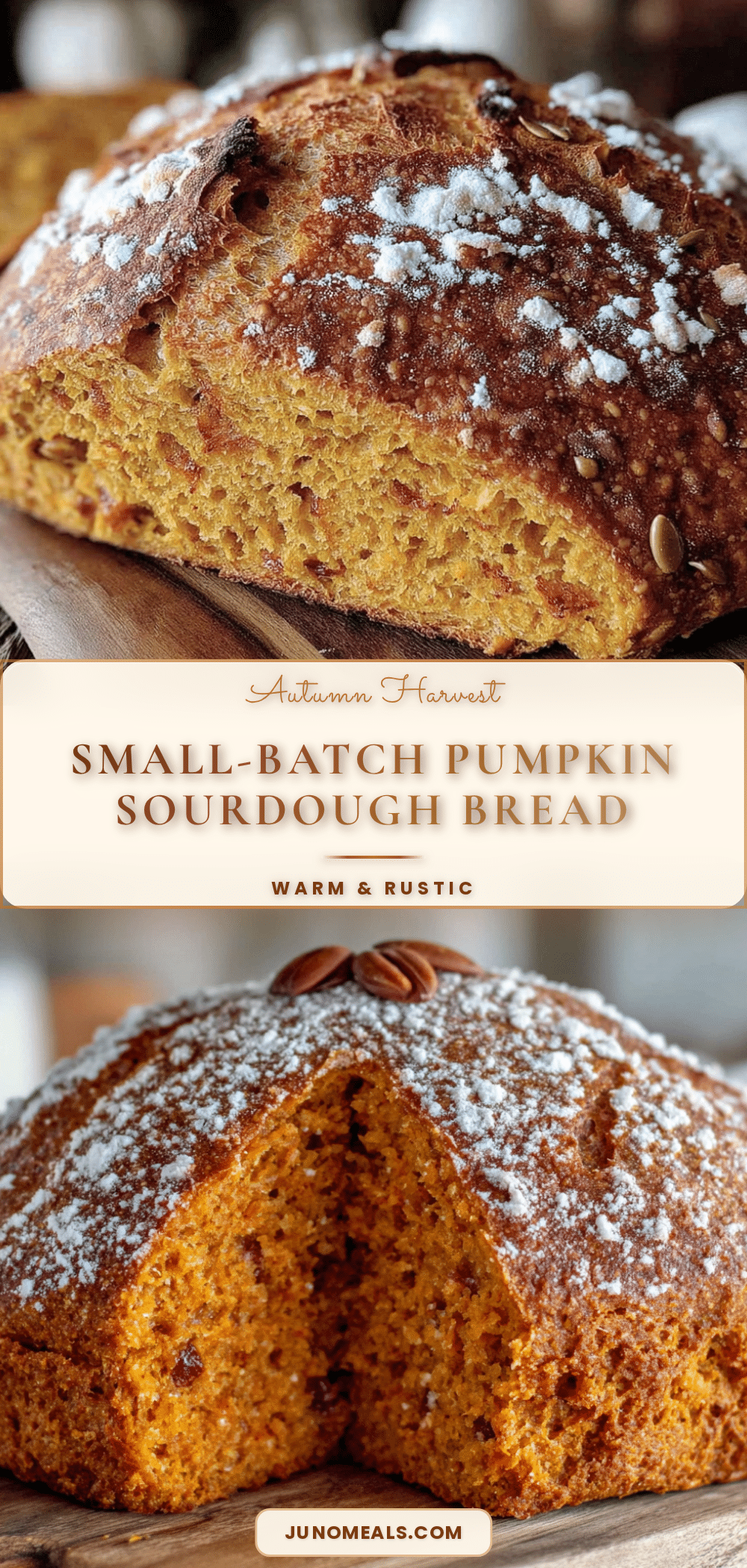
Cozy Small-Batch Pumpkin Sourdough Discard Bread (Easy Recipe)

This cozy small-batch pumpkin sourdough discard bread is the perfect fall bake. It uses up your sourdough discard, satisfies that cozy baking urge, and gives you a loaf that feels special without overwhelming your kitchen or your schedule.
- Prep Time: 15 minutes
- Cook Time: 40-45 minutes
- Total Time: 55-60 minutes
- Yield: 8 servings 1x
- Category: Bread
- Cuisine: American
Ingredients
- 1 cup (120g) all-purpose flour
- ½ cup (120g) sourdough discard
- ½ cup (120g) pumpkin puree
- ½ cup (100g) granulated sugar
- ¼ cup (50g) packed brown sugar
- ¼ cup (60ml) vegetable oil
- 1 large egg, room temperature
- 1½ teaspoons pumpkin pie spice
- ½ teaspoon cinnamon
- ½ teaspoon baking soda
- ¼ teaspoon salt
- 1 teaspoon vanilla extract
Instructions
- Preheat your oven to 350°F (175°C). Position the rack in the center of the oven. Line an 8×4 inch loaf pan with parchment paper, leaving enough overhang on the long sides to use as handles later. Lightly grease the exposed ends of the pan with butter or cooking spray.
- In a medium bowl, whisk together 1 cup (120g) all-purpose flour, 1½ teaspoons pumpkin pie spice, ½ teaspoon cinnamon, ½ teaspoon baking soda, and ¼ teaspoon salt until evenly distributed, about 20 seconds.
- In a large bowl, whisk together ½ cup (120g) sourdough discard, ½ cup (120g) pumpkin puree, ½ cup (100g) granulated sugar, ¼ cup (50g) packed brown sugar, ¼ cup (60ml) vegetable oil, 1 large egg (room temperature), and 1 teaspoon vanilla extract until smooth and well combined.
- Pour the dry ingredients into the wet ingredients. Using a rubber spatula, fold gently until just combined. Stop as soon as you no longer see streaks of flour. A few small lumps are fine.
- Transfer the batter into the prepared loaf pan. Use the spatula to spread it evenly into the corners and smooth the top. Give the pan a gentle tap on the counter to release any air bubbles.
- Bake for 40-45 minutes. At the 30-minute mark, check the bread—if the top is browning too quickly, tent it loosely with aluminum foil.
- At 40 minutes, insert a toothpick or skewer into the center of the loaf. If it comes out clean or with just a few moist crumbs, it’s done. If there’s wet batter, give it 3-5 more minutes and test again. The internal temperature should read 200-205°F (93-96°C).
- Let the bread cool in the pan on a wire rack for 15 minutes. Then, using the parchment paper handles, lift the bread out of the pan and transfer it directly to the cooling rack. Let it cool completely before slicing, about 1-2 hours.
Notes
Don’t overmix the batter. Use room temperature ingredients. Check your oven temperature with an oven thermometer. Trust the toothpick test, not the clock. Let the bread cool completely before slicing. The bread actually gets better on day two as flavors meld.
Nutrition
- Serving Size: 1 slice
- Calories: 220
- Sugar: 18
- Sodium: 180
- Fat: 8
- Saturated Fat: 1
- Carbohydrates: 34
- Fiber: 2
- Protein: 4
Keywords: pumpkin bread, sourdough discard, small batch, fall baking, pumpkin spice, easy recipe