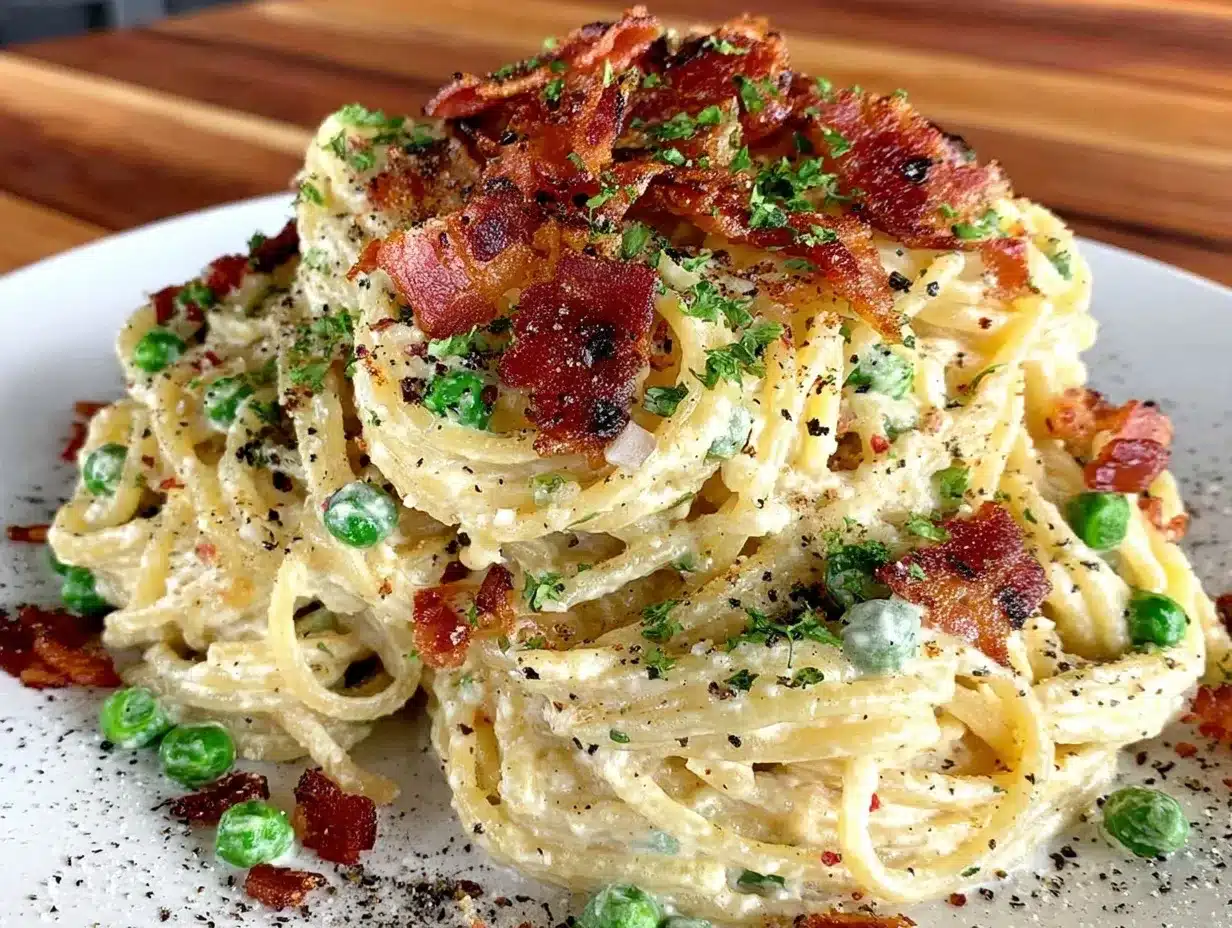
“You’ve got to try this,” my friend texted me one afternoon, right when I was staring blankly at my fridge, wondering if cereal counted as dinner. Honestly, I wasn’t in the mood to cook much, but something about the idea of tangy lemon, creamy ricotta, and that irresistible crunch of pancetta sounded like it might just pull me out of my kitchen slump. I threw together what I had—fresh peas, a wedge of ricotta, a lemon I’d been hoarding, and some pancetta from the deli—and bam: a plate of creamy lemon ricotta pasta was born.
The first bite surprised me. The tang of lemon woke up the rich ricotta, the peas added a pop of spring freshness, and the pancetta gave that salty crunch that makes every bite interesting. I found myself making it three nights in a row (no joke), tweaking the balance here and there, until it felt just right. It’s funny how a quick, almost throw-together meal can end up feeling like a little celebration on a plate. This pasta stuck around because it’s easy, bright, and comforting—all at once.
For a late-night cook who usually leans on simple, no-fuss meals, this one changed the game. It’s not just pasta; it’s a recipe that makes you pause, savor, and actually enjoy the process—even on a hectic day. Plus, the leftovers? Even better the next day. That’s the kind of meal I keep coming back to when I need something that feels special without the fuss.
So yeah, this creamy lemon ricotta pasta with spring peas and crispy pancetta isn’t just another pasta recipe—it’s a little kitchen victory that’s bright, fresh, and just a bit indulgent. It’s the kind of dish that quietly promises you’ll want to make it again, and again.
Why You’ll Love This Creamy Lemon Ricotta Pasta Recipe with Spring Peas and Crispy Pancetta
Having tested this recipe multiple times (and shared it with friends who keep asking for the details), I can say with confidence that it nails comfort food with a fresh twist. Here’s why it stands out:
- Quick & Easy: From start to finish, this pasta comes together in about 25 minutes—ideal for busy weeknights or when you want something tasty without spending hours in the kitchen.
- Simple Ingredients: No hunting down specialty items here. Most ingredients are pantry staples or easy to find at any grocery store, making it a practical go-to.
- Perfect for Spring & Summer: The fresh spring peas and bright lemon zing make it feel seasonal and light—great for outdoor dinners or casual gatherings.
- Crowd-Pleaser: The combination of creamy ricotta and crispy pancetta hits all the right notes, pleasing both kids and adults alike.
- Unbelievably Delicious: The contrast of textures—the softness of ricotta, the tender pasta, the snap of peas, and the crunch of pancetta—keeps each bite interesting and satisfying.
What sets this recipe apart is how it balances richness and brightness. I blend the ricotta into the pasta water to create a silky sauce that clings perfectly without feeling heavy. The lemon zest and juice cut through the creaminess, while the pancetta adds a savory crunch you won’t forget. It’s a little like comfort food, but with a fresh personality.
Plus, it’s an easy dish to tweak. Want to make it vegetarian? Skip the pancetta and toss in toasted pine nuts or crunchy breadcrumbs instead. Need a gluten-free option? Use your favorite gluten-free pasta and you’re all set. This recipe has become my reliable, fuss-free way to impress without stress.
What Ingredients You Will Need
This creamy lemon ricotta pasta recipe uses straightforward, wholesome ingredients that come together for a bright, satisfying dish. Most of these are pantry staples, with the peas and pancetta adding seasonal freshness and savory depth.
- Pasta: 12 oz (340 g) of your favorite long pasta—spaghetti, linguine, or fettuccine work beautifully here.
- Ricotta Cheese: 1 cup (250 g), whole milk ricotta is best for a smooth, creamy texture. I like Galbani or any fresh, small-curd ricotta you can find.
- Spring Peas: 1 cup (150 g), fresh or frozen. Fresh peas add a lovely sweetness and snap, but frozen works well for convenience.
- Pancetta: 4 oz (115 g), diced. Look for thick-cut pancetta to get that perfect crispy bite. If you can’t find pancetta, good-quality bacon is a fine substitute.
- Lemon: 1 large, zest and juice. This adds the signature bright, tangy note that balances the creaminess.
- Garlic: 2 cloves, minced, for a subtle, aromatic base.
- Olive Oil: 2 tablespoons, preferably extra virgin for flavor.
- Parmesan Cheese: ¼ cup (25 g), grated, to stir in at the end for an umami boost.
- Salt & Pepper: To taste, for seasoning at various stages.
- Fresh Herbs (Optional): A handful of chopped parsley or basil adds color and freshness.
Pro tip: If you find yourself wanting a lighter version, you can swap out half the ricotta with plain Greek yogurt. It keeps the creaminess but adds a subtle tang and cuts calories. Also, when buying your pancetta, check the label for minimal additives and a nice balance of fat and meat—that’s the key to getting that perfect crispiness without chewiness.
Equipment Needed
- Large Pot: For boiling the pasta and cooking peas. A 6-quart (5.7 L) pot works well to avoid crowding.
- Large Skillet or Frying Pan: For crisping the pancetta and gently warming the sauce ingredients.
- Colander: To drain pasta and peas efficiently.
- Microplane or Zester: For zesting the lemon finely, which really helps release that bright citrus aroma.
- Wooden Spoon or Silicone Spatula: For stirring the sauce and pasta without scratching your pans.
- Measuring Cups and Spoons: For accuracy, especially with dairy and seasoning.
Honestly, I’ve made this pasta with just a pot and skillet, no fancy gadgets needed. If you don’t have a microplane, a fine grater or even a sharp knife will do for zesting. For budget-friendly options, any non-stick skillet works well and makes cleanup easier.
Preparation Method
- Cook the Pasta and Peas: Bring a large pot of salted water to a boil. Add the pasta and cook according to package instructions (usually 9-11 minutes for al dente). About 2 minutes before the pasta is done, add the fresh or frozen peas directly to the boiling water. This keeps the peas tender but with a slight bite. Reserve 1 cup (240 ml) of the pasta cooking water before draining everything.
- Crisp the Pancetta: While pasta cooks, heat a large skillet over medium heat. Add the diced pancetta and cook for 5-7 minutes, stirring occasionally, until golden and crispy. Use a slotted spoon to transfer pancetta to a paper towel-lined plate, leaving the rendered fat in the pan.
- Sauté Garlic: In the same skillet with pancetta fat, add 2 tablespoons olive oil if needed and toss in the minced garlic. Cook for about 30 seconds to 1 minute until fragrant but not browned (burnt garlic tastes bitter!).
- Make the Sauce: Lower heat to medium-low. Add the ricotta, lemon zest, and juice to the skillet. Stir gently to combine, then gradually add ½ cup (120 ml) of the reserved pasta water to loosen the sauce. It should be creamy and smooth—add more pasta water if needed for consistency.
- Toss Pasta & Peas: Add the drained pasta and peas to the skillet with the sauce. Toss gently but thoroughly to coat everything evenly. If the sauce feels too thick, add a splash more pasta water. Season with salt and freshly ground black pepper to taste.
- Finish with Cheese & Pancetta: Stir in the grated Parmesan and the crispy pancetta. If using, sprinkle chopped fresh herbs over the top for bursts of color and flavor.
- Serve Immediately: Transfer to plates or a large serving bowl. Optionally, add a drizzle of extra virgin olive oil or a few lemon wedges on the side.
Note: Be careful not to overheat once the ricotta is in the pan; too much heat can cause it to curdle. Low and slow wins here. The sauce should feel silky, not grainy.
Cooking Tips & Techniques
One thing I learned the hard way is that timing is everything with this pasta. Cooking the peas right alongside the pasta means less fuss and perfectly tender peas that keep their sweetness. If you add peas too early, they get mushy; too late, they’re crunchy and cold. So, that 2-minute window is your sweet spot.
When crisping pancetta, patience pays off. Let it cook slowly over medium heat so the fat renders out and the pieces get evenly golden. Rushing this step means chewy or greasy bits, which nobody wants. Also, don’t drain all the fat—you’ll use it for extra flavor in the sauce.
For the sauce, the key is gradually adding pasta water. It’s magic—starchy water helps the ricotta cling to the noodles and creates that luxurious texture. But add it bit by bit; too much water and the sauce gets watery, too little and it’s dry.
Finally, when tossing everything together, be gentle. The ricotta sauce can break if stirred too vigorously, so fold the pasta and ingredients with care. And trust me, a sprinkle of fresh herbs at the end makes all the difference.
Variations & Adaptations
- Vegetarian Version: Skip the pancetta and add toasted pine nuts or crunchy toasted breadcrumbs for texture. A pinch of smoked paprika can add a subtle depth without the meat.
- Gluten-Free Option: Use your favorite gluten-free pasta like brown rice or chickpea pasta. The creamy ricotta sauce pairs well with these alternatives.
- Seasonal Twist: Swap spring peas for asparagus tips or fresh green beans during other spring months. Both add a lovely crunch and freshness.
- Extra Creamy: Stir in a spoonful of mascarpone cheese along with ricotta for an even richer sauce.
- Herb Variations: Experiment with tarragon or dill instead of parsley for a different aromatic profile.
Once, I added a handful of baby spinach right before serving—turns out it’s a sneaky way to sneak in some greens without changing the flavor much. If you want a little heat, a pinch of crushed red pepper flakes tossed in with garlic works wonders.
Serving & Storage Suggestions
This creamy lemon ricotta pasta is best enjoyed right away while the sauce is warm and silky. Serve it in shallow bowls to showcase the colorful peas and pancetta bits. A simple side salad with a light vinaigrette complements the richness nicely, and a crisp white wine or sparkling water with lemon pairs beautifully.
Leftovers keep well in an airtight container in the refrigerator for up to 2 days. When reheating, add a splash of water or broth to loosen the sauce and warm gently on the stove or microwave. The flavors actually meld nicely overnight, making it a great make-ahead meal for busy days.
If you want to freeze it, omit the peas (they don’t freeze well). Freeze pasta and sauce separately for up to 1 month. Thaw overnight in the fridge and reheat carefully.
Nutritional Information & Benefits
Per serving (serves 4): Approximately 450 calories, 18g protein, 50g carbohydrates, and 15g fat.
Ricotta cheese provides a good dose of calcium and protein, while peas add fiber and vitamins A and C. Pancetta, though higher in fat, is used sparingly to add flavor without overwhelming the dish. This recipe is naturally gluten-free if you use gluten-free pasta and can be adjusted to lower fat by using part-skim ricotta or Greek yogurt.
It’s a balanced meal that offers a satisfying blend of macronutrients and bright, fresh flavors that make you feel nourished and satisfied without heaviness.
Conclusion
This creamy lemon ricotta pasta with spring peas and crispy pancetta is one of those recipes that feels like a little gift to yourself. It’s quick, simple, and packed with flavor that’s both comforting and fresh. You can easily customize it to match your mood or pantry, making it a reliable weeknight staple or a dish to share with friends.
Honestly, it’s one of those meals I return to when I want something that feels a bit special without a lot of fuss. The balance of creaminess, brightness, and crunch hits every note I look for in pasta. So next time you’re wondering what to make with just a few ingredients, this recipe might surprise you like it did me.
If you’ve enjoyed dishes with lemon in new ways, you might like the mini lemon blueberry cheesecakes recipe perfect for parties I shared recently. Also, for more fresh ideas, you can check out the full range of recipes on the site.
Give this pasta a try, and I’d love to hear how you made it your own!
Frequently Asked Questions
Can I use frozen peas instead of fresh?
Yes, frozen peas work well here. Just add them to the pasta water in the last 2 minutes of cooking to keep their sweetness and texture.
What if I don’t have pancetta?
Bacon is a good substitute for pancetta. Cook it similarly until crispy. For a vegetarian option, skip the meat and add toasted nuts or breadcrumbs for crunch.
How do I prevent the ricotta sauce from curdling?
Keep the heat low when combining ricotta with pasta and avoid boiling once the ricotta is added. Stir gently and add pasta water gradually for a smooth sauce.
Can I prepare this recipe in advance?
You can cook the pasta and sauce separately and combine just before serving. Leftovers store well in the fridge for up to 2 days, but it’s best fresh.
Is this recipe gluten-free?
It can be! Just swap the regular pasta for a gluten-free variety, and make sure your pancetta or bacon is gluten-free as well.
Pin This Recipe!
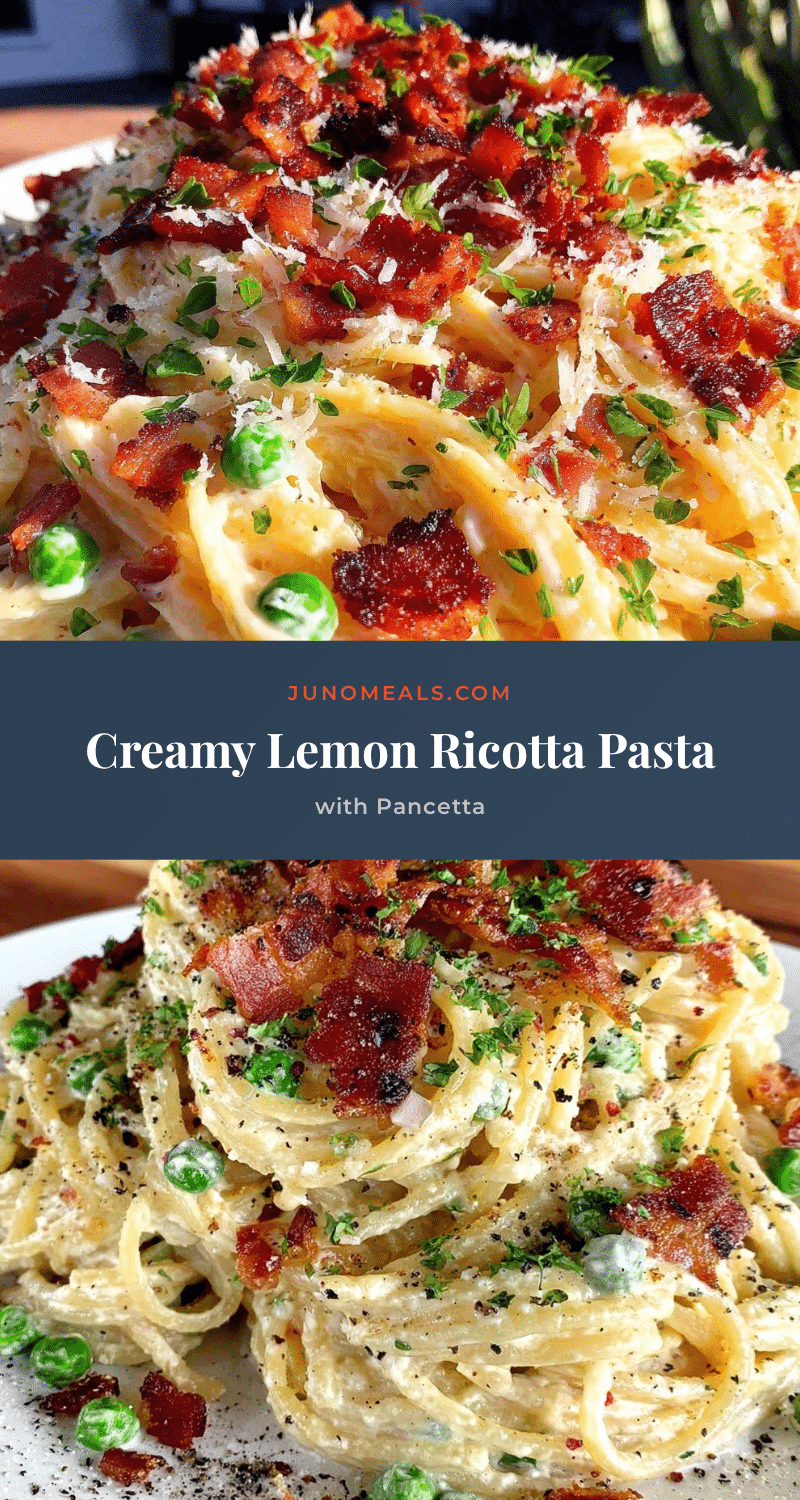
Creamy Lemon Ricotta Pasta Recipe with Spring Peas and Crispy Pancetta
A quick and easy pasta dish combining tangy lemon, creamy ricotta, fresh spring peas, and crispy pancetta for a bright, comforting meal perfect for busy weeknights.
- Prep Time: 5 minutes
- Cook Time: 20 minutes
- Total Time: 25 minutes
- Yield: 4 servings 1x
- Category: Main Course
- Cuisine: Italian
Ingredients
- 12 oz (340 g) long pasta (spaghetti, linguine, or fettuccine)
- 1 cup (250 g) whole milk ricotta cheese
- 1 cup (150 g) fresh or frozen spring peas
- 4 oz (115 g) diced pancetta
- 1 large lemon, zest and juice
- 2 cloves garlic, minced
- 2 tablespoons extra virgin olive oil
- ¼ cup (25 g) grated Parmesan cheese
- Salt and freshly ground black pepper, to taste
- Fresh herbs (parsley or basil), optional
Instructions
- Bring a large pot of salted water to a boil. Add the pasta and cook according to package instructions (usually 9-11 minutes for al dente). About 2 minutes before the pasta is done, add the fresh or frozen peas directly to the boiling water. Reserve 1 cup (240 ml) of the pasta cooking water before draining everything.
- While pasta cooks, heat a large skillet over medium heat. Add the diced pancetta and cook for 5-7 minutes, stirring occasionally, until golden and crispy. Use a slotted spoon to transfer pancetta to a paper towel-lined plate, leaving the rendered fat in the pan.
- In the same skillet with pancetta fat, add 2 tablespoons olive oil if needed and toss in the minced garlic. Cook for about 30 seconds to 1 minute until fragrant but not browned.
- Lower heat to medium-low. Add the ricotta, lemon zest, and juice to the skillet. Stir gently to combine, then gradually add ½ cup (120 ml) of the reserved pasta water to loosen the sauce. Add more pasta water if needed for consistency.
- Add the drained pasta and peas to the skillet with the sauce. Toss gently but thoroughly to coat everything evenly. Season with salt and freshly ground black pepper to taste.
- Stir in the grated Parmesan and the crispy pancetta. If using, sprinkle chopped fresh herbs over the top.
- Serve immediately, optionally adding a drizzle of extra virgin olive oil or lemon wedges on the side.
Notes
Do not overheat the ricotta sauce to prevent curdling; add pasta water gradually to achieve a silky texture. Cook peas in the last 2 minutes of pasta cooking for perfect tenderness. Pancetta should be cooked slowly over medium heat for crispiness without chewiness. Vegetarian version can use toasted pine nuts or breadcrumbs instead of pancetta. Gluten-free pasta can be used to make the dish gluten-free.
Nutrition
- Serving Size: 1 serving (approxima
- Calories: 450
- Fat: 15
- Carbohydrates: 50
- Protein: 18
Keywords: lemon ricotta pasta, creamy pasta, spring peas, pancetta, quick pasta recipe, easy dinner, comfort food, vegetarian option, gluten-free pasta